*221* The Illusion of Isolated Observation: Stability, Correlation, and the Limits of Fragmented…
The Magnetosheath Is Not Enough — Toward a Distributed and Structural Perception of Space
221 The Illusion of Isolated Observation: Stability, Correlation, and the Limits of Fragmented Measurement
The Magnetosheath Is Not Enough — Toward a Distributed and Structural Perception of Space
In recent years, increasing attention has been given to the idea of deploying observational platforms within the region where Earth’s magnetic field meets the solar wind, commonly referred to as the magnetosheath. The ambition appears straightforward: to observe large-scale magnetic interactions directly within their natural environment rather than relying on indirect, filtered measurements from Earth. This framing often evokes the concept of a “space laboratory,” suggesting a controlled environment capable of capturing the dynamics of plasma and magnetic fields at their source. Yet this apparent clarity conceals a deeper issue that becomes evident as soon as one examines how such an installation would actually function over time within a continuously driven and unstable system.
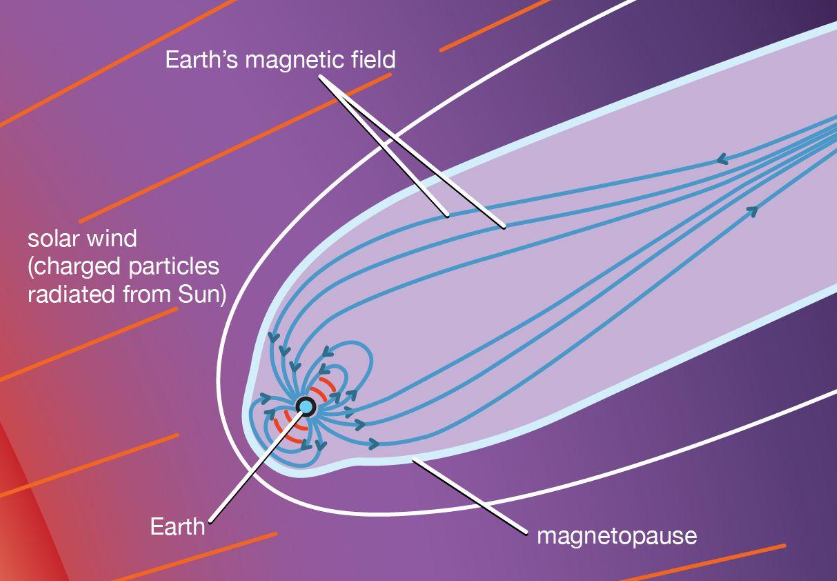
A laboratory, in the scientific sense, implies control, reproducibility, and the ability to isolate variables. None of these conditions are present in the magnetosheath. The solar wind is inherently unstable, the plasma environment is continuously evolving, and magnetic structures are shaped by external forces that cannot be constrained or repeated. What is being proposed is therefore not a laboratory, but a fixed observational point embedded in a dynamic and open system. This distinction is not a matter of wording; it directly determines what kind of knowledge can realistically be obtained and what limitations will persist regardless of instrumentation.

Current and proposed technologies — magnetometers, plasma analyzers, and coordinated multi-satellite systems — represent significant advances in measurement capability. They provide local readings of magnetic fields, particle distributions, and energy transfers, allowing researchers to reconstruct portions of the system’s behavior. However, these measurements remain inherently fragmented. Each instrument captures a local state at a specific moment, and even when combined, these data points do not produce a direct global observation. Instead, they require reconstruction through models that depend on assumptions about continuity and coherence within a highly dynamic environment, which introduces interpretation as an unavoidable layer.

The Illusion of Quantum Teleportation: Stability, Correlation, and the Limits of Interpretation

The article reinforces this perception by explaining that entangled photons allowed information to be transmitted between nodes without crossing the space separating them in the usual manner. Such language naturally evokes the idea of instantaneous transfer, as though information could now detach itself from ordinary physical continuity.

This interpretation becomes even stronger because the term “teleportation” already carries a very specific meaning in the collective imagination. It suggests disappearance in one place and reappearance in another, almost as if a system could bypass the intermediate path entirely. Combined with the vocabulary of quantum mechanics, the announcement gives the impression that a fundamentally new physical capability has been demonstrated — one in which distance no longer plays the role traditionally associated with communication or transfer.


Yet the actual experiment describes something more precise and considerably more dependent on conditions than the headline suggests. The process does not involve the physical displacement of matter, nor the independent movement of information detached from a supporting structure.
The experiment relies on previously entangled quantum states, synchronized measurements, classical communication channels, and a highly controlled environment that allows these correlations to remain stable long enough for the protocol to function. What is observed is therefore not a disappearance of continuity, but a coordinated reorganization occurring inside an already prepared system.

The observable effect then appears more independent than it actually is.


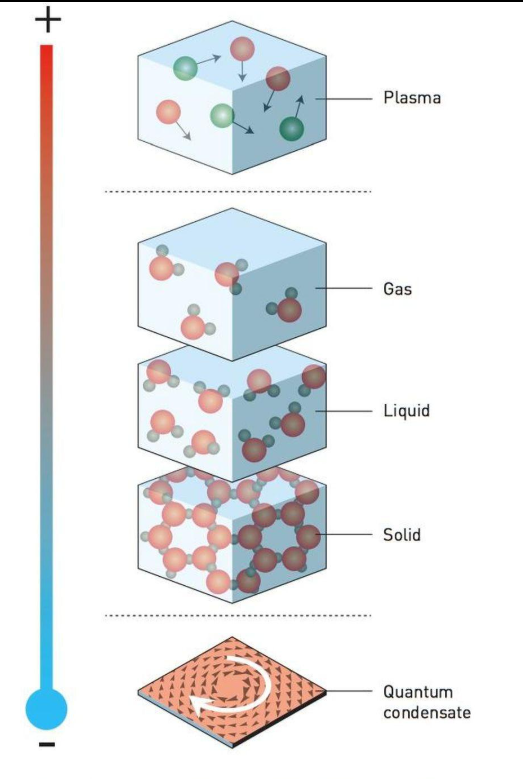
A similar situation can be seen in discussions surrounding so-called “new states of matter.” Under extreme pressures and temperatures, matter may stabilize into unusual configurations that do not persist under ordinary conditions. Yet these configurations do not necessarily represent entirely new forms of reality. More often, they correspond to states that become temporarily stable only within a very specific range of constraints. In the same way, quantum teleportation does not necessarily reveal a new physical principle abolishing distance, but rather the ability to maintain delicate quantum correlations under carefully controlled conditions.


From this perspective, what appears as a scientific rupture may instead reflect an extension of the domain in which certain configurations can remain stable and observable. The novelty lies less in the creation of a fundamentally new reality than in the capacity to access and maintain regimes that are normally too fragile or unstable to persist.
Ultimately, the question raised by such experiments may not concern the abolition of distance itself, but the way scientific interpretation transforms condition-dependent stability into the appearance of a fundamentally new property of reality.

This limitation does not disappear with scale. Increasing the number of sensors improves resolution but does not change the nature of the observation. The system remains decomposed into discrete measurements, and the global behavior remains inferred rather than directly accessed. The result is a progressive refinement of approximation rather than a transition toward structural understanding. This distinction becomes concrete when comparing reconstructed models with evolving measurements, where discrepancies persist despite improvements in instrumentation.

A different approach becomes logically consistent when the observational system is no longer conceived as a fixed structure, but as a distributed presence. Instead of concentrating instruments within a single laboratory, one can define a swarm of autonomous drones continuously embedded within the environment. These units are not individually complete; they function collectively as a single, adaptive instrument. Their role is not to impose stability, but to follow the dynamics of the system, repositioning themselves in response to variations and maintaining continuous coverage of evolving regions.

Within such a system, observation becomes distributed rather than localized. Some units capture structural variations in the magnetic field, others detect interactions within the plasma, and others ensure coherence across the network. The key point is that no single measurement carries meaning in isolation. Meaning emerges from the relationships between measurements, continuously integrated across the system. This is already reflected in multi-point missions, where combining simultaneous readings reveals structures that are not visible from a single location, but here extended to a continuous and adaptive scale.

Even this distributed architecture, however, remains incomplete if it relies solely on conventional measurements. A further transformation becomes operationally relevant when observation expands beyond localized sensing into global energetic reading. Passive spectral observation allows the system to capture the electromagnetic signature generated by the interactions within the environment. These spectral patterns are measurable and already used in multiple domains to identify physical states, but here they are integrated across a distributed system to reflect the global condition rather than isolated emissions.

This global reading is complemented by an active approach through the introduction of a coherent laser system. Unlike passive observation, the laser establishes a stable reference within the environment, allowing the medium to reveal its structure through its interaction with a known signal. Deviations, scattering, and phase shifts in the beam are measurable effects already used in controlled environments, and their extension to a distributed system allows these interactions to be captured across multiple paths simultaneously, providing spatially correlated information.
The combination of passive spectral observation and active laser probing transforms the nature of the observational system. The swarm of drones becomes more than a network of sensors; it becomes a unified perceptual structure capable of both receiving and eliciting measurable responses from the environment. The system no longer depends solely on reconstruction from fragmented data. Instead, it gains access to both the global energetic state and the underlying spatial organization through directly observable signals and interactions.


This transformation has direct consequences for the economic structure of the system. A fixed laboratory inherently requires preservation, and this requirement generates continuous cost. The structure must be stabilized, monitored, corrected, and repaired, and each of these operations implies complex interventions. These are not theoretical constraints; they are systematically observed in all long-duration space infrastructures, where maintenance and correction dominate operational planning.


By contrast, a distributed swarm does not require preservation of individual units. Functionality is distributed, and no single element is indispensable. If a drone fails, the system continues to operate, and its capacity can be restored through replacement rather than repair. This approach is already used in satellite constellations, where redundancy replaces maintenance. Extending this logic to a fully distributed observational system removes the need for servicing missions, return logistics, and centralized stabilization.


The distinction is structural and directly observable in system behavior over time. A system that must be preserved will inevitably generate increasing operational cost because maintenance accumulates. A system that does not require preservation maintains its capability through renewal, keeping operational cost bounded. This is not an assumption but a pattern consistently observed across distributed versus centralized systems.


The implication follows from these observations. The challenge is no longer to build more advanced instruments within rigid frameworks, but to design systems that align with the dynamic nature of the phenomena they seek to understand. In such systems, observation is no longer an external act imposed on reality, but a continuous interaction through which measurable structures and behaviors progressively emerge.
— — — — — — — — — — — — — — — — — — — — — — — — — — — — — — — — — — — —
메타데이터
- post_id
- ef35e279e853
- slug
- 221-the-illusion-of-isolated-observation-stability-correlation-and-the-limits-of-fragmented-ef35e279e853
- url
- https://medium.com/@gouvielos/221-the-illusion-of-isolated-observation-stability-correlation-and-the-limits-of-fragmented-ef35e279e853
- canonical_url
- https://medium.com/@gouvielos/221-the-illusion-of-isolated-observation-stability-correlation-and-the-limits-of-fragmented-ef35e279e853
- author_url
- https://medium.com/@gouvielos
- status
- ok
- fetched_at
- 2026-07-20 02:25:49