Genesis World 1.0 Just Changed the Speed of Physical AI Development. Here’s Why It Matters.
One of the most consistent bottlenecks in Physical AI development is not discussed enough in mainstream coverage.
Genesis World 1.0 Just Changed the Speed of Physical AI Development. Here’s Why It Matters.
One of the most consistent bottlenecks in Physical AI development is not discussed enough in mainstream coverage.
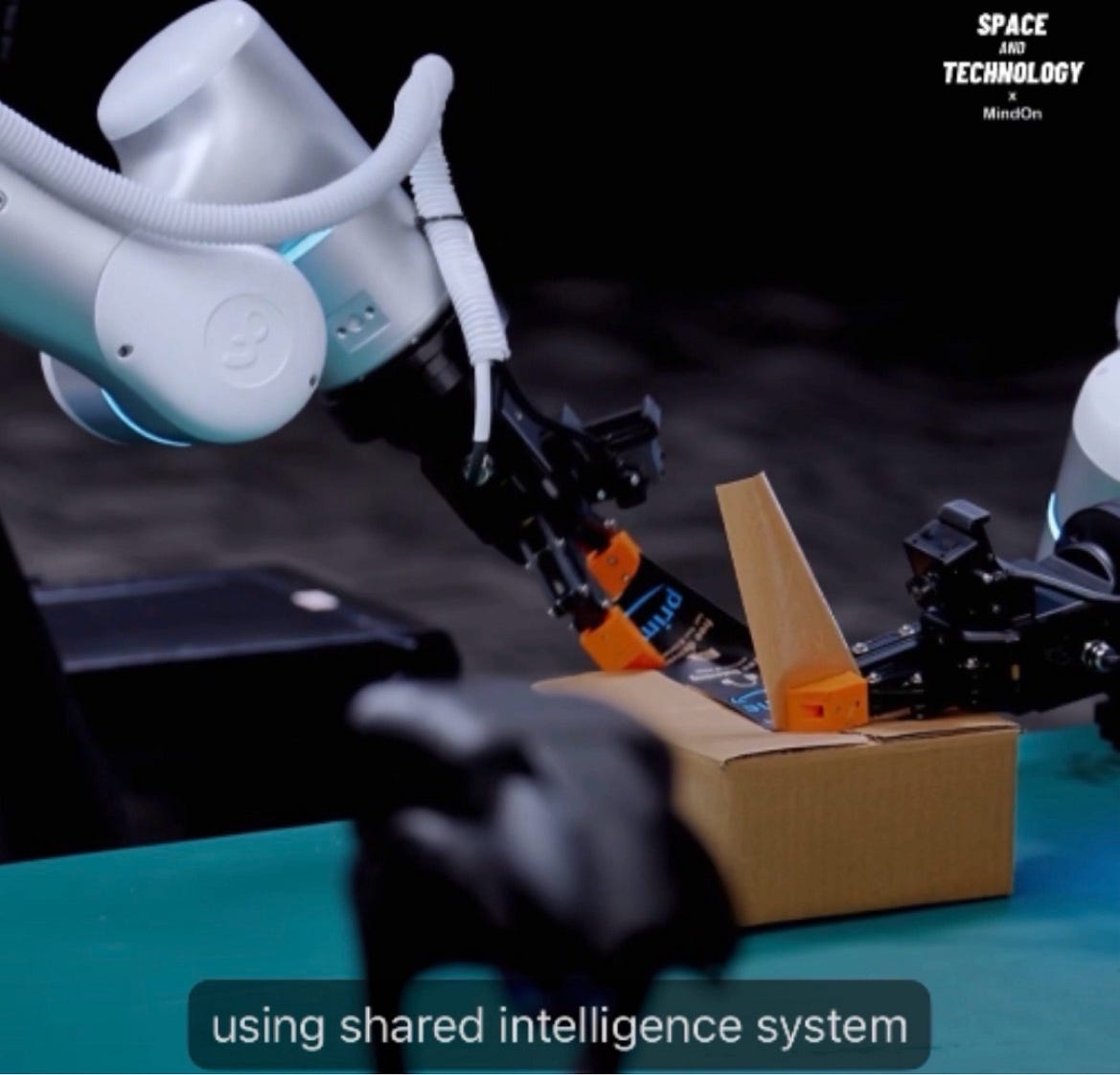
Every model you train on a robot needs to be tested on physical hardware. Every policy you develop in simulation needs to be validated in reality. Every iteration of a training run — every checkpoint, every data recipe change, every architectural modification — eventually requires a robot to do something in the physical world so you can measure whether it worked.
And the physical world runs at 1x speed. Always. No matter how fast your GPUs are. No matter how large your compute cluster. The robot takes the same amount of time to pick up the cup whether you are training on 100 GPUs or 10,000.
This wall-clock bottleneck is one of the primary reasons that Physical AI has historically advanced more slowly than language AI. Language models can generate a training token in microseconds. A robot learning to pick up an object needs to physically reach for it, grasp it, lift it, and place it — at the speed that physics allows — before it knows whether it succeeded.
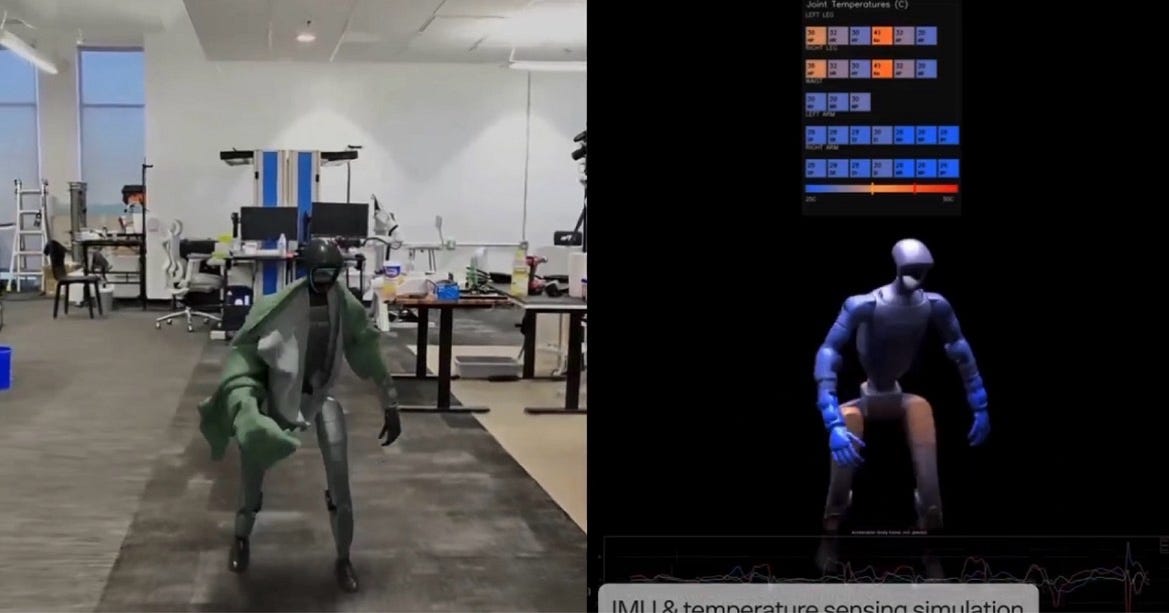
Genesis AI, a global full-stack robotics company building general-purpose robots with human-level intelligence, released Genesis World 1.0 today. It is fully open source. And it is the most serious attempt yet to break the wall-clock bottleneck in Physical AI development.
The Core Insight: Make 1x into 100x
The central insight behind Genesis World 1.0 is simple to state and enormously difficult to execute:
One hour in reality can become 100 days in simulation.
If simulation is fast enough, trustworthy enough, and visually realistic enough, the number of training iterations you can run is no longer limited by how quickly a physical robot can execute them. It is limited by how much compute you have. And compute scales. Physics does not.
This is the same insight that has powered the most impressive results in language model development — the ability to run massive amounts of training iterations in simulation before ever touching physical hardware. Genesis World 1.0 is designed to bring that same scaling dynamic to physical robot training.
But making simulation useful for Physical AI is much harder than it sounds. The gap between simulated and real physical dynamics — what the field calls the sim-to-real gap — has historically been large enough that policies trained entirely in simulation frequently fail when deployed on physical hardware. The contacts are slightly wrong. The friction is slightly different. The visual appearance of objects in simulation does not quite match reality. These small differences compound across a policy’s training distribution and produce behaviors that work in simulation but break in deployment.
Genesis World 1.0 is a systematic attempt to close this gap — not by compromising on simulation performance to achieve accuracy, but by rebuilding every layer of the simulation stack to achieve both simultaneously.
What They Built: Four Components
Genesis World 1.0 is the second release in Genesis AI’s full-stack suite. Behind it is a year of rebuilding every component of the simulation infrastructure from first principles.
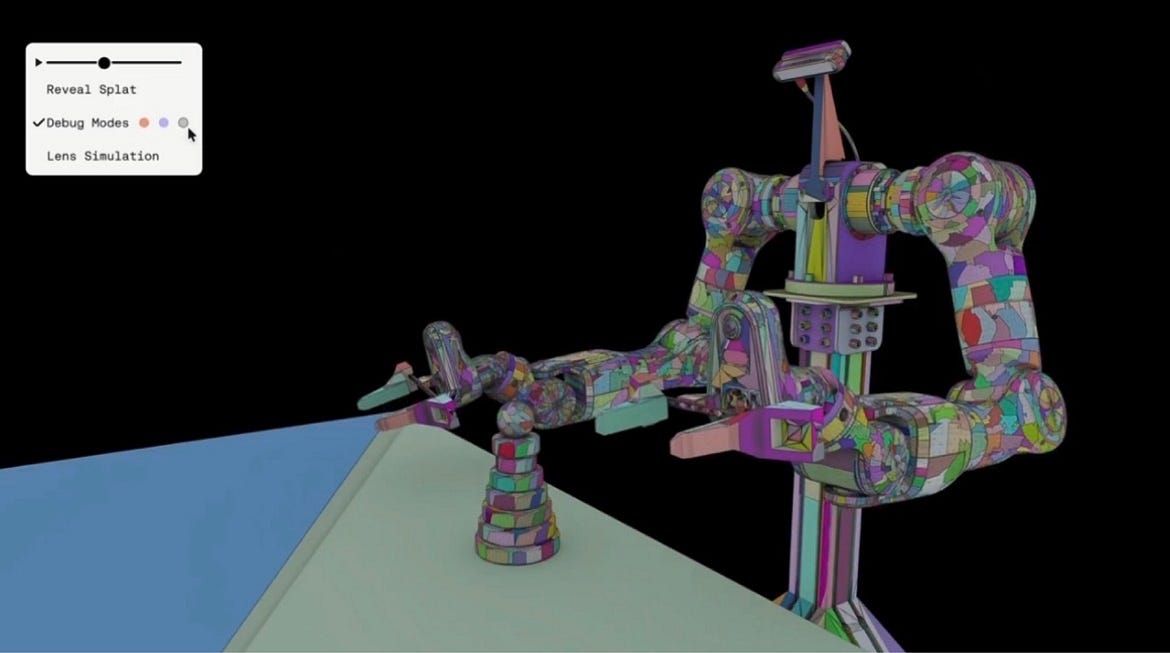
Nyx is Genesis AI’s high-performance path-traced rendering engine, designed from the ground up for robotics applications. Path tracing is the gold standard for photorealistic rendering — it models how light actually behaves in a scene rather than approximating it. The challenge is that path tracing is computationally expensive. Nyx is engineered to make it fast enough for simulation use: the team is targeting noise-free 1080p frames in 4 milliseconds or less on a high-end consumer GPU. At that speed, photorealistic rendering is no longer a bottleneck. It is a capability. Visual fidelity in simulation matters for Physical AI because the vision models trained on simulation data need to see images that look like real environments — or they will fail to generalize when deployed on physical hardware with real cameras seeing real scenes.
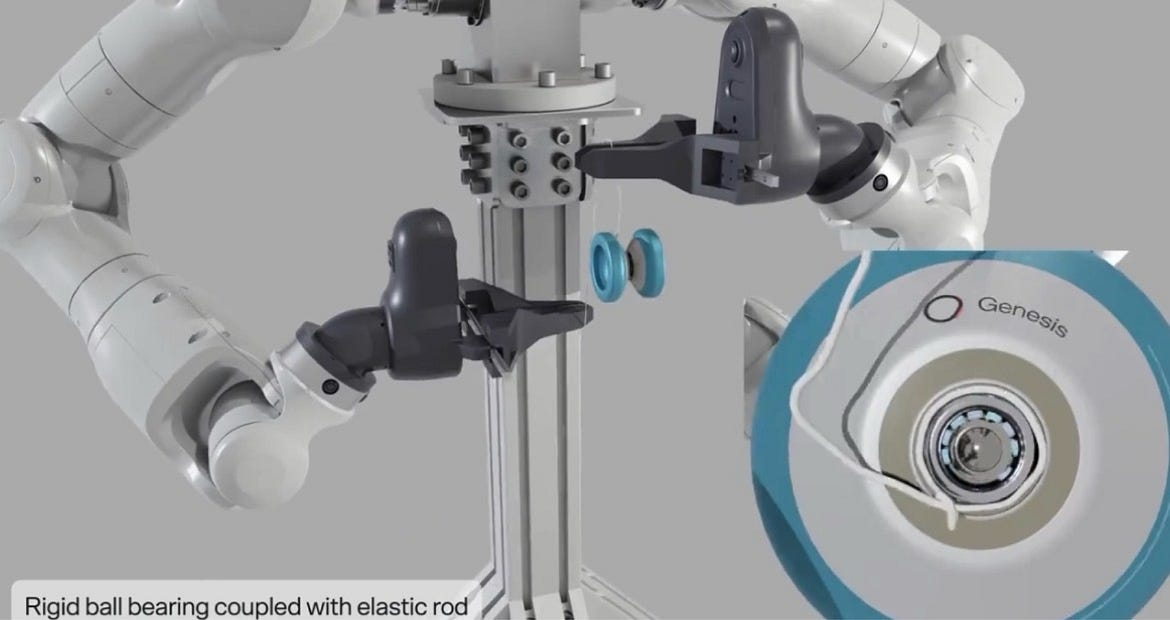
Genesis World 1.0 itself is the simulation framework that integrates all the components. The headline capability is near real-time performance achieved through the latest development of a penetration-free IPC solver — a contact solver that prevents objects from passing through each other in ways that would violate physical reality. This sounds technical and it is, but it matters: previous simulation frameworks had contact solvers that occasionally allowed interpenetration, producing physically impossible states that corrupted training data. A penetration-free solver means the physics is correct by construction, not corrected after the fact. The framework supports a wide range of deformables beyond rigid bodies — cloth, soft objects, fluids, biological tissue — which are essential for training robots that handle the full diversity of materials in real-world environments. Contact-rich, dexterous manipulation is supported across multiple embodiments: Sharpa, Wuji, Genesis Hand, and various grippers, in addition to Unitree platforms.
Quadrants is Genesis AI’s cross-platform GPU-accelerated compiler — their effort to push forward cross-platform GPU computation for simulation workloads. It began as a fork of Taichi, a well-known open-source differentiable programming language for simulation. Genesis rebuilt the parts that matter for simulation workloads. The result is 10x faster launch time and up to 4.6x runtime performance compared to the initial Genesis release. It supports CUDA, AMD ROCm, Apple Metal, Vulkan, x86, and ARM64 — meaning Genesis World 1.0 runs on NVIDIA GPUs, AMD GPUs, Apple Silicon, and standard CPUs. Cross-platform support is not a convenience feature. It determines who can use the platform and on what hardware — and open-source robotics research happens on an enormous diversity of compute hardware.
Together, these components push the sim-to-real gap to what Genesis AI describes as an unprecedented minimum, enabling zero-shot real-to-sim model evaluation for fast iteration — the ability to take a model trained on real-world data, evaluate it in simulation without any additional fine-tuning, and get a reliable signal of how it will perform in physical deployment.
Why Open Source Changes Everything
Genesis World 1.0 is fully open source under the Apache 2.0 license.
This is a significant decision, and it reflects a specific theory of how the Physical AI ecosystem develops. Genesis AI’s view, as articulated in their technical blog, is that simulation is infrastructure — like roads or power grids, it becomes more valuable the more people use it, build on it, and contribute to it.
NVIDIA’s Isaac Sim is the dominant closed simulation platform for robotics. It is powerful, well-supported, and deeply integrated with NVIDIA’s broader robotics stack including GR00T, Cosmos, and Newton. Its limitation is the vendor lock-in it creates — teams building on Isaac Sim are building within NVIDIA’s ecosystem.
Genesis World 1.0 is a credible open-source alternative that runs on multiple hardware platforms. For researchers at universities who cannot afford NVIDIA hardware at scale. For startups that want simulation infrastructure without vendor dependency. For international teams that need to run on hardware that NVIDIA does not support. The open-source model means that every team that uses Genesis World 1.0 is also a potential contributor — filing issues, improving components, extending capabilities in ways that benefit the entire ecosystem.
The comparison Genesis AI draws explicitly is to the role of large-scale RL in simulated sandboxes as a key ingredient of LLM development. AlphaGo and its successors used self-play in simulation to achieve superhuman performance at board games without any human training data. OpenAI’s early robotics work used massive simulation runs to develop dexterous manipulation policies. The same pattern — simulate at scale, transfer to reality — is what Genesis World 1.0 is designed to enable for general-purpose Physical AI.
The Relationship Between Simulation and Real-World Data
Here is the dimension of the Genesis World 1.0 release that is most relevant to the broader Physical AI data ecosystem — and that is not discussed in most coverage.
Simulation and real-world data collection are not alternatives. They are complements. And the quality of each is a function of the quality of the other.
Simulation scales what you can train on. A policy that would require a year of real robot interactions to train can be trained in days using simulation. But simulation is only useful to the extent that the physical behaviors it models match reality. And the accuracy of that match depends on calibration — on how well the simulation’s physics models are validated against real physical measurements.
This calibration requires real-world data. Not just the data that trains robot policies, but the data that validates simulation models — measurements of how real materials behave, how real contact dynamics work, how real robots respond to real forces. The more diverse and high-fidelity this calibration data, the more accurately simulation can approximate physical reality and the smaller the remaining sim-to-real gap becomes.
From the other direction: real-world data collection is augmented by simulation. Scenarios that are rare or dangerous in the physical world can be simulated at scale. Edge cases that never appear in real operational data can be generated synthetically and added to the training distribution. The combination of diverse real-world data and high-fidelity simulation data produces models that generalize better than either alone.
Genesis World 1.0’s zero-shot real-to-sim evaluation capability is the technical expression of this complementary relationship. It assumes that well-calibrated simulation is close enough to physical reality that a model trained on real data can be evaluated in simulation without retraining. That assumption only holds if the simulation is accurately calibrated — which requires real-world data.
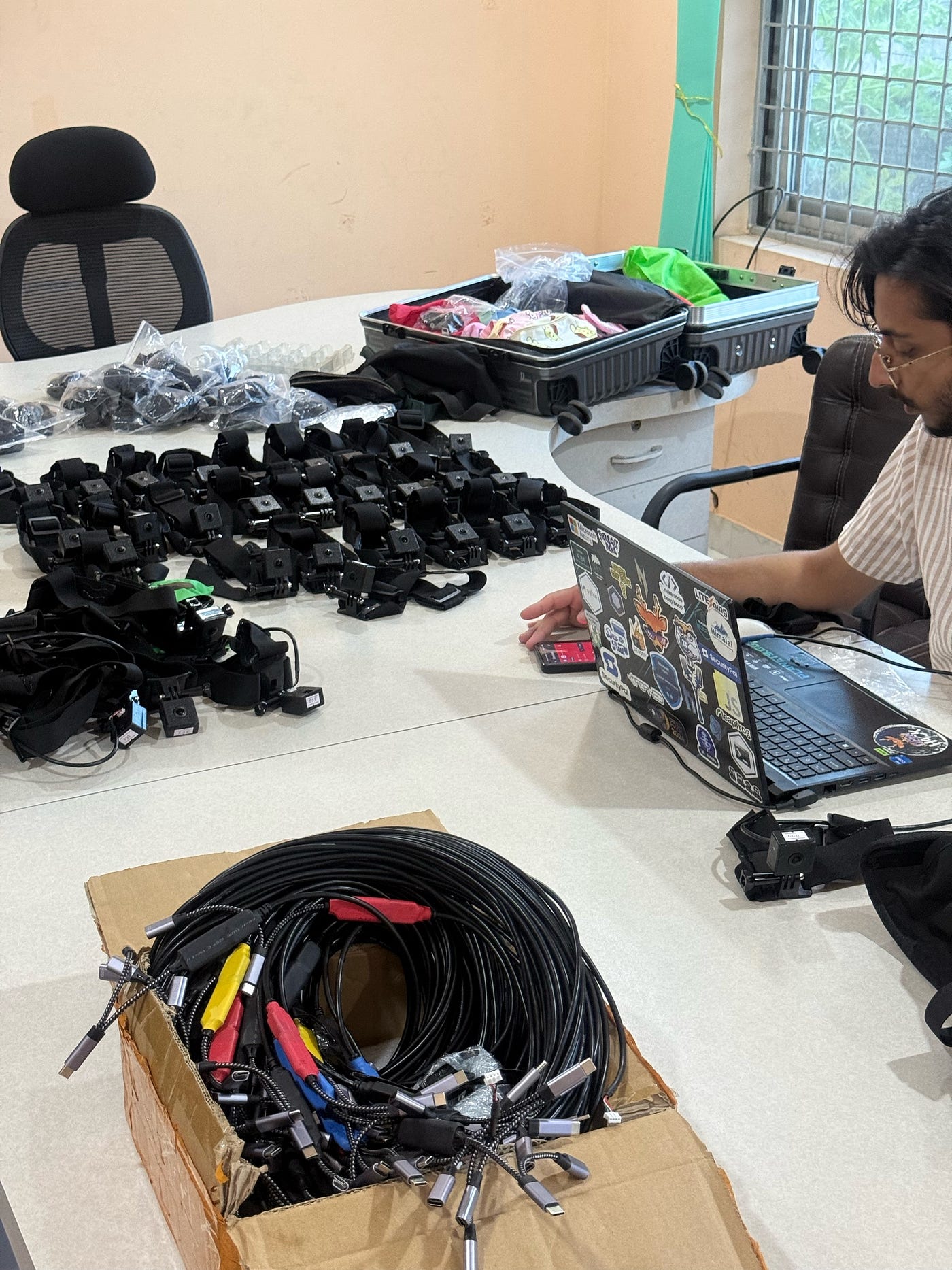
At FileMarket AI, we collect egocentric human motion data from real industrial environments in Kathmandu. This data plays both roles in the simulation-data complementarity: it trains robot policies directly, and it provides the real-world physical interaction data that validates and calibrates simulation models. As tools like Genesis World 1.0 make simulation more powerful, the value of high-quality real-world calibration data increases proportionally. Simulation gets better when it has better ground truth to calibrate against.
What This Points To
The release of Genesis World 1.0 is one data point in a pattern that is becoming increasingly clear across the Physical AI ecosystem.
The infrastructure for Physical AI development — simulation platforms, data collection systems, training frameworks, deployment tooling — is being built rapidly and at open-source scale. The tools that were available only to the best-funded robotics labs two years ago are now accessible to anyone with a GPU and an internet connection.
This democratization of infrastructure is what makes the next phase of Physical AI development possible. Not just for the companies with the largest compute budgets, but for the distributed ecosystem of researchers, startups, and industrial operators who will collectively push the field forward.
Genesis World 1.0 is the simulation layer of that infrastructure. It will not single-handedly close the sim-to-real gap. No single tool does. But combined with better real-world data collection, better physics calibration, and better transfer methods, it makes the gap smaller — and makes the entire development cycle for physical AI systems faster, cheaper, and more broadly accessible.
One hour in reality. One hundred days in simulation. That is the arithmetic of Physical AI development. Genesis World 1.0 just improved the denominator.
Image Credit: Genesis AI
GitHub: https://github.com/Genesis-Embodied-AI/genesis-world
Technical blog: https://www.genesis.ai/blog/the-role-of-simulation-in-scalable-robotics-genesis-world-10-and-the-path-forward
Credit: Genesis AI Team
Learn more about FileMarket AI Data Labs: https://filemarket.ai


메타데이터
- post_id
- ef3cbb0fe76e
- slug
- genesis-world-1-0-just-changed-the-speed-of-physical-ai-development-heres-why-it-matters-ef3cbb0fe76e
- url
- https://medium.com/@filemarketai/genesis-world-1-0-just-changed-the-speed-of-physical-ai-development-heres-why-it-matters-ef3cbb0fe76e
- canonical_url
- https://medium.com/@filemarketai/genesis-world-1-0-just-changed-the-speed-of-physical-ai-development-heres-why-it-matters-ef3cbb0fe76e
- author_url
- https://medium.com/@filemarketai
- status
- ok
- fetched_at
- 2026-06-09 15:37:30