Are We There Yet?
RE: Use of Force to Terminate Vehicular Threats Under the Fourth Amendment and Court Decisions
Are We There Yet? What constitutes vehicular weaponization? When does justified lethality start and end?
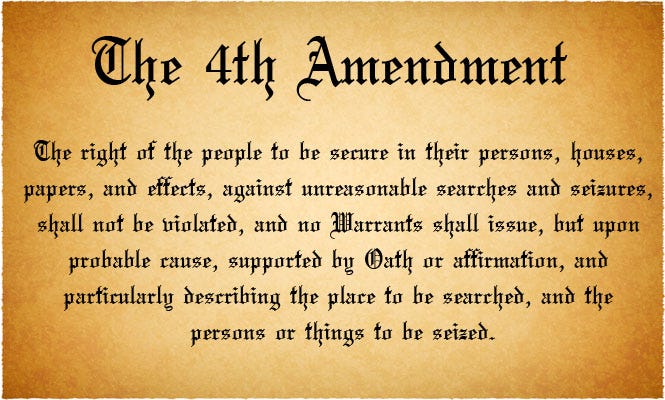
RE: Use of Force to Terminate Vehicular Threats Under the Fourth Amendment and Court Decisions
ISSUE
Whether law enforcement officers may begin to and continue to apply force against a suspect when the instrument of danger is a motor vehicle, and whether such force may lawfully continue until the vehicle is fully stopped and no longer capable of threatening life.
SHORT ANSWER
Yes. When officers have probable cause to believe a vehicle is being used or imminently may be used as a deadly weapon, the Fourth Amendment permits the application of force, including deadly force, to neutralize that threat. That force may lawfully continue until the vehicle is fully stopped or otherwise rendered incapable of endangering officers or the public. Once the vehicle no longer has the capacity to cause serious harm, the constitutional justification for force ends.
GOVERNING LEGAL STANDARD
All claims of excessive force are analyzed under the Fourth Amendment objective reasonableness standard. The inquiry focuses on whether the officer’s actions were objectively reasonable in light of the facts and circumstances confronting them, without regard to intent or hindsight. The analysis is contextual and evaluates the totality of the circumstances as they existed at the time force was applied.
VEHICLES AS DEADLY WEAPONS
A motor vehicle constitutes a deadly weapon when used, or reasonably perceived to be used, in a manner capable of causing death or serious bodily injury. Supreme Court precedent recognizes that the lethality of a vehicle derives from its mass, speed, direction of travel, and the driver’s control over its movement.
The Fourth Amendment inquiry does not hinge on whether injury or contact actually occurs. Rather, it turns on capability and risk. A vehicle presents an equal deadly threat whether it is moving directly toward a person, passing within dangerous proximity, or maneuvering in a manner that requires officers or civilians to evade it. The fact that an officer successfully avoids impact by stepping aside or jumping out of the way does not negate the existence of the threat, rather it generally is confirmation.
Threat assessment properly considers four interrelated factors:
Direction of Travel: Need not be fixed or continuous, as a moving vehicle can be redirected instantaneously.
Proximity to Persons: Need not be minimal or substantial, as speed and mass allow lethal force to be delivered across short distances, in fractions of a second, at any velocity.
Means: Refers to the vehicle’s operational capacity to strike, crush, or otherwise cause catastrophic injury.
Behavioral Disregard for Life: Interpreted as having no regard for the lives of those imposed upon. This manifest indifference to human life reinforces the objective reasonableness of using force.
SUPREME COURT SUPPORT FOR THREAT DEFINITION
Direction of Travel: A vehicle may constitute a lethal threat based on its trajectory toward officers or civilians. Scott v. Harris, 550 U.S. 372 (2007).
Proximity to Persons: Threat exists when the vehicle is within a range where it could reasonably cause serious harm. Plumhoff v. Rickard, 572 U.S. 765 (2014).
Means or Capacity to Inflict Harm: The vehicle’s operational status and ability to cause death or serious injury justify continued force. Tennessee v. Garner, 471 U.S. 1 (1985); Graham v. Connor, 490 U.S. 386 (1989).
Rejection of Narrow Moment-of-Threat Analysis: Courts must consider the totality of circumstances, not a single instant. Barnes v. Felix, 601 U.S. n.d. (2025).
AUTHORITY TO ENGAGE AND CONTINUE FORCE
Once a vehicular threat is established, officers are authorized to apply force for the sole purpose of terminating that threat. Supreme Court precedent makes clear that officers are not constitutionally required to confine their analysis to a narrow, frozen moment of perceived danger. Momentary evasion does not nullify or demote a threat’s classification.
The Supreme Court has expressly rejected analytical frameworks that isolate a single moment of force while ignoring the events prior, same, continuous and evolving nature of a dangerous encounter. When a vehicle remains operational and capable of inflicting serious harm, officers are not required to pause, disengage, or reassess after each discrete application of force. The threat persists so long as it exists.
The use of force remains reasonable so long as the vehicle retains the capacity to cause serious harm. This includes situations where the vehicle continues to move, remains operable, or where the driver retains control sufficient to resume flight or direct the vehicle toward others. A threat persists until immobilization.
TERMINATION OF JUSTIFICATION
The constitutional justification for force ends when the vehicular threat is neutralized. This occurs when the vehicle is fully stopped or otherwise rendered incapable of movement or use as a weapon. Because the threat is created by the combination of the vehicle’s mechanical power and the operator’s intent or actions, officers may lawfully direct force toward either the instrument of danger, the vehicle, or the operator, the driver or person(s) in control, to terminate the threat.
At the point the threat is neutralized — whether by disabling the vehicle’s mechanics or by incapacitating the operator — any continued use of force must be justified by a new and distinct threat that has been meaningfully established. Force used after the vehicle is immobilized, the driver is no longer in control, or the capacity to cause harm is removed exceeds the scope of the original justification and becomes unreasonable under the Fourth Amendment.
FOURTH AMENDMENT ANALYSIS
Comparative Analysis — Vehicle vs. Firearm
Gun as threat: A firearm becomes an established threat when it is raised or pointed. Even the mere brandishing of a firearm in a threatening manner has been found to justify the use of lethal force, as the officer need not wait for the weapon to be fired or for a bullet to be discharged to establish imminent danger. Missing a shot does not end the threat, because the suspect still possesses the weapon and the capacity to use it.
Vehicle as threat: The threat begins when it is operational, engaged, and directed toward a person or area, or when the operator exhibits a total disregard for the safety of others while in control of the vehicle.
Neutralization: Only when the suspect is disarmed or the vehicle is immobilized does the imminent danger end.
The legal principle for vehicles mirrors that of firearms. If a vehicle continues to move and remains under the suspect’s control, the threat persists. In both cases, the Fourth Amendment focuses the reasonableness inquiry on the ongoing capability and imminence of the danger rather than the presence of an actual injury.
APPLICATION
In scenarios involving vehicular flight or aggressive driving, officers may engage with force once probable cause exists that the vehicle presents a deadly threat. To end that threat, force may be applied to stop the vehicle’s progress or to remove the operator’s control over the vehicle. That engagement may continue without interruption until the vehicle is stopped and no longer poses a danger. Officers are not required to wait for impact, nor must they gamble public safety on the hope that the driver will voluntarily cease dangerous conduct.
CONCLUSION
Supreme Court precedent establishes a clear rule. When a motor vehicle is the instrument of danger, officers may use force to terminate that threat and may continue doing so until the vehicle is fully stopped and incapable of endangering life. The Fourth Amendment demands threat termination, not hesitation. Once the threat ends, so too does the authority to apply force. A threat is like a life, once established in birth, it is over not until death.
CITED SUPREME COURT PRECEDENT
Tennessee v. Garner, 471 U.S. 1 (1985)
Graham v. Connor, 490 U.S. 386 (1989)
Scott v. Harris, 550 U.S. 372 (2007)
Plumhoff v. Rickard, 572 U.S. 765 (2014)
Barnes v. Felix, 601 U.S. n.d. (2025)
메타데이터
- post_id
- ef4647927043
- slug
- re-use-of-force-to-terminate-vehicular-threats-under-the-fourth-amendment-and-court-decisions-ef4647927043
- url
- https://medium.com/@guy_valdez/re-use-of-force-to-terminate-vehicular-threats-under-the-fourth-amendment-and-court-decisions-ef4647927043
- canonical_url
- https://medium.com/@guy_valdez/re-use-of-force-to-terminate-vehicular-threats-under-the-fourth-amendment-and-court-decisions-ef4647927043
- author_url
- https://medium.com/@guy_valdez
- status
- ok
- fetched_at
- 2026-06-20 20:29:01