How ADVIDS uses Luma AI NeRFs to capture industrial environments for video production
The oldest problem in location video production is the tension between what the location looks like and what you’re allowed to do with a…

ADVIDS uses Luma AI NeRFs to capture industrial environments for video production
How ADVIDS uses Luma AI NeRFs to capture industrial environments for video production
The oldest problem in location video production is the tension between what the location looks like and what you’re allowed to do with a camera in it. Industrial facilities are often visually spectacular , the scale, the machinery, the choreography of production processes , but operating a camera crew in them safely and effectively is significantly more complicated than operating one in a studio or even a conventional office environment. Safety requirements, production schedules, insurance considerations, and the sheer complexity of the environment can turn a two-day shoot into a logistical project that consumes weeks of planning and still produces footage that doesn’t capture the location the way you imagined it would.
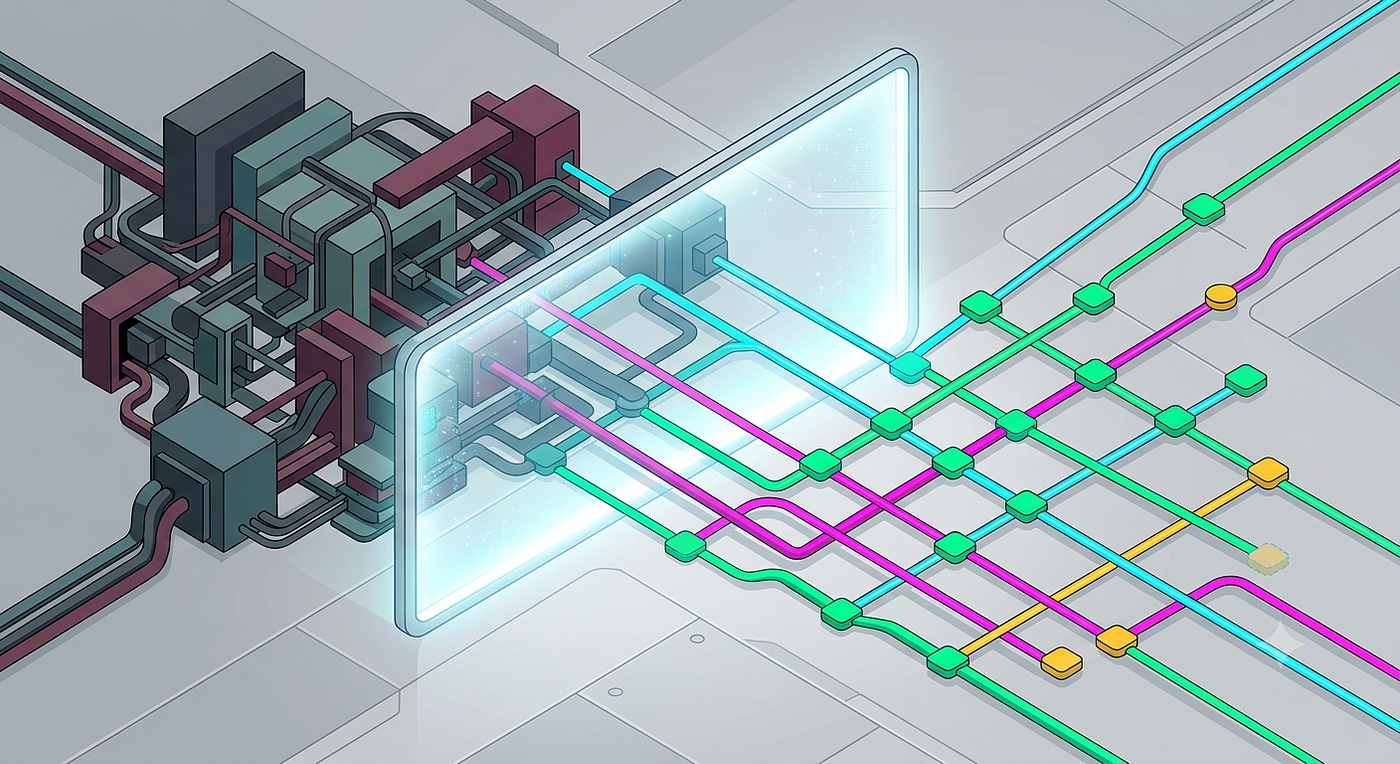
Neural Radiance Fields, the technology underlying Luma AI’s Interactive Scenes platform, represent one of the more interesting developments in how production teams can approach this problem. NeRFs, as they’re commonly abbreviated, are a method for creating a three-dimensional representation of a real environment from a set of photographs or video frames. Given enough reference images taken from different positions and angles, a NeRF algorithm reconstructs the environment as a volumetric 3D model that can be navigated with a virtual camera. You scan the space once, with whatever camera is practical in the environment, and you then have the ability to fly a virtual camera through it indefinitely, from any angle and at any speed, without going back.
The practical implications for production work in industrial and manufacturing environments are significant. ADVIDS has been using Luma AI’s NeRF capture technology on industrial client projects where access to the physical environment is genuinely constrained, and the difference in what we can deliver is meaningful.
Here’s how the process typically works. We send a small team to the client’s facility, usually two people with consumer-grade camera equipment, specifically a camera that can be operated safely in the industrial environment without requiring the kind of crew infrastructure that a conventional production shoot would need. Over the course of a few hours, they capture video and photographic reference from as many positions in the facility as access permits. The focus is on coverage rather than composition, because the composition decisions happen later, in the virtual environment.
That reference material is processed through Luma AI’s platform, which reconstructs the facility as a navigable NeRF. The reconstruction quality from Luma’s current algorithms is impressive enough that the resulting virtual environment captures not just the geometry of the space but its lighting properties, material characteristics, and atmospheric qualities. Metal surfaces reflect light the way metal surfaces reflect light. Concrete walls have the weight and texture of concrete. Ambient light from skylights or industrial fixtures falls through the virtual space with something close to physical accuracy.
With the NeRF constructed, a virtual camera can be placed anywhere in the environment and moved along any path. ADVIDS’s production team uses this capability to design camera moves and compositions that would have been physically impossible in the actual facility, passes through machinery, overhead perspectives from positions where no camera could safely be mounted, continuous moves that travel from one end of a production floor to the other without a cut. These shots are then rendered at production quality and integrated into the final edit alongside other footage types.
The Gaussian Splat format, which Luma AI also produces as an output from its processing pipeline, is worth mentioning separately because it has specific production advantages. Gaussian Splats are a more recent representation format than traditional NeRFs that trades some visual fidelity in dense reconstruction for significantly improved rendering speed and portability. For certain production applications, particularly those that benefit from real-time rendering or interactive visualization, Gaussian Splats offer the better practical trade-off.
One application that has grown at ADVIDS is using Luma AI captures as environment references for 3D visualization work. When we’re producing animation or visualization content that needs to be set in a realistic industrial environment, having an accurate NeRF of the actual client facility provides a reference that no amount of stock photography or generic 3D environment libraries can match. The resulting work looks like it belongs to the client’s actual world because it was built from the client’s actual world.
The capture process does have requirements and limitations that need to be managed. NeRF reconstruction quality depends on the completeness and consistency of the reference capture, meaning areas of the facility that weren’t captured, or were captured under inconsistent lighting conditions, will have lower reconstruction quality in the virtual environment. Planning the capture carefully and ensuring comprehensive coverage of the areas relevant to the production is the most important factor in getting good results from the Luma AI processing.
For ADVIDS, Luma AI NeRFs have expanded what we can do for clients whose most compelling visual assets are locked inside facilities that cameras can’t fully access. The factory exists. The virtual camera can go anywhere. The production possibilities have expanded accordingly.`
메타데이터
- post_id
- ef71f3481e04
- slug
- how-advids-uses-luma-ai-nerfs-to-capture-industrial-environments-for-video-production-ef71f3481e04
- url
- https://medium.com/@advidsai/how-advids-uses-luma-ai-nerfs-to-capture-industrial-environments-for-video-production-ef71f3481e04
- canonical_url
- https://medium.com/@advidsai/how-advids-uses-luma-ai-nerfs-to-capture-industrial-environments-for-video-production-ef71f3481e04
- author_url
- https://medium.com/@advidsai
- status
- ok
- fetched_at
- 2026-06-09 15:37:30