Physical Model
Physical models are essential tools in all fields such a science and engineering, providing simplified representations of complex systems…
Physical Model
Physical models are essential tools in all fields such a science and engineering, providing simplified representations of complex systems. By translating abstract concepts into tangible forms, these models make it easier to visualize, analyze, and predict behaviors in the real world. Here’s the 3 examples of phisical model.
1. Gravity Wave Spectrogram-LIGO
An advanced system designed to detect gravitational waves called LIGO (Laser Interferometer Gravitational-Wave Observatory) are ripples in space-time caused by massive cosmic events, such a merging of black holes or neutron stars. In 2015, LIGO achieved it first detection of gravitational waves, and that opening a new way of observing the universe, besides from using electromagnetic signals.
LIGO representing a gravity wave spectrogram by showing the frequency and amplitude of these gravitational waves over time. The frequency is represented in vertical axis (how many wave cycles per second), while the horizontal axis represents time. LIGO also using colors on the spectogram as an indicator to the strength or amplitude of the gravitational wave, with brighter colors showing stronger signals.
For example, when 2 black holes collide, LIGO can detect the “chirp” of increasing frequency as the black holes spiral closer together. On the spectogram, this signal appears as a curve moving from lower frequencies to higher frequencies over time, reflecting the accelerating motion of the black holes before they merge.
Scientists studying these spectrograms and extract important details about the source, like the masses, the distance from Earth, and the energy released. The data from LIGO can also verify Einstein’s predictions about general relativity, like his theory in predicted the phenomena of gravitational waves.
2. Central Park NYC Temperature
In New York City there’s a model of it’s Central Park’s temperature. And this is important because scientists using this for studying the urban climate. Central Park, with its large green space, provides a natural ecosystem in the middle of a dense city. The temperature changes in this area are often used to study where urban areas are hotter than rural areas wich is called urban heat island effect.
Commonly, this model is includes long-term temperature measurements in Central Park. Changes in temperature patterns over the years can show the effects of climate change, how vegetation cools the environment, and how urbanization affects the local climate. Other meteorological data like humidity, rainfall, and wind patterns can also connected by this model.
The temperature in Central Park can also helps to show the quality of life in cities. For an example, in a hot days, urban areas turns to be much hotter than rural areas, which is increasing the energy demand for air conditioning and can worsen the air quality.
3. Limbique: Brain Slices
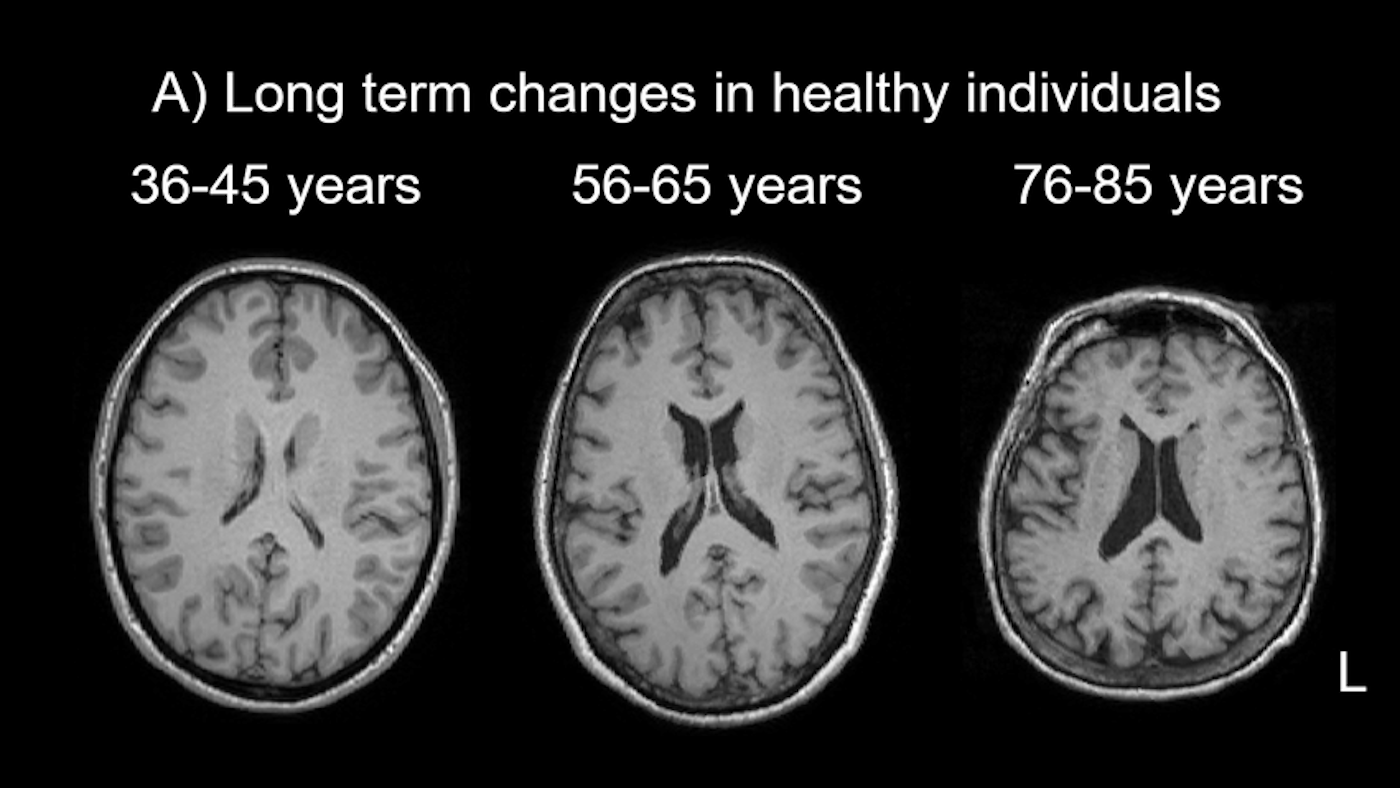
Limbique: Brain Slices is a model that study the limbic system in the human brain. The limbic system is the part of the brain responsible for emotions, memory, and behavior. This model uses brain slices to directly analyze the structure and connections of neurons in specific limbic system regions, including the hippocampus, amygdala, and prefrontal cortex.
The brain slices are processed from animal models or donated human samples. These slices are stained with special chemicals to show the neurons and synaptic networks. Using techniques like electron microscopy or fluorescence microscopy, researchers can see neural connections and electrical activity in the limbic tissue.
This model is being used by researchers to examine how memories are formed, how emotions are processed, and how the limbic system works both normally and abnormally. Mental disorders such as bipolar disorder, anxiety, and depression are frequently associated with limbic system issues. Researchers can discover more effective pharmacological treatments and gain a better understanding of brain problems by examining activity in brain slices.
메타데이터
- post_id
- ef817541a11e
- slug
- physical-models-ef817541a11e
- url
- https://medium.com/@azfa_mkh/physical-models-ef817541a11e
- canonical_url
- https://medium.com/@azfa_mkh/physical-models-ef817541a11e
- author_url
- https://medium.com/@azfa_mkh
- status
- ok
- fetched_at
- 2026-06-17 10:21:25