@CARSaLaCarta deeply reflects on the best F1 year ever — part c
Number of different pole position winners/Número de pilotos que lograron las pole positions
@CARSaLaCarta deeply reflects on the best F1 year ever — part c
Number of different pole position winners/Número de pilotos que lograron las pole positions
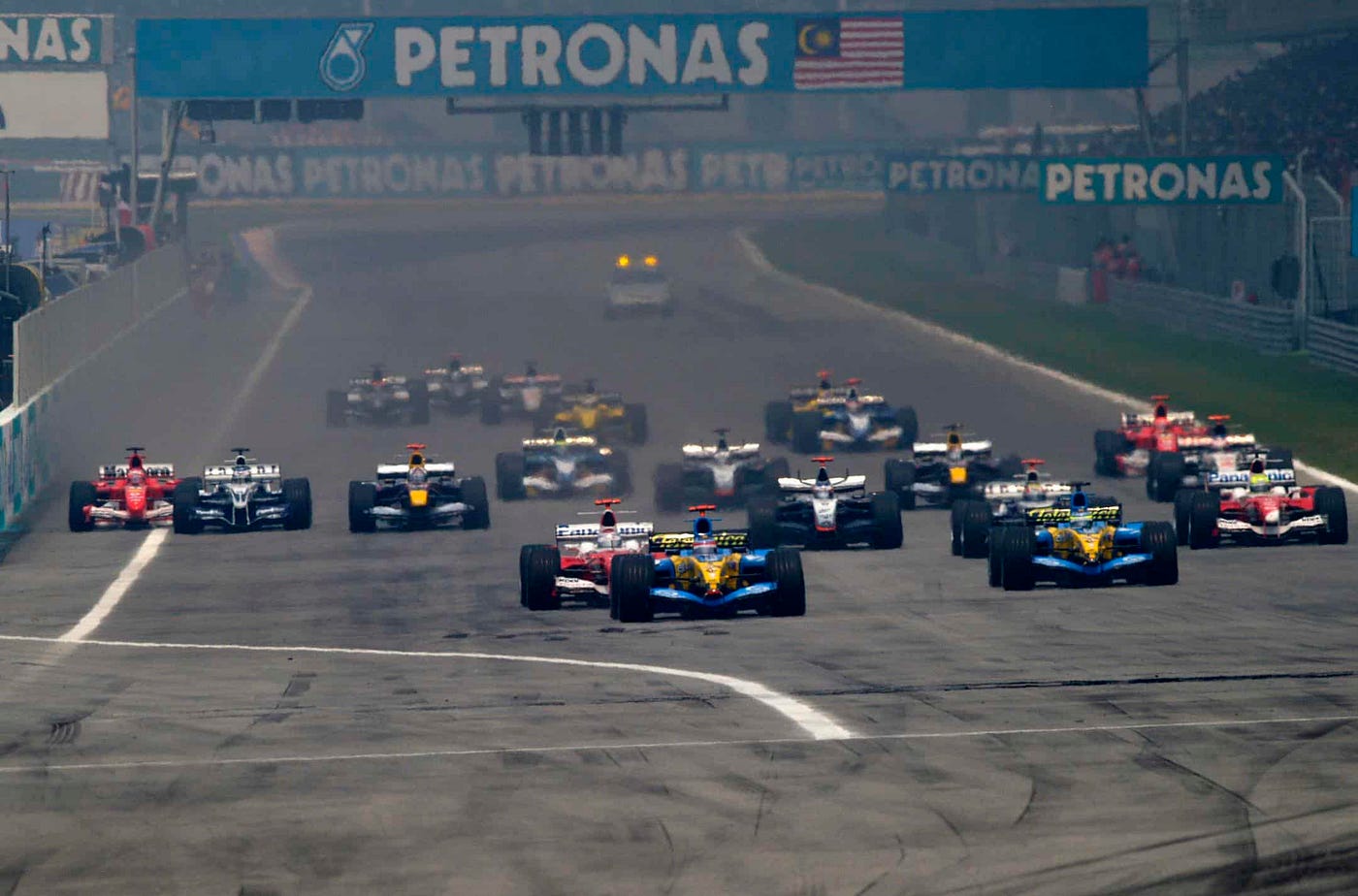
2005- Fernando Alonso leads Jarno Trulli (Toyota)
Here this part could be a little tricky. This is due to the lengthening of the F1 championship in the number of races per season (and I am not going to count that bizarre invention called Sprint Race).
Even the number of races moved from seven in 1950 to nine in 1959 (including the famous 500). During the decade, the highest number of races happened in 1958 with eleven.
The following decade (1960 to 1969), the number of races barely grew. The series had a nine-race calendar in 1960 to reach twelve during the 1968 season.
It was at the 1968 season, when Formula 1 got a sort of endless shower of dollars and pounds in the form and colours of sponsors.
A richer F1
The number of races went on from thirteen (1970) to fifteen (1979). During that decade, the series offered its largest calendar in 1977. Seventeen races fulfil the whole championship scattered in four continents: Africa, America (South and North), Europe and Asia.
The eighties saw a tsunami of money painted in red, white, black, gold, light blue, white and yellow. Those colours were representatives of the cigarette industries. Those dollars were a great help to afford the changes from artisans to big car makes. On the number of races, grew from fourteen to sixteen. These sixteen-race championship seemed to establish a logic number for a then logical series, and it became the average number of the nineties.
A new Millenium
Seventeen was the figure of races that totalized the 2000 and 2009 championships. Nevertheless, the longest championship with nineteen races happened in 2005.
A new record of races cod be seen in the 10’s. In 2010, the calendar was composed by nineteen races while the 2019 got twenty-one competitions. The 20’s has produced a new enlengthening of the calendar. Now the new race number reached twenty-four in twenty-one countries.
Polemen and their records
Here the record is held by the 2005 season during that championship, there were nine different drivers who enjoyed starting, at least one race in pole position. Here is the list of those drivers:
-
Fernando Alonso — Renault — (6)*
-
Kimi Raikkonen — McLaren — (5)
-
Juan Pablo Montoya — McLaren — (2)
-
Giancarlo Fisichella — Renault- (1)
-
Nick Heidfeld — Williams– (1)
-
Jenson Button — BAR — (1)
-
Jarno Trulli — Toyota- (1)
-
Michael Schumacher — Ferrari — (1)
-
Ralf Schumacher — Toyota — (1)
The second place goes to 1968. Even though both seasons shared the number of polemen, 1968 is awarded the second step on the rostrum owing to a twelve-race calendar over the 1985 sixteen race championship.
Here are the names of the 1968 polemen
-
Chris Amon — Ferrari — (3)
-
Graham Hill — Lotus — (2)*
-
Jochen Rindt — Brabham — (2)
-
Jim Clark — Lotus — (1)
-
Jackie Ickx — Ferrari — (1)
-
John Surtees — Honda — (1)
-
Mario Andretti — Lotus — (1)
-
Joseph Siffert — Lotus — (1)
And the fastest men on a quali shortlist in 1985
-
Ayrton Senna- Lotus — (7)
-
Keijo Rosberg — Williams — (2)
-
Alain Prost — McLaren — (2)*
-
Michele Alboreto — Ferrari — (1)
-
Elio de Angelis — Lotus — (1)
-
Teo Fabi — Toleman- (1)
-
Nelson Piquet — Brabham — (1)
-
Nigel Mansell — Williams — (1)
Rostrum: 2005 = 3 pts
1968 = 2 pts
1985 = 1 pt
Championship after three comparative events:
1982= 5 pts
1989 = 3 pts
2005 = 3 pts
2012 = 2 pts
1982 = 2 pts
1968 = 2 pts
1994 = 1 pt
1974 = 1 pt
1985 = 1 pt
In our next part: d) Number of drivers who reached the final race with possibilities of being crowned
Note 1: In parenthesis, the number of poles won by each driver.
Note 2: With an asterisk, the champion of that year.
Español
Aquí esta parte puede ser un poco complicada. Esto se debe a la prolongación del campeonato de F1 en el número de carreras por temporada (y no voy a contar ese extraño invento llamado Sprint Race).
Incluso el número de carreras pasó de siete en 1950 a nueve en 1959 (incluida la famosa 500). Durante la década, el mayor número de carreras se produjo en 1958 con once.
La década siguiente (1960 a 1969), el número de carreras apenas creció. La serie tuvo un calendario de nueve carreras en 1960 para llegar a doce durante la temporada 1968.
Fue en la temporada 1968, cuando la Fórmula 1 recibió una especie de lluvia interminable de dólares y libras en forma y colores de patrocinadores.
Una F1 más rica
El número de carreras pasó de trece (1970) a quince (1979). En esa década, la serie ofreció su calendario más extenso en 1977. Diecisiete carreras completan todo el campeonato repartidas en cuatro continentes: África, América (Sur y Norte), Europa y Asia.
Los años ochenta vieron un tsunami de dinero pintado de rojo, blanco, negro, oro, celeste, blanco y amarillo. Esos colores eran representantes de las industrias del tabaco. Esos dólares fueron de gran ayuda para afrontar los cambios de las marcas artesanales a las grandes automotrices. En cuanto al número de carreras, creció de catorce a dieciséis. Este campeonato de dieciséis carreras pareció establecer un número lógico para una serie entonces lógica, y se convirtió en el número promedio de los años noventa.
Un nuevo milenio
Diecisiete fue la cifra de carreras que totalizaron los campeonatos de 2000 y 2009. Sin embargo, el campeonato más largo con diecinueve carreras ocurrió en 2005.
Un nuevo récord de carreras podría verse en las decenas. En 2010, el calendario estaba compuesto por diecinueve carreras mientras que el de 2019 tuvo veintiuna competencias. Los años 20 han supuesto una nueva ampliación del calendario. Ahora el nuevo número de carreras alcanza las veinticuatro en veintiún países.
Los polemen y sus récords
Aquí el récord lo ostenta la temporada 2005, durante ese campeonato hubo nueve pilotos diferentes que disfrutaron saliendo, al menos en una carrera, en la pole position. Aquí está la lista de esos pilotos:
*1. Fernando Alonso — Renault — (6)**
2. Kimi Raikkonen — McLaren — (5)
3. Juan Pablo Montoya — McLaren — (2)
4. Giancarlo Fisichella — Renault- (1)
5. Nick Heidfeld — Williams– (1)
6. Jenson Button — BAR — (1)
7. Jarno Trulli — Toyota- (1)
8. Michael Schumacher — Ferrari — (1)
9. Ralf Schumacher — Toyota — (1)
El segundo puesto corresponde a 1968. Aunque ambas temporadas compartieron el número de polemen, 1968 se lleva el segundo puesto en el podio debido a un calendario de doce carreras sobre el campeonato de dieciséis carreras de 1985.
Aquí están los nombres de los polemen de 1968
1. Chris Amon — Ferrari — (3)
*2. Graham Hill — Lotus — (2)**
3. Jochen Rindt — Brabham — (2)
4. Jim Clark — Lotus — (1)
5. Jackie Ickx — Ferrari — (1)
6. John Surtees — Honda — (1)
7. Mario Andretti — Lotus — (1)
8. Joseph Siffert — Lotus — (1)
Y los hombres más rápidos en una lista de clasificación en 1985
1. Ayrton Senna — Lotus — (7)
2. Keijo Rosberg — Williams — (2)
*3. Alain Prost — McLaren — (2)**
4. Michele Alboreto — Ferrari — (1)
5. Elio de Angelis — Lotus — (1)
6. Teo Fabi — Toleman — (1)
7. Nelson Piquet — Brabham — (1)
8. Nigel Mansell — Williams — (1)
Podio:
2005 = 3 pts
1968 = 2 pts
1985 = 1 pt
Campeonato tras tres pruebas comparativas:
1982 = 5 pts
1989 = 3 pts
2005 = 3 pts
2012 = 2 pts
1982 = 2 pts
1968 = 2 pts
1994 = 1 pt
1974 = 1 pt
1985 = 1 pt
En nuestra siguiente parte:
d) Número de pilotos que llegaron a la carrera final con posibilidades de coronarse
Nota 1: Entre paréntesis, el número de poles ganadas por cada piloto.
Nota 2: Con un asterisco, el campeón de ese año.
Source: Formula1TK second edition.
Images: https://maxf1.net/en/2005-malaysian-gp-alonso-takes-championship-lead-first-f1-podium-for-toyota/
Recuerden seguirnos a traves de nuestras redes:

@CARSaLaCarta deeply reflects on the best F1 year ever — part b
Number of drivers who scored points/ pilotos que puntuaron
메타데이터
- post_id
- ef8e2d671d40
- slug
- carsalacarta-deeply-reflects-on-the-best-f1-year-ever-part-c-ef8e2d671d40
- url
- https://medium.com/@cars-a-la-carta/carsalacarta-deeply-reflects-on-the-best-f1-year-ever-part-c-ef8e2d671d40
- canonical_url
- https://medium.com/@cars-a-la-carta/carsalacarta-deeply-reflects-on-the-best-f1-year-ever-part-c-ef8e2d671d40
- author_url
- https://medium.com/@cars-a-la-carta
- status
- ok
- fetched_at
- 2026-08-02 21:37:23