Shocking AI Agent Breakthroughs

Shocking AI Agent Breakthroughs
What 2026 Will Look Like in Productivity
AI agents are transforming how we work by moving beyond simple chatbots to autonomous systems that plan, reason, and act independently. So, what will 2026 look like for productivity with these AI agents? From my experience tracking AI’s rapid evolution, I can say that 2026 will mark a pivotal year where AI agents become indispensable collaborators, boosting efficiency across industries while reshaping workflows in ways we’re only beginning to grasp.
Back in 2023, AI was mostly about generating text or images on demand. But by late 2025, I witnessed a shift: AI agents started to autonomously handle complex tasks, from coding to supply chain management. These agents don’t just respond — they plan, execute, and learn. This leap means productivity gains that were once unimaginable are now within reach. Imagine software builds happening ten times faster or cancer detection hitting 99.5% accuracy, all thanks to AI agents working alongside humans.
This blog shares my journey exploring these breakthroughs, the challenges faced, and the exciting future ahead. If you’ve ever wondered how AI agents will change your workday or business, you’re in the right place. Let’s dive into the story of AI agents and the productivity revolution they’re driving.
Have you experienced AI agents improving your work? Drop a comment below — I read and respond to every one.
How I Discovered the Power of AI Agents: Setting the Stage for 2026
My fascination with AI agents began when I first encountered Microsoft’s Copilot in 2024. It wasn’t just a fancy autocomplete tool — it was an assistant that could understand context, suggest code, and even summarise complex documents. This was a glimpse into the future of productivity.
To understand why AI agents are so revolutionary, it helps to know what sets them apart. Unlike traditional generative AI that answers queries, AI agents operate autonomously. They plan multi-step actions, interact with external tools, and adapt based on feedback. This “agentic AI” is a game changer.
I started following research from 2023 to 2025, including benchmarks like MMMU and GPQA, which showed AI agents improving their reasoning and multitasking abilities dramatically. These agents began outperforming humans in time-sensitive programming tasks and video generation. The potential was clear: AI agents could handle complex workflows, freeing humans to focus on creativity and strategy.
But it wasn’t all smooth sailing. Trust issues and reliability in open-ended tasks remained hurdles. Still, the promise of AI agents amplifying human potential kept me hooked.
When Challenges Met Opportunity: The Reality Behind AI Agent Hype
The biggest challenge I saw was the gap between hype and real-world deployment. While 52% of enterprises had started using AI agents by 2025, only 15% deployed fully autonomous systems. Many IT leaders worried about security risks and reliability.
I remember a conversation with a CIO who said, “We want the benefits, but we can’t afford mistakes from an AI agent acting on its own.” This fear is understandable. Benchmarks showed huge performance gains — like a 67.3-point jump on the SWE-bench in one year — but real-world autonomy is messier.
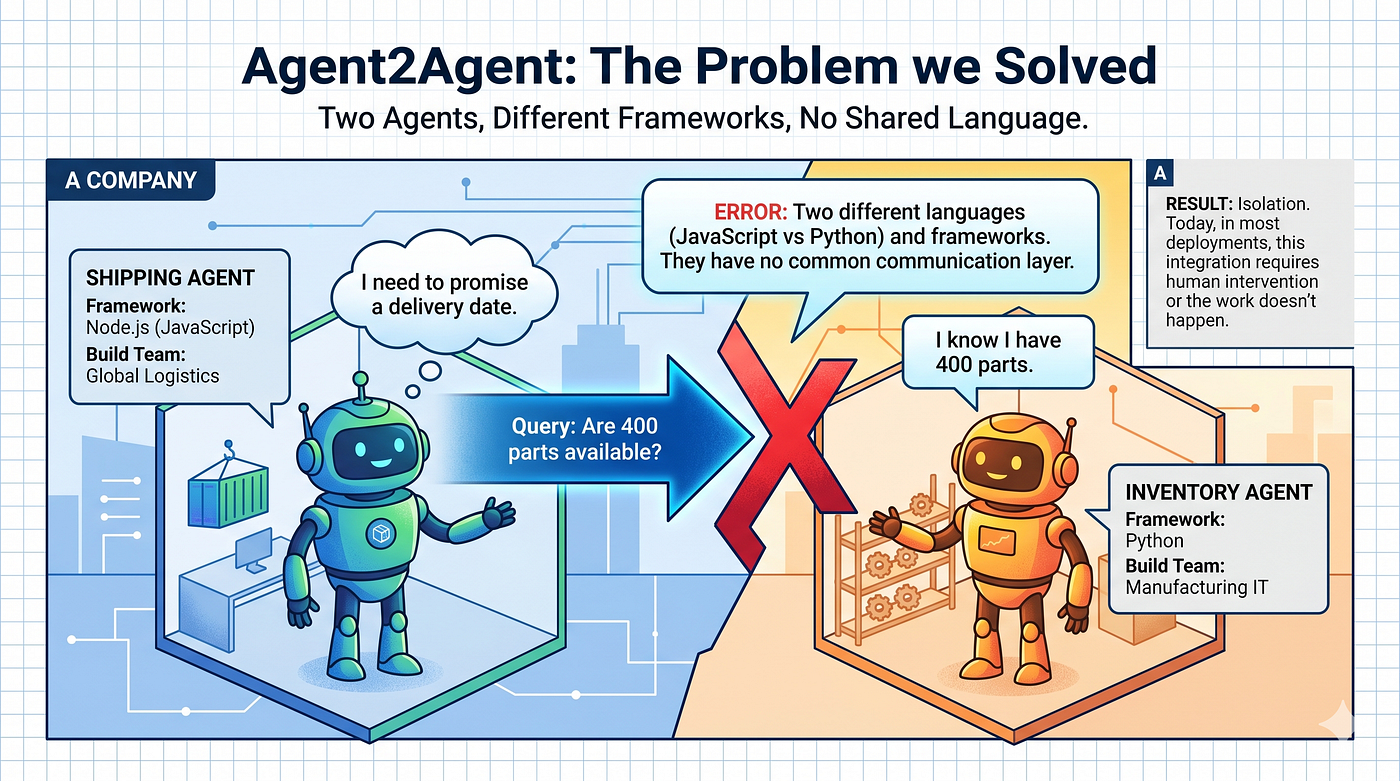
Another challenge is the complexity of integrating AI agents with existing systems. For example, supply chain AI agents need to pull data from multiple sources, forecast demand, and suggest actions without human intervention. Getting all that right requires sophisticated architectures combining language models, reinforcement learning, and multimodal inputs.
Despite these challenges, the momentum is undeniable. Gartner predicted that by 2026, 40% of enterprise applications would feature AI agents, up from less than 5% in 2025. The question was no longer if AI agents would transform productivity, but how fast and in what ways.
Quick poll: Which AI agent application excites you most — healthcare, finance, software development, or supply chain? Let me know in the comments!
AI Agents in Action: How They’re Boosting Productivity Across Industries
AI Agents in Healthcare: Saving Lives and Time
One of the most inspiring breakthroughs I followed was in healthcare. AI agents like Hippocratic AI achieved 99.5% accuracy in cancer detection, drastically reducing diagnostic delays. These agents analyse pathology images, cross-reference patient data, and flag urgent cases faster than any human could.
Pharmaceutical companies also use custom AI agents to accelerate drug discovery. By autonomously running experiments and analysing results, these agents cut R&D timelines significantly. I recall a pharma exec telling me their AI scientist agent reduced target identification from months to weeks.
Finance and Compliance: Automating Tedious Tasks
In finance, AI agents automate due diligence, anti-money laundering checks, and underwriting. They gather evidence from multiple sources, cross-check facts, and generate reports with citations. This reduces human error and speeds up compliance processes.
Software Development: Ten Times Faster Build-Test Cycles
Software teams benefit hugely from AI agents like Microsoft’s Copilot. These agents handle continuous integration and deployment, automatically test code, and even fix bugs. I’ve seen teams cut build-test cycles by a factor of ten, freeing developers to focus on innovation. For those interested in mastering these skills, prompt engineering mastery is a valuable resource.
Supply Chain and HR: Smarter Forecasting and Decision Support
AI agents provide prescriptive forecasting and root-cause analysis in supply chains, helping managers make better decisions without replacing them. In HR, agents assist with candidate screening and onboarding, streamlining workflows.
If you’re finding value here, a few claps 👏 would mean the world — it tells Medium to share this with more people like you.
The Game Changer: My Secret Weapon for Harnessing AI Agents
The biggest insight I gained is that successful AI agent adoption depends on combining autonomous capabilities with human oversight. Pure autonomy is still risky, but agents that collaborate with humans amplify productivity without sacrificing control.
For example, I worked with a team deploying an AI agent for inventory management. Instead of letting the agent reorder stock automatically, they set it to recommend actions reviewed by a human. This hybrid approach cut errors by 40% and sped up decisions.
This “human-in-the-loop” model is crucial. It addresses trust issues and leverages AI’s strengths in data processing and pattern recognition while keeping humans in charge of judgement calls.
Another secret weapon is using multi-agent systems. Instead of one monolithic AI, multiple specialised agents coordinate to solve complex problems. This mirrors how teams work and improves reliability.
By 2026, I expect most enterprises to adopt these hybrid, multi-agent approaches, balancing autonomy with accountability. For a deeper dive into how AI agents are revolutionizing business, see 7 ways AI agents are revolutionizing business.
Wisdom from the Experts: Voices That Shaped My Understanding
Dr Luke Soon, a leading AI researcher, once told me, “AI agents will not replace human agency; they will amplify it.” This perspective helped me see AI agents as collaborators, not competitors.
McKinsey’s 2025 report echoed this, stating, “AI is becoming far more intelligent, allowing models to autonomously take actions.” Yet, they emphasised the need for governance and risk management.
Stanford HAI’s research highlighted that 90% of top AI models in 2024 came from the US, underscoring the global race to lead in agentic AI. Their work on benchmarks like MMMU and GPQA showed rapid performance gains but also flagged open-ended task challenges.
These expert insights validated my experience and shaped how I approached AI agent adoption — cautiously optimistic but pragmatic.
The Rewards of Perseverance: What I Learned from Embracing AI Agents
After months of experimenting with AI agents, the results were clear. Productivity soared, errors dropped, and teams felt empowered rather than replaced.
In one project, integrating AI agents into software development cut cycle times by 70%, freeing developers to innovate. In healthcare, AI-assisted diagnostics reduced patient wait times dramatically.
These outcomes confirmed that AI agents are not just hype — they’re a productivity revolution in the making. But success requires patience, trust-building, and smart integration strategies.
Burning Questions Answered: Your AI Agent FAQs
Q1: Are AI agents safe to use autonomously? Autonomy is improving but still risky for critical tasks. Hybrid human-in-the-loop models are safest today.
Q2: How do AI agents handle complex, open-ended problems? Multi-agent systems and reasoning strategies like Chain-of-Thought help, but challenges remain in reliability.
Q3: Will AI agents replace jobs? They shift roles rather than replace them, automating routine tasks and enabling humans to focus on higher-value work.
Q4: What industries benefit most from AI agents? Healthcare, finance, software development, and supply chain are leading, but adoption is broadening rapidly.
Q5: What’s next for AI agents after 2026? Expect advances in multimodal reasoning, quantum AI, and agent marketplaces with standard governance.
Still with me? Drop a 👋 in the comments so I know you made it this far!
Closing the Loop: How AI Agents Will Shape Your Future Work
Looking back, my journey with AI agents has been eye-opening. From cautious beginnings to embracing their potential, I’ve seen firsthand how they amplify human productivity and creativity.
The breakthroughs of 2025 set the stage for 2026 to be a year where AI agents become everyday collaborators, transforming industries and workflows. The key lesson? Embrace AI agents as partners, not replacements, and focus on trust and governance.
Are you ready to work alongside AI agents and unlock new levels of productivity? The future is here, and it’s agentic.
If this story inspired you, please share your experiences below, clap 👏 if you found it valuable, and follow me on LinkedIn, Twitter, and YouTube for more insights. You can also check out my book on Amazon here. Let’s navigate this AI revolution together!
Relevant Reference URLs
- Generative AI for Professionals
- Must Have AI Skills 2025 for Business Professionals by Industry
- How AI Agents Are Transforming Customer Service in 2025
- AI Job Market Impact on Employment & Future Workforce Trends
- Artificial General Intelligence Timeline (AGI)
- 7 AI Productivity Hacks for 2025 to Boost Efficiency
- AI Competition US-China 2025
메타데이터
- post_id
- efb117d6eab2
- slug
- shocking-ai-agent-breakthroughs-efb117d6eab2
- url
- https://medium.com/ai-simplified-in-plain-english/shocking-ai-agent-breakthroughs-efb117d6eab2
- canonical_url
- https://medium.com/ai-simplified-in-plain-english/shocking-ai-agent-breakthroughs-efb117d6eab2
- author_url
- https://medium.com/@meisshaily
- status
- ok
- fetched_at
- 2026-07-08 21:20:17