Cross-Site Scripting (XSS) Assessment
Introduction
Wiki topics:
🔒 · Cybersecurity
Cross-Site Scripting (XSS) Assessment
Introduction
Cross-Site Scripting (XSS) is a vulnerability that allows attackers to inject malicious JavaScript code into web pages viewed by other users. When the application fails to sanitize user input, attackers can execute scripts within a victim’s browser session.
Objective
The objective of this assessment was to determine whether DVWA properly sanitized user input against XSS attacks.
Target Information
- Target Application: DVWA
- Vulnerability Module: Reflected XSS
- Security Level: Low
Tools Used
- Browser
- Parrot OS
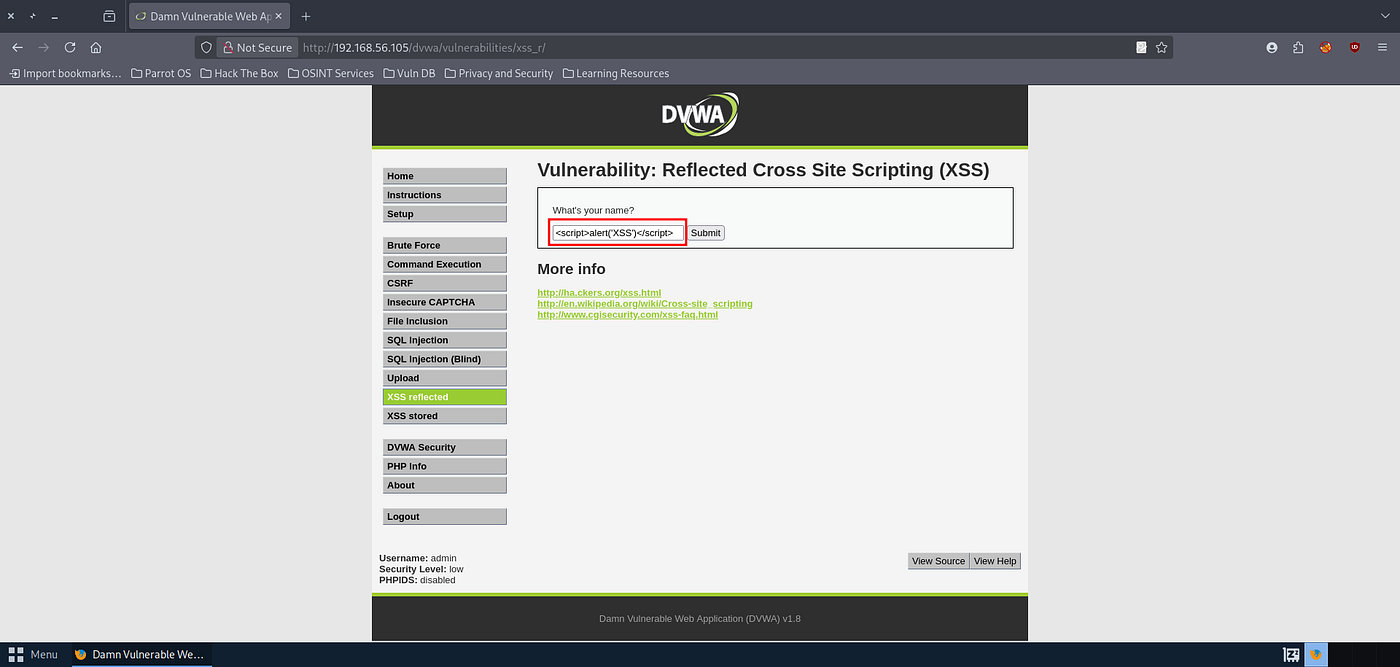
Payload Used
Screenshot
Methodology
- Opened the Reflected XSS module in DVWA.
- Entered the JavaScript payload into the input field.
- Submitted the payload to the application.
- Observed browser behavior after execution.
Observation
The JavaScript code executed successfully within the browser.
Screenshot

Evidence
- Alert popup appeared on screen.
- Script execution was confirmed.
Explanation
The application reflected user input directly into the webpage without sanitization or output encoding, allowing JavaScript execution.
Impact
- Session hijacking
- Credential theft
- Malicious redirects
- Phishing attacks
- Browser-based malware delivery
Recommendations
- Sanitize user input
- Encode output before rendering
- Implement Content Security Policy (CSP)
- Use secure cookies with HTTPOnly flags
Conclusion
The application was vulnerable to Cross-Site Scripting attacks due to improper input validation and output encoding mechanisms.
메타데이터
- post_id
- efb614d290ad
- slug
- cross-site-scripting-xss-assessment-efb614d290ad
- url
- https://medium.com/@knyutho2/cross-site-scripting-xss-assessment-efb614d290ad
- canonical_url
- https://medium.com/@knyutho2/cross-site-scripting-xss-assessment-efb614d290ad
- author_url
- https://medium.com/@knyutho2
- status
- ok
- fetched_at
- 2026-06-10 08:17:25