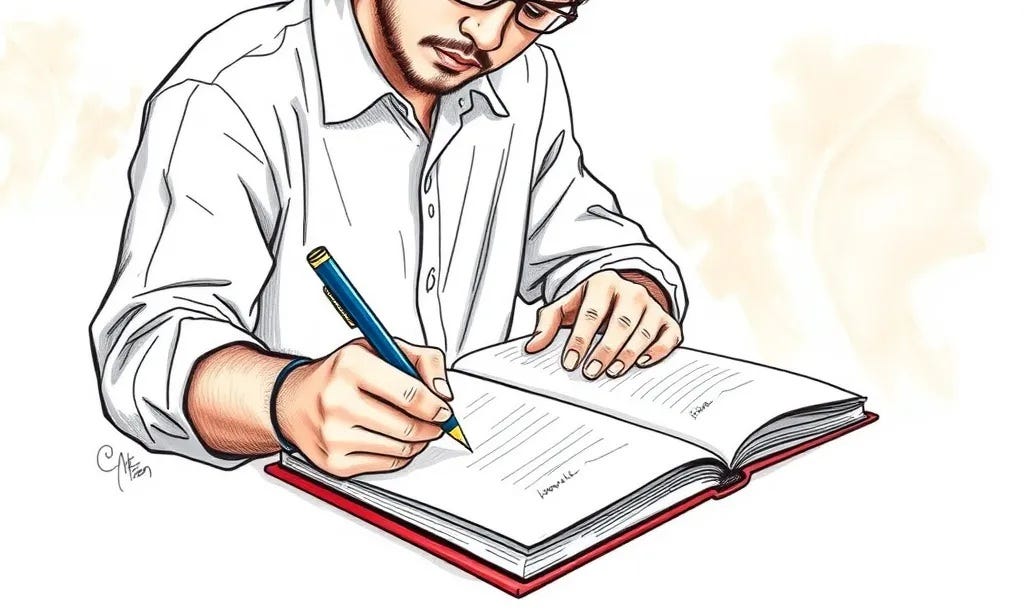
The Craft of Writing: Avoiding Overwhelm
Is too much advice from writing gurus paralyzing you?
The Craft of Writing: Avoiding Overwhelm
Is too much advice from writing gurus paralyzing you?

Photo by Stefano Pollio on Unsplash
Sain thee, seelie wights. Here’s your weekly byte-sized newsletter from my Substack blog. Scroll down for:
- Free Scifi & Fantasy ebooks
- Fresh Sci-fi & Fantasy News
- Weekly Writing Tip
- Recap of the week’s other Substack posts
Free eBooks
Browse free unlimited fantasy, romance, romantasy & sci-fi.
Weekly SFF News Report:
Books & Publishing
Sci-fi
- New June releases roundup: Book Riot published a list of notable new science fiction and fantasy titles landing through June, including “Rostam Wrecks the Realm” by Olivia Abtahi (June 9) and “The Sixth Nik” by Daniel Kraus (June 23). (BOOK RIOT)
Fantasy
- New June releases roundup: Highlights from a Book Riot list include “The Unicorn Hunters” by Katherine Arden (June 2) and “Kill All Wizards” by Jedediah Berry (June 16). (BOOK RIOT)
- New short fiction: Reactor published “Trail Cam” by Benjamin Percy on June 3. (Reactor)
Romantasy
- The Times reports the UK’s first dedicated romantasy bookshop, “Bad Girl Books,” is set to open in Oxford on July 2, following pop-ups and crowdfunding support. (The Times)
Film & TV
Sci-fi
- “Stargate” update: Space.com reports Amazon MGM has cancelled its planned new “Stargate” series, which had been in early development under Martin Gero with input from franchise veterans. (Space)
- What’s coming next (roundup published this week): Space.com published a 2026 sci-fi TV preview including items like “Spider-Noir,” “Star City,” “Silo” Season 3, and more. (Space)
Audio & Radio
Fantasy and sci-fi
- Listening pick: Book Riot’s podcast episode “The It Books of June 2026” dropped within the week, spotlighting major new book releases (useful if you like your “to be read” (TBR) with commentary). (Apple Podcasts)
Fandom & Events
Romantasy
- The Times notes “Bad Girl Books” in Oxford plans themed merchandise and a summer “romantasy festival” featuring 50+ authors, alongside the shop opening July 2. (The Times)
Weekly Writing Tip: Avoiding Overwhelm
A revelation
The other day I was busy being mystified by the YouTube algorithm when a revelation struck me. . .
Instead of watching TV, I sometimes relax by watching YouTube videos that encompass my interests, such as landscape, science, handcrafts, scifi, fantasy, history etc. Apparently, the YouTube algorithm knows me better than I know myself — or at least, it thinks it does. It often suggests videos I’d not have deliberately picked, and lately these have been videos teaching ‘the craft of writing’.
I’m always happy to learn something new, so I started watching them. After viewing half a dozen or so, I realised I’d better stop, or I’d probably never write anything again.
Flooded with advice
There is an entire industry built around teaching writing, and while much of it comes from knowledgeable people with real experience, there is also a risk that beginners end up swamped in a morass of rules before they have even written a page.
There’s no shortage of experts on the craft of writing. Many are professional editors. Many run successful YouTube channels and/or sell courses aimed at aspiring authors. Some undoubtedly have valuable knowledge to share. Yet I sometimes wonder whether new writers are being overwhelmed before they have even begun.
Imagine sitting down with the desire to write your first story, only to be met with endless warnings: avoid this mistake, master that structure, follow these ten rules, understand these tropes, learn pacing, tension, character arcs, point of view, scene structure, market expectations, how to write good dialogue, how to excel at prose rhythm, and so on. Before long, writing starts to resemble an arduous examination rather than a joyous act of imagination. I suspect some emerging writers are in danger of becoming frightened to pick up a pen at all!
Help! I’m trapped!
Restriction is another potential danger for emerging writers who depend on advice from “gurus”. They can fall into the trap of patterning themselves on successful writers, or following market trends, instead of developing their own unique voice.
The most helpful method for becoming a good writer
Here’s my opinion: if you want to become a skilled writer, read.
Read for enjoyment, and read the best authors. Read classics, no matter how old, and read contemporary books. Reading teaches things that formal instruction often cannot, and it usually does so without you really realising it, while you’re simply immersed in a great story. You begin to recognise voice, rhythm, pacing, story arcs and all the rest.
You can choose to read passively, (immersing yourself in the narrative and absorbing writing-craft goodness by osmosis), or read actively — dissecting the author’s methods.
Did you know you know more than you know you know?
You already know much more about writing in your native language than you might think. Here’s an example for English-speakers — does this sound right to you? “The green, great dragon flew across the skies. . . “
You instinctively know it sounds wrong; and not because you’ve never seen an actual dragon.
JRR Tolkien wrote about this in a letter to W. H. Auden dated 7 June 1955, later published as Letter 163 in The Letters of J. R. R. Tolkien.
He recalled that, when he was about seven, he tried to write a story about a dragon. He remembered almost nothing of the story, except that his mother corrected his phrase “a green, great dragon” and told him that it had to be “a great, green dragon.”
His mother was correcting the natural English order of adjectives: an adjective of size or scale, such as great, normally comes before an adjective of colour, such as green. In English, adjectives generally appear before a noun in the following order: opinion, size, physical quality, age, shape, colour, origin, material, and purpose or type. English speakers usually apply this order instinctively, which is why the corrected phrase sounds natural and the original phrase sounds unusual.
THEY did not formally ‘learn the craft of writing’. . .
Think of beloved writers from the past. Did Shakespeare enroll in a writing masterclass? Did Tolkien undertake a writing course? Not at all! They read, studied, observed, and then wrote.
Of course, Tolkien was a scholar, and Shakespeare received an education far beyond casual reading. There are, however, many successful authors who had little formal education. Their lives do not prove that higher education is unimportant, but they do show that deep reading, curiosity, and persistence can have enormous influence.
A few examples:
- Agatha Christie Christie had little formal schooling and was educated mostly at home. She became one of the bestselling authors in history.
- Charles Dickens Dickens had only a limited formal education. His family’s financial troubles forced him into factory work as a child. Much of his learning came through voracious reading and experience. He became one of the most influential novelists in English literature.
- Mark Twain Twain left school around age 11 after his father’s death and worked as a printer’s apprentice. He educated himself through reading and experience. His observations of people became central to his writing.
- George Bernard Shaw Shaw disliked formal schooling and considered much of his education self-directed. He spent years reading extensively in libraries before success arrived.
- Ray Bradbury Bradbury never attended college. He famously said: “Libraries raised me.” He spent years reading in libraries several days a week and became one of the defining science fiction writers of the twentieth century. His work includes Fahrenheit 451.
Many authors without university education were still highly educated in another sense. They read constantly, they memorised poetry and they delved into history, mythology, religion, politics, languages, or philosophy. Their education was often self-built.
People sometimes say, “You do not need education to write,” and hear, “You do not need to learn.” Those are very different ideas. The authors above learned relentlessly. Libraries, newspapers, observation, conversation, and life supplied what universities did not.
If I looked for one habit shared by successful writers across a variety of backgrounds, whether university-educated or not, I would choose this: they spent enormous amounts of time among books.
Writing advice has value, but perhaps its proper place comes later. A young tree needs sunlight and soil before it needs pruning.
For beginners especially, perhaps the best encouragement is not, “Learn all the rules first,” but rather: read constantly, write often, and allow experience to teach what formulas cannot.
I sometimes post writing tips on this blog, because when I surveyed my beloved subscribers, they told me that was what they wanted. However I try to keep those tips broad and fluid.
Reading and writing alone do not always guarantee improvement. Guidance has its place, and a skilled editor can accelerate development enormously. However, when advice becomes overwhelming, or when consuming content about writing begins to replace writing itself, that’s the danger.
The writers who progress tend to do this — they read voraciously, they write obsessively, and sometimes they seek advice.
Recap of other Substack Posts this Week
Subscribers: I only send you one post per week, because I love not cluttering your email inbox. However, I write other stuff, which you can read on the Substack website and app. This past week, it included:
Crafting a linocut print (probably procrastination in disguise)
메타데이터
- post_id
- efb6b18b686b
- slug
- the-craft-of-writing-avoiding-overwhelm-efb6b18b686b
- url
- https://medium.com/@airshipofdreams/the-craft-of-writing-avoiding-overwhelm-efb6b18b686b
- canonical_url
- https://medium.com/@airshipofdreams/the-craft-of-writing-avoiding-overwhelm-efb6b18b686b
- author_url
- https://medium.com/@airshipofdreams
- status
- ok
- fetched_at
- 2026-06-09 15:37:30