Refik Anadol and the New Aesthetic of the Brand
Most brand content competes for seconds. The problem is that seconds are not enough to build memory. Nielsen’s research found that when…
Refik Anadol and the New Aesthetic of the Brand
Most brand content competes for seconds. The problem is that seconds are not enough to build memory. Nielsen’s research found that when creative is strong, it can drive up to 89% of digital advertising success. Refik Anadol’s work shows what happens when a brand or institution stops using technology for novelty and starts using it to build a new sensory language.
At MoMA, Anadol’s Unsupervised drew almost 3 million visitors and generated an average viewing time of 38 minutes per person, which he described to McKinsey as the largest audience in MoMA’s history. That is an extraordinary benchmark in an economy built on distraction. This was not “content.” It was prolonged attention.
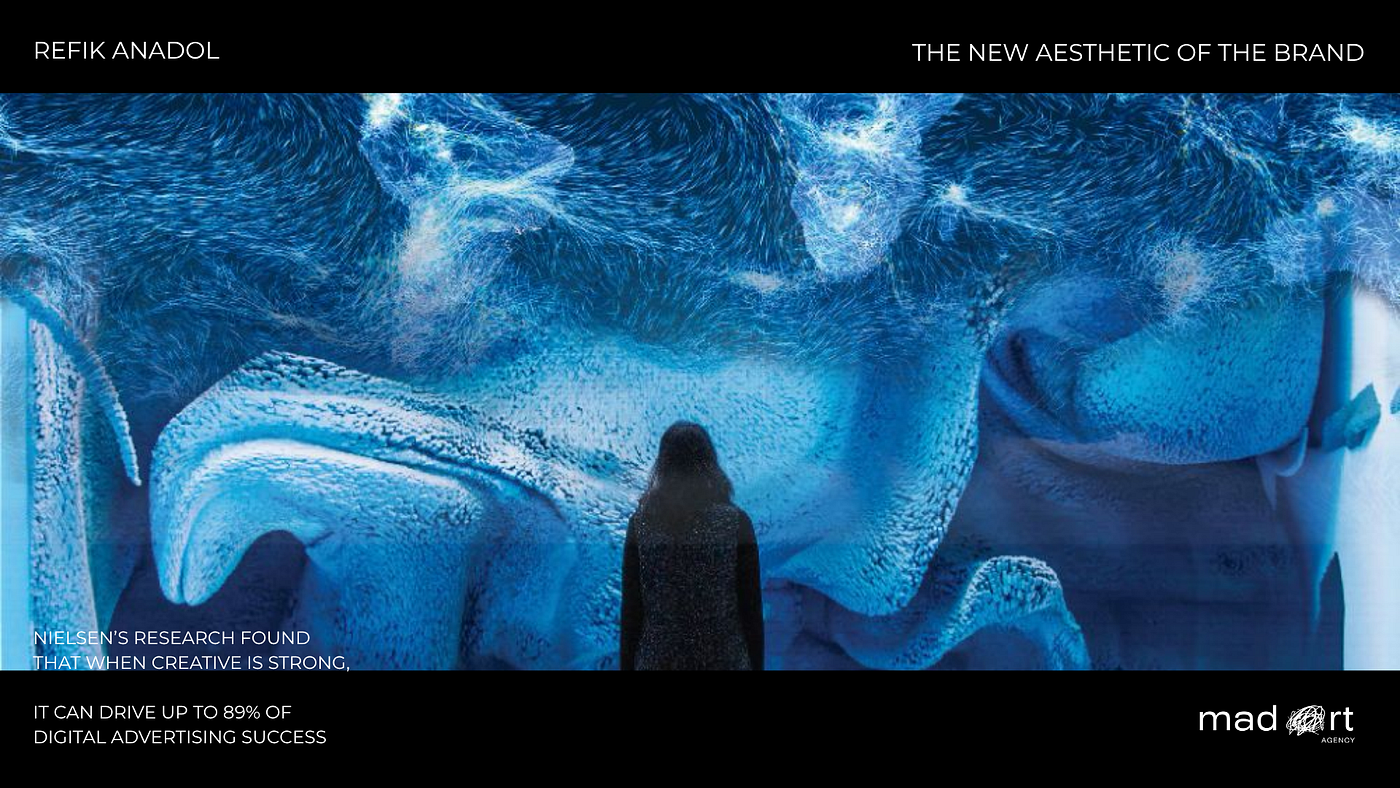
The same logic appears in Anadol’s later projects. TIME reported that for the 2025 TIME100 AI cover, his studio trained a system on more than 5,000 TIME covers, using support from Nvidia and Google Cloud. On his own site, Anadol positions his studio at the intersection of media art, architecture, machine intelligence, and public space.
The strategic lesson for brands is this: AI should not be used to mass-produce average creative. It should be used to create a proprietary aesthetic world from your own archive, data, memory, and identity. When data becomes atmosphere, and technology becomes emotion, marketing stops looking technical and starts feeling cultural. That is art marketing.
메타데이터
- post_id
- efebab6449e4
- slug
- refik-anadol-and-the-new-aesthetic-of-the-brand-efebab6449e4
- url
- https://medium.com/@madartagency/refik-anadol-and-the-new-aesthetic-of-the-brand-efebab6449e4
- canonical_url
- https://medium.com/@madartagency/refik-anadol-and-the-new-aesthetic-of-the-brand-efebab6449e4
- author_url
- https://medium.com/@madartagency
- status
- ok
- fetched_at
- 2026-07-08 17:17:42




