The Neuroscience of Decision-Making: Unpacking the Illusion of Control
Every day, we make countless decisions — from what to wear to what career path to pursue. We often believe we are rational, deliberate…
The Neuroscience of Decision-Making: Unpacking the Illusion of Control

Every day, we make countless decisions — from what to wear to what career path to pursue. We often believe we are rational, deliberate agents, carefully weighing pros and cons to arrive at the optimal choice. But what if that belief, our very sense of control, is largely an illusion? The Neuroscience of Decision-Making reveals a far more complex, fascinating, and often surprising truth about how our choices are truly formed. Far from being purely logical processes, our decisions are a delicate, intricate dance between conscious thought, ancient brain circuits, hidden biases, and even our environment.
This post will delve into the intricate workings of the brain, exploring the mechanisms that shape our every choice. We’ll challenge common assumptions, expose the unseen influences, and ultimately empower you with a deeper understanding of your own decision-making process.
The Common Assumption of Rational Choice
For centuries, economics and philosophy largely operated on the premise of Homo economicus — the perfectly rational human. This idealized individual was assumed to possess complete information, consistent preferences, and the ability to evaluate all options logically to maximize their utility. This model posited that our choices were the direct result of conscious, deliberate reasoning, implying a high degree of personal control and accountability for every decision made.
Why Neuroscience Challenges Our Intuitions About Control
Modern neuroscience, however, paints a much different picture. Through advanced brain imaging techniques and ingenious experiments, researchers have begun to uncover the vast, silent majority of processes that operate beneath the surface of conscious awareness. Landmark studies, such as Benjamin Libet’s work on conscious intention, suggest that our brains initiate actions before we are consciously aware of deciding to act. This doesn’t mean we’re mere puppets; rather, it highlights that the feeling of “control” might often be a post-hoc rationalization of processes already in motion. Our intuition about being fully in charge, therefore, is being continually refined, and sometimes dramatically challenged, by empirical evidence from brain science.
A stylized graphic depicting a brain with an arrow pointing from unconscious activity to conscious awareness, with a time delay illustrated between them.
A stylized graphic depicting a brain with an arrow pointing from unconscious activity to conscious awareness, with a time delay illustrated between them.
Key Brain Areas and Their Roles
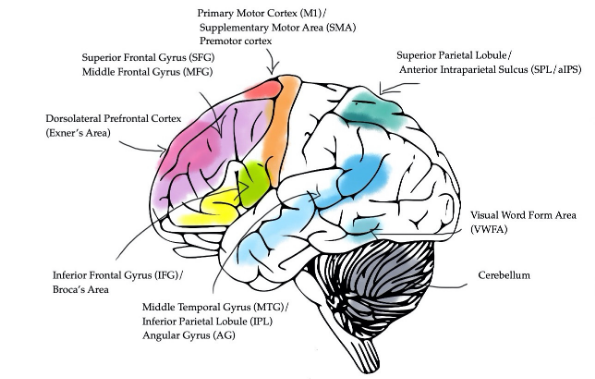
Decision-making isn’t confined to a single “thought center” in the brain. Instead, it’s a highly distributed process involving a complex network of regions, each contributing its unique function to the final choice. The prefrontal cortex, particularly the ventromedial prefrontal cortex (vmPFC), is often highlighted for its role in integrating emotion and cognition, evaluating risks and rewards, and planning. The amygdala, meanwhile, serves as our emotional alarm system, quickly processing threats and rewards, often overriding slower, more deliberate cortical processes. The basal ganglia are crucial for habit formation and action selection, while the hippocampus plays a vital role in memory, providing the contextual information necessary for informed decisions.
From Sensory Input to Motor Output: A Simplified Pathway
Imagine seeing a delicious piece of cake. This sensory input (sight, smell) travels first through your thalamus, acting as a relay station, and then to various processing areas. Visual cortex processes the image, while the olfactory bulb processes the smell. These signals then feed into areas like the amygdala, which assigns emotional value (“tasty!”), and the hippocampus, which recalls past experiences with cake (“remember that great birthday cake?”). This information converges in the prefrontal cortex, which integrates these signals, weighs the immediate pleasure against long-term goals (e.g., diet), and ultimately triggers a motor command — either to reach for the cake or to resist. This simplified pathway underscores the multi-faceted nature of even seemingly simple decisions.
The Speed of Subconscious Processing vs. Conscious Deliberation
A crucial insight from the neuroscience of decision-making is the stark difference in processing speed between our unconscious and conscious minds. Our subconscious mind is a powerful parallel processor, capable of evaluating vast amounts of information and making rapid assessments based on intuition, past experiences, and emotional cues, often in milliseconds. This “gut feeling” is incredibly efficient for survival and routine tasks. Conscious deliberation, on the other hand, is a much slower, serial process. It involves deliberate reasoning, logical analysis, and the weighing of explicit factors. While vital for complex problems, it can be easily overwhelmed or even bypassed by the lightning-fast operations of the subconscious, especially under pressure or when faced with ambiguity.
The Tyranny of Cognitive Biases: Unseen Influencers
Our brains, in their quest for efficiency, often take shortcuts. These mental shortcuts, or heuristics, while generally helpful, can lead to systematic errors in judgment known as cognitive biases. These biases are pervasive and powerful, often leading us astray without our conscious awareness, further challenging the notion of complete control.
An infographic depicting a few common cognitive biases, such as confirmation bias, availability heuristic, and sunk cost fallacy, with small icons or short descriptions for each.
An infographic depicting a few common cognitive biases, such as confirmation bias, availability heuristic, and sunk cost fallacy, with small icons or short descriptions for each.
Availability Heuristic: The Trap of Easily Recalled Information
The availability heuristic describes our tendency to overestimate the likelihood of events that are easily recalled from memory, often because they are vivid, recent, or emotionally charged. For example, after seeing news reports about a plane crash, people might overestimate the risk of flying, even though statistical data overwhelmingly shows that driving is far more dangerous. The vividness of the plane crash story makes it “available” in our minds, leading to an irrational fear and potentially influencing travel decisions. This bias highlights how our exposure to information, particularly media, can subtly yet powerfully shape our perceptions of risk and reality.
Sunk Cost Fallacy: Continuing Down a Losing Path
The sunk cost fallacy occurs when we continue to invest time, money, or effort into something simply because we’ve already invested in it, even if it’s clearly not working out. The idea that we’ve “put so much into it already” makes it hard to cut our losses, leading us to throw good money after bad. Consider someone who continues to pour resources into a failing business venture, or stays in a dissatisfying relationship, purely because of the previous investments. Our brains struggle with the concept of wasted effort, and this bias can prevent us from making rational, forward-looking decisions that would ultimately be more beneficial.
Emotional Hijacks: When Feelings Override Logic
Emotions are not just background noise; they are integral to decision-making. Far from being disruptive, emotions provide crucial information and motivate action. However, when intense, they can “hijack” our rational thought processes, leading to choices we might later regret.
Stress, Fatigue, and Their Impact on Judgment
High stress levels trigger the “fight or flight” response, diverting resources from the prefrontal cortex (our center for executive function) to more primitive brain areas responsible for immediate survival. This can severely impair our ability to think clearly, assess risks accurately, and make nuanced decisions. Similarly, fatigue significantly diminishes cognitive resources, making us more prone to impulsivity, errors, and reliance on heuristics. A tired brain is a less effective brain, and it’s less capable of overriding the automatic, biased responses that often dictate our choices. Recognizing the impact of these states is a critical step in understanding the neuroscience of decision-making.
Predictive Coding and Belief Maintenance
Our brains are not passive receivers of information; they are active prediction machines. Predictive coding theory suggests that our brains constantly generate hypotheses about the world, comparing incoming sensory data with these internal models. When there’s a mismatch (a prediction error), our brains update their models. This fundamental process heavily influences how we perceive, interpret, and act upon information.
How Our Brains “Predict” the Future to Inform Decisions
Every decision we make is, in essence, a prediction about the future outcome of our actions. Will this investment pay off? Will this choice make me happy? Our brains use past experiences, existing beliefs, and current context to construct these predictions. We are constantly trying to minimize “prediction error” — the discrepancy between what we expect and what actually happens. This drive for consistency means we often seek out information that confirms our existing beliefs (confirmation bias) and struggle to update our views even when presented with contradictory evidence. This predictive framework underscores how deeply ingrained our biases and prior experiences are in shaping our present choices.
A simplified diagram showing a feedback loop: “Internal Model/Beliefs” -> “Prediction” -> “Compare with Sensory Input” -> “Prediction Error” -> “Update Model.” Arrows indicate the flow.
A simplified diagram showing a feedback loop: “Internal Model/Beliefs” -> “Prediction” -> “Compare with Sensory Input” -> “Prediction Error” -> “Update Model.” Arrows indicate the flow.
The Role of Environment and Social Conditioning
Decisions rarely happen in a vacuum. Our physical and social environments play a profound role in shaping our choices, often without us even realizing it. From the layout of a supermarket to the opinions of our peers, external factors can nudge us toward certain outcomes.
Nudging for Good: Applying Behavioral Science
“Nudging” refers to subtle interventions that steer people’s choices in a predictable direction without restricting their freedom of choice. This concept, popularized by behavioral economists, leverages insights from the neuroscience of decision-making and cognitive psychology. Examples include making healthy food the default option in a cafeteria, automatically enrolling employees in retirement savings plans (with an opt-out option), or placing hand sanitizer in prominent, easily accessible locations. By understanding how environmental cues and default options influence our unconscious processing, we can design better environments that promote healthier, more beneficial decisions for individuals and society.
Developing “Decision-Making Literacy”
While the illusion of complete control might be unsettling, understanding the mechanisms behind our choices is incredibly empowering. It allows us to become more discerning decision-makers, less susceptible to unseen influences.
Bias Awareness and Debiasing Techniques
The first step in improving decision-making is to cultivate bias awareness. Learning about common cognitive biases allows us to recognize them in action — both in ourselves and others. Debiasing techniques then offer strategies to mitigate their impact. These include: Considering the opposite: Actively seeking out information that contradicts your initial viewpoint. Framing alternatives: Re-evaluating a problem from different perspectives. Pre-mortem analysis: Imagining that a decision has already failed and working backward to identify potential causes. Deliberate pause: Creating a buffer before making high-stakes decisions to engage conscious, analytical thought. Seek diverse perspectives: Consulting with people who hold different views or have different experiences.
Designing Better Decision Environments
If our environment profoundly influences our choices, then actively shaping that environment can lead to consistently better decisions.
Strategic Use of Habits and Routines
Habits are essentially automated decisions. Once a behavior becomes habitual, it requires minimal cognitive effort, freeing up mental resources for more complex tasks. By strategically designing positive habits and routines, we can essentially “pre-program” ourselves for success. Want to eat healthier? Make it a habit to meal prep on Sundays. Want to save money? Automate transfers to your savings account. This proactive approach leverages the brain’s efficiency to our advantage, making good choices the default rather than a constant battle of willpower.
Embracing Imperfection: When “Good Enough” is Best
The complexity of decision-making, as revealed by neuroscience, teaches us that perfect rationality is an unattainable ideal. Rather than striving for flawless decisions, a more realistic and effective approach is to aim for “good enough” or “satisficing” decisions — choices that meet our needs without expending excessive time and energy.
Actionable Insights for Everyday Decisions
Armed with this deeper understanding of the neuroscience of decision-making, here are some actionable insights for your daily life:
- Recognize your cognitive load: Be aware of when you’re stressed, tired, or overwhelmed, as these states compromise judgment. Postpone critical decisions if possible.
- Actively challenge your first instincts: Especially for important choices, pause and consider if a bias might be at play.
- Create friction for bad choices, ease for good choices: Remove temptations (e.g., don’t keep unhealthy snacks at home) and make good options the default (e.g., lay out your gym clothes the night before).
- Embrace pre-commitment: Make decisions in advance that bind you to a course of action later (e.g., signing up for a class, buying non-refundable tickets).
- Reflect and learn: After a decision, take time to reflect on the outcome and the process. What worked? What didn’t? How can you improve next time?
Conclusion
The journey into the neuroscience of decision-making reveals that our choices are a magnificent interplay of conscious reasoning, ancient biological impulses, deeply ingrained habits, and the subtle nudges of our environment. The illusion of complete control, while comforting, gives way to a more nuanced understanding of our own agency. We are not entirely rational, nor are we completely at the mercy of our unconscious. Instead, we are complex beings whose decisions are shaped by a symphony of factors, many operating beyond our immediate awareness.
By understanding these intricate mechanisms, we gain a powerful tool. It’s not about achieving perfect rationality, but about developing “decision-making literacy” — the ability to recognize our biases, manage our emotional states, design supportive environments, and strategically leverage our brain’s inherent efficiency. Embracing this deeper insight allows us to make more informed choices, fostering greater autonomy and ultimately leading to a more intentional and fulfilling life, one decision at a time.
메타데이터
- post_id
- effba75f53cb
- slug
- the-neuroscience-of-decision-making-unpacking-the-illusion-of-control-effba75f53cb
- url
- https://medium.com/@algomehr/the-neuroscience-of-decision-making-unpacking-the-illusion-of-control-effba75f53cb
- canonical_url
- https://medium.com/@algomehr/the-neuroscience-of-decision-making-unpacking-the-illusion-of-control-effba75f53cb
- author_url
- https://medium.com/@algomehr
- status
- ok
- fetched_at
- 2026-06-17 08:20:12