U.S.-Iran MOU and Negotiations: Expert Perspectives — Gulf International Forum
Following the signing of the U.S.-Iran Memorandum of Understanding (MoU) and the launch of follow-on negotiations in Switzerland, Gulf…
U.S.-Iran MOU and Negotiations: Expert Perspectives — Gulf International Forum

Following the signing of the U.S.-Iran Memorandum of Understanding (MoU) and the launch of follow-on negotiations in Switzerland, Gulf International Forum experts assess the agreement’s implications for Gulf security, regional stability, and global energy markets. Their analyses examine how GCC states are responding to the emerging diplomatic framework, the extent to which the agreement addresses the underlying drivers of conflict, and what the cessation of hostilities could mean for the future of the regional order, energy security, and long-term stability in the Gulf.
The Global Economy Might Take Some Time to Recover — Rachel Ziemba, Senior Non-Resident Fellow with Gulf International Forum
Kuwait Is Relieved at the War’s End-but Fears Resumption — Dr. Courtney Freer, Senior Non-Resident Fellow with Gulf International Forum
After the War, Iran’s Nuclear Ambitions Are Unlikely to Fade — Dr. Gawdat Bahgat, Senior Non-Resident Fellow with Gulf International Forum
The MOU Over Baghdad’s Head — Dr. Muhanad Seloom, Senior Non-Resident Fellow with Gulf Internaional Forum
The Iran War Was a Blunder for Benjamin Netanyahu — Dr. Robert Geist Pinfold, Senior Non-Resident Fellow at Gulf International Forum
Turkey Wants a Long-Term End to the War — Sinem Cengiz, Non-Resident Fellow with Gulf International Forum
To Preserve Peace, the GCC Must Defend Its Sovereignty — Dr. Abdulla Banndar Al-Etaibi, Assistant Professor at Qatar University
The MOU Is a Win for Qatari Diplomacy — Dr. Ali Bakir, Senior Non-Resident Fellow at the Middle East Council on Global Affair
Bahrain Wants More than a Ceasefire — Mahdi Ghuloom, Fellow for Geopolitics at ORF Middle East

The Global Economy Might Take Some Time to Recover
Rachel Ziemba, Senior Non-Resident Fellow with Gulf International Forum
The signing of the MOU has led to a short-term burst in additional fuel supplies exiting the Gulf from both Iranian and other producers as pent-up vessels escape the Strait. Envisioned plans to return to pre-war export and production levels look optimistic. It will take time to scale up production, reposition vessels and other policies. OFAC waivers have only just been introduced and are time-limited and Iran persists in claiming oversight over strait traffic even if it is waiving tolls. There is plenty of friction that can allow one of the signatories to say that the other is not complying sufficiently with the ceasefire to have a long-term deal.
For now, more vessels are likely to exit rather than enter the Strait and government-backed fleets and insurance are likely to dominate trade and try to derisk the trade. This will likely imply higher-than-average volumes compared to the war period, and some scope for producers to begin draining their storage and considering reversing shut-ins. Additional new supplies from Saudi Arabia and the UAE are likely to dominate in the near term, while Iraq, Kuwait and Qatar take longer to ramp back up. The latter will also look to risk-tolerant shippers to pick up their volumes.
Traffic in and out of the strait will increase if the MOU takes hold, but it will likely remain well below pre-conflict levels until early next year. Lasting effects, including the willingness by sellers other than Iran to use evasive techniques, greater government involvement in trade and commitment to new sea and land routes, are likely to continue, absorbing more sovereign wealth at home in this new logistics investment. Discounts on supplies from the Strait are likely to be necessary to regain market share. Crude oil is likely to fall more sharply in price than oil products like naphtha and diesel, as refined product supplies take longer to reset and some refineries in the region require repairs.

Kuwait Is Relieved at the War’s End-but Fears Resumption
Dr. Courtney Freer, Senior Non-Resident Fellow with Gulf International Forum
Kuwait, with the memory of the Iraqi invasion and occupation from 1990 to 1991 and with recent attacks on civilian targets like Kuwait International Airport, is eager to end hostilities that started between the U.S.-Israel alliance and Iran at the end of February. For decades, Kuwait has crafted a foreign policy that has sustained both its independence and its security.
That said, the issue of the Strait of Hormuz remaining open without tariffs or conditions may constrain Kuwait’s ability to accept a deal in the long term. Kuwait is one of the most reliant among its neighbors on hydrocarbon revenues, with oil accounting for 88 percent of the Kuwaiti government’s budget, and oil revenues were forecasted to drop from $3.3 billion to $0.9 billion in March alone due to the Strait’s closure.
Securing free passage of oil, particularly for Kuwait which lacks an alternative pipeline at present, is set to be an important issue for Kuwait and its neighbors who have also vocally opposed any potential Iranian-imposed tariffs. Notably, Kuwaiti Foreign Minister Shaykh Jarrah Jaber al-Ahmad al-Sabah received a phone call from his Iranian counterpart Abbas Arangchi three days ago — the first direct contact between the two since the start of the war-to discuss the MOU. In the conversation, the Kuwaiti Foreign Minister emphasized the need to adhere to “ the principles of international law and the objectives enshrined in the United Nations Charter .” Kuwait is likely to continue to press these demands both with Iran and when American Secretary of State Marco Rubio visits Kuwait next week.
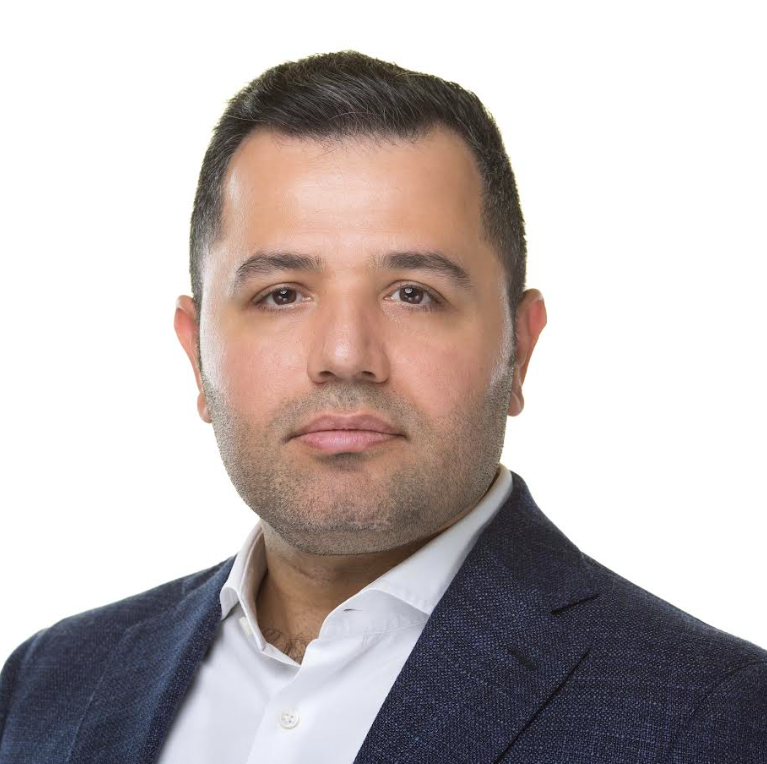
The MOU Over Baghdad’s Head
Dr. Muhanad Seloom, Senior Non-Resident Fellow with Gulf Internaional Forum
The most revealing thing about the Islamabad Memorandum, from Baghdad’s vantage, is what it does not say. The text names Lebanon explicitly, committing both sides to terminate operations there and guaranteeing its sovereignty. However, it does not name Iraq, the theater where American and Iranian power are most densely entangled. That silence is not a reprieve; it defers Iraq’s status to the 60-day negotiation, recasting Baghdad as an object of bargaining rather than an author of the settlement.
The load-bearing clause for Iraq is the second point, in which both sides agree to “ refrain from interfering in each other’s internal affairs. “ Nowhere is that pledge less credible than in Iraq, where both powers project influence through presence and proxy, and where a principals’ agreement does not obviously bind the agents operating in the gap. The “all fronts” language, having named Lebanon and skipped Iraq, leaves the status of Iran-aligned factions undefined, and Israel’s refusal to be bound even in Lebanon shows how little such wording constrains.
Two further provisions land on Iraq without addressing it: the withdrawal of U.S. forces “from the proximity” of Iran implicates the presence on Iraqi soil, while Iran’s immediate return to oil markets reshapes Iraqi revenue and the sanctions-conduit economy Baghdad has been caught in. Iraq’s task during the 60 days ahead is to convert exclusion into leverage, to ensure that troop disposition, the status of armed factions, and the oil shock are settled with Baghdad at the table, not over its head.

The Iran War Was a Blunder for Benjamin Netanyahu
Dr. Robert Geist Pinfold, Senior Non-Resident Fellow at Gulf International Forum
After the “Twelve Day War” of June 2025, Israeli Prime Minister Benjamin Netanyahu took a gamble: rather than start another round of conflict with Iran and have the US join in later, he would convince President Trump to join Tel Aviv’s campaign from the start. The putative logic is that this would serve as a force multiplier to degrade and destroy Iran’s military assets more quickly than in June 2025, whilst also insulating Israel from international criticism.
This gamble has backfired. Iran’s regime not only survived, but is more confrontational than ever. Netanyahu, on the other hand, feels more constrained by US pressure to adhere to a ceasefire that is highly unpopular in Israel. The war has thus exacerbated domestic criticism of Netanyahu’s multi-front conflicts, a tentative suggestion that the era of Israel’s “ October 7 Wars” may be ending. But Netanyahu has been critiqued less for waging war and more for doing so ineffectively. Many Israelis, including those in the anti-Netanyahu camp, still cling to the fantasy that if Israel strikes more frequently and more forcefully in Lebanon, Hezbollah will be defeated. Confronting Iran remains a consensus issue in Israel’s political mainstream.
The same, albeit reversed, dynamic manifests in Iranian politics, too. This suggests that any US-Iran comprehensive agreement will not end the Israel-Iran war. Instead, both sides will return to shadow conflicts, using unwitting third parties-Iraq, Yemen and Lebanon-as battlegrounds for their regional powerplay. They will likely both profess support for any deal, whilst pushing it to its limits through confrontation in their proxy battlegrounds. The Israel-Iran rivalry will, then, remain a destabilizing feature of whatever regional order emerges from the ashes of the recent conflict.

Bahrain Wants More than a Ceasefire
Mahdi Ghuloom, Fellow for Geopolitics at ORF Middle East
The signing of the US-Iran MOU halts a dangerous spiral that had directly threatened Bahraini territory. The lowest available estimate compiled by the author from Bahrain Defence Force disclosures suggests Iran launched 559 drones and 200 missiles at Bahrain since February 28- including at least 36 drones in the week before the signing of the MOU, an enormous number considering the country’s limited size and population. Paired with the immediate reopening of the Strait of Hormuz, it delivers tangible, albeit precarious, relief. Nestled as it is in the Gulf, Bahrain is almost wholly dependent on the Strait for imports, including gas, food, and other essential commodities.
Still, Bahrain seeks verifiable outcomes, not another tactical pause. For Manama, any meaningful de-escalation must address the wider regional security environment. This helps explain Bahrain’s emphasis on “non-interference” in internal affairs. Since the conflict began, it has faced sustained Iran-linked efforts to inflame sectarian tensions while continuing to uncover proxy networks allegedly backed by Tehran. Bahrain has also underscored the importance of respect for regional sovereignty. This is particularly significant given Iran’s repeated justification of attacks on Bahrain and other Gulf states on the basis of their hosting of US military assets: an argument that directly challenges the sovereign right to determine security arrangements-let alone the lack of proof such assets were used to attack Iran.
Against this backdrop, Bahrain appears prepared to play a measured but principled role in supporting constructive outcomes, which translates into exercising its role in multilateral institutions, especially as a non-permanent member of the UN Security Council and the rotating President of the GCC bloc.
The views and opinions expressed in this analysis are those of the authors and do not necessarily reflect the views of Gulf International Forum.
Issue: U.S. — Gulf Policy
The de-escalation agreement between the United States and the Islamic Republic of Iran represents a significant shift in the form of the conflict between the…
The United States and Iran have announced an agreement to end hostilities and begin a new round of negotiations. According to public statements by the…
Since December, more than two dozen pieces of legislation have been introduced in Congress regarding the Gulf, with over 85 percent focused on the U.S.-Israeli…
Originally published at https://gulfif.org on June 22, 2026.
메타데이터
- post_id
- f00a67d6a970
- slug
- u-s-iran-mou-and-negotiations-expert-perspectives-gulf-international-forum-f00a67d6a970
- url
- https://medium.com/@website_56990/u-s-iran-mou-and-negotiations-expert-perspectives-gulf-international-forum-f00a67d6a970
- canonical_url
- https://medium.com/@website_56990/u-s-iran-mou-and-negotiations-expert-perspectives-gulf-international-forum-f00a67d6a970
- author_url
- https://medium.com/@website_56990
- status
- ok
- fetched_at
- 2026-07-13 06:23:13