Coming Home to the Mountains: What Luxury Travel in Pakistan Looks Like in 2026
The last time I was in Murree, we stayed in a guesthouse that charged extra for hot water and served tea in chipped cups. This was not…
Coming Home to the Mountains: What Luxury Travel in Pakistan Looks Like in 2026
The last time I was in Murree, we stayed in a guesthouse that charged extra for hot water and served tea in chipped cups. This was not remarkable. It was what was available. My aunts called it charming, the way people call things charming when they have decided not to be disappointed by them.
That was fifteen years ago. I have been back twice since. What I found on the most recent visit — last August, with my own children, who were raised in London and are constitutionally skeptical of things that are not excellent — is something I am still trying to explain to friends who have not been.
Pakistan’s luxury travel landscape has changed. Not everywhere. Not at the scale of the Gulf’s hospitality industry or the Alps’ infrastructure. But in the Murree Hills, and in Bhurban specifically, something has emerged that I was not expecting to find and that my children, who had been gently sceptical about the whole enterprise, did not want to leave.
The Gap Between Reputation and Reality
The Pakistani diaspora carries a particular burden when it comes to travel back home. We have spent years managing the expectations of people who know Pakistan only from news cycles and geopolitical commentary. We have rehearsed the counterargument — that the country is more complex, more beautiful, more alive than its reputation suggests — so many times that the speech comes automatically.
But there is a different problem, and it is internal. We have held our own expectations low because past experience taught us that the gap between what Pakistan’s best landscapes offer and what its hospitality infrastructure could deliver was real and significant. We have arrived prepared to be charmed by the landscape and to manage our frustration with everything around it.
That expectation is now out of date. At least in Bhurban. At least in the segment of the market that has decided to take the category of luxury seriously rather than simply apply the label to anything with a double room and a shower that works.
What Has Changed
The change is not uniformly distributed, and I want to be specific rather than evangelical about this, because diaspora travellers who return on inflated expectation and find the reality unchanged do not come back a third time.
What has changed, specifically:
The private estate model has arrived. Rather than hotels that accommodate many guests with varying levels of service and privacy, a small number of properties in the Bhurban area now operate on a single-group basis — the entire property, its staff, its spaces, and its service are engaged by one family or one group. The concept exists in Tuscany, in Rajasthan, in the Cotswolds. It now exists, properly, in the Murree Hills.
The food has become genuinely good. Not good-for-a-mountain-resort good. Good in the sense that produces the particular silence at a dinner table that means everyone is paying attention to what is in front of them. The produce comes from the region. The kitchen takes the altitude’s gifts — the dairy, the stone fruit, the mountain herbs — seriously.
The service, at the better properties, has a quality that is harder to describe but easier to feel. It is attentive without surveillance. It knows what you need before you have articulated it and has the discretion to provide it without ceremony.
What This Looks Like in Practice
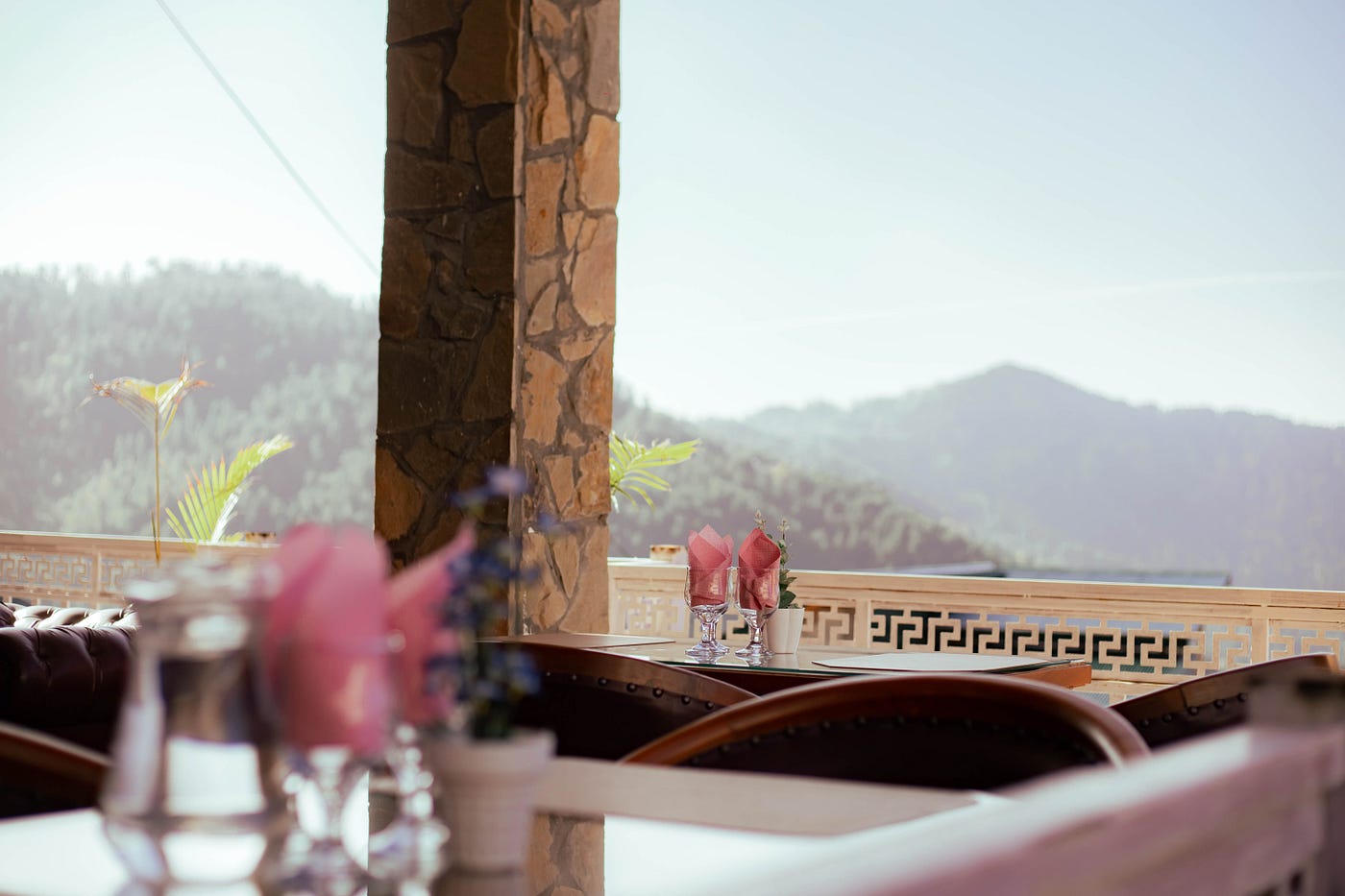
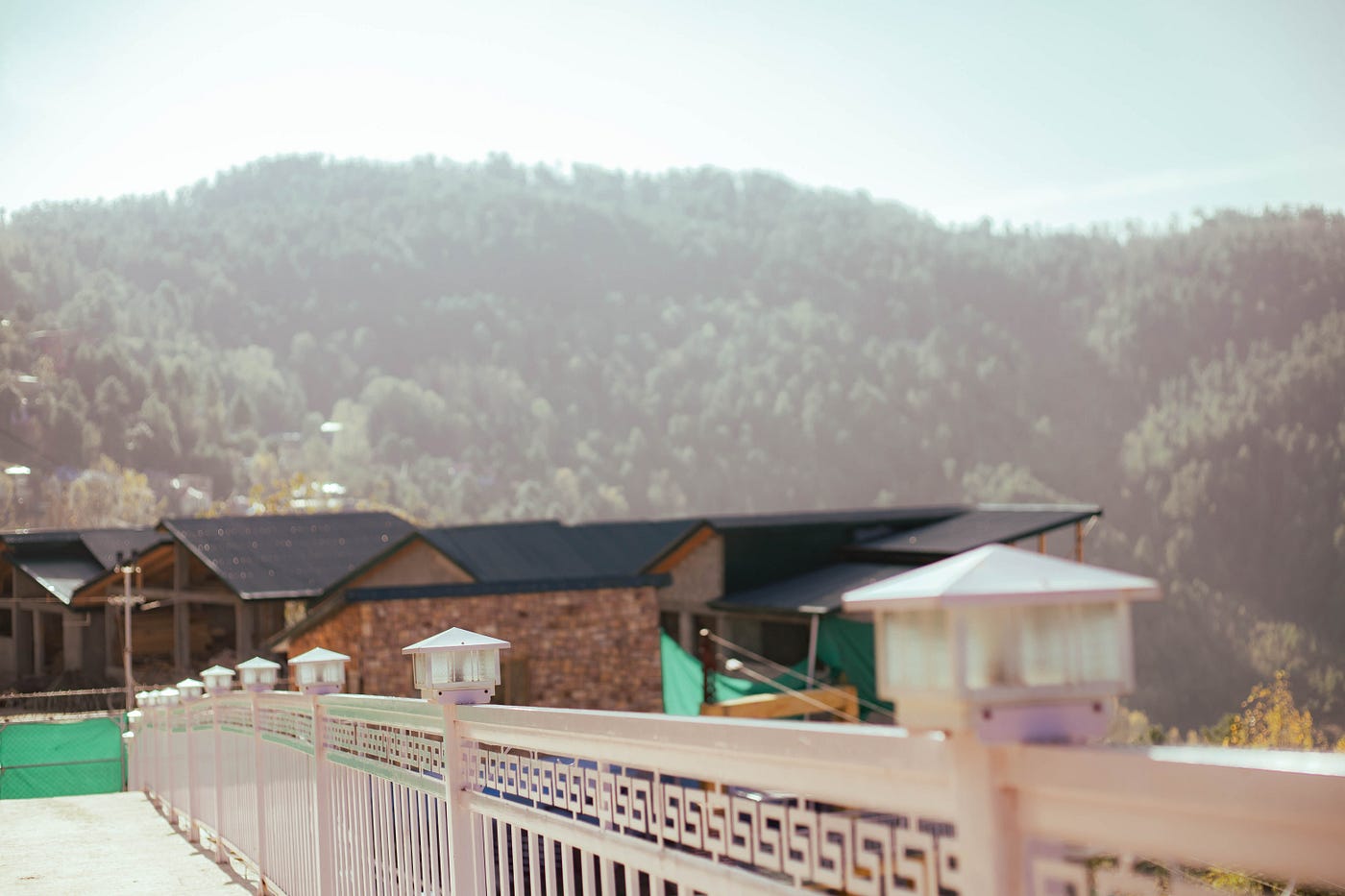
We arrived at the estate in the late afternoon of a Thursday. My son, who is seventeen and has opinions about most things, was quiet for the first thirty minutes. He had expected something that needed adjusting to. What he found instead was cedar forest at eye level, mountain light doing something extraordinary to the view across the valley, and a welcome that felt personal rather than procedural.
By the second morning he had stopped checking his phone. This is not a small thing.
My daughter, thirteen, who had been in Morocco the previous summer and had set that trip as the standard for all future family travel, pronounced the breakfast ‘genuinely good’ — her highest category of endorsement, applied rarely and with visible reluctance. She also walked six kilometres through the cedar trails without being asked, which I note here because it has never happened before.
These are not the testimonials of people who were lowering their expectations to be polite. They are the observations of young people who have no reason to be generous to a landscape they were uncertain about visiting.
For the Diaspora Family Planning a Return
If you are reading this from Dubai, London, Toronto, or Riyadh, and you are planning a Pakistan visit and wondering whether to include the hills — the specific hills of Bhurban — in that itinerary, here is what I would tell you as someone who has been recently and honestly:
The landscape is already there. It has always been there. The cedar forest, the altitude, the morning mist over the valley, the particular quality of mountain air that reminds you of something you cannot quite name — none of this required building or improving. It is the infrastructure around that landscape that has caught up, in certain places, with what the landscape deserves.
Those places exist in Bhurban. They are not widely advertised. They are found through recommendation, which is why I am writing this.
Your children, whether they were raised in the West or in Pakistan’s cities, will not need to be convinced to pay attention. The mountains do that without assistance.
A Practical Note
The best time to visit, for diaspora families travelling from the Gulf, the UK, or North America, is July through mid-August — which aligns with the summer school holiday window. Bhurban’s peak season matches the diaspora’s travel calendar almost perfectly: when the hills are at their most welcoming and the valleys below are at their least liveable.
For private estate accommodation in Bhurban that books as a single group — meaning the property is yours, without other guests — Himalaya Villas is the option my family used and the one I would return to. Details at himalayavillas.com or via WhatsApp at wa.me/923045679000, which is the most direct route to availability and rates.
Pakistan is worth returning to. The mountains, this particular summer, are worth building a trip around.
메타데이터
- post_id
- f01c0b5db7af
- slug
- what-luxury-travel-in-pakistan-looks-like-in-2026-f01c0b5db7af
- url
- https://medium.com/@himalyavillasandresort1/what-luxury-travel-in-pakistan-looks-like-in-2026-f01c0b5db7af
- canonical_url
- https://medium.com/@himalyavillasandresort1/what-luxury-travel-in-pakistan-looks-like-in-2026-f01c0b5db7af
- author_url
- https://medium.com/@himalyavillasandresort1
- status
- ok
- fetched_at
- 2026-06-24 04:09:36