DeFi Current Situation Analysis: Challenges, Innovations, and Future Trends
In 2025, the TVL in DeFi exceeded $110 billion, but the value of tokenized RWAwas only $5 billion, and the trading volume of derivatives on…
DeFi Current Situation Analysis: Challenges, Innovations, and Future Trends
In 2025, the TVL in DeFi exceeded $110 billion, but the value of tokenized RWAwas only $5 billion, and the trading volume of derivatives on DEXs was less than 2% of that on CEXs . This article reveals the true picture and key development aspects of the current DeFi ecosystem from three dimensions: the liquidity dilemma, protocol innovation, and market fragmentation.
Liquidity Dilemma: The Trilemma of RWAs and Bottlenecks of Derivatives DEXs
- Unsolved Mystery of the RWA Trilemma
Currently, the TVL in RWAs is only $5 billion, a gap of over 20 times compared to the traditional financial market. Its core contradiction lies in the impossibility of simultaneously achieving liquidity, returns, and stability:
- Tokenized Treasury Bonds (TVL: $2 billion): Amid expectations of Federal Reserve interest rate cuts, yields may drop to 2% by 2026, making it difficult to compete with on-chain yield protocols like AAVE.
- Commodities (TVL: $1 billion): The 50-year average return of gold is only 8%, and low returns restrict capital inflows.
- Credit Protocols (TVL: $500 million): Poor-quality asset screening has led to a default wave, triggering liquidity panic.
- Tokenized Stocks (TVL: $11 million): The convenience of 24/7 trading is offset by the lack of governance rights.
Liquidity Silos of Derivatives DEXs
Despite the annual 300% growth in decentralized derivatives trading volume, it still accounts for less than 2% of that of CEXs. The core bottlenecks are as follows:

Rotocol Innovation: The Technological Revolution to Solve the Dilemma
- Breakthroughs of Next-Generation Derivatives DEXs
Protocols represented by PerpX have solved the liquidity dilemma through mechanism restructuring:
- P2Pool2P Trading Mechanism: Long and short positions are hedged in independent liquidity pools, reducing counterparty risk by 90%.
- Single-Coin Liquidity Model: LPs only need to supply USDT or index tokens, reducing impermanent loss by 40%.
- Dual Oracle Protection: Chainlink pricing + independent verification nodes, with a price attack success rate of <0.001%.
- Dynamic Funding Rate: An automatic adjustment algorithm based on the long-short position ratio
2. Integration Experiment of Perpetual Economies
PerpX proposes a 3D Value Cycle Model to bridge the gap between DeFi and the real world:
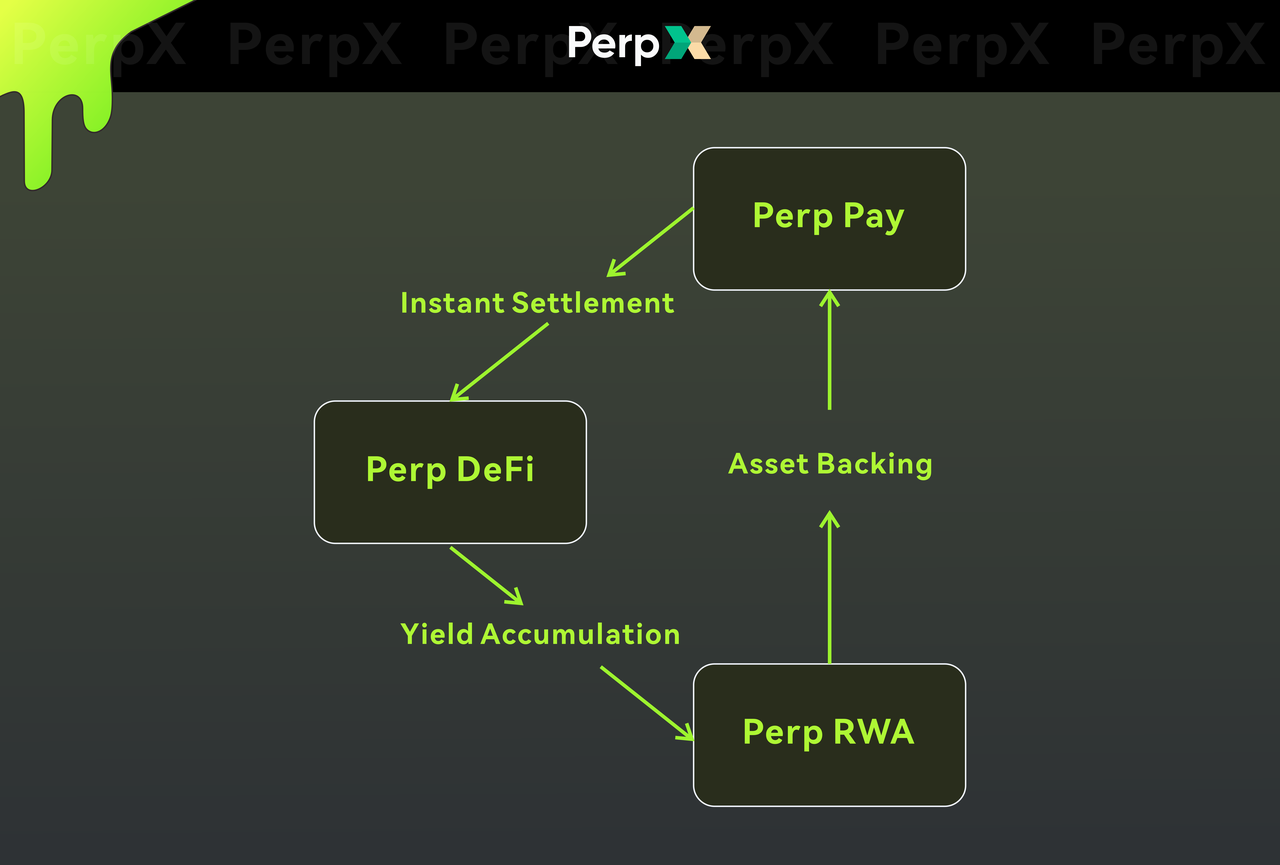
Its core innovations lie in:
- Dual-Token Economic Model: $PPX (governance) + $esPPX (ecosystem incentives) form a “return-governance double helix.”
- Unlocking Circuit Breaker Mechanism: A floating fee is triggered when the daily unlocking volume (Qₐ) exceeds the safety threshold (Qₛ).
- DID Identity System: The referral rebate network reduces the CAC for new users by 65%.
Market Fragmentation: Ecosystem Silos and Integration Paths
- Four Current Fragmentation Scenarios

2. Exploration of Integration Paths
Liquidity Bridging Technology PerpX’s D2D/D2C channels enable liquidity sharing between CEXs and DEXs, reducing slippage by 70%.
RWA Earnings Engine The physical asset layer of PPX converts U.S. Treasury bond yields into on-chain stablecoin yields, with an APY of 5.8%.
Cross-Chain Derivatives Protocol An order routing protocol based on ZKPs, with cross-chain transaction latency of <500ms.
Future Trends: Key Evolution Directions of DeFi 3.0
- Infrastructure Upgrades
- Dedicated Chain Construction: Derivatives-specific chains increase transaction TPS to over 50,000.
- AI Risk Control Engine: Machine learning oracles achieve a 92% accuracy rate in predicting market fluctuations.
- Product Form Evolution

3. Regulatory Integration and Innovation
- On-Chain KYC Module: The time required for compliant identity verification has been reduced from 3 days to 8 minutes.
- Dynamic Compliance Pool: Automatically isolates funds from high-risk jurisdictions.
Conclusion: The Key Leap Toward the Value of the Internet
Currently, DeFi is experiencing growing pains in its transformation from a fragmented ecosystem to a value-integrated entity. The RWA trilemma reveals the core contradiction of asset onboarding, while the PPX Finance protocol, through mechanism innovation, is developing a solution to the “impossible trinity” of liquidity, returns, and stability. With the improvement of dedicated chains, cross-chain bridges, and compliance frameworks, DeFi is expected to achieve two major breakthroughs by 2026:
- The market share of derivatives DEXs will increase from 2% to 15%.
- The TVL in RWAs will exceed $200 billion.
The essence of this transformation is the leap of blockchain from a transaction settlement layer to a value creation layer. When on-chain yield engines can seamlessly connect to the value of the real economy, and when cross-border payment costs drop to 1/100 of those in traditional systems, a true perpetual economy will reshape the global financial infrastructure.
메타데이터
- post_id
- f039da02fe2e
- slug
- defi-current-situation-analysis-challenges-innovations-and-future-trends-f039da02fe2e
- url
- https://medium.com/@perpx_io/defi-current-situation-analysis-challenges-innovations-and-future-trends-f039da02fe2e
- canonical_url
- https://medium.com/@perpx_io/defi-current-situation-analysis-challenges-innovations-and-future-trends-f039da02fe2e
- author_url
- https://medium.com/@perpx_io
- status
- ok
- fetched_at
- 2026-08-24 02:12:38




