Your Competitors Are Already Using Location Data to Steal Your Customers
Why geolocation apps are the most underrated competitive advantage in 2025 and how to build one that actually drives revenue
Your Competitors Are Already Using Location Data to Steal Your Customers
Why geolocation apps are the most underrated competitive advantage in 2025 and how to build one that actually drives revenue
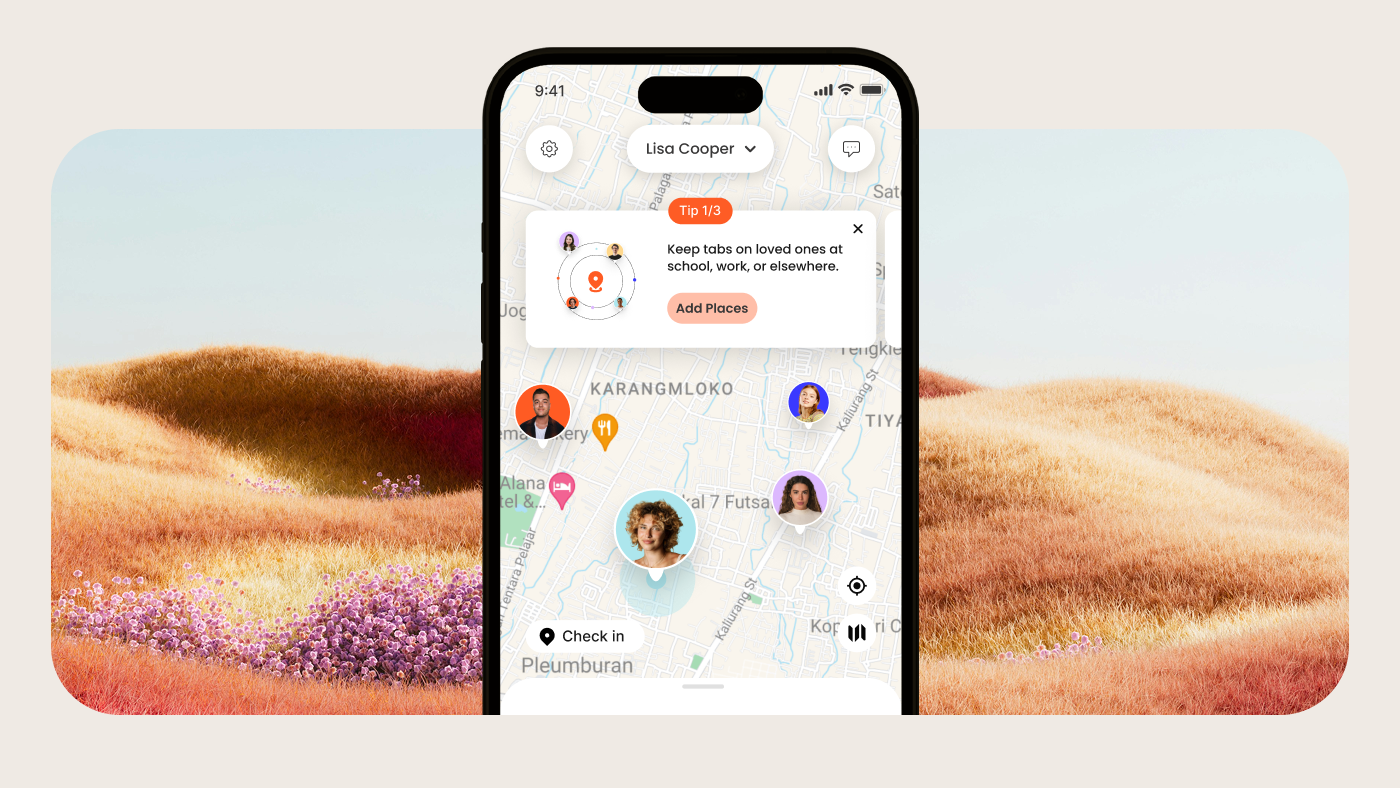
Here’s a question that should keep you up at night: How many of your potential customers walk right past your business because they don’t know you exist?
While you’re investing thousands in digital ads hoping to reach the right people, your competitors are using geolocation technology to ping customers the moment they enter your neighborhood. They’re sending personalized offers when users are within walking distance. They’re building features that make discovery effortless.
The location-based services market hit $51.3 billion in 2024 and is racing toward $346.3 billion by 2034. That’s a 21.6% annual growth rate. This isn’t some distant trend. It’s happening right now, and businesses that ignore it are leaving massive revenue on the table.
Think about the last time you needed a coffee shop, a gym, or a hardware store. You probably opened an app that showed you exactly what’s nearby, with reviews, photos, and directions. That convenience? It’s powered by geolocation technology.
If your business isn’t part of that ecosystem, you’re invisible.
The hidden cost of not having location features
Let’s talk numbers for a second.
Retailers using location-triggered push notifications see sharp increases in in-store conversions. Not marginal improvements. Sharp increases. Meanwhile, Google Maps alone monetizes $11.1 billion annually through ad placements.
Your competitors are already there. They’re showing up when customers search for services near them. They’re sending offers when people are close enough to actually walk through the door.
What are you doing?
Building a geolocation app isn’t just about adding a map feature. It’s about fundamentally changing how customers discover and interact with your business. It’s about being present at the exact moment when intent turns into action.
Seven types of location apps that are printing money right now
The beauty of geolocation technology is its versatility. You don’t need to be Uber to benefit from it.
Navigation and mapping apps get people from point A to point B. Google Maps and Waze dominate, but there’s room for vertical-specific solutions. Think apps that help tourists navigate historical sites or help truck drivers find routes that accommodate their vehicle size.
On-demand service apps connect users with nearby services instantly. Food delivery, ride-hailing, home services. The model works because proximity matters. Nobody wants a plumber from across town when pipes are flooding their basement.
Fitness and outdoor apps track routes, suggest trails, and build communities around shared locations. Strava turned running into a social network by making location data social and competitive.
Real estate and property apps show users what’s actually nearby, not just what’s on a map. Schools, restaurants, crime rates, commute times. Location data transforms how people make one of the biggest decisions of their lives.
Retail and eCommerce apps drive foot traffic through location-based promotions. Target knows when you’re near their store. Shopkick rewards you for walking through doors. These aren’t gimmicks. They’re proven revenue drivers.
Event and entertainment apps guide users to experiences and create new ones. Eventbrite helps you find nearby concerts. Pokémon GO turned the entire world into a game board and generated billions in revenue.
Healthcare apps connect patients with nearby providers fast. When you need a doctor or pharmacy, “nearby” isn’t a nice-to-have. It’s essential.
Each of these categories proves the same thing: location data isn’t a feature. It’s a fundamental way to deliver value.
The features that separate amateur apps from revenue-generating platforms
Not all location features are created equal. Some are table stakes. Others are competitive advantages.
Here’s what you actually need:
Must-have features (build these first)

Advanced features (build these next for competitive edge)
Geofencing — Triggers actions when users enter/exit areas. Creates automated engagement opportunities
Offline mode — Works without internet connection. Critical for navigation in remote areas
Personalized recommendations — Suggests based on location history. Increases engagement and repeat usage
Augmented reality — Overlays digital info on physical world. Creates memorable experiences
Wearable integration — Syncs with fitness trackers and smartwatches. Expands data collection and use cases
The difference between these two categories is timing, not importance. Build the fundamentals first. Add competitive advantages as you prove the model works.
The tech stack that actually works (according to developers who’ve built 50+ apps)
Let’s cut through the noise about technology choices.
After building dozens of geolocation apps across industries, we’ve learned what works and what wastes time. Here’s the honest breakdown:
For the frontend: React Native or Flutter if you need to move fast and launch on both iOS and Android simultaneously. Native development with Swift for iOS and Kotlin for Android if performance is absolutely critical. Most apps don’t need native. Don’t let developers convince you otherwise unless you have specific performance requirements.
For the backend: Node.js handles server logic and API integrations efficiently. Ruby on Rails works if your team already knows it well. Don’t get religious about backend choices. Pick what your team can actually maintain.
For mapping: Google Maps API is the standard for good reason. It works, it’s reliable, and users already understand it. Mapbox offers more customization if you need unique styling or advanced features. Don’t build your own mapping unless you’re Google.
For databases: PostgreSQL for structured data and complex queries. MongoDB for flexible, document-based storage. The choice matters less than consistent data architecture.
For geolocation services: GPS provides accuracy outdoors. Wi-Fi and cell tower triangulation fill gaps indoors and in urban canyons. Hybrid approaches deliver the best user experience.
For notifications and geofencing: APNs for iOS, Firebase Cloud Messaging for Android. These aren’t debatable. Use the platform tools.
For analytics: Google Analytics and Firebase Analytics give you user behavior insights without building custom systems.
The pattern here? Use proven, maintained solutions for everything except your core business logic. Save your custom development budget for features that actually differentiate your app.
Four challenges that kill location apps (and how to survive them)
Every geolocation app faces the same obstacles. The difference between success and failure is knowing they’re coming.
Challenge one: Location accuracy goes haywire
GPS fails in urban canyons, indoor spaces, and anywhere with weak signal. Users in Manhattan get walking directions that assume they can walk through buildings. Hospital visitors can’t find the right wing.
The solution: Hybrid positioning that combines GPS, Wi-Fi, and cell tower data. When one source fails, others fill the gap. This isn’t optional for serious apps.
Challenge two: Real-time data crushes your servers
Tracking thousands of users simultaneously generates massive data streams. Poor infrastructure leads to lag, crashes, and furious users.
The solution: Scalable cloud architecture from day one. Node.js handles concurrent connections efficiently. Don’t optimize prematurely, but don’t ignore capacity planning either.
Challenge three: Privacy concerns stop adoption
Users are rightfully paranoid about location tracking. Apps that feel creepy fail. Period.
The solution: Transparent data practices, clear opt-in mechanisms, and actual compliance with GDPR and similar regulations. End-to-end encryption isn’t optional. Anonymize data where possible. Give users control over their information.
Challenge four: Third-party API limitations break your app
Google Maps has rate limits. Payment gateways have downtime. External dependencies always fail at the worst possible time.
The solution: Build fallback mechanisms for every critical integration. Cache data aggressively. Test API interactions under stress. Have Plan B ready before Plan A fails.
These challenges aren’t theoretical. They’re based on real problems we’ve solved dozens of times.
What it actually costs to build a location app (and why most estimates are wrong)
Let’s talk money.
Most articles give you vague ranges like “$50,000 to $200,000” and call it helpful. That’s useless. Here’s what you’ll actually spend and why.
Phase one: Prototypes and specifications (80 hours) Before writing code, you need to understand what you’re building. User flows, feature requirements, technical specifications. This saves you from building the wrong thing.
Phase two: Design (120 hours) Custom UX/UI tailored to your users. This isn’t optional polish. Good design directly reduces drop-off rates and support costs.
Phase three: Development (the big number)
- iOS app — Places integration, check-ins, recommendations, user profile, history — ~452 hours
- Android app — Same feature set with platform-specific optimization — ~520 hours
- Backend — Server logic, database, API integrations, admin panel — ~320 hours
Android takes longer because you’re testing across hundreds of device types. iOS has a more standardized ecosystem, which speeds development.
Phase four: Testing (100 hours) Finding bugs, optimizing performance, ensuring things work across devices. Cut testing time and you’ll pay for it in bad reviews.
Total investment for MVP:
- iOS app: ~$53,600 (1,072 hours at $50/hour)
- Android app: ~$57,000 (1,140 hours at $50/hour)
- Both platforms: ~$100,000+
These numbers assume Eastern European development rates. U.S.-based teams cost 2–3x more. Offshore teams in Asia might be cheaper, but communication overhead often erases savings.
What most estimates miss:
Post-launch costs for updates, bug fixes, new features, and server expenses. Budget 20–30% of initial development cost annually for maintenance.
The question nobody asks (but should)
Why do most location apps fail within the first year?
Not because of bad technology. Not because of weak teams. Because they solve problems nobody has.
Before building anything, answer these questions honestly:
Does location data actually improve your core value proposition? Adding a map to your app doesn’t make it better if location isn’t central to what you do.
Will users share their location with you? If there’s no clear benefit to users, they won’t opt in. Without user location data, your app is useless.
Can you compete with Google Maps for your use case? If your app is just “Google Maps but for [specific thing],” you’re probably wasting money. What can you do that Google can’t or won’t?
Do you have a plan beyond launch? Building the app is step one. Marketing it, supporting users, and iterating based on feedback require ongoing investment.
If you can’t answer these questions convincingly, step back and rethink your approach.
Your next move
The location-based services market is growing at 21.6% annually. Transportation and logistics alone held 22.7% market share in 2024, with healthcare recording the highest growth outlook at 26.5% through 2030.
This isn’t a maybe-someday opportunity. It’s happening now.
Your competitors are already using location data to reach customers at the exact moment they’re ready to buy. They’re sending offers when people are nearby. They’re building features that make discovery effortless.
The question isn’t whether location features matter. The question is whether you’ll be part of the ecosystem or invisible to it.
What’s stopping you from building location features into your business?
Building a geolocation app requires more than mapping APIs and GPS coordinates. It demands strategic thinking about how location data creates genuine user value while navigating complex technical and privacy challenges. Partner with developers who’ve actually shipped location-based products, not just theorized about them.
메타데이터
- post_id
- f0420efdc3eb
- slug
- your-competitors-are-already-using-location-data-to-steal-your-customers-f0420efdc3eb
- url
- https://medium.com/@mindstudios/your-competitors-are-already-using-location-data-to-steal-your-customers-f0420efdc3eb
- canonical_url
- https://medium.com/@mindstudios/your-competitors-are-already-using-location-data-to-steal-your-customers-f0420efdc3eb
- author_url
- https://medium.com/@mindstudios
- status
- ok
- fetched_at
- 2026-08-01 12:11:00