America and the Rules It Doesn’t Follow
Is the US acting like one of the rogue states it condemns under Trump — and what even makes a country a rogue state?
America and the Rules It Doesn’t Follow
Is the US acting like one of the rogue states it condemns under Trump — and what even makes a country a rogue state?
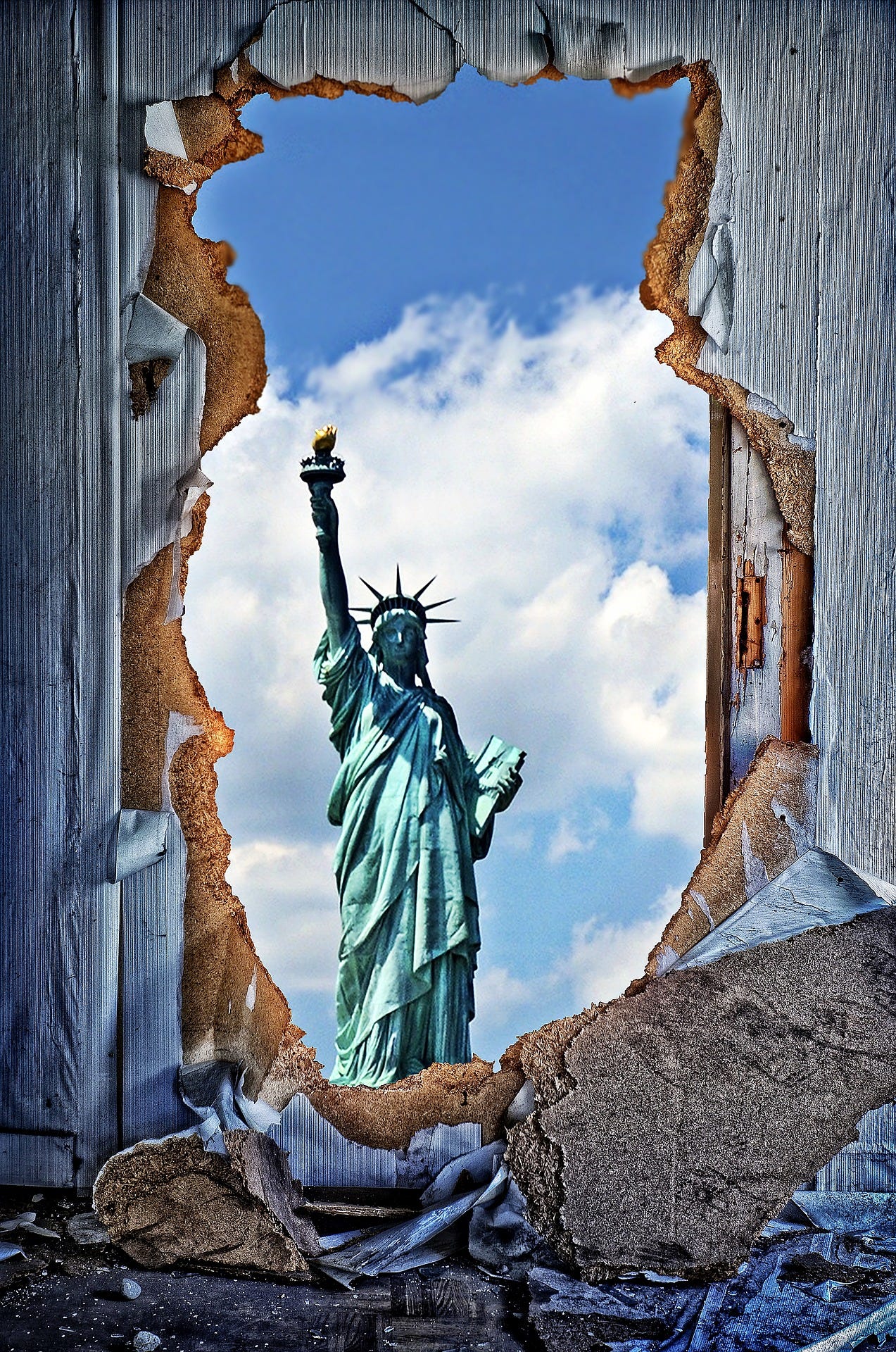
Photo by Jørgen Håland on Unsplash
“The strong do what they can and the weak suffer what they must.” — Thucydides, The History of the Peloponnesian War (Book 5, Chapter 89)
Thucydides viewed the natural order as being that of one dominated by the strong, a system where those who lack power suffer at the expense of the strong. This is especially relevant in today’s world, where the identity and nature of the global hegemon remain contested. The United States, some argue, has become a malign hegemon, willing to use military and economic power to pursue its interests through intervention, sanctions, and protectionist trade policies.
Thucydides argued that the weak will suffer the consequences of the actions of the strong, but just how true is this in the modern day? Is it becoming increasingly evident? And what does it mean for geopolitics?
A “rogue state” has no formal legal definition, but in practice it refers to a nation-state acting outside the accepted rules of the international order, and according to some sources such as the Collins Dictionary, Wikipedia and the Cambridge Dictionary it is typically one or more of the following:
- Violating international norms and laws
- Threatening international peace and security
- Supporting terrorism or trafficking narcotics
- Pursuing weapons of mass destruction
- Opposing the geopolitical interests of major powers, particularly the United States
The final bullet-point is perhaps the most controversial, as critics argue that opposition to US interests has often influenced which states receive the label.
Since the end of the Cold War, the United States has frequently assumed a leadership role in enforcing aspects of the international order through sanctions, military interventions, and diplomatic pressure. This has often involved military action, sanctions, and diplomatic pressure against states viewed as threatening international peace and stability.
The Broader Hypocrisy Debate
The term “rogue state” was not born in international law. It was born in Washington. In 1994, Clinton’s National Security Advisor Anthony Lake labelled five nations as rogue states: North Korea, Cuba, Iran, Libya, and Iraq, describing them as regimes that “assault the basic values” of the international family. The United States, naturally, positioned itself as the enforcer of those values, becoming viewed by many as the judge of international politics.
Trump has revived this term once again in 2017, applying it to Venezuela. The irony of a US President standing at the UN podium, an institution built on the principle that no state is above international law and yet the United States still has been designating enemies using a term with no legal basis, was apparently lost on those present.
Scholars and critics have not been so generous. Noam Chomsky described the United States itself as a rogue state following the assassination of Iranian General Qasem Soleimani in 2020. Author William Blum went further, dedicating an entire book “Rogue State: A Guide to the World’s Only Superpower” to the argument that US foreign policy defines the very behaviour it condemns in others. And in January 2026, following US airstrikes on Caracas and the capture of Venezuelan president Nicolás Maduro, US Congresswoman Rashida Tlaib stated plainly: “These are the actions of a rogue state.”
Perhaps most telling of all is the American Service Members’ Protection Act, a law passed by the US Congress that authorises military force to free any American personnel detained by the International Criminal Court in The Hague. The United States, in other words, passed a law threatening to invade the institution designed to prosecute war crimes, should any of its own ever face prosecution there. Critics did not hesitate to call it what it is, the Hague Invasion Act, and a direct proclamation that the United States is not afraid to violate international laws and norms.
So the question is no longer purely academic: does the United States now meet its own definition of a rogue state? The evidence of the last twelve months alone makes that question very difficult to dismiss.
However, Trump was indeed pointing out an injustice that needed to be highlighted, so some critics argue that the capture of the Venezuelan president was needed to bring peace in the region, only arguing that his approach was too unilateral. On the other hand, other critics believe that this was too interventionist and that it threatens the sovereignty of Venezuela, something that could itself also be viewed as the actions of a rogue state.
So there are indeed counterarguments to these rogue state claims. Additionally, the United States has continued the funding of foreign aid to help Ukraine, being the largest funder to Ukraine, giving it $119.2 billion between 2022–2024, so it has fulfilled its goal of wanting peace and security internationally, in that sense. And even to this day, the United States still provides funding to Ukraine.
The reason that Trump gave for the bombing of Iran is that they were acting like a rogue state due to: pursuing weapons of mass destruction, in the form of nuclear weapons. But, sources suggest that there is no tangible proof of Iran pursuing nuclear weapons, as indicated by the IAEA and stated by Rafael Grossi on X (formerly Twitter). But the United States decided to act anyway due to a perceived threat of the construction of such weapons as Iran had enriched uranium. However, it is hardly defensible to begin airstrikes on a country due to a fear of something that does not have enough substantial evidence, although some critics would argue that this is a “better safe than sorry” situation.
Trump’s Hypocrisy
Trump has long positioned himself as a champion of peace, a leader willing to act where others would not. Yet the record of his administration tells a more complicated story. Trump withdrew the United States from the Iran nuclear deal in 2018, dismantling a multilateral agreement that had verifiably extended Iran’s nuclear breakout time from 2–3 months to over a year by capping enrichment levels, reducing Iran’s centrifuge count by more than half, from roughly 19,000 to 5,000, and shipping out 98% of its enriched uranium stockpile, which the IAEA confirmed Iran was complying with.
Trump stated that the deal ignored Iran’s ballistic missile programme and that it contained sunset clauses that would eventually lift restrictions, though these concerns were not without merit. However, in the view of critics, Trump scrapping the deal directly led to Iran no longer being restrained in its production of enriched uranium.
What followed was that the U.S. imposed sanctions under maximum pressure. These heavy sanctions left Iran with no economic incentive to stay constrained in their production of enriched uranium, and Iran began stepping out of the deal’s limits in 2019. Subsequently, the deal that was meant to prohibit this from happening could no longer restrict Iran from creating enriched uranium, as Trump scrapped it.
In simple words, Iran initially agreed to nuclear constraints in exchange for sanctions relief, that was the entire bargain. And when the U.S. pulled out and reimposed sanctions, it meant that Iran was now holding up its end of a deal while getting nothing from it. Predictably, they simply went back to creating enriched uranium.
The United States then used that enrichment as partial justification for military action in 2026. In other words, the United States helped create the conditions it later used to justify bombing. This, as stated before, had no concrete evidence of being used for nuclear missiles. Therefore, in the view of critics, Trump’s actions led to Iran making enriched uranium again, so in their view, the reason Trump even had to face this threat, was due to him cancelling the deal.
So, in the view of such critics, Trump caused the very problem that he is now attempting to solve using military action, something that some would argue is a form of threat to international peace and security, the very thing Trump condemns.
However, Iran has in the past done things to stir worry in what they may do again regarding nuclear weapons. In August 2002, an Iranian opposition group revealed secret underground nuclear facilities at Natanz and Arak meant for enriching uranium and producing heavy-water, respectively. Iran claimed that these would have been used for nuclear power for citizens, something the United States questioned as the oil-and-gas-rich country would likely not need such facilities, alleging they were intended for nuclear weapons-related work. You can read more on this here.
Therefore, Trump’s actions are not without historical precedent. And as of 14th June 2026, Trump has also stated that peace deals have been signed and that the Iran conflict will be over “pretty soon”. Therefore, supporters of Trump’s actions argue that the strikes were intended as a limited intervention rather than an attempt at regime change or territorial conquest. From this perspective, it becomes more difficult to classify these actions as those of a so-called rogue state.
Your View, Your Opinion
Are Trump’s direct military actions similar to the acts of the rogue states he condemns? Has his frequent use of military power in situations that he inadvertently caused become a threat to international security? And is it really fair to condemn a state into the title of “rogue state” just because it opposes the geopolitical interests of great powers like the United States?
Was Thucydides correct, and are weaker nation states now suffering due to the selfish actions of great powers like the United States?
Or, are you on the view that Trump is acting in a more direct way to resolve the danger of “rogue states”, that otherwise would not be easy to contain to prevent potentially more dangerous situations? That is for you as the reader to decide.
Thank you for reading. Please consider following/subscribing and liking my work/article, your support is always appreciated.
메타데이터
- post_id
- f050e0d3296e
- slug
- america-and-the-rules-it-doesnt-follow-f050e0d3296e
- url
- https://medium.com/the-political-prism/america-and-the-rules-it-doesnt-follow-f050e0d3296e
- canonical_url
- https://medium.com/the-political-prism/america-and-the-rules-it-doesnt-follow-f050e0d3296e
- author_url
- https://medium.com/@kristiyandagnev
- status
- ok
- fetched_at
- 2026-06-24 04:09:36