Vietnam’s Electric Cars Arrive in India
The First Ride That Felt Different
Vietnam’s Electric Cars Arrive in India
The First Ride That Felt Different
Late once more, Arjun hurried toward the office. The clock had already turned against him by the time he reached the door.
Just like every other time, he tapped open the ride app on his phone. A beat-up sedan showed up most days, often with a rattling motor, sometimes an air conditioner struggling to cool the back seat.
This moment carried a weight it hadn’t before. A shift hung in the air, quiet but certain.
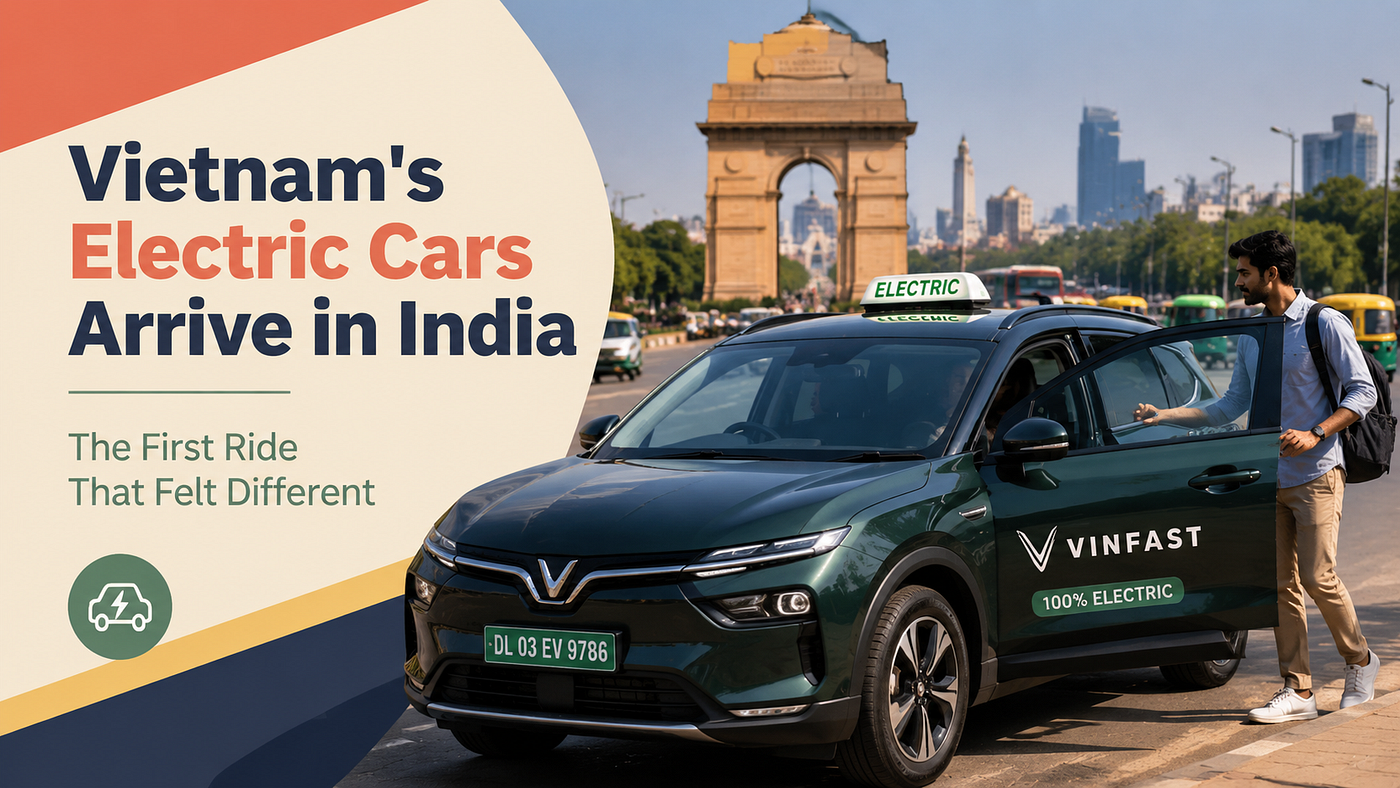
Image is Generated by AI
The vehicle showed up without a sound.
Silence where noise usually lives. The usual hum missing, replaced by something unfamiliar. A vehicle stops, sleek and quiet, bearing a logo he does not recognise. Not from any global giant, this one sprouted from Vietnam’s rising electric wave. Now it rolls through India, unannounced, unhurried.
Little did he realise this moment tied into something far larger.
Vietnam Builds Electric Vehicles, India Opens Doors
Fresh off strong growth at home, Vietnam’s electric vehicle push now stretches past its backyard. With VinFast steering the charge, momentum builds across regions farther west. Not just a local story anymore, wheels are turning in new territories. Driven by ambition, each step outward adds weight to the effort. Beyond familiar markets, fresh roads open up steadily.
Out of nowhere, India caught attention; its huge demand for city rides made it a clear choice.
Out there, VinFast moves fast electric SUVs roll into new regions while taxi deals quietly stack up. Instead of waiting, they team with local fleets to edge past bigger names already on the map. Emerging spots get first dibs, skipping the usual launch delays. Competition watches, but momentum favours those who start before permission is asked.
India already has:
- Ola Electric is pushing EV scooters and fleet plans
- Uber and Ola are experimenting with electric cabs
- Tata Motors is dominating the domestic EV car supply
A fresh global name enters suddenly, and everything shifts.
India’s role in the electric vehicle shift
India isn’t just another market.
Speed is picking up fast in how people move around here. Growth hasn’t slowed down much at all lately.
Daily, millions depend on ride-hailing apps for:
- office travel
- airport rides
- late-night commutes
- delivery logistics
This push comes down to electric transport gaining ground. What drives it? A quiet switch is happening now. People choose differently from before. Shifts add up over time. Movement grows without fanfare. Change feels natural, somehow. It just makes sense today
- rising fuel costs
- pollution concerns in metro cities
- government push for EV adoption
Faster movement toward electric vehicles looks likely across India during the 2020s, backed by government efforts to shift transportation off fossil fuels.
At that moment, a Vietnamese electric car maker steps in? Not by chance.
It’s strategic.
The Driver Sees Changes That Are Silent Yet Unclear
Something felt off when Arjun got back into the cab.
He drove in silence most of the time.
A screen lit up with numbers, battery life, how far it could go, spots to plug in while he watched closely. Not a single gauge showed gasoline anywhere.
Stopping at the traffic signal, Arjun tilted his head. “Did you just get that?” he said
The driver nodded.
“Vietnam company… EV fleet started recently.”
It wasn’t just a new car.
It was a new system.
Less fuel anxiety.
More charging planning.
Different economics altogether.
How EV Taxis Shift Daily Life
Running on electricity does not make taxis special by itself.
They change how mobility businesses operate:
- Lower running cost per kilometer
- Reduced maintenance compared to petrol/diesel engines
- Dependency on charging infrastructure instead of fuel stations
- Higher upfront investment but lower long-term cost
Better profits come later for businesses doing this.
Drivers must adapt to an unfamiliar pattern of daily tasks.
The Larger Contest Happening Offstage
A shift like this puts a slow but steady push on current competitors.
Charging setups, battery tech, fleet ties Tata Motors alongside Ola Electric dive into these pieces across India’s electric vehicle scene. Instead of waiting, they shape how parts connect, piece by piece.
Global firms expanding into India
- advanced EV technology
- global fleet experience
- aggressive expansion strategies
A third contender enters the scene. One step ahead, two others follow close behind. Not just competition, now tension shifts like wind before a storm
- Indian automakers
- Indian mobility platforms
- international EV entrants
The outcome hinges less on vehicles, more on the systems supporting them.
The Real Challenge Is Charging, Not Cars
Faster than anyone thought, Arjun’s journey on wheels came to a stop.
Smooth ride, though the driver brought up a key point
“Charging stations are still the biggest problem.”
Here is the real picture of electric vehicles in India.
Even if machines grow smarter, life still hinges on what shares the ground. When tech evolves fast, survival ties back to roots beneath tyres. Though speed improves, balance rests with unseen threads in the soil. As engines refine, harmony leans on creatures ignored by maps. Despite progress claims, stability feeds from hidden links below roads
- charging availability
- fast-charging speed
- grid capacity
- urban planning
Most top electric fleets still can’t grow past a certain point without it.
A Small Ride A Bigger Change
Out came Arjun from the cab, one backward glance caught the moment.
The vehicle had gone quiet once more, heading now to where it would collect someone else.
Just another ordinary feeling, really.
It felt normal.
Perhaps that’s what true change actually looks like.
Not announcements.
Not headlines.
Yet lately, unnoticed changes just slip into routine.
The Roads Are Changing
Out of nowhere, Vietnam’s electric vehicles show up in India’s ride-hailing scene, not merely sparking rivalry.
It’s about transition.
Switching power sources now means leaving behind gas. Electricity takes over where burning stops.
Starting with gears, then shifting toward code-powered movement.
Markets once stayed close to home. Now they face rivals from everywhere else.
For folks such as Arjun, change doesn’t come like a sudden storm. Instead, it seeps through slowly, quietly. Not with fanfare but with shifts too small to name at first. It unfolds without announcement. Day by day, almost unnoticed. Then one morning, things are just… different. The world moved while he blinked.
One more trip, like any other. The car pulls up without fanfare. Ride begins in silence. Streetlights blur past the window. The driver says nothing. The passenger stares ahead. Minutes tick by slowly. Destination appears too soon. The door opens to an ordinary night.
Silent. Smooth. Electric.
It’s happening now, starting to feel usual.
메타데이터
- post_id
- f059ac026dd5
- slug
- vietnams-electric-cars-arrive-in-india-f059ac026dd5
- url
- https://medium.com/reflections-and-realities/vietnams-electric-cars-arrive-in-india-f059ac026dd5
- canonical_url
- https://medium.com/reflections-and-realities/vietnams-electric-cars-arrive-in-india-f059ac026dd5
- author_url
- https://medium.com/@aman-87
- status
- ok
- fetched_at
- 2026-06-24 18:57:25