The 10 Best UK Number Ones of the 2000s — Part Three: Heaven
There’s a Holiday Inn that towers over Stockport train station. It wasn’t always there. Two anonymous, half-empty office blocks loom large…
The 10 Best UK Number Ones of the 2000s — Part Three: Heaven
There’s a Holiday Inn that towers over Stockport train station. It wasn’t always there. Two anonymous, half-empty office blocks loom large next door. They weren’t always there either. The hotel and its two adjacent office blocks are all glass, chrome, and corporate polish. Advertising space. For rent, but mostly empty. The courtyard surrounded by these three buildings is all beige stone and grey granite. The one “green area” is a solitary patch of grass, which started balding before it started growing. It’s a desolate place. People wait for taxis to take them elsewhere; punters used to fall out of Bask (the one bar in the postcode) but that closed down; commuters hold their umbrellas tightly in torrential Greater Manchester downpours. It doesn’t matter how many people pass by — no actual life occurs there. Whenever I end up this courtyard, all I see are ghosts — not necessarily of people long gone, but of the buildings replaced by the Holiday Inn and its two neighbours. I’m old enough to be able to see ghosts now, and I see too many of them outside Stockport train station.
[embed]
Nostalgia is a tricksy and false creature. It lies to you. Sometimes I think that’s all it does. I’m 31 now, which means that I’m not only old enough to see ghosts, I’m also old enough to remember times now referred to as the past. People lie about the past. Quite a lot, actually. I’ve started to believe that all people ever do when discussing the past is lie. Often through their teeth, sometimes brazenly. In terms of the big picture — you know, of life and everything — I’m more doubtful than ever about how it shifts, or whether it actually shifts at all. Do the little things really get materially better or worse over time? Maybe people just get older and more miserable. Maybe they start confusing the lack of responsibility they had as a child for that childhood occurring in an objectively better world. Maybe they confuse government cuts for cosmic injustice. Maybe the pendulum is just swinging this bad way before swinging back the good way, and we’ll just be dead before that happens. Maybe the only thing that does change over time is the strength and power of nostalgia, that tricksy and false creature. But having said that — let me tell you something: when I lie about the past, it’s cute. So, let me lie to you for a bit, about the ghosts I see and about Stockport’s recent weekend history.
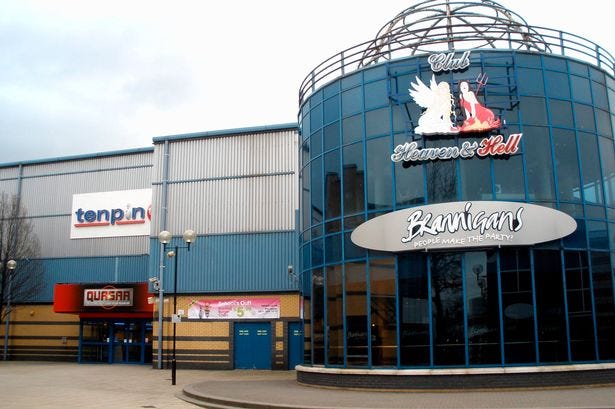
First, a truth. That Holiday Inn and its two adjacent glass and chrome office blocks are built on the former site of two communal and cultural institutions in this town: Grand Central’s Tenpin bowling alley and arcade, and Brannigan’s Heaven & Hell nightclub. Both were closed in 2007, left abandoned and ruined for years, and then knocked down in 2012. As a kid born in 1994, I obviously spent numerous weekends (and sometimes weeknights) at Tenpin through the late 90s and almost the entire 2000s. The garish overhead lighting and screaming children, the clatter of polyester smashing into maple wood, the Jackson-Pollock-meets-Stagecoach-bus-seat carpet. Heaven & Hell shared a party wall with it. As a kid born in 1994, I obviously spent no weekends (or weeknights) inside Heaven & Hell — I was 13 when it closed and 18 when they demolished it. But for some reason, I’ve mourned the loss of Heaven & Hell from Stockport’s nightlife more than Tenpin. Maybe it’s because the function that Tenpin performed in my life was satisfactorily replaced — bowling alleys and arcades still operate in Stockport (Redrock, Parrs Wood). Maybe it’s because I got to fully experience Tenpin and came to know every inch of the building, so when they knocked it down I didn’t feel like I’d missed an opportunity to experience it. Perhaps it was harder to say goodbye to the experiences in Heaven & Hell that I never felt, knowing they were now beyond my reach.
It’s a strange sensation watching old symbols and images of your childhood get knocked down, then get replaced by new symbols and images that will one day be mourned by the children of 2025. It’s strange, chiefly, because I didn’t think I’d become this type of adult, who mourns memories and laments the passage of time. I thought I’d always understand and accept that nothing was permanent, that life goes on, and that accepting my part in the massive natural process of life, growth, decay, and death would help stave off all these feelings. Turns out, I was wrong. I know that things outside Stockport station are probably objectively better today, and you’re probably less likely to get mugged outside the ticket office in 2025 than you’ve ever been. But in this version of the 21st century that we’ve ended up in, town planners, architects, and the money men behind the construction of the Holiday Inn — and its adjacent hollow office blocks, which we mustn’t forget — all seem to assume that safety and character are mutually exclusive things. That in order to keep things clean, we must excise any and all personality too.
Heaven & Hell was always on the edge of powering up for the night when Tenpin closed and us kids went home. Stepping out of the arcade into a brisk Stockport evening, I used to hear the music and see the laser lights through the door. Its giddy patrons stumbled in as I was escorted back to the car by my parents, or my friends’ parents. That was all I experienced of it during its peak hours. In the daytime, when its doors were shut — and during the five years it lay empty before it was pulled down — I took advantage. I used to walk past and gaze enviously through its windows. The black leather sofas and starry night carpets, the polished bar at the back of the room. I used to imagine it crowded, bustling, and noisy, like that episode of The Office that ends with John Betjeman’s ‘Slough’. It probably stank of sweat and spirits and aftershave and claustrophobia, and I always avoided nightclubs and heavy drinking for that reason, even after I turned 18. But I remained attached to my enviousness of Heaven & Hell’s patrons. My made-up stories of Heaven & Hell became a reality for me, of sorts. I did the evil work nostalgia does, but willingly. I even grew attached to the despicable-but-affectionately-despicable ugliness of its exterior — it looked like a black and blue strangulated hernia, jutting out of concrete. But it was a black and blue strangulated hernia that I’d grown to love.
When it comes to Grand Central’s Tenpin, the song playing in my imagined memory of it is Roger Sanchez’s ‘Another Chance’. But in my imagined non-memories of Heaven & Hell, the permanent looping soundtrack is DJ Sammy & Do’s cover of Bryan Adams’ ‘Heaven’. I mean, just look at these beautiful monstrosities. They look like Y2K; they should sound like it too.
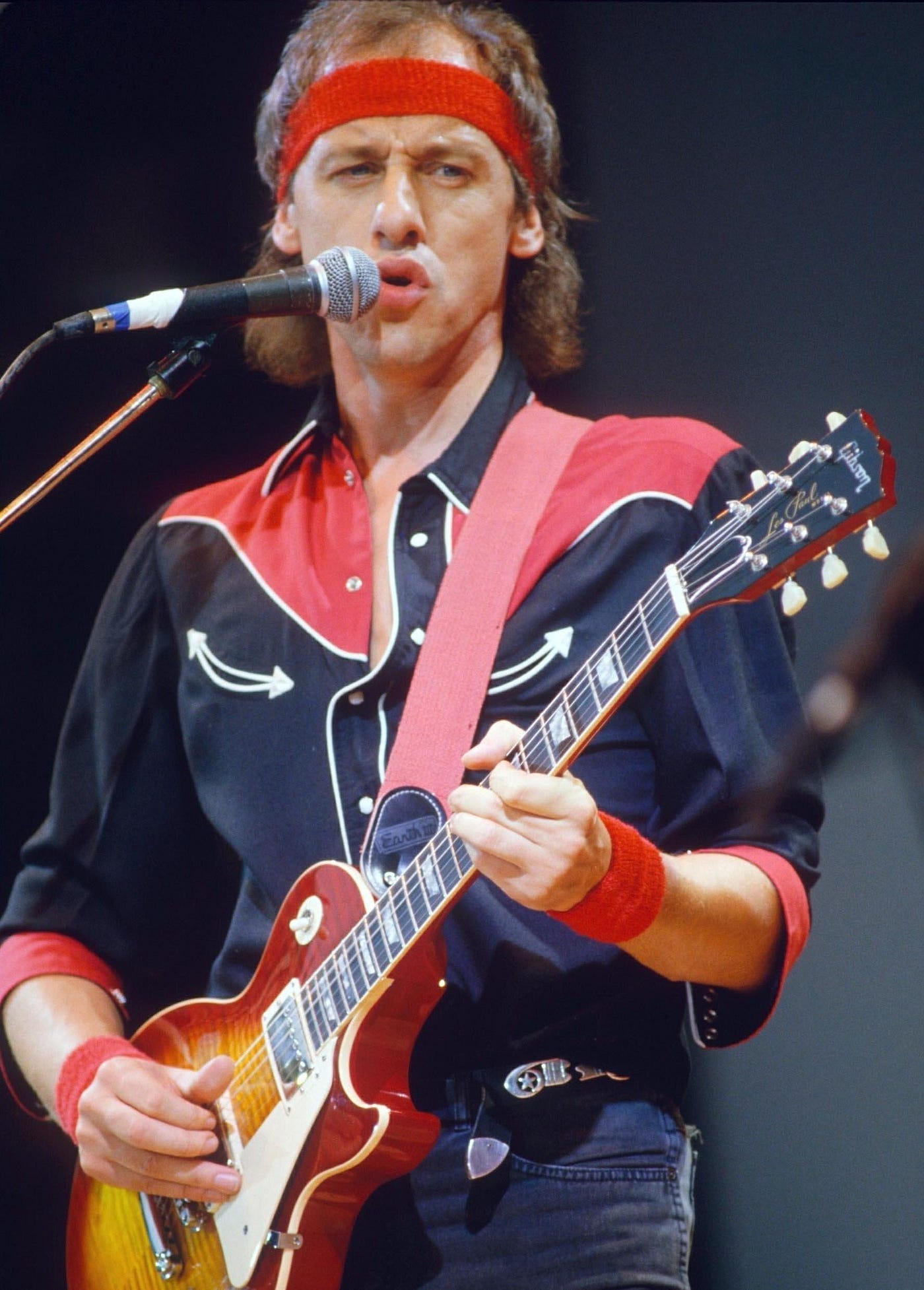
You can file ‘Heaven’ in the folder marked Covers I Prefer to the Original, next to James Blake’s ‘Limit to Your Love’ or The Communards’ ‘Don’t Leave Me This Way’, among others. Bryan Adams wrote the original number in the early 1980s and released it in 1983 after touring with Journey. Sweetie, we can tell. A friend of mine coined the term Reagancore to describe acts like Journey and Mr. Adams — that kind of dismal, trudging, corporate Hollywood pop-rock from the 80s that wins crowds over simply by bludgeoning them. But still, it’s worth thanking Mr. Adams for ‘Heaven’, if only for enabling his words and melodies to be passed down through the generations and eventually used in a setting far more appropriate for his melodramatic lyricism and fist-pumping declarations of undying and unending love.
DJ Sammy’s version identifies something that Bryan couldn’t, though, even within his own song: cathartic euphoria. It’s the split-second, life-or-death thrill of realising you’re falling in love. It captures a moment in time, not just from the scene it stylistically belonged to (we’ll get to that), but between the two characters in its own story. Where Bryan sings polite pleasantries over a dinner table to his wife of many years, DJ Sammy & Do make their version sound like a young pair of clubbers kissing for the fist time after a months-long “will-they-won’t-they?” dynamic. In my mind, it brings up as many ghosts as that courtyard outside Stockport station. Picture it: Stockport, 2002: It’s a Friday night at Heaven & Hell. Two co-workers have been flirting for months across the office, catching each others’ eyes on lunch breaks, leaving little notes to each other on their desks. He’s been single for a while, she’s recently had her heart broken and doesn’t know if she can really trust another person again. Their colleagues have been egging them on for weeks but they’ve each been saying ‘Leave it out, would you?’ while giggling. Finally they give in to their feelings and relent to their colleagues’ demands. The tension, at long last, breaks. They embrace each other under the laser lights, ‘Heaven’ pumps out of giant monitors, and their whole future shines out in front of them. It’s beautiful. Work-all-week-party-all-weekend culture, at least as it was portrayed by by Trainspotting and Human Traffic, petered out towards the end of the 2010s, then Covid kicked it into touch. By the time we resurfaced from lockdown, paid apps had cornered the dating market, working from home was a new norm, and a weekly night out had become prohibitively expensive. ‘Heaven’ was only possible then, in 2002. Less so now.
Around the same time, but from a different scene entirely, Blink-182 were becoming masters at writing songs that sounded exactly like a young person experiencing a life-altering feeling for the very first time — and that’s the sweet spot the 21st century ‘Heaven’ finds. It has to cross genres to become one, but this is a spiritual prequel to Mark, Tom, and Travis’ ‘First Date’ from 2001. Let’s make this night last forever and ever. We humans might have gained self-awareness over millions of years of evolution, but as a species we’re absolutely terrible at savouring moments as they happen. Publius Vergilius Maro said ‘tempus fugit’ more than 2,000 years ago but we still haven’t grasped what he meant. Occasionally, though, as ‘Heaven’ proves, we are capable of producing art that has the power to stop time — or, at least, stop our concept of time — and force us to absorb what’s happening. That sudden rush in from the intro is a lightning bolt. A single, shuddering, striking moment that arrests whatever state of mind you’re in and shakes it severely, preparing you for the rest. It’s a sudden shot of anticipation and excitement. Another sudden rush happens again after the bridge, which features only Do and an acoustic guitar. Now our dreams are coming true — through the good times and the bad, I’ll be standing there by you-u-u-u-u-u. The way the word ‘you’ is chopped up and extended as the snares rush back in prepares you for an almighty climax, with Bryan Adams’ hoarse pleas turned into a hairbrush classic, amid Gina G synths and Whigfield playfulness.
In terms of time and place, fortune and happenstance, ‘Heaven’ was a vocal trance and rave-adjacent number one that could have only dominated when it did. After setting the template for the 90s, Big Beat and rave faded from the charts as the 20th century turned over into the 21st, with trance waiting in the wings after travelling over from Germany. Meanwhile, the Criminal Justice and Public Order Act of 1994 put a big dent in rave’s ability to produce more underground acts ready to go over the top onto the pop frontlines (a la The Prodigy). Just as the land outside Stockport station would follow suit 25 years later, raves became cleaner, safer, and therefore more corporate as the 21st century approached. Things were more official, regulated, and now appealed to the kind of everyday office workers from my imagined fantasies of Heaven & Hell. Raving became clubbing, any sense of rebellion or political resistance just became a weekend pastime. However, unlike the town planners of the 2020s, club nights retained their character even with the added safety and security. They were still focused on people, and it’s people who bring personality to a place. And for those people, a new sound was needed.
Dance-pop hits from the early-to-mid 90s, all of them decorated with lashings of trance aesthetics, returned with a vengeance. The British public had been attending cleaner, softer, more regulated raves for at least decade now, and were in trendy, polished nightclubs searching for things like catharsis and euphoria — as opposed to just having a scuzzy, “anti-social” good time in a disused warehouse. It was clear from pop chart activity that they intended to bring in the new millennium, and its endless possibilities, with uplifting, lightspeed trance with soft feminine voices. Robin S’ ‘Show Me Love’ charted in 1993, 1997, and 2002 after originally being released in 1990; Baby D’s ‘Let Me Be Your Fantasy’ and Livin Joy’s ‘Dreamer’ had both topped the charts before 1995 was done, but were both remixed and re-released to big successes in the late 90s and early-to-mid 2000s. Everything But the Girl achieved their first top 10 hit for nearly a decade with Todd Terry’s trance-inspired remix of ‘Missing’ in 1995. Olive topped the charts with ‘You’re Not Alone’ in 1997. Ian Van Dahl turned to Belgian female vocalist Marsha to send ‘Castles In the Sky’ to number one around Europe in 1999. Alice Deejay went stratospheric with ‘Better Off Alone’ in 1998, as did Sonique with ‘It Feels So Good’ in 2000. This is the world ‘Heaven’ was dropped into. Louder, larger, and more suited to the consumption of alcopops than anything that preceded it.
Vocal trance’s representation in the charts ebbed and flowed somewhat after ‘Heaven’ — which seemed for a while to have put a capstone on the mini-movement, as acts like Tomcraft, Fedde Le Grand, and Benny Benassi made mainstream dancefloor anthems sound gnarlier and nastier, while The Shapeshifters, Room 5, and LMC attempted to secure some airplay for dance on both BBC Radio 1 and 2 — but its broad formula still churned out some of the biggest UK hits in the 2010s. The UK public might not be drawn to illegal raves anymore, and clubbing as we knew it might have died a death thanks to austerity, social media, and Covid, but for a long time after its ostensible peak, hard drums, large synths, and a beautiful woman with beautiful pipes continued to land big wins. Somewhere underneath the British public’s love for Rihanna’s ‘Only Girl (In the World)’, Ariana’s ‘One Last Time’, and Florence and Calvin’s ‘Spectrum — Say My Name’ (and Ellie and Calvin’s ‘Miracle’ in the 2020s), the ghosts of our love for ‘Heaven’ and other vocal trance songs long gone still lurked. Maybe I can learn to love the Holiday Inn and its two adjacent office blocks in the same way. I’ll never love them as much as I loved what they ultimately replaced, but I’ll just have to learn to be comforted by those ghosts I see whenever I’m waiting for a taxi in the rain in Stockport station’s car park. I was there, I have the memories to prove it, and nobody can take that away from me.
메타데이터
- post_id
- f0a5ffca1b8b
- slug
- the-10-best-uk-number-ones-of-the-2000s-part-three-heaven-f0a5ffca1b8b
- url
- https://medium.com/@colourfulsevens/the-10-best-uk-number-ones-of-the-2000s-part-three-heaven-f0a5ffca1b8b
- canonical_url
- https://medium.com/@colourfulsevens/the-10-best-uk-number-ones-of-the-2000s-part-three-heaven-f0a5ffca1b8b
- author_url
- https://medium.com/@colourfulsevens
- status
- ok
- fetched_at
- 2026-06-24 18:57:25