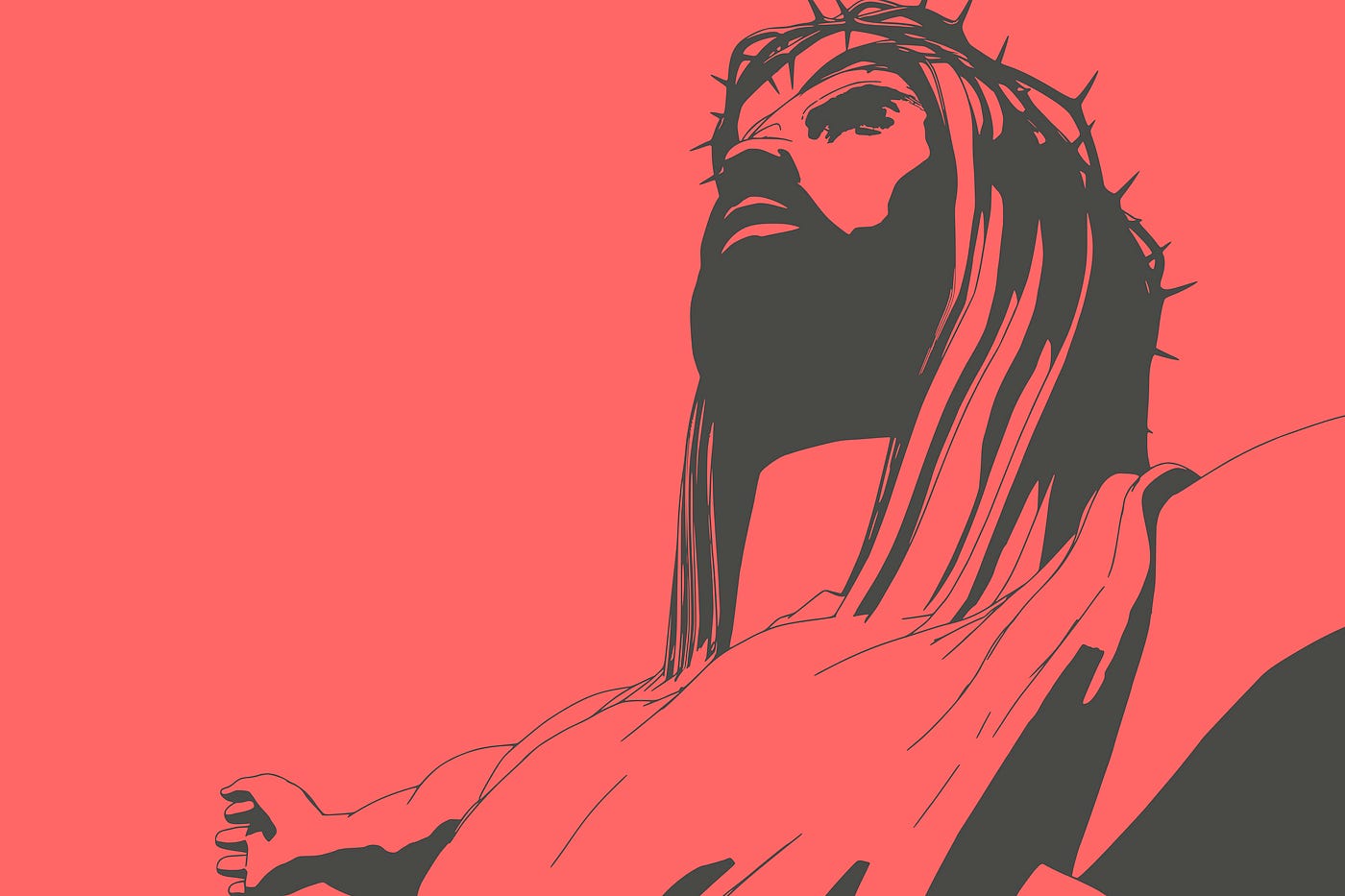
Jesus Christ in Islam: Prophet, Messiah, and the Word of God
Jesus Christ in Islam: Prophet, Messiah, and the Word of God
Jesus Christ in Islam: Prophet, Messiah, and the Word of God
Jesus Christ in Islam: Prophet, Messiah, and the Word of God
by yusuf jamal
A faith deeply misunderstood by both its adherents and its critics holds Jesus in extraordinary reverence — just not in the way Christians might expect.
There is a widespread assumption in the West that Islam and Christianity are simply in opposition when it comes to Jesus. Christians venerate him as the Son of God; Muslims deny this — end of story. But this summary misses something remarkable: no non-Christian religious tradition in the world honours Jesus as profoundly and extensively as Islam does. The Qur’an names Jesus (Isa ibn Maryam) in 15 surahs across 93 verses.
He is called the Messiah (al-Masih), the Word of God (Kalimatullah), a Spirit from God (Ruhun minhu), a prophet, a messenger, a sign to all humanity, and one of the five greatest prophets ever sent. His mother Mary has an entire chapter of the Qur’an named after her — the only woman in the Qur’an to be mentioned by name.
To understand Jesus in Islam is not merely an exercise in comparative theology. It is to understand something essential about the Islamic worldview: the nature of prophethood, the theology of divine mercy, and the vision of a shared Abrahamic inheritance that Islam presents as its own identity. This essay draws directly from the Qur’an and the authenticated Hadith collections to paint a portrait of Isa ibn Maryam — the Islamic Jesus — in full.
· · ·
I. His Name and Titles: A Prophet Uniquely Honoured
Jesus is referred to in the Qur’an as Isa ibn Maryam — Jesus son of Mary. This patronymic itself is theologically loaded: by identifying him through his mother rather than a father, the Qur’an acknowledges the miracle of his virgin birth while simultaneously clarifying that he has no divine paternity in the literal sense. He is honoured with titles given to no other prophet in the Qur’an.
“Innamā al-Masīḥu ʿĪsā ibnu Maryama rasūlu llāhi wa-kalimatuhu alqāhā ilā Maryama wa-rūḥun minhu…”
*“The Messiah, Jesus son of Mary, was only a messenger of God, and His word which He conveyed unto Mary, and a spirit from Him…” *Qur’an 4:171 (An-Nisa)
Three extraordinary titles appear in a single verse: Rasul Allah (Messenger of God), Kalimatullah (the Word of God), and Ruhun minhu (a Spirit from Him). Muslim scholars have long debated the precise meaning of these titles. The Ash’ari theological position, dominant in Sunni Islam, holds that Jesus is called the “Word of God” because he came into existence through God’s command — the divine word “Kun” (Be!) — without the agency of a human father. He is called a “spirit from God” not because he shares in the divine essence, but as a mark of honour emphasising his elevated spiritual nature and miraculous creation.
The title al-Masih (the Messiah) is used eleven times in the Qur’an — a title shared with no other prophet. Classical scholars like Ibn Kathir and Al-Qurtubi explain that the root may relate to either “anointing” (one who was blessed and anointed) or “travel” (one who journeyed throughout the land healing and teaching).
*“He said: ‘O Mary, indeed God gives you good tidings of a word from Him, whose name will be the Messiah, Jesus, the son of Mary — distinguished in this world and the Hereafter, and among those brought near to God.’” *Qur’an 3:45 (Al Imran)
The phrase wajihan fi’d-dunya wa’l-akhira — “distinguished in this world and the Hereafter” — is among the highest commendations in the Qur’an. It signals that Jesus occupies a position of honour not only in his earthly life but in the afterlife as well, including his anticipated return at the end of times.
· · ·
II. The Virgin Birth: A Miracle Affirmed
The Qur’an devotes extensive attention to the birth narrative of Jesus. Surah Maryam (Chapter 19) and Surah Al Imran (Chapter 3) together constitute the most detailed accounts of Mary and the Annunciation in any scripture outside the Gospels themselves.
*“She said: ‘My Lord, how will I have a child when no man has touched me?’ He said: ‘Such is God; He creates what He wills. When He decrees a matter, He only says to it, “Be,” and it is.’” *Qur’an 3:47 (Al Imran)
*“She placed a screen to seclude herself from them, then We sent to her Our Spirit, and it assumed for her the likeness of a well-proportioned man. She said: ‘I seek refuge in the Most Merciful from you, if you should be fearing of God.’ He said: ‘I am only the messenger of your Lord to give you the news of a pure boy.’ She said: ‘How can I have a boy while no man has touched me and I have not been unchaste?’ He said: ‘Thus it will be — your Lord says: it is easy for Me, and We will make him a sign to the people and a mercy from Us. And it is a matter already decreed.’” *Qur’an 19:17–21 (Maryam)
The Qur’an draws an explicit parallel between the creation of Jesus and the creation of Adam to make a theological point about divine omnipotence — not about divinity:
*“Indeed, the example of Jesus to God is like that of Adam. He created him from dust, then said to him, ‘Be,’ and he was.” *Qur’an 3:59 (Al Imran)
The comparison is deliberate and profound. Adam had no father and no mother; Jesus had a mother but no father. Both were created by divine command. If the miraculous birth of Jesus without a father implies divinity, then Adam — born without either parent — would have an even stronger claim. The Qur’an uses logic here as a theological instrument. The miracle of the virgin birth is affirmed absolutely; the theological conclusion drawn from it in Christian doctrine is rejected.
The birth narrative in Surah Maryam continues with the remarkable scene of Mary giving birth alone under a palm tree, in pain, wishing she had never been born. The Qur’an then describes the infant Jesus speaking from the cradle in her defence — one of the most extraordinary miracles attributed to him.
*“But he called to her from below her: ‘Do not grieve; your Lord has provided beneath you a stream. And shake toward you the trunk of the palm tree; it will drop upon you fresh, ripe dates. So eat and drink and be consoled…’” *Qur’an 19:24–26 (Maryam)
· · ·
III. His Miracles: The Signs of a Chosen Messenger
The Qur’an attributes to Jesus a series of miracles that are among the most spectacular granted to any prophet. These are presented as “signs” (ayat) — evidence of divine authorisation, not evidence of divinity itself. Islam holds that miracles are given to prophets as authentication, and Jesus received them in unusual abundance.
The Cradle Speech
*“So she pointed to him. They said: ‘How can we speak to one who is in the cradle, a child?’ He said: ‘Indeed, I am the servant of God. He has given me the Scripture and made me a prophet, and He has made me blessed wherever I am, and has enjoined upon me prayer and zakat as long as I remain alive, and kind to my mother, and He has not made me a wretched tyrant. And peace is on me the day I was born and the day I will die and the day I am raised alive.’” *Qur’an 19:29–33 (Maryam)
This passage is remarkable for multiple reasons. The infant Jesus’ first words, in Islamic scripture, are a declaration of his servitude to God — directly countering any claim to divinity. His speech in the cradle silenced accusations against his mother Mary, one of the most revered women in Islamic theology.
The Clay Birds
*“And I will be a messenger to the Children of Israel, saying: I have come to you with a sign from your Lord, in that I create for you from clay that which looks like a bird, then I breathe into it and it becomes a bird by permission of God…” *Qur’an 3:49 (Al Imran)
The phrase bi-idhni llah — “by the permission of God” — appears repeatedly in conjunction with Jesus’ miracles. The Qur’an is careful to ensure that each miraculous act is attributed ultimately to divine will, not to any independent power Jesus possesses.
Healing the Blind and the Lepers, Raising the Dead
*“…and I cure the blind and the leper, and I give life to the dead — by permission of God. And I inform you of what you eat and what you store in your houses. Indeed in that is a sign for you, if you are believers.” *Qur’an 3:49 (Al Imran)
The Table from Heaven (Al-Ma’ida)
One of the most vivid miracle narratives is found in Surah Al-Ma’ida, which takes its very name from this event. When Jesus’ disciples asked for a sign, he prayed for a table laden with food to descend from heaven:
*“Jesus son of Mary said: ‘O God, our Lord, send down to us a table from the sky to be for us a festival for the first of us and the last of us, and a sign from You. And provide for us, and You are the best of providers.’” *Qur’an 5:114 (Al-Ma’ida)
The Surah closes with one of the most theologically significant exchanges in the entire Qur’an — God questioning Jesus on the Day of Judgement about whether he ever asked people to worship him, which will be discussed further below.
· · ·
IV. The Gospel (Injil): Jesus as a Legislating Prophet
In Islamic theology, Jesus was not merely a miracle worker or moral teacher. He was a nabi (prophet) and rasul (messenger) — meaning he brought a new divine scripture and a new law. The Qur’an refers to his scripture as the Injil (Gospel), understood as the original, uncorrupted divine revelation given to Jesus, distinct from the Gospels of the New Testament which Islam regards as later human compilations.
*“And We sent, following in their footsteps, Jesus son of Mary, confirming that which came before him in the Torah; and We gave him the Gospel, in which was guidance and light and confirming that which preceded it of the Torah as guidance and instruction for the righteous.” *Qur’an 5:46 (Al-Ma’ida)
Jesus is thus understood to stand in a chain of prophetic succession — confirming Moses and the Torah, being confirmed in turn by Muhammad and the Qur’an. The Islamic concept of tasdiq (confirmation) places Jesus as a vital link in a continuous divine project of revelation to humanity.
*“And when Jesus brought clear proofs, he said: ‘I have come to you with wisdom and to make clear to you some of that over which you differ, so fear God and obey me.’” *Qur’an 43:63 (Az-Zukhruf)
The Qur’an also describes Jesus as easing some of the restrictions of Mosaic law, a point consistent with the Gospel narratives:
*“And to confirm what was before me of the Torah and to make lawful for you some of what was forbidden to you. And I have come to you with a sign from your Lord, so fear God and obey me.” *Qur’an 3:50 (Al Imran)
· · ·
V. Jesus and the Announcement of Muhammad
One of the most distinctive Islamic claims about Jesus is that he explicitly foretold the coming of the Prophet Muhammad. This is derived from a verse in the Qur’an which refers to a messenger “whose name shall be Ahmad” — an alternate name of Muhammad, derived from the same Arabic root h-m-d (praise).
*“And remember when Jesus, son of Mary, said: ‘O Children of Israel, I am the messenger of God to you, confirming what came before me of the Torah, and bringing good tidings of a messenger to come after me, whose name is Ahmad.’” *Qur’an 61:6 (As-Saff)
Muslim scholars have traditionally connected this verse to the Paraclete passages in the Gospel of John (John 14:16, 14:26, 15:26, 16:7), where Jesus promises a coming “Comforter” or “Helper.” The Greek word parakletos (comforter) is argued by some Muslim scholars — notably Ibn Ishaq and later Rahmatullah Kairanawi — to be a corruption or mistranslation of periklutos (praised one), which would be a Greek equivalent of the Arabic “Ahmad.” Whether or not this philological argument holds scholarly consensus, it illustrates how deeply Islam situates Jesus within its own prophetic framework.
· · ·
VI. The Crucifixion: The Most Contested Verse
No aspect of the Islamic understanding of Jesus is more theologically significant — or more controversial — than the question of the crucifixion. The Qur’an contains one verse that appears to directly deny that Jesus was crucified:
*“And for their saying, ‘We have killed the Messiah, Jesus, the son of Mary, the messenger of God.’ But they did not kill him, nor did they crucify him; but it was made to appear so to them. And indeed, those who differ over it are in doubt about it. They have no knowledge of it except the following of assumption. And they did not kill him, for certain.” *Qur’an 4:157 (An-Nisa)
This verse — among the most debated in all of Islamic theology — has generated enormous scholarly discussion. The mainstream Sunni position, held by the vast majority of classical scholars including Al-Tabari, Ibn Kathir, and Al-Razi, is that a substitute was made to appear like Jesus, was crucified in his place, and Jesus himself was raised to God alive. The Ahmadiyya movement holds the heterodox view that Jesus survived the crucifixion and later migrated to Kashmir. A minority of modern Muslim scholars, including Mahmoud Ayoub, have proposed that the verse denies not the physical event but its ultimate theological significance — that though Jesus was put on the cross, the enemies of God did not truly “defeat” or “kill” the divine mission.
*“Rather, God raised him to Himself. And ever is God Exalted in Might and Wise.” *Qur’an 4:158 (An-Nisa)
The Islamic theology of the rafa’ (raising) of Jesus holds that he was lifted bodily to the heavens while alive, in a state of honour, preserved for his return at the end of times. This is not understood as a resurrection in the Christian sense — Jesus did not die, was not buried, and was not resurrected. He was elevated while living. The doctrine is eschatologically crucial, as it connects to Jesus’ anticipated return.
· · ·
VII. The Return of Jesus: An Islamic Eschatological Cornerstone
Islam holds that Jesus will physically return to earth before the Day of Judgement. This belief is among the most well-attested eschatological doctrines in Sunni Islam, supported by multiple authenticated hadiths in the collections of Bukhari and Muslim.
*“By the one in Whose hands my soul is, the son of Mary will soon descend among you as a just judge. He will break the cross, kill the pig, abolish the jizya, and wealth will pour forth so that no one will accept it.” *Sahih Al-Bukhari, Book 34, Hadith 425 — Narrated By Abu Huraira
“How will you be when the son of Mary descends amongst you and he will judge people by the law of the Qur’an and not by the law of Gospel?”
Sahih Al-Bukhari, Book 55, Hadith 658 — Narrated By Abu Huraira
*“Jesus son of Mary will descend as a just and fair ruler. He will break the cross, and kill the pig. He will put an end to war, and money will be so plentiful that no one would accept it as charity.” *Sahih Muslim, Book 1, Hadith 293 — Narrated By Abu Huraira
The Qur’an itself contains a verse interpreted by many classical scholars as a reference to Jesus’ return:
*“And indeed, he will be a sign of the Hour, so be not in doubt of it, and follow Me. This is a straight path.” *Qur’an 43:61 (Az-Zukhruf)
The classical tafsir scholars — Ibn Abbas, Al-Tabari, Ibn Kathir — all interpret the “he” in this verse as Jesus, identifying his descent as one of the major signs of the approaching Day of Judgement. According to hadith literature, Jesus will descend in Damascus, place his hands on the wings of two angels, and lead the Muslim community in prayer. He will then confront the Dajjal (a figure analogous in some ways to the Antichrist) at the gate of Lod in Palestine, kill him, and usher in an era of universal justice and prosperity. He will live for forty years, marry, have children, perform the Hajj pilgrimage, and die a natural death, to be buried next to the Prophet Muhammad in Medina.
*“Then Jesus son of Mary will descend near the white minaret to the east of Damascus, wearing two garments slightly dyed with saffron, placing his hands on the wings of two angels. When he lowers his head, there will fall beads of perspiration from his head, and when he raises it up, beads like pearls will scatter from it.” *Sahih Muslim, Book 41, Hadith 7015 — Narrated By An-Nawwas Ibn Sam’an
· · ·
VIII. The Day of Judgement: Jesus Distances Himself from Deification
The Qur’an contains one of its most dramatic and theologically pointed exchanges in the closing verses of Surah Al-Ma’ida: a dialogue on the Day of Judgement between God and Jesus, in which God asks Jesus whether he instructed people to worship him as a god.
*“And when God said: ‘O Jesus, son of Mary, did you say to the people: Take me and my mother as deities besides God?’ He said: ‘Exalted are You! It was not for me to say that to which I have no right. If I had said it, You would have known it. You know what is within myself, and I do not know what is within Yourself. Indeed, it is You who is Knower of the unseen.’” *Qur’an 5:116 (Al-Ma’ida)
“‘I said not to them except what You commanded me — to worship God, my Lord and your Lord. And I was a witness over them as long as I was among them; but when You took me up, You were the Observer over them, and You are, over all things, Witness.’”
Qur’an 5:117 (Al-Ma’ida)
This passage is the climax of the Qur’anic theology of Jesus. Jesus himself, in the final reckoning, declares that he never claimed divinity, never instructed his followers to worship him, and that his message was precisely and only the message of Islamic monotheism: worship God alone. The verse also subtly includes Mary — “me and my mother as deities” — a reference to the veneration of the Virgin Mary in some Christian traditions, which Islam regards as bordering on shirk (polytheism).
· · ·
IX. What Islam Rejects: The Theological Boundaries
Having established what Islam affirms about Jesus, it is equally important to understand where it draws firm theological lines. The Qur’an is not vague on these matters.
The Rejection of Divine Sonship
*“It is not befitting for God to take a son; exalted is He! When He decrees an affair, He only says to it, ‘Be,’ and it is.” *Qur’an 19:35 (Maryam)
*“The Jews say: ‘Ezra is the son of God’; and the Christians say: ‘The Messiah is the son of God.’ That is their statement from their mouths; they imitate the saying of those who disbelieved previously. May God destroy them; how are they deluded?” *Qur’an 9:30 (At-Tawbah)
The Rejection of the Trinity
*“Say not ‘Trinity’; desist — it is better for you. Indeed, God is but one God. Exalted is He above having a son. To Him belongs whatever is in the heavens and whatever is on the earth. And sufficient is God as Disposer of affairs.” *Qur’an 4:171 (An-Nisa)
*“They have certainly disbelieved who say: God is the third of three. And there is no god except one God. And if they do not desist from what they are saying, there will surely afflict the disbelievers among them a painful punishment.” *Qur’an 5:73 (Al-Ma’ida)
The Rejection of Atonement
Islam does not accept the Christian doctrine of original sin or its corollary, vicarious atonement — the idea that Jesus died to pay the penalty for human sin. Islam holds that every human soul bears its own moral responsibility (la taziru waziratun wizra ukhra — “no bearer of burden shall bear the burden of another,” Qur’an 6:164). Salvation, in Islam, comes through faith, repentance, and divine mercy — not through the sacrifice of an intermediary.
*“And no bearer of burdens will bear the burden of another. And if a heavily laden soul calls to carry some of its load, nothing of it will be carried, even if he should be a close relative.” *Qur’an 35:18 (Fatir)
· · ·
X. Jesus in Hadith: The Personal and the Eschatological
Beyond the Qur’an, the hadith literature provides vivid accounts of Jesus — his physical appearance, his spirituality, his character, and the Prophet Muhammad’s relationship to him across time.
The Night Journey and the Meeting of Prophets
*“During the Night Journey, I was brought to meet the prophets. Moses was a tall man with wavy hair… Jesus was of medium stature, with a reddish complexion, as if he had just come out of a bath.” *Sahih Al-Bukhari, Book 55, Hadith 607 — Narrated By Ibn Abbas
The Isra wal-Mi’raj (Night Journey and Ascension) narrative places Muhammad in direct contact with Jesus and other prophets. Muhammad leads them all in prayer at Al-Aqsa Mosque — a detail rich with theological implications about the Islamic claim to be the fulfilment and continuation of the prophetic tradition.
The Closeness of Muhammad and Jesus
*“I am the nearest of all the people to the son of Mary, and all the prophets are paternal brothers, and there has been no prophet between me and him.” *Sahih Al-Bukhari, Book 55, Hadith 651 — Narrated By Abu Huraira
This hadith is striking in its warmth. Muhammad does not merely acknowledge Jesus as a predecessor; he claims a special closeness to him, as though the two prophets — separated by six centuries — share a unique bond in the divine plan. The absence of any prophet between them is treated as theologically meaningful: Jesus began a prophetic arc that Muhammad completed.
The Spiritual Example of Jesus
*“The Prophet said: ‘If anyone of you sees something which he dislikes, he should change it with his hand; if he is unable to do so, he should change it with his tongue; and if he is still unable, he should detest it in his heart, and that is the least of faith.’ [This principle was attributed in early Islamic tradition to the spirit of Jesus’ approach to corruption.]” *Sahih Muslim, Book 1, Hadith 84 — Narrated By Abu Sa’id Al-Khudri
In the classical Islamic literary tradition, Jesus became the archetype of the zahid — the ascetic, the one who renounces the world. Collections of wisdom attributed to Jesus circulated widely in early Islamic letters and Sufi writings. Al-Ghazali, in his Ihya Ulum al-Din, quotes Jesus extensively as a model of spiritual detachment. Ibn ‘Arabi, the great Sufi metaphysician, regarded Jesus as the “Seal of Sainthood” — a title different from but parallel to Muhammad’s “Seal of Prophethood.”
*“Jesus used to say: ‘Do not speak much without the remembrance of God, for too much speech without remembrance hardens the heart, and the person farthest from God is the one with a hard heart.’” *Al-Ghazali, Ihya Ulum Al-Din, Vol. 3 — Attributed Saying Of Jesus
· · ·
XI. Mary (Maryam): The Most Honoured Woman in Islam
No discussion of Jesus in Islam is complete without Mary, for the two are inseparable in Islamic theology. Mary is the only woman named in the Qur’an. She is described as having been chosen above all women of the world:
*“And when the angels said: ‘O Mary, indeed God has chosen you and purified you and chosen you above the women of the worlds.’” *Qur’an 3:42 (Al Imran)
The Prophet Muhammad named Mary as one of the four perfect women of all time:
*“The best of the women of Paradise are: Khadijah bint Khuwaylid, Fatimah bint Muhammad, Maryam bint Imran, and Asiyah the wife of Pharaoh.” *Musnad Ahmad, Hadith 2663 — Narrated By Ibn Abbas; Also In Al-Hakim, Al-Mustadrak
In Islamic law and ethics, reverence for Mary is obligatory — to deny her purity or virtue is considered deeply sinful. The fact that an entire Surah (Chapter 19) bears her name — while no Surah is named after Khadijah, Aisha, or Fatimah, the most beloved women of early Islam — testifies to her extraordinary spiritual rank.
· · ·
XII. A Point of Profound Convergence and Divergence
Islam Affirms
Virgin birth, miracles, Messiah title, ascension to God, physical return at End Times, moral perfection, the Injil as divine scripture
Islam Rejects
Divine nature, sonship of God, crucifixion and death, Trinity, original sin, vicarious atonement, his followers’ later theological formulations
The Islamic position on Jesus is thus not one of indifference or simple denial. It is a complex, engaged, deeply reverent — yet theologically distinct — reading of the same historical and spiritual figure that Christianity centres its faith upon. Islam claims, in essence, that the “true Jesus” — the historical prophet who walked in Galilee and Judea, who healed the sick, preached monotheism, and awaited the coming of the final prophet — is far closer to the Islamic portrait than to the Christ of Nicene Christianity. Whether one agrees with this claim is a matter of faith; that it represents a serious and sophisticated theological position is beyond dispute.
“In Islam, to love Jesus is an act of faith. To deny him would be apostasy. He occupies a place not at the periphery of Islamic belief, but at its very heart.”
· · ·
Conclusion: The Islamic Jesus and the Challenge of Dialogue
Core Islamic Beliefs About Jesus — Summary
- Born of a virgin, by the direct creative command of God (Kun fa-yakun)
- Titles: Messiah, Word of God, Spirit from God, Prophet, Messenger
- Performed miracles including speaking in the cradle, raising the dead, healing the blind, and creating living birds from clay — all by God’s permission
- Brought the Injil (Gospel) as divine scripture for the Children of Israel
- Foretold the coming of Muhammad by name (Ahmad)
- Was not crucified; was raised bodily to the heavens while alive
- Will return before the Day of Judgement as a just ruler and sign of the Hour
- On Judgement Day, will disavow any claim to divinity before God
- His mother Mary is the most honoured woman in Islam
For anyone engaged in Muslim-Christian dialogue, the Islamic theology of Jesus is both a bridge and a boundary. It is a bridge because it grounds both traditions in a shared reverence for an extraordinary figure, a shared Abrahamic heritage, a shared belief in his miraculous birth, his moral perfection, and his eschatological significance. It is a boundary because the two traditions’ ultimate claims about who Jesus is — servant-prophet or incarnate God — are irreconcilably different.
But what the Islamic tradition insists upon — and what this survey of Qur’anic verses and authenticated hadith demonstrates — is that Muslims do not merely “tolerate” Jesus or treat him as an afterthought of an older religion. They love him, revere him, await his return, and consider belief in his prophethood a pillar of their own faith. The hadith of the Prophet Muhammad puts it most plainly:
*“Whoever bears witness that there is no god but God alone, without partner, and that Muhammad is His servant and messenger, and that Jesus is the servant of God and His messenger and His word which He cast into Mary and a spirit from Him, and that Paradise is real and Hell is real — God will admit him into Paradise whatever his deeds.” *Sahih Al-Bukhari, Book 55, Hadith 644 — Narrated By Ubadah Ibn Al-Samit
The Islamic Jesus — Isa ibn Maryam, the Messiah, the Word of God, the awaited returner — is not a diminished figure. He is one of the mightiest of the prophets, extraordinary in his birth, his miracles, his message, his character, and his destiny. To understand him through Islamic eyes is to see not a contradiction of Christian faith, but a parallel and competing vision of the same sacred history — one that invites not dismissal, but careful, honest, and respectful engagement.
· · ·
Primary Sources Referenced: Holy Qur’an (Suwar: Al Imran 3, An-Nisa 4, Al-Ma’ida 5, At-Tawbah 9, Maryam 19, Az-Zukhruf 43, As-Saff 61, Fatir 35);
Sahih Al-Bukhari (al-Jami’ al-Musnad al-Sahih);
Sahih Muslim (al-Musnad al-Sahih); Musnad Ahmad ibn Hanbal;
Al-Mustadrak (Al-Hakim al-Naysaburi);
Ihya Ulum al-Din (Imam Al-Ghazali). A
ll Qur’anic translations follow the Saheeh International rendering with minor scholarly adjustments for clarity.
메타데이터
- post_id
- f0b0f60eb61b
- slug
- jesus-christ-in-islam-prophet-messiah-and-the-word-of-god-f0b0f60eb61b
- url
- https://medium.com/@physiologytc/jesus-christ-in-islam-prophet-messiah-and-the-word-of-god-f0b0f60eb61b
- canonical_url
- https://medium.com/@physiologytc/jesus-christ-in-islam-prophet-messiah-and-the-word-of-god-f0b0f60eb61b
- author_url
- https://medium.com/@physiologytc
- status
- ok
- fetched_at
- 2026-06-14 13:58:26