Investment and Funding Opportunities in Sustainable Energy and Space Exploration
Investment and Funding Opportunities in Sustainable Energy and Space Exploration
In the 21st century, two of the most transformative sectors shaping humanity’s future are sustainable energy and space exploration. Driven by climate change, energy security, and technological ambition, both sectors are rapidly expanding, attracting attention from governments, private investors, startups, and multinational corporations. The global push for clean energy solutions and the renewed interest in space missions offer substantial opportunities for funding and investment. This essay explores these investment trends, the driving factors behind them, and the risks and rewards associated with funding sustainable energy and space exploration.
1. The Global Push for Sustainability and Innovation
The urgency of climate change has catalyzed global efforts to transition from fossil fuels to renewable and low-carbon energy sources. At the same time, technological breakthroughs in aerospace engineering, satellite communications, and materials science have reignited interest in space exploration. These dual imperatives — protecting Earth and exploring beyond it — are now major pillars of global policy and private enterprise.
Investors are increasingly aligning portfolios with Environmental, Social, and Governance (ESG) goals, favoring companies that support sustainability and innovation. As a result, billions of dollars are being funneled into solar, wind, battery technology, hydrogen fuels, satellite systems, reusable rockets, and interplanetary research.
2. Investment Opportunities in Sustainable Energy
a. Renewable Energy Infrastructure
Solar, wind, hydroelectric, and geothermal projects are receiving large-scale funding across the globe. According to BloombergNEF, global investment in renewable energy reached over $500 billion in 2023, with solar and wind leading the charge.
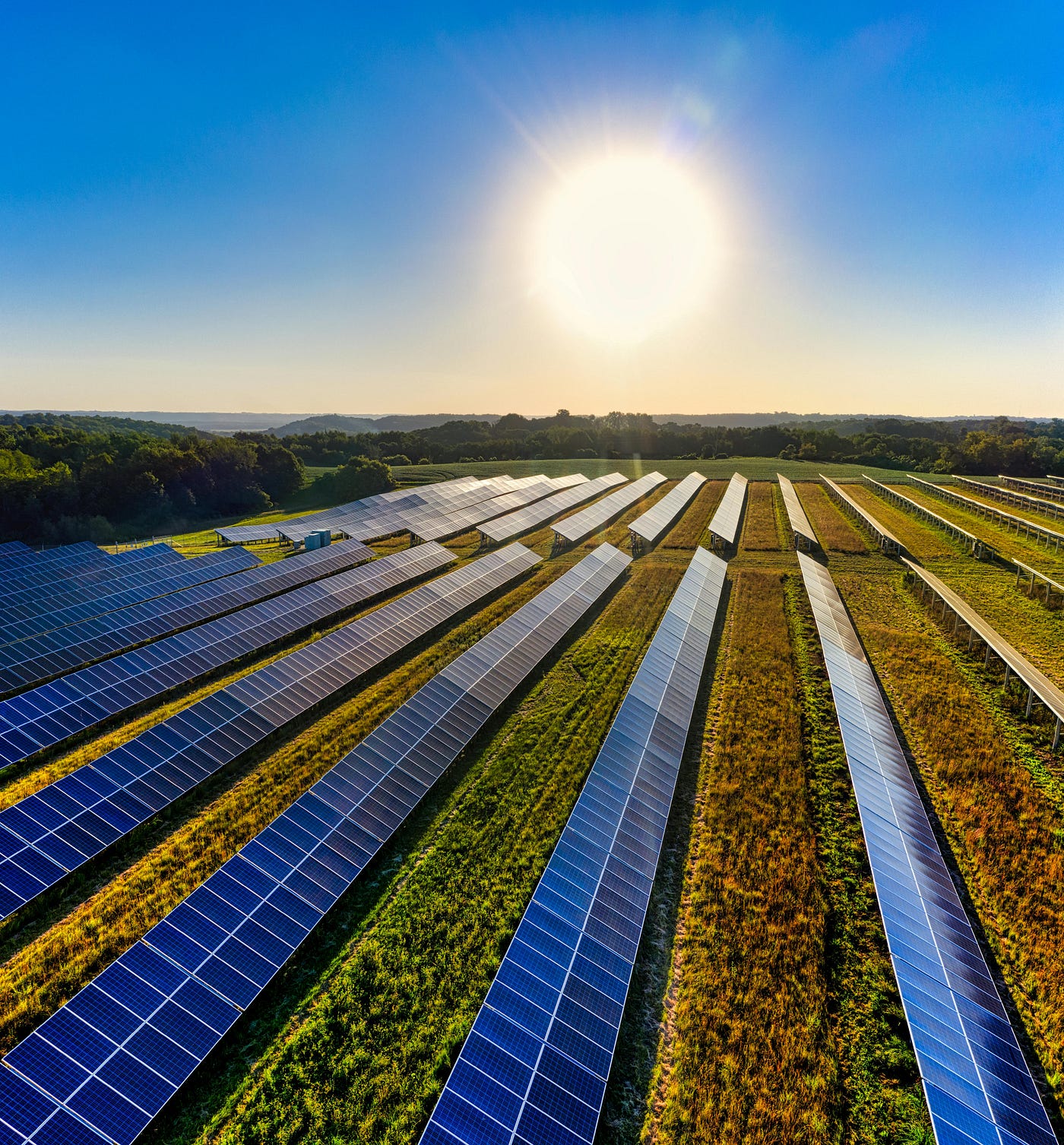
- Solar power offers investment opportunities in panel manufacturing, utility-scale solar farms, and residential rooftop systems.
- Wind energy, especially offshore wind, is growing rapidly in Europe, Asia, and the U.S., creating demand for turbines, maintenance services, and grid integration.
Governments often provide incentives, tax breaks, and feed-in tariffs to support these investments, making them relatively low-risk over the long term.
b. Energy Storage and Battery Technology
The intermittent nature of renewable energy demands reliable energy storage solutions. This makes battery technologies — such as lithium-ion, solid-state, and flow batteries — a vital area for innovation and investment.
Companies like Tesla, CATL, and QuantumScape are leading the charge in battery research, and venture capital is increasingly supporting startups developing energy storage breakthroughs. Additionally, large-scale grid storage systems like Tesla’s Megapack offer institutional investors long-term returns.
c. Hydrogen and Alternative Fuels
Green hydrogen, produced using renewable electricity, is gaining traction as a clean alternative for industries that are hard to electrify, such as steel, shipping, and aviation. Major investments are being made in hydrogen production plants, fuel cell technology, and transportation infrastructure.
Countries like Germany, Japan, and Australia are launching national hydrogen strategies, creating fertile ground for public-private partnerships and international funding.
d. Smart Grids and Clean Tech
The integration of renewable energy into existing power grids requires modernization through smart grid technologies, IoT, and AI-based demand forecasting. Companies offering grid software, smart meters, and energy management platforms are attracting both venture capital and institutional investment.
3. Investment Opportunities in Space Exploration
a. Satellite Technology and Launch Services
Satellite applications are no longer limited to government use. Commercial services such as broadband (e.g., Starlink), Earth observation, weather forecasting, and global positioning are now booming sectors.
- Constellations of small satellites are creating demand for low-cost launch providers and satellite manufacturing companies.
- Investment opportunities exist in satellite data analytics firms, component suppliers, and ground station services.
Private equity and venture capital firms are actively investing in startups that support data-based agriculture, mining, maritime, and disaster response using satellite imaging and analytics.
b. Space Launch and Reusability
SpaceX, Rocket Lab, Blue Origin, and other aerospace companies are leading a revolution in launch frequency, cost efficiency, and reusability. SpaceX’s Starship, for example, promises to cut orbital costs dramatically, potentially enabling commercial missions to the Moon and Mars.
Investors are pouring capital into launch startups, propulsion tech, and 3D-printed rocket parts. Space-focused SPACs (Special Purpose Acquisition Companies) have also enabled small space companies to access public markets and raise significant funds.
c. Lunar and Deep Space Exploration
NASA’s Artemis program and partnerships with private companies mark the beginning of a new space race focused on the Moon and Mars. These missions open avenues for investment in life-support systems, habitat modules, lunar mining, and autonomous robotics.
While still high-risk, the long-term rewards for early investors could be significant as governments commit billions to deep space initiatives and international collaborations.
d. Space Tourism and Commercialization
Companies like Blue Origin and Virgin Galactic are making suborbital space tourism a reality. Though still in its infancy, this sector has garnered strong interest from high-net-worth individuals and venture capital firms.
As costs decrease and technology improves, space tourism may expand into orbital hotels, commercial research in microgravity, and entertainment ventures — offering novel investment avenues.
4. Cross-Sector Synergies: Sustainability Meets Space
Interestingly, sustainable energy and space exploration are increasingly intersecting;
- Solar panels used in space are driving advancements in terrestrial solar efficiency.
- Energy storage developed for satellites is influencing grid-scale batteries.
- Green propulsion systems for rockets reduce the environmental footprint of launches.
- Satellites help monitor climate change, optimize renewable energy placement, and detect natural disasters.
Investors who recognize these synergies can leverage diversified strategies that benefit from technological spillovers between space and clean energy.
5. Funding Channels and Investor Categories
a. Venture Capital and Private Equity
Startups in both sectors are attracting VC and PE funding, especially those with scalable solutions, patented technologies, or strong government ties. Accelerators like Y Combinator and space-specific funds like Seraphim Capital are nurturing early-stage ventures.
b. Public Markets and SPACs
Many companies in the space and energy sectors are going public through IPOs or SPAC mergers. Investors can access these through ETFs like ARKX (space) and ICLN (clean energy), or invest directly in public companies like Plug Power, Tesla, and Rocket Lab.
c. Government Grants and Subsidies
Governments remain a crucial source of funding via agencies like NASA, the Department of Energy (DOE), the European Space Agency (ESA), and public infrastructure funds. Investors can co-invest or align with public programs to reduce risk.
d. Impact Investment and ESG Funds
With growing interest in ESG investing, funds are channeling capital into companies with strong sustainability credentials. Impact investors specifically target measurable environmental and social returns, making sustainable energy a key priority.
6. Risks and Considerations
While the opportunities are abundant, both sectors come with notable risks:
- Technological uncertainty: Breakthroughs can take years, and not all innovations reach commercial viability.
- Regulatory hurdles: Policies can change, especially with space governance or emissions targets.
- Capital intensity: Many projects, particularly in space and infrastructure, require significant upfront investment and long timelines.
- Market competition: As the sectors mature, competition will increase, potentially eroding early profits.
Investors must conduct thorough due diligence, assess long-term viability, and diversify within and across sectors to mitigate risk.
Investment in sustainable energy and space exploration represents a convergence of financial opportunity, innovation, and global impact. As the world transitions toward a cleaner, more technologically advanced future, funding these sectors not only promises strong returns but also contributes to solving humanity’s most pressing challenges — from climate change to interplanetary survival.
For investors, the time to act is now. With government backing, rapid innovation, and an increasingly favorable public mindset, sustainable energy and space exploration stand as two of the most promising frontiers of the 21st-century economy.
메타데이터
- post_id
- f0baeadbcb7e
- slug
- investment-and-funding-opportunities-in-sustainable-energy-and-space-exploration-f0baeadbcb7e
- url
- https://medium.com/@imali8810/investment-and-funding-opportunities-in-sustainable-energy-and-space-exploration-f0baeadbcb7e
- canonical_url
- https://medium.com/@imali8810/investment-and-funding-opportunities-in-sustainable-energy-and-space-exploration-f0baeadbcb7e
- author_url
- https://medium.com/@imali8810
- status
- ok
- fetched_at
- 2026-06-09 15:37:30