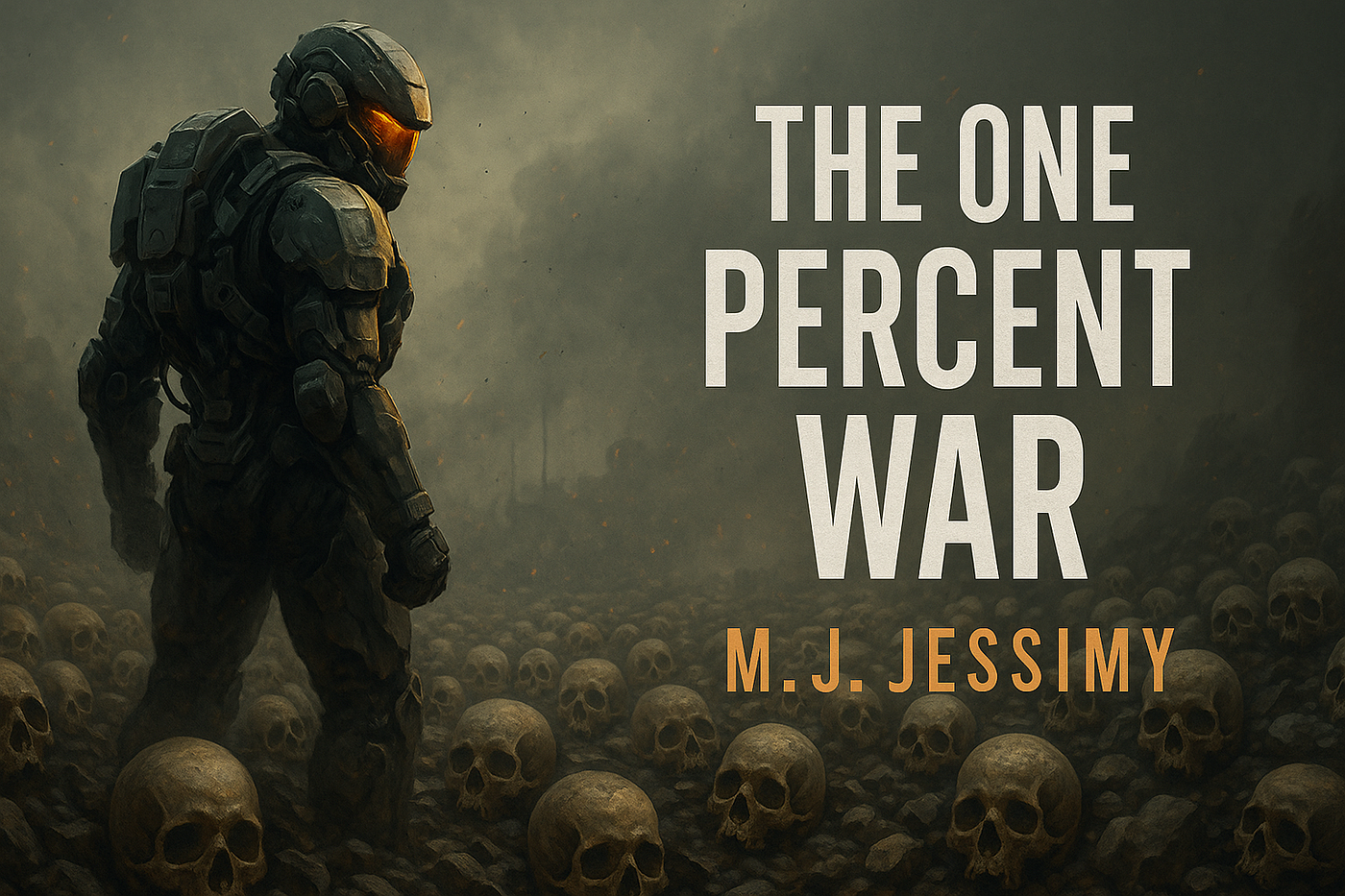
10 Best Military Dystopian Sci-Fi Books That Will Wreck Your Sleep Schedule
There’s something uniquely unsettling about military dystopian sci-fi. It doesn’t just ask “what if the future is dark?” — it asks “what if…
10 Best Military Dystopian Sci-Fi Books That Will Wreck Your Sleep Schedule
There’s something uniquely unsettling about military dystopian sci-fi. It doesn’t just ask “what if the future is dark?” — it asks “what if the future is dark, and we’re the ones holding the guns?” These stories strip away the comfort of distance. The soldier isn’t a background character mowing down faceless enemies; they’re the lens through which we watch systems of power grind people down, one deployment at a time.
Whether you’re drawn to the philosophical weight of Heinlein, the war-weary grit of Haldeman, or newer voices pushing the genre into fresh territory, here are ten books that earn a permanent spot on the military dystopian sci-fi shelf.
1. Starship Troopers — Robert A. Heinlein
The book that arguably created the modern template for military sci-fi. Beneath the powered armor and interstellar bug hunts is a dense meditation on citizenship, duty, and what a society owes — and demands from — the people who fight its wars. Heinlein’s Terran Federation, where full citizenship is earned through military service, remains one of the genre’s most debated political thought experiments decades later.
2. The Forever War — Joe Haldeman
Written as a direct response to Heinlein and shaped by Haldeman’s own experience in Vietnam, this novel follows soldier William Mandella through a war that stretches across centuries thanks to relativistic time dilation. Every time he returns from combat, Earth has changed so much he’s a stranger in it. It’s less about the battles and more about the alienation of coming home to a world that no longer recognizes you — arguably the most human military sci-fi novel ever written.
3. Old Man’s War — John Scalzi
Scalzi takes the “soldiers fighting endless interstellar war” premise and adds a wicked hook: recruits are senior citizens who trade their old bodies for genetically enhanced ones in exchange for military service. It’s darkly funny, propulsive, and quietly devastating once you realize what the Colonial Union is actually asking of the elderly people it recruits.
4. Armor — John Steakley
Underrated and criminally under-discussed, Armor follows a soldier named Felix through the psychological wreckage of repeated high-casualty combat drops against an alien enemy. Steakley digs into trauma, dissociation, and the terrifying idea that surviving a war might cost you more of yourself than dying in one would.
5. Ender’s Game — Orson Scott Card
A dystopia disguised as a coming-of-age story. Child soldiers are trained through simulated warfare so brutal and immersive that the line between game and genocide disappears entirely. The twist ending remains one of the genre’s most gut-punching commentaries on how militaries dehumanize the people — and here, the children — they weaponize.
6. Red Rising — Pierce Brown
Set in a brutally stratified Mars colony ruled by a genetically engineered elite, Red Rising follows a low-caste miner who infiltrates the ruling class through a violent, Hunger-Games-style military academy. It’s dystopian world-building married to unapologetic, large-scale war strategy, and the trilogy only escalates from there.
7. The Hunger Games — Suzanne Collins
Technically YA, but don’t let that fool you — Collins built a militarized dystopia where child combat is a tool of state propaganda and social control. The Capitol’s arena isn’t just entertainment; it’s a machine for reminding conquered districts exactly who holds the weapons. Few books capture the psychological toll of forced combat as sharply.
8. 1984 — George Orwell
The ur-text of dystopian fiction, and inseparable from military dystopian sci-fi because its entire society runs on perpetual, possibly fabricated war. Oceania’s endless conflict with Eurasia or Eastasia (the enemy shifts, but the war never ends) exists to keep the population compliant and resources controlled. Orwell understood something the rest of this list circles back to again and again: permanent war is a tool of governance, not just geopolitics.
9. Metro 2033 — Dmitry Glukhovsky
Set in the irradiated ruins of post-nuclear Moscow, Glukhovsky’s survivors have retreated into the metro tunnels, where rival factions wage war over territory, ideology, and survival itself. It’s bleaker and more claustrophobic than most entries on this list, trading interstellar scale for something far more intimate and suffocating.
10. The One Percent War — M.J. Jessimy
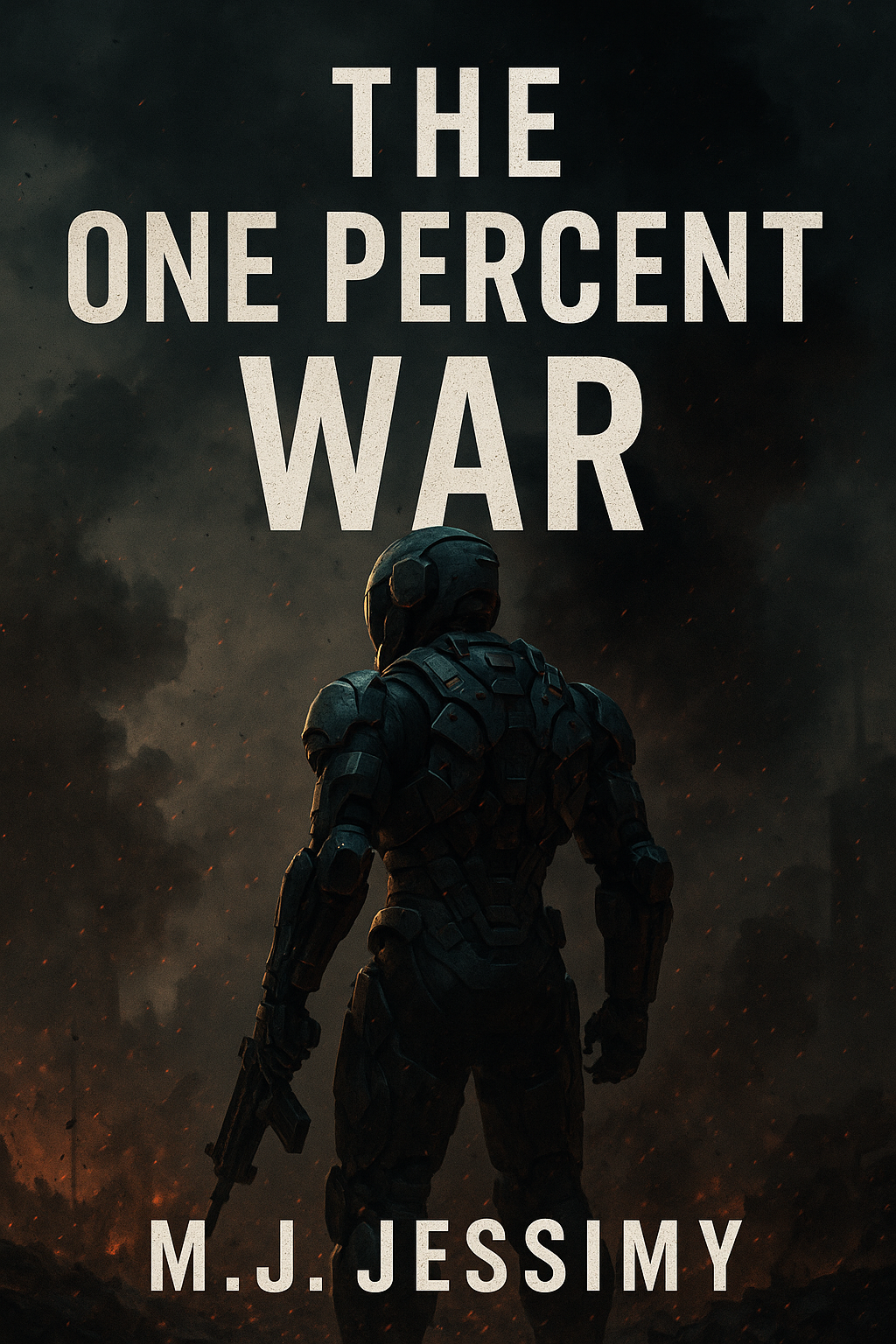
Rounding out the list is a newer entry (2025) that distills the genre’s bleakness into a single, devastating premise. In a war without end between the Federation and the Eastern Pact, a breakthrough exosuit called the Equalizer turns ordinary soldiers into “war gods” — fast, precise, unstoppable. The catch, classified from the soldiers themselves: every activation burns away one percent of the wearer’s lifespan. And once synced, the suit activates itself — an adrenaline spike, a perceived threat, even a nightmare is enough. As entire companies begin dropping dead and whistleblower footage leaks to the blacknets, the Federation’s response isn’t to abandon the technology. It’s to bring back conscription — and then lower the draft age to twelve, recalibrating the suits “for adolescent synchronization.” Told through the detached eye of history rather than a single hero’s arc, it reads less like an adventure and more like an autopsy of a society that stopped asking whether the price was too high and only asked whether it could be paid in time. The average life lost per soldier: 47 years. The Federation didn’t win. They almost did — and almost was enough to kill them.
Why This Genre Keeps Hitting So Hard
What ties all ten of these books together isn’t lasers or power armor. It’s the question underneath the action: what does a society become when war is normalized, and what does it cost the people asked to fight it? Heinlein and Haldeman were answering that question in the shadow of real 20th-century wars. Collins and Brown are answering it for readers raised on reality TV and algorithmic spectacle. Jessimy answers it with brutal literalism: a state that knows exactly what its war machine costs — down to the percentage point — and classifies the price rather than pay it, feeding first its volunteers, then its conscripts, and finally its children into the debt.
메타데이터
- post_id
- f0bf65b890f3
- slug
- 10-best-military-dystopian-sci-fi-books-that-will-wreck-your-sleep-schedule-f0bf65b890f3
- url
- https://medium.com/@mjavier6/10-best-military-dystopian-sci-fi-books-that-will-wreck-your-sleep-schedule-f0bf65b890f3
- canonical_url
- https://medium.com/@mjavier6/10-best-military-dystopian-sci-fi-books-that-will-wreck-your-sleep-schedule-f0bf65b890f3
- author_url
- https://medium.com/@mjavier6
- status
- ok
- fetched_at
- 2026-07-09 03:40:04