The Work Nobody Applauds
Finding Dignity In Ordinary Labor
The Work Nobody Applauds
Finding Dignity In Ordinary Labor
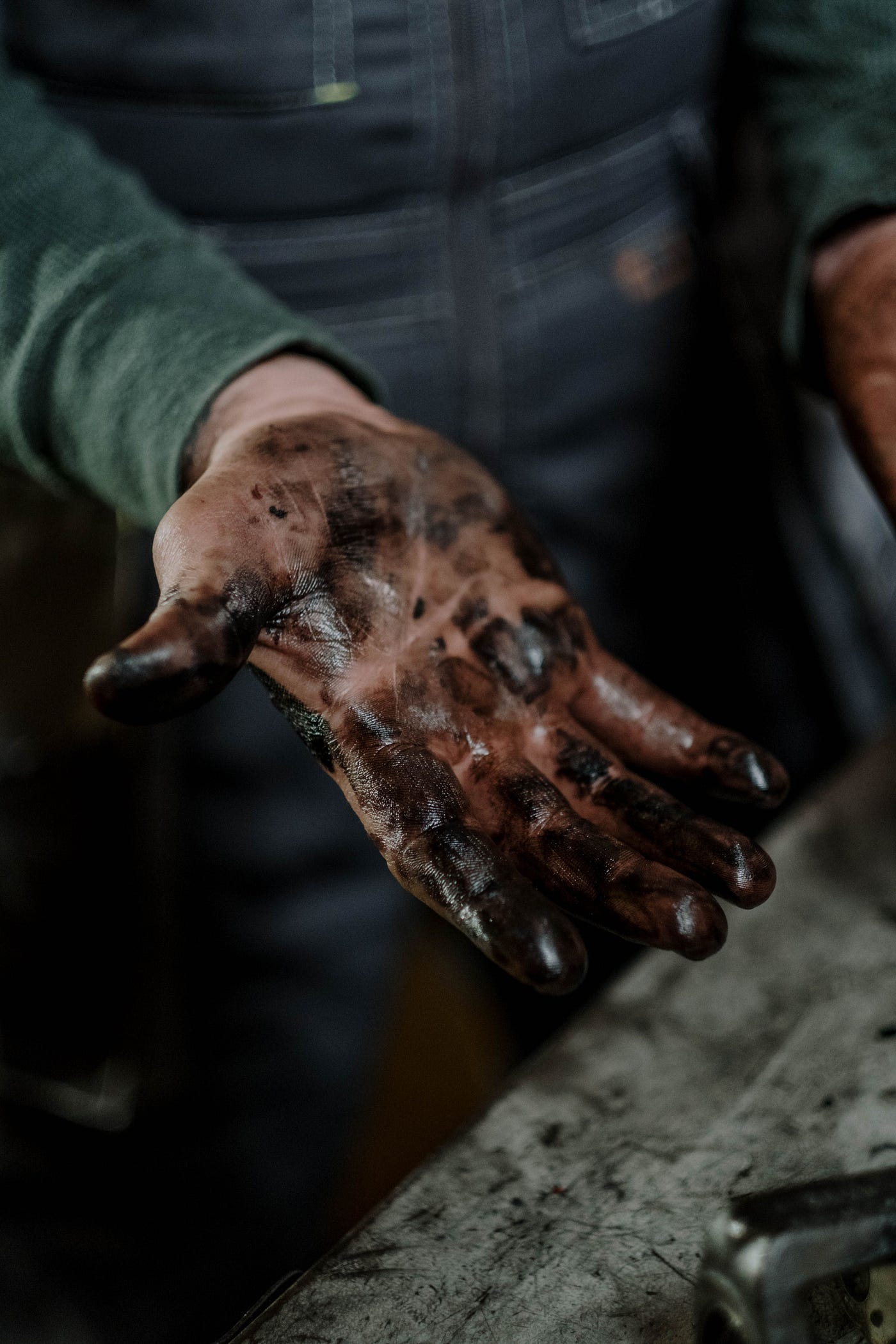
“Grease-stained hands remind us that worth is not measured by recognition, but by faithfulness to the work before us.” ) photo by Cottonbro Studio on Pexels
Part Of The Series: Faith In Grease-Stained Hands — Exploring The Meaning Of Work, Dignity, And Human Experience Through Manual Labor.
We are part of a culture that sees some work more than others. Achievement is celebrated. Recognition is rewarded. Public success attracts attention. The people we see on stages, running organizations or building platforms get all the glory. By contrast, much of the work that holds society together happens behind closed doors. Vehicles are repaired before dawn. Streets are cleaned before half the population even wakes up. Behind closed doors things are maintained. Workers — who lift, carry, fix, build and maintain the normal functions of everyday life without much recognition. This creates a strange imbalance. Society tends to pay least attention to the work it relies on most. Finding this invisibility lasting a lifetime for so many of the laborers They toil, they feed families and communities, they carry a world of responsibility on their shoulders and receive less than understanding in return. After some time, it raises an interesting question: If no one notices my work, does it even matter? This is not simply a financial question It is a matter of dignity. A question about value. A question of whether labor which is done day-by-day has meaning apart from the pay it generates. The question remains deeply personal for many people who work with their hands.
What the Workshop Taught Me About Worth Factory methodology requires regular consideration of operational meaningfulness and collaborating faculty design. A vehicle comes with an issue. When the repair is complete, the owner may have only seen finished results. They never really see the innumerable hours spent digging into failure, vetting plausible solutions and wrestling with problems buried several layers deep in machinery. The work evaporates into the result. This applies to many other professions as well. We see the results, but not how hard creating them was. But the workshops reveal a vital truth about what we value in people. Work is not defined by how many people get to see it. Even if nobody notices it is of value no matter how many people notice a repaired engine or one person. Similarly, working faithfully matters even without a prize. This lesson shatters a lot of conventional wisdom about success. They say visibility is a modern paradigm that teaches folk to quantify their value in the world. But workshops are obnoxiously preachy about a different lesson. But some of the most important work is done in relative obscurity. And in that reality there is a deep spiritual truth.
God’s Attention Is Different From Human Attention One of the most comforting truths about faith is that God does not judge people according to many of the criteria by which we humans assess individuals. Human nature is to spot power, prestige, beauty and success. God sees faithfulness. From scripture, many whom God used most powerfully existed in common work throughout their lives. Moses cared for sheep. David tended flocks. The disciples worked as fishermen. Jesus Himself worked most of His time on the earth at manual labor prior to launching a public ministry. These details matter. They remind us that common work is not less Christian work. God does not limit His presence to those who have grand titles. He also does not measure the worth of people by human fame. The carpenter’s bench. The fishing boat. The shepherd’s field. The mechanic’s workshop. As small as they may appear on the existing world stage, yet places where human beings dwell, suffer, learn and meet Jesus. Faith reframes mere mortal toil for us by reminding us that no work is too menial to provoke divine scrutiny.
The Dignity Of Providing The least known form of dignity is the dignity of provision. A lot of workers endure 40 years clocking-in not because each dawn brings a sense of purpose, but rather that someone (or the government) relies on them. Families need food. Children need education. Homes require maintenance. Responsibilities require sacrifice. Labour of such kinds rarely gets attention. It can also be long hours, physical labor and emotional labour. However, there is a deep nobility in taking your strength and talents and using them to care for others. Provision is an act of love. Every repaired vehicle that helps in making a living. Every long shift done even though dead on your feet. All Sacrifices Are For The Blooming Of Someone Else. Both have significance beyond the physical. The world might call them average. But these are not by any means negligible. Faith teaches us that love is often expressed in the language of obligation and duty. And it is in the form of labor that responsibility seems to manifest most frequently.
When Work Feels Meaningless There will probably be days when this point of view seems a little challenging to uphold, as always. Every worker has an experience where work is monotonous, draining, and taken for granted. The routine becomes heavy. Fatigue accumulates. Although the effort needed to complete a task often outweighs the reward, It is easy to think that nothing matters in those moments. Still, meaning is not always found in thrill. Meaning is sometimes found in the consistency A mechanic torquing bolts can’t feel inspired all of the time. The farmer sowing seeds will not be able to witness results right away. A worker doing routine maintenance on equipment may never be seen publicly. However, a great deal of entire communities are held aloft by faithful repetition. Labour is important not because it feels good. So, it depends on the good that is achieved. And much of the best human value comes through the simple repetition of acts over time.
Why Ordinary Labor Matters The greatest lesson I learned from grease-stained hands It comes from purpose. There are forms of work that the world may dismiss. God does not. Every honest work adds value to another person’s life. A trust held and honored is a testament to character. Every sacrifice given for the good of another has significance. This does not remove exhaustion. It does not eliminate hardship. But it changes perspective. It reminds us that we are not worth less when not visible. Our value does not become reality because others see us. Our worth is tied to the fact that we are created in the image of God. And when that truth sinks in, even the banalities of labor begin to take on a different appearance. The workshop is more than a work place. It becomes more of a task than motility. The day transforms from a robotic schedule. It becomes a moment where we can live obediently to the normative human experience. And maybe that is where real dignity lies— not in being feted, but knowing that work with integrity, humility and love never goes unrewarded. In fact, I could see this article emerging right after The Loneliness of Working With Your Hands in the budding book — it answers the question loneliness asks: If my work is giving an audience but no one sees it, does it matter? This thinking is what the article argues that it does.
If this reflection on work and faith resonated with you, consider supporting my ongoing research and writing by joining my Patreon community at patreon.com/RobsonMunambaDeepDivesReflections.
메타데이터
- post_id
- f0d47e15aca0
- slug
- the-work-nobody-applauds-f0d47e15aca0
- url
- https://medium.com/@robsonmunamba/the-work-nobody-applauds-f0d47e15aca0
- canonical_url
- https://medium.com/@robsonmunamba/the-work-nobody-applauds-f0d47e15aca0
- author_url
- https://medium.com/@robsonmunamba
- status
- ok
- fetched_at
- 2026-06-09 15:37:30