Why Decentralization Matters
In this article we want to outline three reasons about why decentralization is really something that can improve our lives.
Why Decentralization Matters
If you are familiar with web3 you may have heard this mantra often:
“Decentralization Matters!”
Everyone is talking about web3 as the new iteration of the Internet we use today (web2) but with a shift that focuses on decentralization. In this article we want to outline three reasons why decentralization is something that can really improve our lives:
- Fighting Censorship
- Ownership of Your Data
- Financial Freedom
Feel free to suggest other reasons that are important to you, at the end of this article. If you are not familiar with web3, you can read our previous article here:
1. Fighting Censorship
In web2 the majority of companies monetize their user’s data.
Think of companies like Google or Facebook where you do not pay for their services: it’s all free!
But why is it free? Because you are the product.
No one really reads the Terms & Conditions when opening a new Google account. If they did, they’d be shocked to know just what they’re allowing a company like Google to do. By agreeing to those conditions, people give up their rights to privacy and let these companies do many things with their data, such as tracking their interactions on the web. In web2 you basically give up control of your data once you sign those Terms & Conditions with massive companies like Google or Facebook.
Furthermore, your interactions with these applications are completely controlled by them. We all know that search results in Google are controlled, based on how much an advertiser pays to be at the top of the search results. We also know that Google or Facebook censors what we see in their applications. The illusion of freedom on their platforms is carefully crafted, often to benefit the companies themselves.

Photo by Markus Winkler on Unsplash
You can read more about how both Google and Facebook censors data here:
Do you like the idea of searching for something only to see results that have been influenced by what these companies want you to read? We think not.
In web3 there is no censorship!
If we think about Ethereum (the second largest and most used blockchain in web3) all the data stored in it is completely and fully accessible by everyone. Searches on Ethereum are handled thanks to open protocols like The Graph, where there is no central power in control or advertisers paying to influence search results.
In the web3 space, you are no longer the product.
While Google makes money by selling ads and manipulating what you see, in web3 there are open protocols whose economic sustainability is provided by work utility tokens.
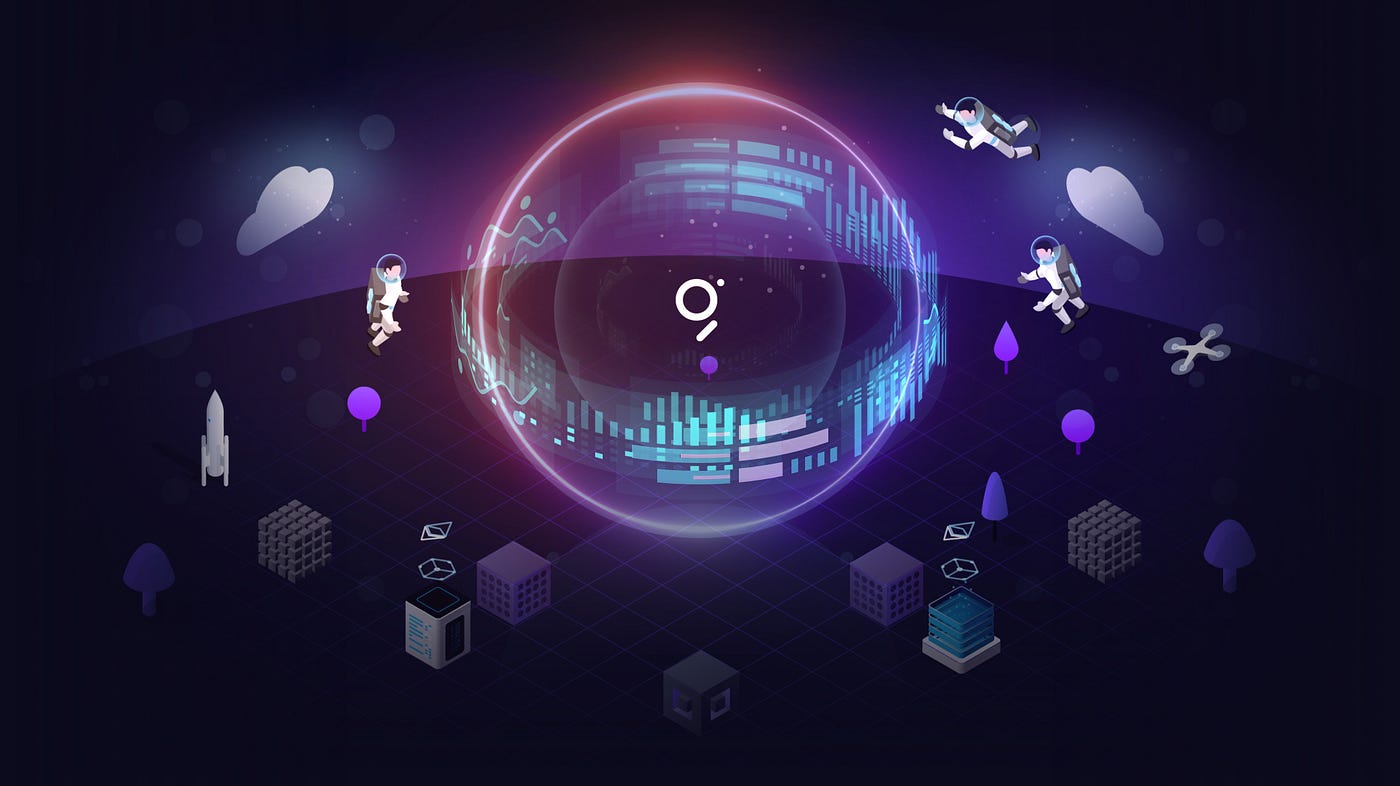
In the case of The Graph, the work utility token is GRT. Applications built on top of Ethereum can use GRT to compensate participants in The Graph network for the services they provide. In an open protocol like The Graph, there is no CEO that can decide to censor content or provide preferential treatment. Governments or powerful public companies cannot do anything to prevent data from being displayed.
Credit: https://thegraph.com/blog/the-graph-network-in-depth-part-1/
The Graph functions thanks to a Decentralized Network of node operators, called “Indexers”. Anyone can setup a node and begin indexing data and providing search results. In exchange for this service, node operators are rewarded with GRT tokens. If you want to know more about the incentives of being a node operator in The Graph network, you can read more here:
In a nutshell, open protocols in web3 like The Graph are exactly the opposite of proprietary algorithms built by web2 companies.
2. Ownership of Your Data
Everyone knows that NFT is a cool word, but what impact can Non Fungible Tokens have in our life? NFT is often associated with digital art, like the world famous Bored Ape Yacht Club. But this is just the tip of the iceberg. NFTs are becoming more and more popular, since they embody the idea of you actually owning the digital items you buy. But do you really own them?
Owning your online files forever
Digital Art is growing, and in recent years we have seen flourishing online exhibitions. People are buying expensive art in the form of NFTs. But after spending your money to buy an NFT, how can you ensure that your investment is preserved? In other words, who is actually storing the file which represents your NFT? We encounter deleted or corrupted data all the time. Think how often have you clicked on a dead link online. Or what if one day a service you use ceases to exist? Everyone remembers “Google Plus”, an attempt from Google to offer an alternative to Facebook. All of a sudden Google decided to close their service and asked users to backup their data:
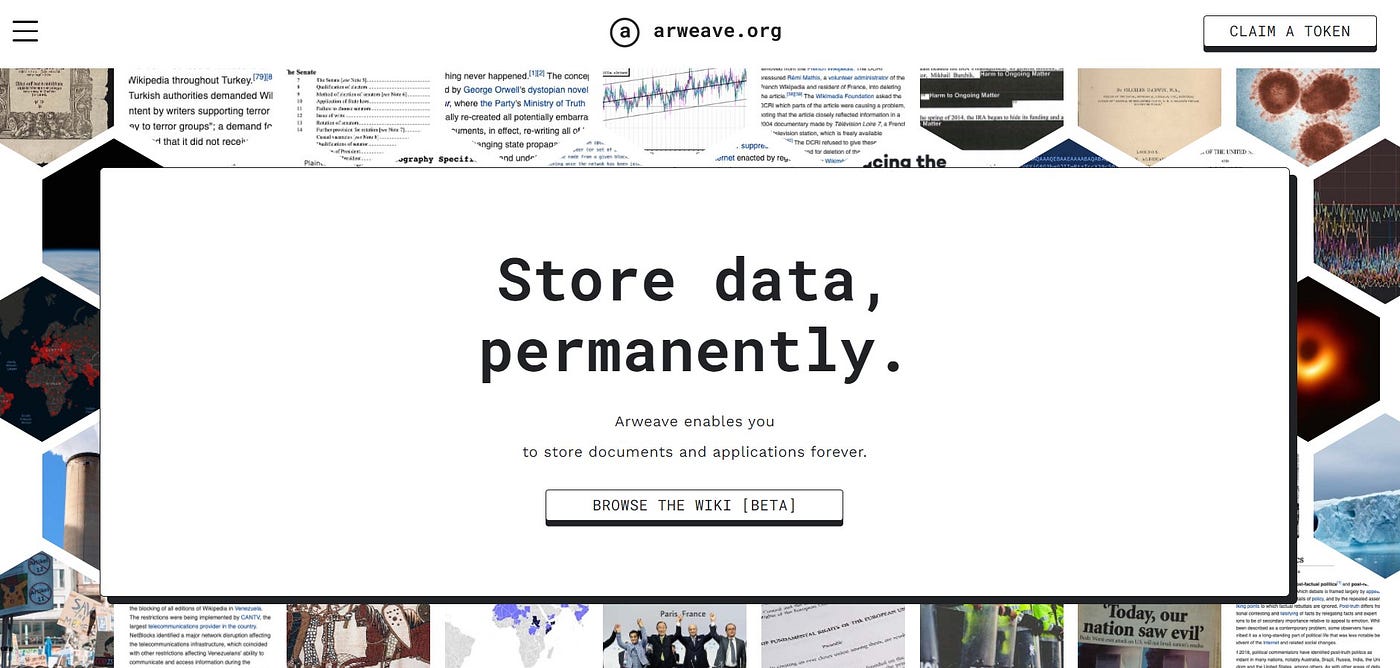
The remedy to this problem is to rely on decentralized web3 protocols like Arweave, where files are stored permanently on a decentralized network in which no one has the authority to apply censorship or shutdown the service. Similar to The Graph, Arweave has a utility token (AR) which is the incentive for everyone to join the network and provide storage for all of humanity.
Credit: https://www.arweave.org/
Ethereum was not created for data storage, as it would be extremely complex and expensive to store data on it. Arweave is basically the layer that provides data storage for web3. In the Arweave blockchain users can store NFTs, videos, photos, documents, etc., permanently and for a one-time fee. Data on Arweave won’t be changed or deleted, but stored forever.
On top of Arweave there are several tools and projects that are being built to provide both developers and end users a more streamlined experience. One of the most interesting project is **Bundlr**, which accounts for over 90% of all data uploaded to Arweave.
Credit: https://medium.com/bundlr-network/in-the-past-year-bundlr-has-achieved-many-milestones-4b71e7016169
Bundlr was created to scale Arweave and make web3 data storage faster, easier to use, and multi-chain supportive. Bundlr launched its Testnet in July 2022, and plans to launch its Mainnet late in 2023.
Since Bundlr has been launched, the number of transactions on Arweave has increased by about 3000%. Not only is Bundlr easy to integrate on any platform and use, but it is also accessible by any blockchain and accepts any token as payment. This is different from storing in Arweave, where you can only pay using their native AR token. Once uploaded to Bundlr, your data is instantly available, and guaranteed to be permanently stored on web3, forever.
3. Financial Freedom
In most developing countries, it is very hard to have access to banking systems or to credit cards. It may seem weird to you, but not all countries have developed economies or democracies that allow their citizens to decide what to do with their money. Even in developed countries, the bank system is very rigid and old, not keen to embrace changes. Plus, the cost of transferring money across countries is super expensive, especially when dealing outside certain areas (e.g. wire transfers across two continents, or outside the EU area). While it is true that web2 has seen a constant rise of new online banks, the truth is that it is just an online version of the traditional banking system. It is nothing more than the old way of doing business, but now just online. And similar to how Google controls your data, your bank and government can control your money.
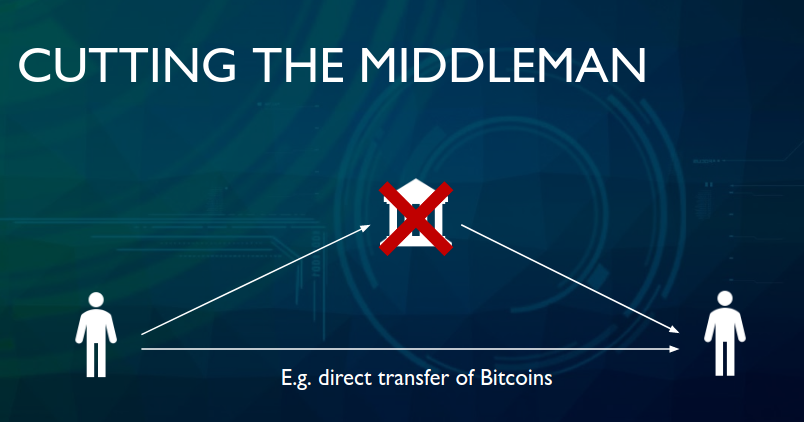
New companies like Strike leverage the Bitcoin Decentralized Network by allowing people to exchange money (e.g. for remittance), or for merchants to get paid directly by their customers (avoiding the middlemen like credit card companies and banks). This eliminates all the fees which are given to intermediaries and allows instant exchange of money across continents, like never before.
Credit: https://originstamp.com/blog/what-is-blockchain-based-timestamping/
Let’s make a comparison to a bank account. In web2, you have an account tied to a specific bank institution. Let’s say you do not like their services anymore or you do not like their app. If you want to switch you have to go through quite a few steps. You have to open a new bank account, move the funds from your old bank to the new one, and then close the old bank account. This is a complex process that requires filling out a lot of documentation as well. It can take months to do this!
In web3, the bank is the network itself. For example, think about Ethereum, the second largest blockchain. There is no ownership and no central authority that can shutdown or control the network. In Ethereum, you can keep your savings totally safe in a stable coin like USDC or USDT. To access your savings, you just need a crypto/web3 wallet (of which you have plenty of choices). If you do not like a specific wallet, you can simply download and install another one, and still access your savings with just a few clicks. Today, more and more merchants are beginning to accept crypto native payments, so it’s reasonable to foresee that in the next few years banks will need to embrace web3 or risk losing market share to new players (like Strike or Coinbase that have had a footprint in web3 since day one.)
If you want to know more about what a crypto/web3 wallet is, you can read our previous article here:
This concludes our article. Feel free to suggest other points of view or reasons you think decentralization matters, in the comments.
Do you have any questions?
**Graphtronauts** is the largest, unofficial community for long-term GRT holders who believe in The Graph’s web3 vision for the future. Our goal is to educate the broader crypto community and help them become contributing members within The Graph ecosystem.
If you have any questions, or concerns, or want to submit feedback, you can reach out to us using our social channels:
- App: graphtronauts.app
- Telegram: t.me/graphtronauts
- Twitter: twitter.com/graphtronauts_c
- YouTube: youtube.com/@graphtronauts
- Blog: blog.graphtronauts.com
- Warpcast: warpcast.com/~/channel/graphtronauts
- Reddit: reddit.com/r/Graphtronauts
- LinkedIn: linkedin.com/company/graphtronauts
graphtronauts.com is the largest unofficial community for long term GRT holders.
Graphtronauts indexer is live on The Graph!
You can read our official launch announcement here.
If you want to delegate to us, you can go directly in Graph Explorer, using the link **here**.
You can delegate to us via Graph Explorer, here.
You can contact us using our dedicated social channels for our Indexer operation:
- Twitter: @graphtronauts_x
- Discord: Join our Server
- Telegram: @GraphtronautsIndexer
- **Delegate to us**
메타데이터
- post_id
- f0d7a5efcbbc
- slug
- why-decentralization-matters-f0d7a5efcbbc
- url
- https://medium.com/coinmonks/why-decentralization-matters-f0d7a5efcbbc
- canonical_url
- https://medium.com/coinmonks/why-decentralization-matters-f0d7a5efcbbc
- author_url
- https://medium.com/@OG-Graphtronauts
- status
- ok
- fetched_at
- 2026-07-26 13:45:18