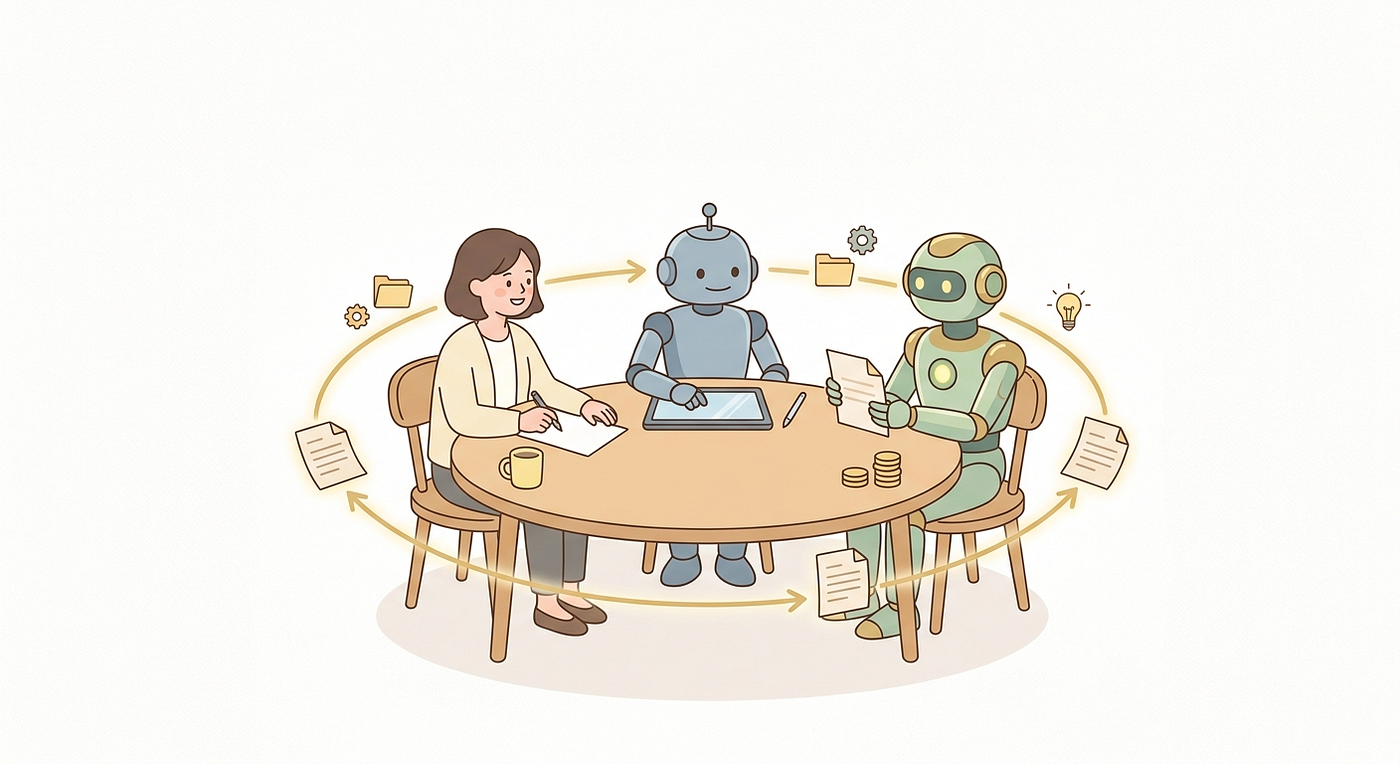
The Two Sides of AI: ChatGPT vs. the API: Which One Do You Need?
You’re paying for ChatGPT. You use it every day. You feel like you’ve got AI covered.
The Two Sides of AI: ChatGPT vs. the API: Which One Do You Need?
You’re paying for ChatGPT. You use it every day. You feel like you’ve got AI covered.
Then you add an AI feature to your CRM. Or your email tool starts offering an “AI assistant.” Or you watch a YouTube video where someone claims their AI business made them $30,000 last month — and you wonder why yours isn’t doing the same.
Here’s what nobody told you: the AI you’re paying for and the AI powering those tools are two completely different things. Same technology. Completely separate products. Separate billing.
Let me explain.

mage prompt: A clean split illustration — on the left, a person typing into a chat window on a laptop; on the right, interconnected business applications and dashboards. In the center, a glowing AI brain connecting both sides.
ChatGPT Is Not “The AI.” It’s a Window Into It.
This is the most important thing in this post, so I’ll say it plainly.
OpenAI — the company behind ChatGPT — built a very powerful AI model called GPT. Think of GPT as the engine. ChatGPT is the car they built around that engine so regular people can drive it.
When you go to chat.openai.com and type a question, you’re using the car. It’s designed to be easy, friendly, and accessible. You pay a flat monthly fee and you can use it as much as you want within certain limits.
But OpenAI also made the engine available separately — without the car. Developers, businesses, and software tools can connect directly to GPT and use it inside their own products. That connection is called an API (Application Programming Interface). Don’t worry about the name — just think of it as a direct line to the AI engine, no chat interface required.
These are two completely different products. With different pricing. And most people have no idea the second one exists.

A clean split illustration — A car engine block in the center, glowing with energy. To the left, a single family sedan. To the right, a lineup of very different vehicles — an off-road SUV, a rally car, a Formula 1 car, and a helicopter
The Three Chat Plans — And What They Don’t Cover
Right now, ChatGPT offers four subscription tiers for regular users:
- Free — basic access, limited usage, older model
- Go — around $8/month, longer chats, limited usage, access to newer models
- Plus — around $20/month, faster responses, access to newer models
- Pro — around $200/month, highest limits, most advanced features
These plans cover you, using ChatGPT, in that chat window. That’s it.
They do not cover any other application that uses AI. Not your CRM. Not your email tool. Not the AI chatbot on someone’s website. Not a custom tool a developer built for your team.
Every one of those is using the API — and the API has its own completely separate pricing.
How API Pricing Actually Works (And Why It Can Get Expensive Fast)
Here’s where it gets interesting.
When a business or developer uses the API, they don’t pay a flat monthly fee. They pay per use — specifically, per “token,” which is roughly per word processed. Every time their app sends a question to the AI and gets an answer back, a small charge hits their account.
For most normal uses, this is very cheap. A single question and answer might cost a fraction of a cent.
But here’s the catch: if thousands of people are using that app, those fractions of a cent add up very fast. And if something goes wrong — a bug in the code, a loop that keeps sending requests, or a sudden spike in traffic — the bill can spiral out of control before anyone notices.
That’s where those stories come from. You’ve probably seen the headlines: “Developer wakes up to $20,000 AWS bill.” Or the YouTube creator who built an AI tool that went viral overnight and suddenly owed OpenAI tens of thousands of dollars. That’s not a subscription fee gone wrong. That’s API usage that nobody capped or monitored properly.
Every AI-Powered App You Use Is an API Customer
This is the part that changes how you think about every AI tool in your business.
Take Notion AI. If you use their AI assistant to summarize emails or draft follow-ups, Notion AI is calling the API every single time you hit that button. They’re paying OpenAI or Anthropic (the company behind Claude) per use — per word, essentially — and building that cost into what they charge you. The same is true for Zapier, Intercom, your email platform’s smart compose feature, your customer support tool, and virtually every other SaaS product that added an AI feature in the last two years.
So when you pay $49/month for one of those tools, part of that fee covers their API bill. They’ve done the math, estimated how much their average customer uses the AI feature, and priced accordingly. Sometimes they get it right. Sometimes they don’t — and they either raise prices or quietly limit how much AI you can use per month.
The key point: your $20 ChatGPT subscription does not subsidize any of this. Notion AI has no idea you have a ChatGPT plan. They’re paying their own API bill. You’re paying their subscription fee. They’re two completely separate things — and they always were.
Once you see this two-sided structure, a lot of things start to make sense — why AI features in tools have usage limits, why pricing tiers exist, why some apps get more expensive as your team grows. It’s not arbitrary. Every AI interaction has a real cost behind it, and somebody is always paying it. Now you know it isn’t covered by your chat subscription.
Beyond the Chat Box is written for business owners and entrepreneurs who want to use AI practically, without needing a tech background. If this was useful, consider following for more.
메타데이터
- post_id
- f0db5013c52c
- slug
- the-two-sides-of-ai-why-your-20-chatgpt-plan-doesnt-cover-your-business-apps-f0db5013c52c
- url
- https://medium.com/@manoliu.andrei/the-two-sides-of-ai-why-your-20-chatgpt-plan-doesnt-cover-your-business-apps-f0db5013c52c
- canonical_url
- https://medium.com/@manoliu.andrei/the-two-sides-of-ai-why-your-20-chatgpt-plan-doesnt-cover-your-business-apps-f0db5013c52c
- author_url
- https://medium.com/@manoliu.andrei
- status
- ok
- fetched_at
- 2026-06-09 15:37:30