Why Some Cities Stay With Us Long After We Leave
The psychology of place, belonging, and the cities that quietly change how we see the world.
Why Some Cities Stay With Us Long After We Leave
The psychology of place, belonging, and the cities that quietly change how we see the world.

Illustrative image generated using AI. Not a photograph of the actual location.
There are cities you visit and cities that visit you.
The first kind are pleasant, sometimes spectacular, and largely forgettable in the weeks that follow. You recall the big landmarks, the hotel, perhaps a meal that surprised you. But the city itself fades, blurring into the general inventory of places you’ve been.
The second kind behave differently. They insert themselves into your thinking long after departure. You find yourself referencing them in unrelated conversations:“It reminded me of something I noticed in Kyoto” or measuring your own city against them in ways you hadn’t expected. You carry them with you, like a slightly better version of somewhere you’ve always known.
The question worth asking is why. What is it about certain cities that creates this quality of lingering? And what does the answer tell us about what we actually need from the places we inhabit, even temporarily?
The Science of Why Places Take Hold
Environmental psychologists have a term for the bond between people and places: place attachment. It describes the emotional connection that develops between a person and a particular environment, a connection that influences wellbeing, identity, and memory in ways researchers are still working to fully understand.
Community members who lose their neighbourhood to redevelopment often report not just the loss of a physical environment but the dissolution of social networks and shared memories that gave that place its meaning. The same mechanism operates in reverse for visitors: when a city’s design allows for genuine human experience when it invites rather than overwhelms the place encodes itself into memory with unusual persistence.
Urban memory is a complex phenomenon that gradually emerges over time within the urban context. Cities must adapt constantly to stay competitive, but these changes often remove familiar landmarks and architectural features and with them, individual and collective experiences.
What travelers feel intuitively, researchers can increasingly quantify: the design of a city: its scale, its rhythms, its relationship to nature and to movement shapes how deeply it registers in the minds of those who pass through it. The cities that stay with us are rarely the loudest. They are, more often, the most considered.
The Human Scale Principle
Ask someone to describe a city they found instantly welcoming and the language that emerges is almost always about proportion. It didn’t feel overwhelming. You could actually walk everywhere. It felt like a city made for people.
This is not accidental. It results from choices made by urban planners and city councils over decades, choices that prioritize human movement and human experience over vehicular efficiency or architectural spectacle.
Copenhagen: Engineering Belonging

Illustrative image generated using AI. Not a photograph of the actual location.
Jan Gehl’s first case study that inspired human-centred urbanism was of Italian historical towns examples of public space based on human scale. Then came Copenhagen’s public spaces, with a case study on the Strøget, the first pedestrian street of the city, to document the effects of pedestrianisation on people’s wellbeing. The study brought evidence of city improvement after pedestrianisation. The City Council little by little removed parking lots and transformed them into public space.
The result of those decades of deliberate choice is a city that feels almost disarmingly pleasant. Copenhagen consistently ranks among Europe’s most walkable cities, with walking distances averaging just 20 minutes between major attractions. Despite an urban area population of approximately 2.4 million people, it never feels crowded or impersonal.
Visitors to Copenhagen frequently note something harder to articulate than convenience: the sense that the city has been designed with them in mind. That feeling is the product of generations of public policy shaped by a simple question “what does life here actually feel like for the person walking through it?”
Amsterdam: A City at Eye Level

Image Source: Wikimedia Commons. Photo by Dietmar Rabich
Amsterdam exercises a similar pull, though its mechanism is different. Where Copenhagen operates at the scale of the street, Amsterdam operates at the scale of the canal a city engineered, quite literally, to be seen from the water’s edge, at eye level, at walking pace.
Amsterdam has achieved strong active transport by setting speed limits on most city roads and designating certain areas as car-free. Amsterdam moves at the pace of a bike.
That pace matters more than most city planners acknowledge. A city experienced at cycling or walking speed is a city experienced with intimacy. You notice the facades, the light on the water, the small cafe that doesn’t appear on any map. You have time to stop. You have reason to look. The result is a depth of experience that motorised cities simply cannot replicate and a set of memories that outlast the trip by years.
Green Space and the Memory of Ease
If walkability creates the conditions for place attachment, green space consolidates it. The presence of accessible parks, gardens, and natural corridors within a city does something specific to the quality of experience: it provides relief. Not the relief of escape, but the relief of contrast the sense that the city hasn’t consumed every inch of itself, that there is room to breathe.
Research consistently links urban green space to improved mental wellbeing, reduced stress, and higher reported satisfaction with city life. But there is a subtler effect that matters for travelers specifically: green space slows the pace of movement. It invites lingering. And lingering is precisely what creates the kind of unhurried, sensory-rich experience that cities retain their hold in memory.
Kyoto: The City That Refuses to Rush

Image Source: Wikimedia Commons. Photo by Tom Maisey
Of all the cities that travelers describe as unforgettable, Kyoto occupies a particular position. It is a city that has made a cultural commitment to slowness not as nostalgia, but as civic identity.
Kyoto’s Higashiyama District offers leisurely wandering through centuries-old stone-paved lanes lined with preserved wooden machiya townhouses, artisan boutiques, traditional tea shops, and hidden cafés. The district does not announce itself. It rewards those who are willing to walk without destination, to turn corners without reason, to sit with a cup of tea in a doorway that has been here for three hundred years.
Walking around Kyoto, one cannot help but encounter stone or wooden placards designed to commemorate events, historical figures, and literary references from the past twelve hundred years. The city has long paid attention to urban planning in ways attentive to tradition, including constructing views of the surrounding hills.
This layering of time where the modern city and its ancient predecessor coexist rather than compete gives Kyoto a quality that travelers struggle to name but consistently report: a feeling of depth, of substance, of a place that has been somewhere worth being for a very long time.
Adelaide: A City That Fits Around Its People

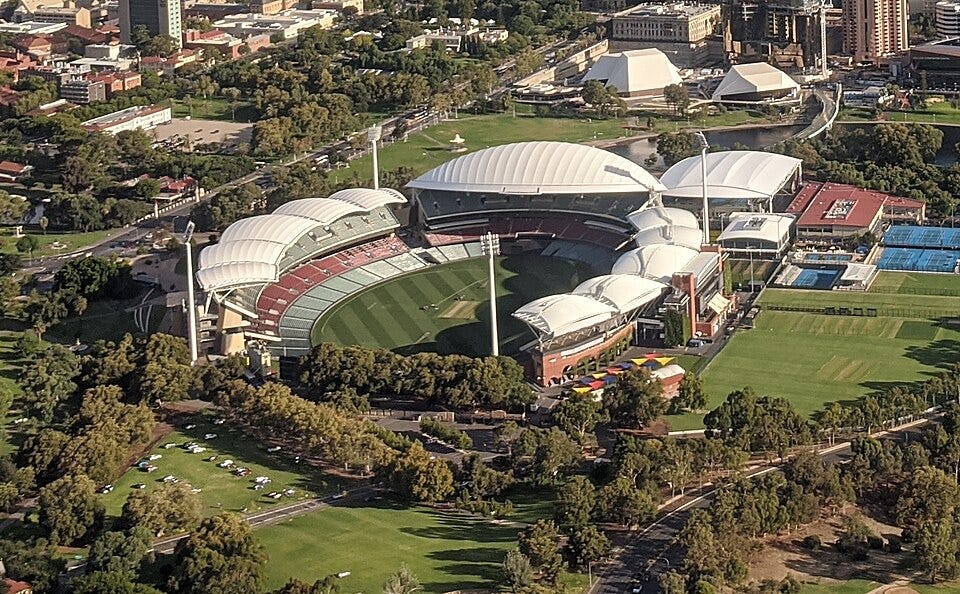
Image Source: Wikimedia Commons. Photo by Clintpix
There is a quality that visitors to Adelaide describe repeatedly, and it is worth examining on its own terms rather than merely as a comparison to larger Australian cities. They describe a city that fits. Not one that overwhelms, not one that underwhelms, but one that in some combination of scale, design, and civic intention seems sized to the human experience of being in it.
This is not coincidental. It is the direct product of a city conceived with unusual foresight.
Colonel Light’s Enduring Vision
The Adelaide Plan is regarded as a masterwork of urban design, a grand example of colonial urban planning. The city grid and defining park lands were laid over the shallow river valley with its gentle undulations. The city layout is designed to take full advantage of the topography, an important innovation for the time. The streets were sited and planned to maximise views and vistas through the city and Park Lands and from some locations to the Adelaide Hills.
In 1836, Colonel William Light made a series of decisions that would determine the character of Adelaide for nearly two centuries. The grid. The hierarchy of streets. And most significantly, the ring of parklands that would encircle the city entirely separating the CBD from its inner suburbs and ensuring that no resident or visitor would ever be more than a short walk from open green space.
The Adelaide Park Lands and City Layout is considered a masterwork of urban design and is one of the most complete examples of nineteenth-century colonial planning. These are some of the reasons why the Adelaide Park Lands and City Layout were included on the National Heritage List in 2008. Covering 932 hectares, the Adelaide Park Lands are Australia’s biggest backyard.
That listing reflects not just heritage significance but something more fundamental: an acknowledgment that the original plan green space as civic infrastructure, not ornament was right. Other cities have parks. Adelaide has a park system that defines the city’s very boundary, its shape, its identity.
A City That Breathes
The Adelaide Park Lands are the largest inner urban park system in Australia 29 parks and 6 city squares, all with an array of different features, facilities, and biodiverse ecosystems. They warmly welcome around 10 million visitors each year.
For travelers who choose to stay centrally whether in serviced apartments in Adelaide, **short-stay accommodation in the CBD**, or self-contained apartments that allow for the kind of slow, residential-style visit that suits a city of this character the parklands are not a feature on a list of attractions. They become part of daily orientation. A morning run along the Torrens. An afternoon in the Botanic Garden. An evening walk through the squares as the light changes over the hills.
The parklands do something significant to the pace of an Adelaide visit. They prevent the urgency that crowds into tightly built cities. There is always somewhere calm to go. There is always a reason to slow down.
Human Scale in Practice
Adelaide’s grid is compact, legible, and walkable in the CBD itself, a quality that visitors consistently note. The inner laneways and bar culture of Peel Street and Leigh Street owe their character partly to the city’s human scale: narrow enough for conversation to spill across the street, intimate enough that a good place to eat is never far from where you’ve stopped.
The coastal dimension adds another register entirely. Glenelg, Henley Beach, and the broader metropolitan beachfront bring a kind of horizontal freedom to a city that is already unhurried. Visitors who spend time beyond the CBD, finding accommodation near the coast or exploring suburban precincts like Norwood and Port Adelaide, often describe a quality that they find hard to locate in larger Australian cities: the absence of pressure. The sense that the city does not demand anything of you.
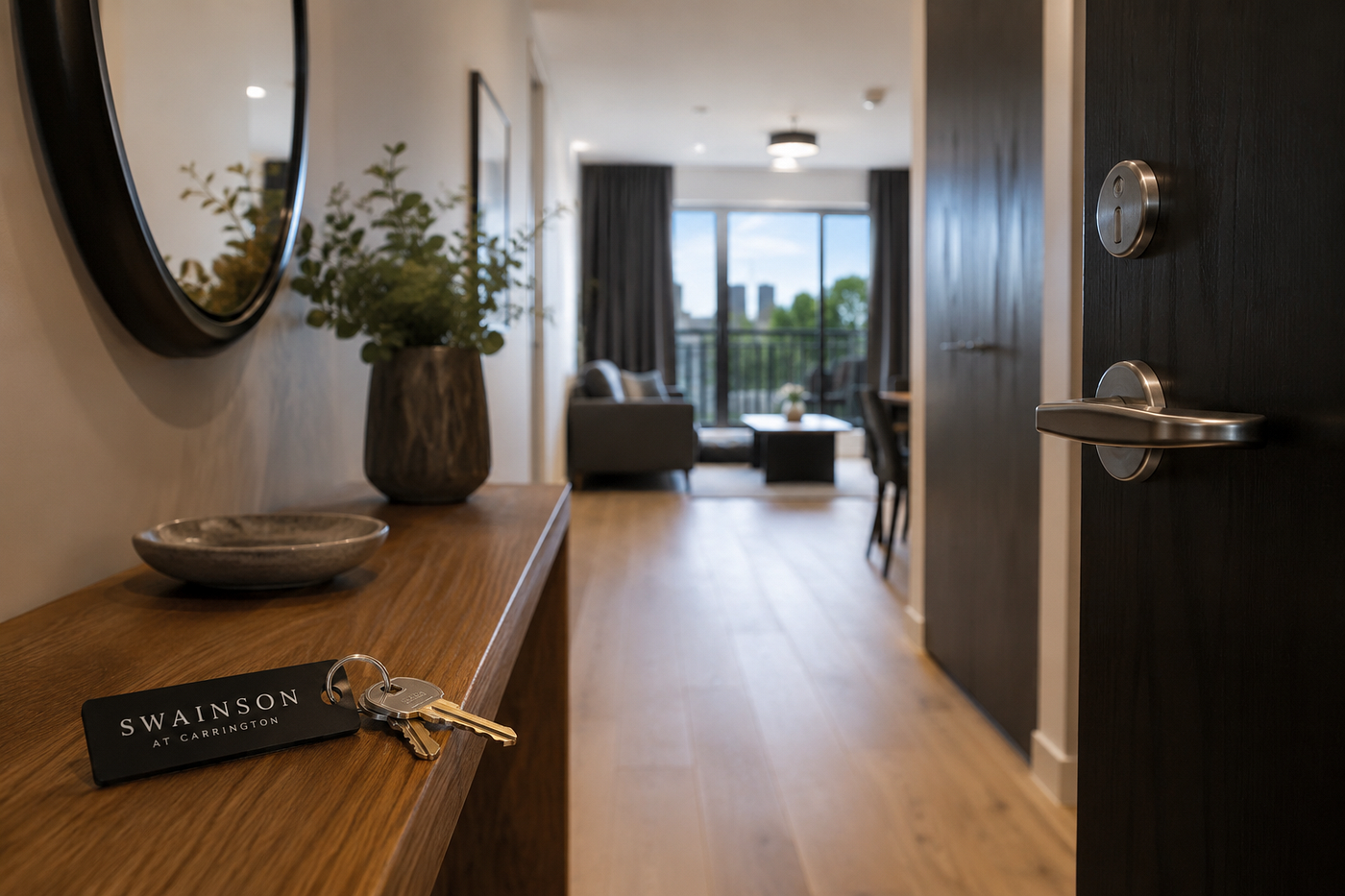
For those seeking longer stays business travelers, families making a base for regional exploration, or visitors who simply want time to understand a place rather than consume it ,adelaide self contained accommodation offers precisely the kind of platform the city rewards. Properties like Swainson represent a broader trend in how visitors choose to experience Adelaide: not as a checklist but as a place to inhabit, if only for a few days or weeks.
Melbourne and Vancouver: Cities That Reward Investment

Image Source: Wikimedia Commons. Photo by Murray Foubister
Not every memorable city works through calm. Melbourne and Vancouver both generate strong place attachment through a different mechanism: they reward the visitor who stays long enough to understand them.
Melbourne’s character is not immediately legible from its skyline or its famous attractions. It reveals itself through the laneways, the café culture, the way the city’s personality shifts from the Yarra’s south bank to Fitzroy to St Kilda. It is a city for people who pay attention and the attention it demands is precisely what makes it memorable.
Vancouver operates similarly, but with a different environmental logic. The city sits against mountains, faces water, and exists in constant dialogue with wilderness. This creates a sense of scale that differs entirely from European cities or the flat grids of Australian CBDs. Vancouver reminds visitors, persistently, that the city is a small thing within a larger world and that proximity to that larger world is not incidental but essential.
Both cities create lasting impressions not through ease but through the depth of what they offer to those who engage seriously with them.
How Slower Cities Change How We See Our Own
There is a particular kind of disorientation that follows a visit to a city that has solved problems your own city hasn’t. You return home and see the street differently. You notice the absence of the park you walked through every morning. You miss the ease of the walk you made each evening without thinking.
This is not nostalgia. It is recalibration the process by which travel actually changes us, not through spectacle but through contrast. The cities that stay with us are the cities that held a mirror up to the way we live elsewhere.
Place attachment, researchers suggest, operates not just as an emotional bond to where we are, but as a reference point for where we might be. When a city gives us something we didn’t know we were missing the green space, the human scale, the cultural depth, the quality of unhurried time it doesn’t leave us when we do. It travels with us, as a standard, as an aspiration, as an argument.
The Cities We Carry
It is worth asking, at the end of any trip that has genuinely moved you, what it was that the city actually gave you.
Was it beauty? Perhaps. But beautiful places are common, and they do not always stay. Was it novelty? Novelty fades fast and leaves little behind. Was it the quality of being somewhere that seemed to have thought carefully about what a good life looks like and had built its streets, its parks, its public spaces accordingly?
That is the quality that persists. Copenhagen embodies a distinct vision of urban life, and its inhabitants seem to thrive in this environment. It became clear after visiting the city that a high degree of thought and care had gone into its design, and there was a commitment to offer its people a high-quality lifestyle.
Every city on this list — Adelaide, Melbourne, Amsterdam, Copenhagen, Kyoto, Vancouver has made choices. About what to preserve and what to build. About where to put the green space and how wide to make the street. About whether to design for cars or for people, for speed or for depth, for efficiency or for life.
The cities that stay with us made those choices well. And in carrying them forward in the small, daily recalibration they produce in us long after we’ve come home they continue, quietly, to do their work.
Which city has stayed with you? The one whose streets you still walk in memory, whose pace you still sometimes miss? It might be worth asking what, exactly, it gave you and what that tells you about what you need.
메타데이터
- post_id
- f0ea5b32beb6
- slug
- why-some-cities-stay-with-us-long-after-we-leave-f0ea5b32beb6
- url
- https://medium.com/engage/why-some-cities-stay-with-us-long-after-we-leave-f0ea5b32beb6
- canonical_url
- https://medium.com/engage/why-some-cities-stay-with-us-long-after-we-leave-f0ea5b32beb6
- author_url
- https://medium.com/@swainsons
- status
- ok
- fetched_at
- 2026-06-20 20:29:01