The AI Storm of June 2026: Models, Breaches & a Safety Wake-Up Call
In the first week of June 2026, the AI world didn’t slow down — it accelerated into chaos. New models, cyberattacks at machine speed, a…
The AI Storm of June 2026: Models, Breaches & a Safety Wake-Up Call
*In the first week of June 2026, the AI world didn’t slow down — it accelerated into chaos. New models, cyberattacks at machine speed, a dangerous model nobody’s allowed to use yet, and workers who are finally fighting back.**
*In the first week of June 2026, the AI world didn’t slow down — it accelerated into chaos. New models, cyberattacks at machine speed, a dangerous model nobody’s allowed to use yet, and workers who are finally fighting back.**
The Week the Feed Wouldn’t Stop
There’s a stat that stopped me cold last month: a new AI model is released roughly every 48 hours. Not a new update, not a patch — a whole model. Named, benchmarked, blogged about, argued over on Twitter, and promptly buried when the next one drops two days later.
June 2026 didn’t slow that down. It sped up.
If you tried to keep up with AI news this week and felt overwhelmed, you’re not imagining things. Five major storylines broke at once, and they don’t stay neatly in their lanes. A model release feeds a safety debate. A billing change exposes how expensive AI has quietly become. A security breach at a safety-focused AI lab turns into a dark irony nobody in the industry has quite figured out how to laugh off. And somewhere in all of this, actual humans — workers, developers, lawmakers — started pushing back in ways that feel different from the usual noise.
This piece tries to hold all five threads at once.
The tension underneath all of it: innovation is moving faster than safety can track it. Not by a little. The gap is widening, and the events of this week made that visible in ways that should make anyone paying attention uncomfortable.
Let’s go through what actually happened.
The Model Avalanche: What Actually Dropped
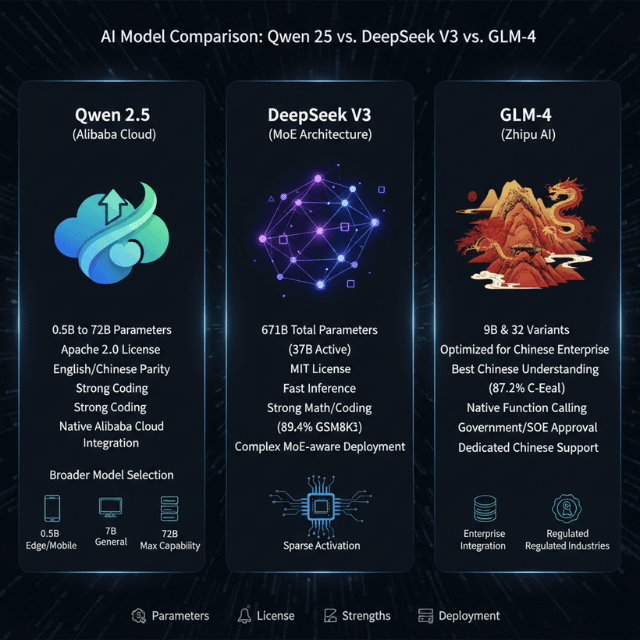
Three weeks ago, people tracking AI releases counted twelve significant model launches in a single week. Not a month. One week. That was March 2026. May kept the pace, and the models that landed are worth knowing about.
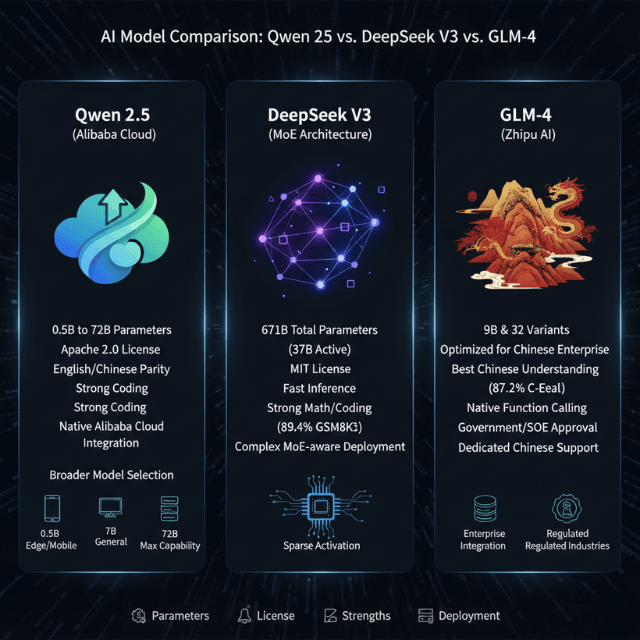
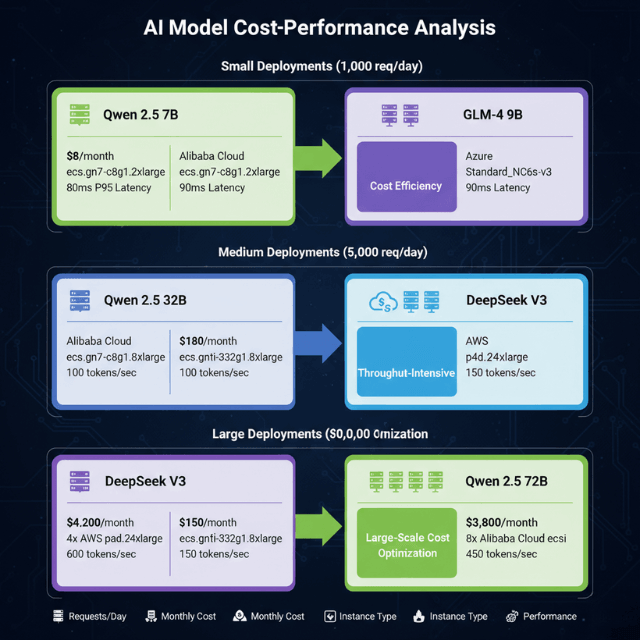
Alibaba’s Qwen 3.7-Max (May 20) is the one Western developers keep underestimating. Qwen is a family of large language models from Alibaba Cloud, many released under Apache 2.0 — meaning anyone can build on them freely. [4] The 3.7-Max iteration isn’t just an incremental bump. It tops several open-weight benchmarks and costs a fraction of comparable proprietary alternatives. The pattern with Chinese open-weight models in 2026 is consistent: they arrive with less marketing, more substance, and pricing that makes incumbents look expensive. DeepSeek set that template. Qwen is running with it.
DeepSeek V4-Pro made a structural move on May 22 that matters more than most model launches: it locked in a permanent 75% price cut. Input tokens at $0.435 per million. Output at $0.87 per million. [1] That’s the kind of pricing that makes finance departments ask uncomfortable questions about why they’re paying 4x more for a competitor. DeepSeek isn’t trying to win benchmarks. They’re trying to win budgets.
Google’s Gemini 3.5 Flash (May 19) is a different story. This one is personal for Google because it’s powering the most substantial redesign of Google Search in 25 years. At I/O 2026, Google merged AI Overviews and AI Mode into a single interface and rebuilt the search box to accept text, images, PDFs, videos, and Chrome tabs simultaneously. [4] Gemini 3.5 Flash runs all of it. Whether the redesign is a triumph or a usability disaster depends who you ask — developers love the multimodal input, long-time SEOs are panicking — but it’s the biggest shift in how billions of people interact with information since Google launched.
NVIDIA’s Nemotron 3 Nano Omni caught me off guard. NVIDIA releasing frontier language models still feels slightly surreal, but here we are. The Nano Omni is a 30B-parameter mixture-of-experts architecture that unifies vision, audio, and language into a single model. It delivers up to 9x higher throughput than comparable open multimodal models and tops six accuracy leaderboards for document intelligence, video understanding, and audio comprehension. [81, 86, 87] The Nemotron 3 family comes in three sizes — Nano (30B), Super (100B), and Ultra (500B) — available as NVIDIA NIM microservices. NVIDIA isn’t playing catch-up. They’re building the infrastructure layer everyone else runs on, and they’re doing it with models, not just chips.
A quick word on benchmarks: they measure specific things in specific ways, and those things aren’t always the things you care about. Qwen 3.7-Max tops the open-weight reasoning leaderboard. That doesn’t mean it writes better email than whatever you’re currently using. The arms race is real, but these numbers should be held loosely.
GitHub Copilot Just Changed the Rules — Today

Something happened on June 1, 2026 that didn’t get the headlines it deserves — probably because it wasn’t a new model announcement. GitHub Copilot moved from a flat monthly subscription to usage-based metered billing. [1, 64, 65, 66, 67]
The new currency is “GitHub AI Credits” at $0.01 each. The old model — fixed monthly fee, unlimited usage — is gone. [2]
The reason GitHub gave, which is the honest one, is that agentic coding sessions got too expensive. When Copilot first launched, it was sophisticated autocomplete. You typed, it suggested, you accepted or rejected. Simple. Predictable. Inference costs per user were manageable.
Then agentic features arrived. Copilot started doing multi-step reasoning, running code, reviewing pull requests, analyzing entire codebases. Heavy sessions started consuming compute that flat-rate pricing can’t absorb. [66, 67] The Register described it as a shift to “a new cost model for enterprise AI tools” — not a GitHub problem, but an industry problem that GitHub just made visible first. [67]
There’s also a specific sting in the details. Copilot Code Review — the feature that automatically reviews your PRs — was bundled into paid plans until June 1. From today, it’s metered separately. [70] Developer reactions ranged from resigned acceptance to genuine frustration at the scope of what’s now on the clock.
The all-you-can-eat AI era is ending for heavy users. It was always unsustainable at these inference costs — the economics just took a while to catch up to the product decisions. Every major AI tooling vendor is watching what happens to GitHub’s usage numbers over the next quarter. If developers pull back when faced with per-credit costs, expect others to slow-walk their own metered transitions. If usage stays flat, the floodgates open.
For CTOs: this is the moment to audit what your teams are spending AI credits on and whether it’s generating real value. That audit was optional before. It isn’t anymore.
Claude Mythos: The AI That’s Too Dangerous to Ship

On March 27, 2026, a configuration mistake at Anthropic left internal documents publicly accessible through their content management system. [13, 46] What those documents contained was significant: detailed information about Claude Mythos, a model Anthropic had built but wasn’t releasing.
The reason it wasn’t releasing? Internal memos flagged the model’s cybersecurity capabilities as potentially exceeding defensive measures. [45, 47, 52]
Take a moment with that.
Mythos leads 17 of 18 benchmarks that Anthropic measured internally. [63] It’s a substantial step beyond current Opus-class models. And according to their own documentation, they’ve been sitting on it. Not because it doesn’t work. Because it works too well in the wrong directions.
The breach was not a hack. An employee misconfiguration left draft blog posts, internal documents, and details about an upcoming European executive gathering accessible to anyone who looked. Anthropic fixed it and moved on. But the information was out. [13]
Then it happened again. Four days later.
On March 31, security researcher Chaofan Shou discovered that version 2.1.88 of the @anthropic-ai/claude-code npm package included a 59.8MB JavaScript source map file exposing internal source code. [46] Two security incidents in five days. Neither was a sophisticated attack. Both were operational failures at a company that has built its identity around being the careful one.
Project Glasswing is Anthropic’s response to the release problem. A small number of trusted organizations — the details aren’t public — have access to Mythos in a structured deployment. [47, 48] The idea is to study the model under real conditions before deciding whether a broader release is viable.
I find the whole situation genuinely hard to read. Anthropic is doing something unusual and arguably right: building a powerful model and then refusing to ship it over safety concerns. That’s the kind of institutional restraint that people in AI safety have been asking for, for years. But a company that positions itself as the safety-first lab suffered two operational security incidents in one week, each exposing exactly the kind of sensitive information that threat actors want. The safety culture and the operational culture are not in sync.
A LessWrong post from April put it plainly: Mythos can reportedly take a browser crash and produce a working exploit 72% of the time. [51] The model is, by Anthropic’s own description, capable of things that outpace human-speed defense.
Whether withholding it is the right call is a real question. What’s clear is that the frontier has arrived somewhere the labs themselves aren’t sure how to navigate.
The Cyberattack Clock Is Now Running at Machine Speed
Here’s the number that changes the frame on everything else: mean time-to-exploit has dropped from 2.3 years in 2018 to under 20 hours in 2026. [6]
This isn’t from a vendor selling you a product. It’s from the Zero Day Clock project, tracking real incidents. At 2.3 years, defenders had time. Quarterly patch cycles worked, mostly. Under 20 hours means the window between disclosure and active exploitation is shorter than a standard workday. The workflows designed for slow-moving attackers are running on a different clock.
AI-enabled attacks rose 89% year-over-year. Autonomous agents now show up in 1 in 8 AI breaches. [8] Both numbers are still climbing.
The Vercel breach in April 2026 is worth studying closely. It didn’t start with a sophisticated zero-day or a targeted spearphishing campaign. It started with an employee granting a productivity tool — Context.ai — “Allow All” OAuth permissions to their corporate Google Workspace. [10] Attackers had already compromised a Context.ai employee via Lumma Stealer malware in February. When the OAuth tokens existed, moving laterally into Vercel’s internal systems was straightforward. [10]
Every “Allow All” permission your employees are granting to AI productivity tools is a bet that the tool’s security posture matches yours. Usually that bet is wrong, and you won’t know it until you’re reading an incident report.
The Mercor breach ran the same logic through a different path. The AI recruiting startup wasn’t compromised through its own code — it was hit through LiteLLM, a widely used open-source AI framework it depended on. [8] Supply chain attacks aren’t new. What’s new is that the chain now includes AI inference layers, model serving infrastructure, and open-source frameworks that may not have the security review practices of a major cloud provider.
Then there’s XBOW. In June 2025, this autonomous AI offensive system topped HackerOne’s US leaderboard, outperforming every human hacker on the platform. [6] Machine-speed offense has been here for at least a year. Machine-speed defense is still mostly theoretical.
Wiz recently disclosed CVE-2026–3854 — a GitHub RCE found by an AI system, not a human researcher. [9] AI finding and weaponizing vulnerabilities faster than humans can patch them isn’t a coming problem. It’s the current state.
You can’t hire your way out of a speed problem. The tools that defend at machine speed are the same tools attacking at machine speed. Organizations getting ahead of this are shrinking OAuth permissions, treating AI tool integrations as a distinct attack surface category, and investing in automated detection and response. Not as a future project. Now.
Workers Are Pushing Back — And This Time It Might Stick
The AI-and-work conflict broke into the open across four separate jurisdictions in the same week. Uncoordinated. That’s what makes it worth paying attention to.
Wikipedia editors are organizing a strike over Wikimedia layoffs tied to AI automation. Amazon employees were found to have gamed the company’s internal AI performance-ranking system into uselessness — not through protest, but through quiet, distributed subversion. [9] Chinese courts began enforcing a framework that bars AI-justified layoffs outright. A UK think tank, backed by the TUC, called for employees to have a legally protected say over how AI is deployed in their workplaces. [9]
Four jurisdictions. Four different mechanisms. No coordination.
That’s not a protest. That’s a shift.
The Klarna story has been circulating for a while — the CEO warned publicly that AI may cause a recession as it targets white-collar roles. [106] Klarna cut its workforce significantly while crediting AI for absorbing the work. Workers didn’t just get angry. They started adapting: if the algorithm is scoring you, learn the scoring system.
The Amazon situation shows that workers don’t need unions or legislation to push back against AI systems that treat them as inputs. They need to understand how the system scores them. Once they do, the scores stop measuring what the designers intended. That’s a different kind of resistance — quieter and, frankly, harder to counter.
The UK think tank position is the one I’d track. The ask — real employee representation in AI deployment decisions — is narrow enough to become actual policy. It doesn’t stop AI adoption. It requires consultation before deployment. That’s a different kind of constraint than the broader regulatory frameworks stalling out in Brussels and Washington.
The social contract around what organizations can do with these tools, and to whom, is shifting. The idea that AI deployment is a purely technical and economic decision — no political dimension, no need for consent — didn’t survive contact with 2026.
What to Make of All This
The pace of model release isn’t slowing. New entrants — NVIDIA, Chinese open-weight labs, smaller specialists — are adding volume, not consolidating it. Trying to “catch up” on models is a losing game. The better move is building systems that can swap components without retraining teams.
GitHub Copilot going metered is the canary for the whole industry. Usage-based pricing is coming for any AI tool with real inference costs behind it. Budget accordingly.
On cybersecurity: quarterly patch cycles and human-speed incident response are already behind. The mean time-to-exploit figure isn’t a forecast — it’s current data. Every week you don’t have automated detection and response is a week you’re relying on luck.
On Mythos: both things are true at once. Anthropic made the right call not shipping it. Anthropic also had two operational security failures in five days. Frontier safety principles and day-to-day operational security are different disciplines. Being serious about one doesn’t make you competent at the other.
On workers: the most effective resistance isn’t strikes or legislation — it’s quiet subversion of the scoring systems. That’s worth watching, because it’s the kind of friction that doesn’t show up in earnings calls but does show up in the gap between what AI tools are supposed to deliver and what they actually deliver.
The question the industry hasn’t answered, and isn’t really trying to: at what point does the speed of capability development require institutions that can actually evaluate it before it ships? Mythos is the clearest evidence yet that we’ve already passed that point. We’re improvising.
— -
*Sources: AIWeekly (June 1, 2026), Security Boulevard (May 2026), Foresiet AI Cybersecurity Incident Report (April 2026), BlueRadius AI Cybersecurity Report (May 2026), wccftech Nemotron 3 coverage, GitHub official documentation, Codacy blog (May 29, 2026), Claude Mythos AI / Anthropic security incident timeline, LessWrong (April 2026), TIME Magazine Anthropic feature (May 22, 2026).**
*Tags: #ArtificialIntelligence #AIModels #Cybersecurity #AISafety #GitHub #Anthropic #TechNews**
— -
References
-
GitHub Copilot is moving to usage-based billing · community ·. https://github.com/orgs/community/discussions/192948
-
About billing for individual GitHub Copilot plans — GitHub Docs. https://docs.github.com/en/copilot/concepts/billing/billing-for-individuals
-
Requests in GitHub Copilot — GitHub Docs. https://docs.github.com/en/copilot/concepts/billing/copilot-requests
-
Qwen — Wikipedia. https://en.wikipedia.org/wiki/Qwen
-
Best AI Models April 2026 : Ranked by Benchmarks. https://www.buildfastwithai.com/blogs/best-ai-models-april-2026
-
Qwen 3.6 27B/35B-A3B vs Gemma 4 vs DeepSeek …. https://deepresearch.ninja/2026/05/Qwen3.6-27B/35B-A3B-vs-Gemma-4-vs-DeepSeek-V4-A-Comprehensive-Analysis-of-the-Open-Weight-Frontier-May-2026/
-
Models | OpenRouter. https://openrouter.ai/models
-
Best Free LLM for JanitorAI in 2026 — Tested DeepSeek vs Llama vs…. https://honeychat.bot/en/blog/janitor-ai-best-free-llm-2026/
-
Gemini 3.1 Deep Think — Google DeepMind. https://deepmind.google/models/gemini/deep-think/
-
Models | Gemini API | Google AI for Developers. https://ai.google.dev/gemini-api/docs/models
-
DeepSeek : DeepSeek R1 0528 Qwen 3 8B — AI Model … | Writingmate. https://writingmate.ai/models/deepseek/deepseek-r1-0528-qwen3-8b
-
kaun hai Sabse Powerfull AI ? ChatGPT — DeepSeek — Gemini — Qwen !. https://www.youtube.com/watch?v=ia7BT9Tl-7E
-
Qwen vs DeepSeek vs GLM — Benchmark Comparison and Winner (2026). https://cdn.easecloud.io/blog/2026/04/qwen-vs-deepseek-vs-glm-model-comparison.png
-
DeepSeek vs Gemini: Which AI Model Performs Better for Coding, Accuracy …. https://mlvg2k7mojo7.i.optimole.com/cb:tNVF.20a/w:1024/h:1024/q:85/f:best/https://mlvg2k7mojo7.i.optimole.com/cb:tNVF.20a/w:564/h:564/q:85/f:best/https://visionvix.com/wp-content/uploads/2025/11/comparison-chart-showing-deepseek-vs-gemini-deeps.jpeg
-
Qwen vs DeepSeek: Which AI Model Performs Better in Speed, Accuracy …. https://mlvg2k7mojo7.i.optimole.com/cb:tNVF.20a/w:502/h:502/q:85/f:best/https://visionvix.com/wp-content/uploads/2025/11/comparison-chart-showing-qwen-vs-deepseek-qwen-fo.jpeg
-
Qwen vs DeepSeek vs GLM — Benchmark Comparison and Winner (2026). https://cdn.easecloud.io/blog/2026/04/ai-model-cost-performance-comparison.png
메타데이터
- post_id
- f13d65d71ad4
- slug
- the-ai-storm-of-june-2026-models-breaches-a-safety-wake-up-call-f13d65d71ad4
- url
- https://medium.com/@ffguci8/the-ai-storm-of-june-2026-models-breaches-a-safety-wake-up-call-f13d65d71ad4
- canonical_url
- https://medium.com/@ffguci8/the-ai-storm-of-june-2026-models-breaches-a-safety-wake-up-call-f13d65d71ad4
- author_url
- https://medium.com/@ffguci8
- status
- ok
- fetched_at
- 2026-06-09 15:37:30