Data Engineering Fundamentals: ETL vs. ELT
Understanding how data moves through an organization is a core competency for any analyst or engineer. At the center of this, there are two…
Data Engineering Fundamentals: ETL vs. ELT
Understanding how data moves through an organization is a core competency for any analyst or engineer. At the center of this, there are two fundamental architectural patterns: ETL and ELT.
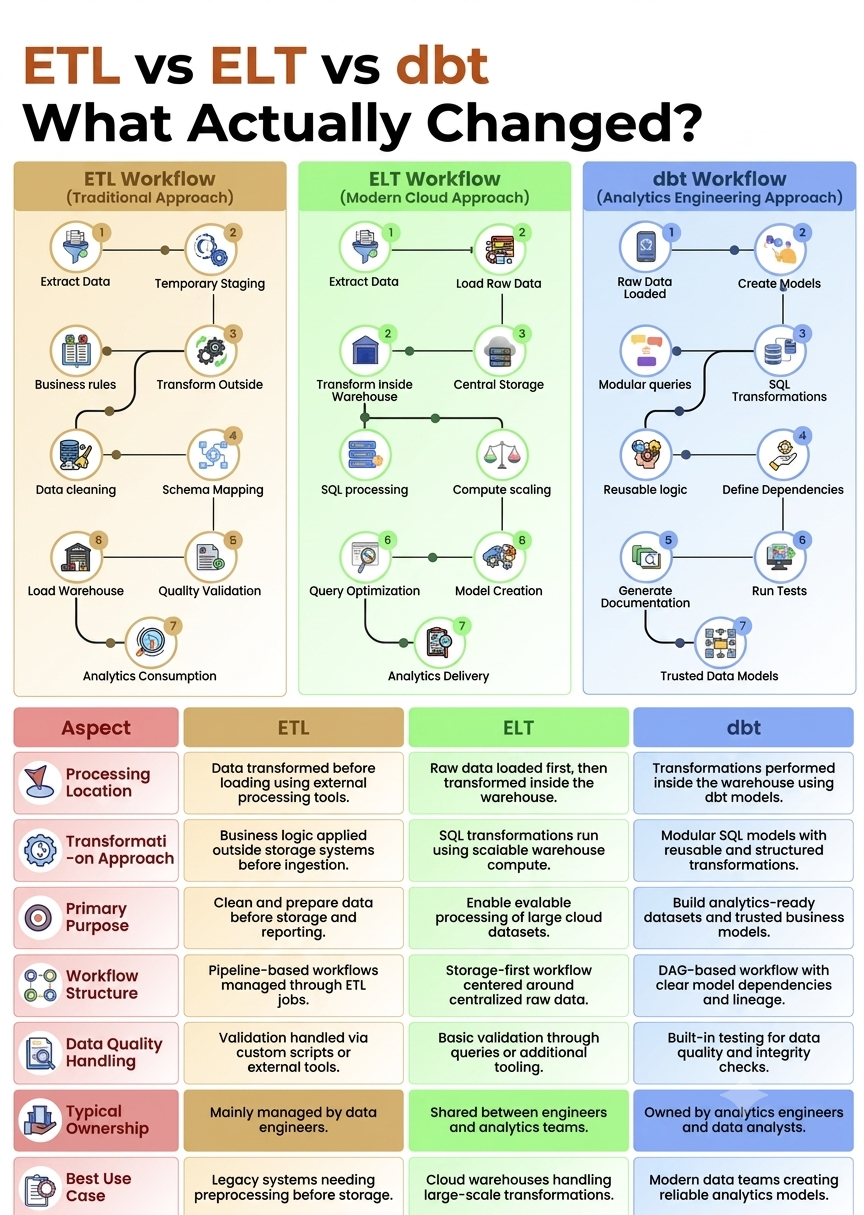
ETL (Extract, Transform, Load)
A traditional data integration process where data is extracted from source systems, transformed into a structured format in a staging area, and then loaded into a target data warehouse.
ELT (Extract, Load, Transform)
A modern data integration process where raw data is extracted and loaded directly into the target data warehouse. The transformation process occurs within the target warehouse itself.
Technical Workflow Comparison
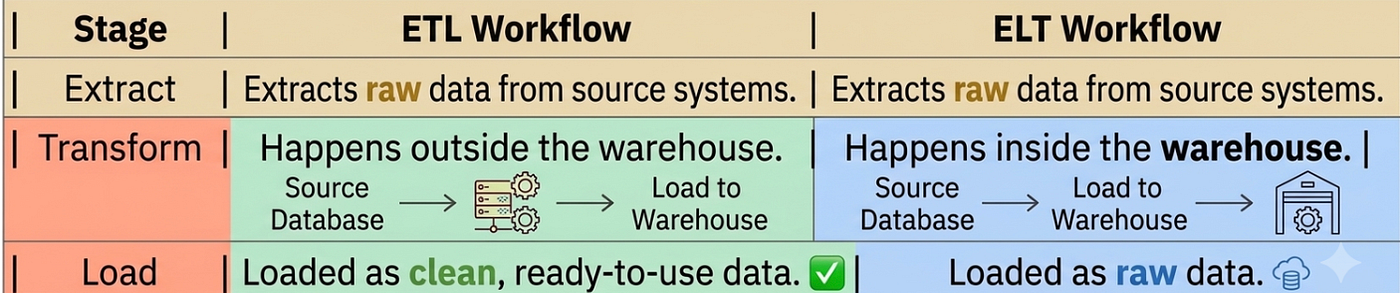
Key Differences
ETL: Transformation relies on external processing power. This can create bottlenecks if data volume is extremely high. ELT: Leverages compute power of modern cloud data warehouses (e.g., Snowflake, BigQuery) to perform transformations, allowing for faster processing of large datasets.
Data Accessibility
ETL: Data is highly structured and cleaned before it reaches the final destination. This ensures high quality reporting but limits the ability to perform ad hoc exploration on raw data. ELT: Users have immediate access to raw data. This supports complex data science workflows, machine learning model training, and agile business intelligence.
When to Use ETL vs ELT
Use ETL when:
- Data Privacy/Compliance: You need to redact or mask sensitive data (PII) before it enters your primary data warehouse.
- Legacy Infrastructure: Your data warehouse is on premise and has limited processing power.
- Consistency: Your business requires strictly governed, pre defined metrics.
Use ELT when:
- Cloud Architecture: You are utilizing modern, scalable cloud data warehouses.
- High Data Volume: You need to move massive amounts of data efficiently.
- Agility: You need the ability to transform data in multiple ways for different use cases (e.g., one team needs raw logs, another needs aggregated metrics).
Conclusion
The shift toward ELT is largely driven by the scalability and compute power of modern cloud platforms. While ETL remains essential for environments requiring rigorous data governance, ELT has become the standard for organizations prioritizing speed, flexibility, and comprehensive data access.
Understanding both patterns allows you to make informed decisions about data pipeline architecture and best practices for your organization.
메타데이터
- post_id
- f165a8d3e714
- slug
- data-engineering-fundamentals-etl-vs-elt-f165a8d3e714
- url
- https://medium.com/@kgebrehiwot19/data-engineering-fundamentals-etl-vs-elt-f165a8d3e714
- canonical_url
- https://medium.com/@kgebrehiwot19/data-engineering-fundamentals-etl-vs-elt-f165a8d3e714
- author_url
- https://medium.com/@kgebrehiwot19
- status
- ok
- fetched_at
- 2026-06-11 22:20:54