How Ripple’s Blockchain Payments Are Reshaping Remittances in Nigeria and Strengthening U.S.
The Role of Remittances in Household Welfare and Economic Development in Nigeria
How Ripple’s Blockchain Payments Are Reshaping Remittances in Nigeria and Strengthening U.S. Finance
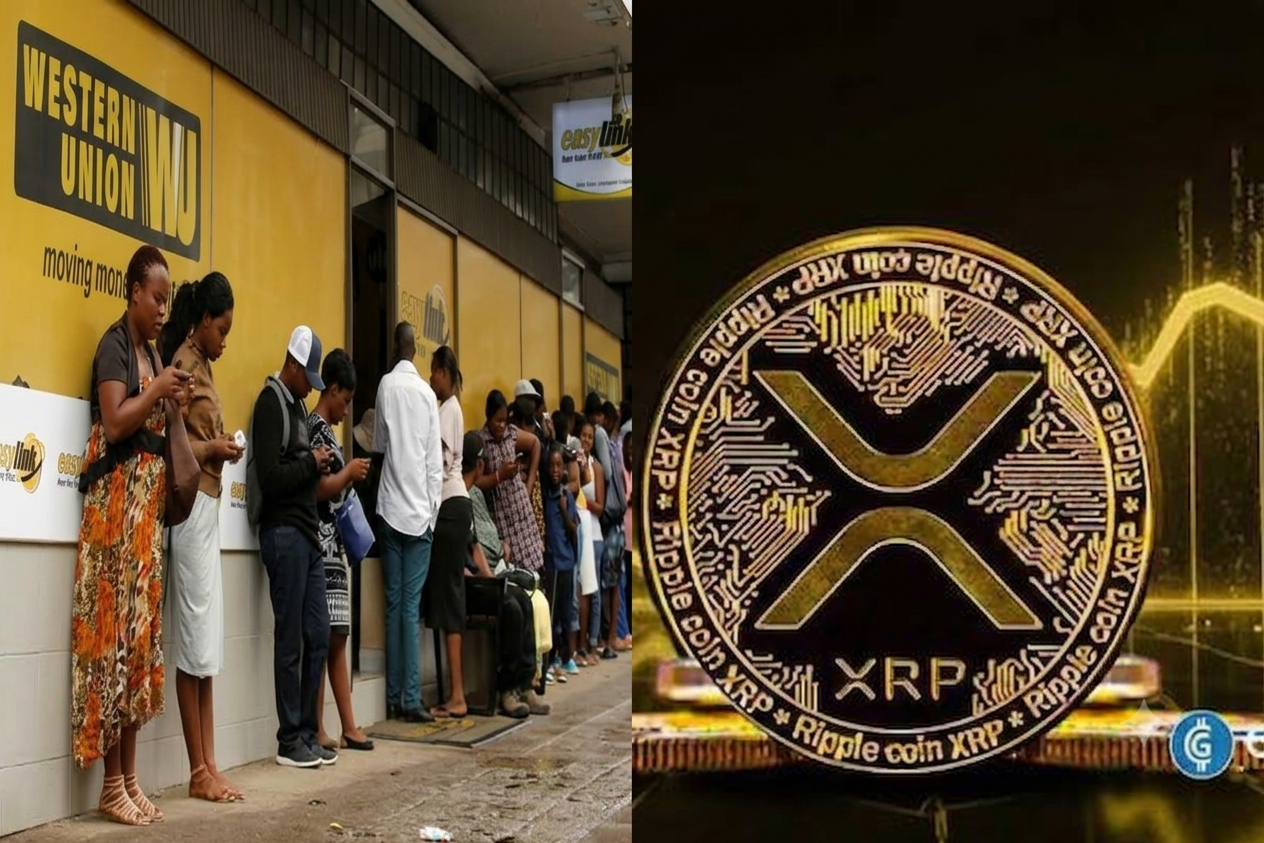
The Role of Remittances in Household Welfare and Economic Development in Nigeria
Nigeria is one of the largest remittance-receiving countries in Africa, with millions of Nigerians abroad sending money home to support their families. These remittances help households meet essential needs such as food, education, healthcare, and housing, making them a critical source of income for many families.
The significance of remittances has grown over time, with inflows increasing from just over US$1 billion in 2003 to approximately US$9.9 billion in 2010, highlighting the important role of the Nigerian diaspora in supporting household welfare and financial stability.
Remittances contribute significantly to Nigeria’s economic development and poverty reduction. Research shows that a 10% increase in remittance income reduces income inequality by 0.02% in rural areas and 0.1% in urban areas. In addition, remittances accounted for about 6.1% of Nigeria’s GDP in 2018 and 4.0% in 2020, highlighting their importance in the national economy.
Between 2018 and 2020, Nigeria received approximately US$64 billion in remittances, reinforcing their role in supporting economic activity and reducing poverty levels. However, sustainable development still requires stronger domestic investment, job creation, and financial inclusion
The Hidden poverty in delayed remittance
Delayed remittances result from structural inefficiencies in cross-border payment systems. Transfers typically take 1–5 days, with some exceeding 48–72 hours, depending on intermediaries, compliance checks, and banking processes. Even where SWIFT gpi enables processing in under two hours, end-to-end settlement still varies widely.
Most payments move through 3–5 intermediary banks, with each stage adding verification and regulatory friction, reinforcing systemic delay across correspondent banking networks.
Remittance systems also reflect high global scale but persistent inefficiency. Flows reached $572 billion (2020) and $656 billion (2023), with about 1 billion users and remittances accounting for 3%+ of GDP in 60+ countries.
Despite this importance, average costs remain 6–7%, sometimes rising to 10.3%, while transfers often pass through four or more intermediary banks, increasing both cost and processing time. A 20% decline in correspondent banking relationships (2011–2018) has further concentrated flows through fewer channels.
These frictions reduce the efficiency of cross-border inflows by limiting real-time access to funds. Around 74% of country pairs rely on one intermediary country, and about 6% require two, showing heavy dependence on indirect routing.
As payment systems become more complex and centralized, delays increase transaction costs, reduce liquidity availability, and weaken the ability of remittances to function as stable financial support within economies.
Ripple’s Blockchain Payment Model
Ripple’s blockchain payment model is designed to improve cross-border transfers by reducing reliance on traditional correspondent banking systems. Instead of passing through multiple intermediary banks, Ripple enables direct digital settlement across assets.
It operates across 60+ markets and has processed over $100 billion in transactions, supporting fiat and digital currencies through a multi-asset routing system based on corridor efficiency rather than sequential banking chains.
Unlike traditional systems that rely on 3–5 intermediary banks and settlement times of 1–5 days, Ripple’s XRP Ledger enables transactions to finalize in about 3–5 seconds using a consensus mechanism.
It also uses On-Demand Liquidity (ODL), which removes the need for pre-funded accounts by sourcing liquidity at the time of transfer, reducing delays and capital lock-up common in legacy correspondent banking systems.
Ripple’s mission is to make global payments faster, cheaper, and more efficient, especially in emerging markets. With over 300 financial institutions and corridors covering 27 African countries, it supports remittances and cross-border trade in regions like Nigeria where digital assets are increasingly used.
This contrasts with traditional systems, which are slower, more expensive, and dependent on multiple intermediaries.
Impact of Ripple blockchain on financial access in Nigeria
Ripple improves financial access in Nigeria by reducing reliance on costly and inefficient cross-border remittance systems. Remittances remain a key income source in Africa, exceeding $100 billion, with Sub-Saharan Africa receiving about $55 billion, yet traditional channels charge fees of up to 9%, reducing household value.
Ripple’s blockchain-based infrastructure and partnerships across Africa aim to lower costs and improve access, particularly in financially underserved markets where access to efficient formal services remains uneven.
Ripple also increases transaction speed and efficiency compared to traditional correspondent banking systems. Conventional remittances involve multiple intermediaries and delays, while Ripple’s XRP Ledger settles transactions in approximately 3–5 seconds at around $0.0002 per transaction, using a consensus mechanism instead of mining.
Its system enables faster cross-currency transfers through XRP as a bridge asset, reducing the delays and friction typical of legacy banking networks.
Overall, Ripple supports financial inclusion in Nigeria by expanding digital payment infrastructure and aligning with growing regulatory acceptance of digital assets.
Nigeria processes about $59 billion in crypto transfers (2023–2024) and has formal recognition of digital assets under the Investments and Securities Act 2025, alongside regulatory easing for licensed providers. With partnerships spanning 27 African countries and over 300 financial institutions, Ripple strengthens access to faster, cheaper, and more transparent cross-border financial systems.
Reengineering Cross-Border Payment Systems
Ripple’s mission in U.S. financial infrastructure focuses on improving liquidity efficiency by reducing reliance on pre-funded nostro/vostro accounts that lock capital across borders.
Instead, Ripple’s system integrates custody, treasury, and settlement services to enable more direct movement of funds, improving how institutions manage liquidity in cross-border transactions.
A second goal is reducing transaction costs and intermediary layers in global payments connected to the U.S. Traditional correspondent banking involves multiple intermediaries, increasing cost and complexity.
Ripple’s integrated model combines issuance, custody, treasury, and settlement functions, with estimates suggesting potential savings of up to $10 billion by 2030 through reduced fees and streamlined settlement processes.
Ripple also aims to modernize payment speed and infrastructure efficiency. While traditional cross-border transfers take several days, Ripple enables near real-time settlement and has processed over $100 billion across 60+ markets.
Its broader mission includes integrating blockchain-based systems into regulated financial infrastructure to improve speed, transparency, and operational efficiency.
메타데이터
- post_id
- f16863cbcd7e
- slug
- how-ripples-blockchain-payments-are-reshaping-remittances-in-nigeria-and-strengthening-u-s-f16863cbcd7e
- url
- https://medium.com/@malakkamel3699/how-ripples-blockchain-payments-are-reshaping-remittances-in-nigeria-and-strengthening-u-s-f16863cbcd7e
- canonical_url
- https://medium.com/@malakkamel3699/how-ripples-blockchain-payments-are-reshaping-remittances-in-nigeria-and-strengthening-u-s-f16863cbcd7e
- author_url
- https://medium.com/@malakkamel3699
- status
- ok
- fetched_at
- 2026-07-08 18:29:56



