Understanding CAR-T Cell Therapy
Disclosure: I wrote this article and used AI as a “professional editor” to refine and shorten overly long or complicated sentences.
Understanding CAR-T Cell Therapy
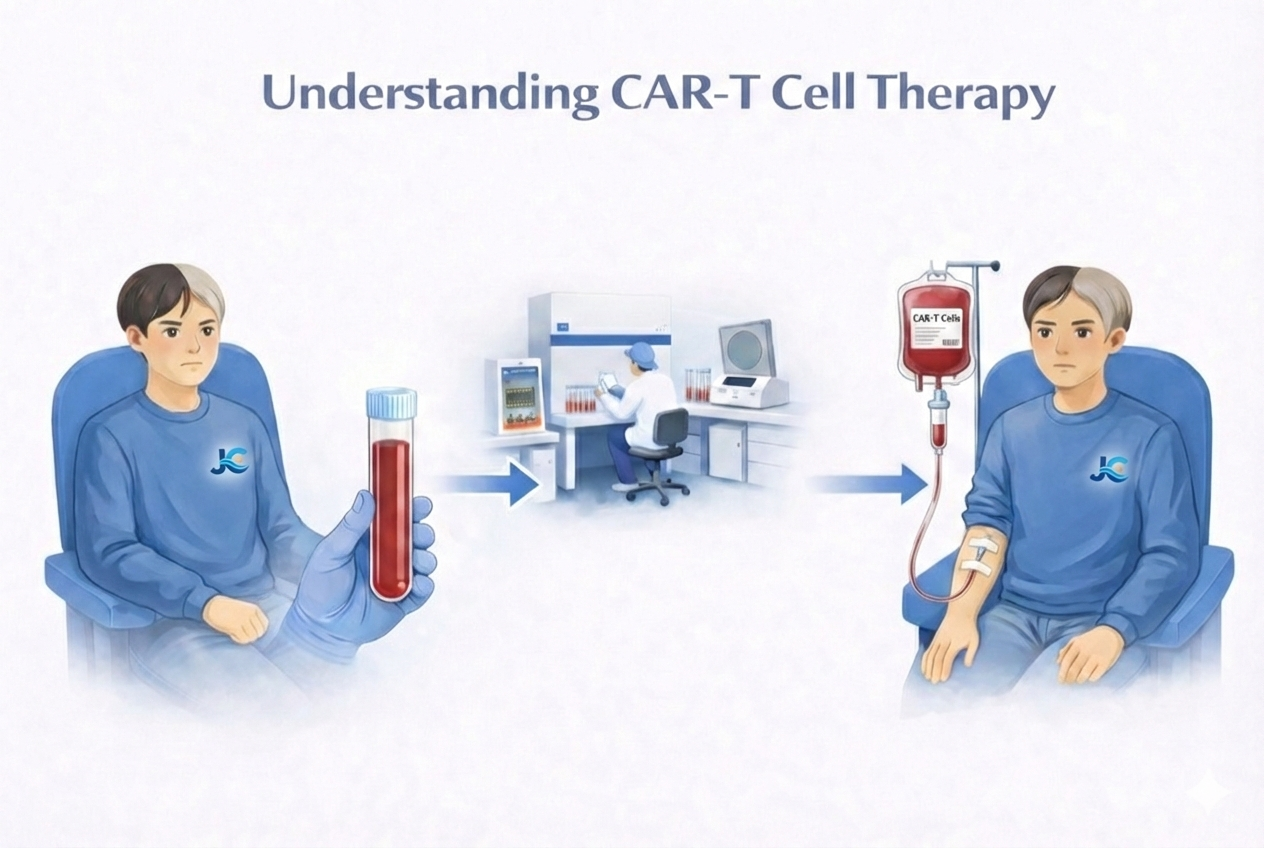
Image generated with the assistance of AI.
Disclosure: I wrote this article and used AI as a “professional editor” to refine and shorten overly long or complicated sentences.
In my recent articles, I focused on tools that physicians can use to support the diagnosis of disease more accurately or help improve treatment decisions. To this end, I covered how Pharmacogenomics (PGx) can help determine medication safety and effectiveness, explained the concept of Companion Diagnostics, and shed light on Liquid Biopsies. All of these areas reflect a broader shift in patient care that is often summarized as personalized medicine.
Personalized medicine does not only describe how diseases are diagnosed or which medication is most effective for a given patient — it can also include the treatment itself. Today’s topic couldn’t be more “personal,” because all currently FDA-approved CAR-T cell therapies use the patient’s own cells.
My companion articles, ***What Is Cell Therapy? and [What Is Genetic Medicine?](https://www.linkedin.com/pulse/what-genetic-medicine-peter-friebe-phd-nho5c/)***, can be found here.
A Sneak Peek into Our Immune System
Before taking a closer look at CAR-T cells, let’s briefly look at how our immune system works. The human body is constantly exposed to potential infections, yet most of us get sick only occasionally. We can thank our immune system for this constant protection.
Our immune system is highly complex, but it can roughly be divided into two parts: the innate immune system and the adaptive immune system.
The innate immune system responds broadly to anything that is considered dangerous. Using bacterial infections as an example, innate immune cells recognize common features shared by many bacteria, such as components of the bacterial cell wall. This response happens very quickly, often within minutes to hours.
The adaptive immune response is more precise and highly tailored. Most people are familiar with antibodies and how they protect us against specific diseases, such as the flu, which is caused by the influenza virus. Antibodies are produced by B cells, which are part of the adaptive immune system. Antibodies are highly specific for their intended target, allowing for a very strong and effective immune response. Because the influenza virus changes constantly, this specificity is also the reason why a new flu vaccine is recommended every year.
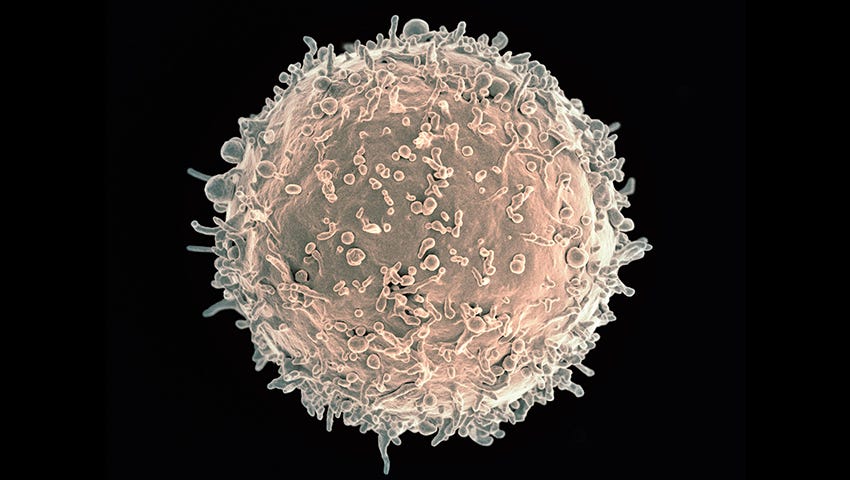
Besides B cells, the adaptive immune system also includes T cells. Some T cells are specialized in directly recognizing and responding to infected or abnormal cells. These T cells interact directly with other cells through their T-cell receptor. If the receptor recognizes that a cell is infected or abnormal, the T cell can initiate a targeted attack that leads to destruction of that cell. Because of this function, these cells are often described as “killer T cells.”
Once activated, these T cells can multiply and generate many copies of themselves, amplifying the immune response. The more active T cells are generated, the stronger the response becomes. This description is intentionally simplified — in reality, the process is highly regulated to ensure that healthy cells are not harmed.
The ability of activated T cells to recognize and destroy specific cells is the biological foundation of CAR-T cell therapy.
What Is CAR-T Cell Therapy
In CAR-T cell therapy, T cells are collected from the patient, usually through a blood-based procedure. These T cells are then genetically modified in a specialized laboratory so that they express a so-called chimeric antigen receptor (CAR).
This engineered receptor is designed to bind very specifically to a target structure (called an antigen) on another cell. Once the CAR binds to its target, the CAR-T cell becomes activated and can directly attack and kill the target cell.
After destroying a target cell, the activated CAR-T cell begins to multiply, producing identical copies of itself. These new CAR-T cells then continue to seek out and kill additional cells that carry the same antigen. In this way, a single infusion can trigger a powerful and sometimes long-lasting immune response.
Advantages and Risks of CAR-T Cell Therapy
CAR-T cell therapy offers an alternative approach for patients whose disease has not responded to conventional treatments. Today, CAR-T cell therapies are primarily used to treat certain blood cancers, including specific types of leukemia, lymphoma, and multiple myeloma. These diseases are well suited for CAR-T cell therapy because cancer cells in the blood often share clearly defined and accessible target antigens that engineered T cells can recognize.
The therapy is highly targeted and it can produce a long-lasting response, even in patients who have not responded to standard treatment options such as chemotherapy or radiation therapy. In some cases, CAR-T therapy has led to long periods of remission after a single treatment, something rarely seen with traditional drugs.
At the same time, CAR-T therapy is not without significant risks. The strong immune activation can lead to serious inflammatory reactions and neurological side effects, and treatment requires close medical supervision. For this reason, CAR-T therapy is administered only in specialized hospitals with experienced multidisciplinary teams.
In addition, CAR-T treatments are complex to manufacture, expensive, and time-consuming, since each therapy is personalized, using the patient’s own T cells. Not all patients are eligible, and careful evaluation is required to balance potential benefit against risk.
What Comes Next for CAR-T Cell Therapy
CAR-T cell therapy represents a new way of treating disease by reprogramming the immune system rather than relying solely on traditional drugs. While current CAR-T therapies are limited to certain blood cancers and carefully selected patients, research in this field is moving rapidly. Scientists are working to make CAR-T treatments safer, more widely available, and easier to deliver.
One area of active research is the use of T cells donated from healthy donors to create CAR-T cell therapies that could be readily available to more patients. While still using living immune cells, this approach would resemble traditional drug therapies from an availability perspective, as treatments could be prepared in advance and made available when needed.
Although CAR-T cell therapy will not replace conventional treatments anytime soon, it offers a glimpse into a future where medicine becomes more personalized, more precise, and more biologically driven.
If you’d like to keep reading:
Subscribe to my newsletter on **Substack** (free, email delivery)
If you’d like to follow my work professionally (and read articles there as well):
Connect with me on **LinkedIn**
If you find this writing useful and want to support independent science communication:
You can support my work on **Patreon** (optional)
메타데이터
- post_id
- f1b1ce1d19e6
- slug
- understanding-car-t-cell-therapy-f1b1ce1d19e6
- url
- https://medium.com/@scienceworthknowing/understanding-car-t-cell-therapy-f1b1ce1d19e6
- canonical_url
- https://medium.com/@scienceworthknowing/understanding-car-t-cell-therapy-f1b1ce1d19e6
- author_url
- https://medium.com/@scienceworthknowing
- status
- ok
- fetched_at
- 2026-06-09 15:37:30