Why Your Kitchen Feels Like a Smoky Warzone Every Evening (And What Indian Homes Are Finally Doing…
There’s a moment that happens in almost every Indian household around 7 PM. Someone’s making dinner. The oil is shimmering in the kadhai…
Why Your Kitchen Feels Like a Smoky Warzone Every Evening (And What Indian Homes Are Finally Doing About It)
There’s a moment that happens in almost every Indian household around 7 PM. Someone’s making dinner. The oil is shimmering in the kadhai. The cumin seeds hit the pan, and within seconds, the entire apartment fills with that sharp, unmistakable haze. Your eyes water. You cough. And if you’re in the living room trying to watch TV, you already know the smoke is coming for you.
My friend Priya called me last month, genuinely frustrated. She’d just spent a small fortune getting her dream modular kitchen installed. Sleek white cabinets, soft-close drawers, the works. Two months in, she noticed something disturbing. A faint yellowish film had started forming on the cabinet doors nearest the stove. She wiped it off with a cloth, and the cloth came away sticky and dark. “I don’t understand,” she said. “I keep everything so clean.”
That’s the thing about Indian cooking. It’s not just about heat. It’s about intensity.
The Invisible Cloud We’ve All Accepted
Walk into any home during meal prep, and you’ll see it that suspended cloud of oil particles, spice smoke, and steam just hanging in the air. We’ve normalized it so completely that we don’t even question it anymore. The kitchen smells like food. The living room smells like food. Sometimes, even the bedrooms smell like food.
But here’s what’s actually happening: every time you temper mustard seeds in hot oil, or fry a batch of pakoras, or roast dry spices for a masala, you’re releasing thousands of microscopic fat droplets into the air. These droplets don’t just disappear. They settle. On your walls. On your cabinets. On your expensive sofa fabric. Inside your curtains.
I started noticing this more clearly after I moved into a ninth-floor apartment with almost no cross-ventilation. My old house had big windows on opposite sides the breeze would eventually clear things out. But in this new place? The smoke had nowhere to go. After making aloo parathas one Sunday morning, the smell lingered until Tuesday.
Why the Ceiling Fan and Window Trick Doesn’t Work Anymore
Our parents managed without any fancy equipment, right? Just open a window, turn on the ceiling fan, maybe run that old exhaust fan that sounds like a tractor. Why can’t we do the same?
Because modern apartments are built differently.
Older homes had high ceilings, large windows, and often, open courtyards or balconies adjacent to kitchens. Smoke had room to disperse and escape. But walk into a new 2BHK flat in any metro, and you’ll find compact kitchens with low false ceilings, often semi-open to the living area for that “modern look.” There’s barely any natural airflow.
And that small 6-inch exhaust fan? It’s doing its best, but it’s completely outmatched. Indian cooking generates a staggering amount of grease-laden smoke compared to continental or East Asian cooking styles. We use heavy oils. We deep-fry regularly. We char spices directly on flame. A basic exhaust fan was designed for light steam and occasional cooking odors, not the daily assault of tadka, tawa frying, and pressure cooker whistles.
The Hidden Costs Nobody Talks About
Here’s what I wish someone had told me earlier: poor kitchen ventilation isn’t just about discomfort. It’s expensive.
That modular kitchen you saved up for? The laminate starts losing its sheen. The edges of cabinet doors near the stove get discolored. If you have wooden shelves, the finish dulls faster than it should.
Your wall paint? It turns dingy around the cooking area, developing that sad, greyish-yellow tone that no amount of scrubbing fixes.
And then there’s your health. You’re breathing in all that smoke every single day. That burning sensation in your throat when you add chili powder to hot oil? That’s not just discomfort those are particulates entering your lungs.
My neighbor, an older lady who’s been cooking for her family for decades, recently mentioned she’s been getting persistent coughs. Her doctor asked if she spent a lot of time in the kitchen. She laughed it off at first, but later admitted she’d never really thought about how much smoke she was inhaling daily.
When I Finally Understood What Was Missing
I visited a cousin’s new home last year, and something felt immediately different. She was making fish curry one of the smokiest, most pungent dishes you can make indoors. But somehow, the living room smelled completely normal. No haze. No lingering odor.
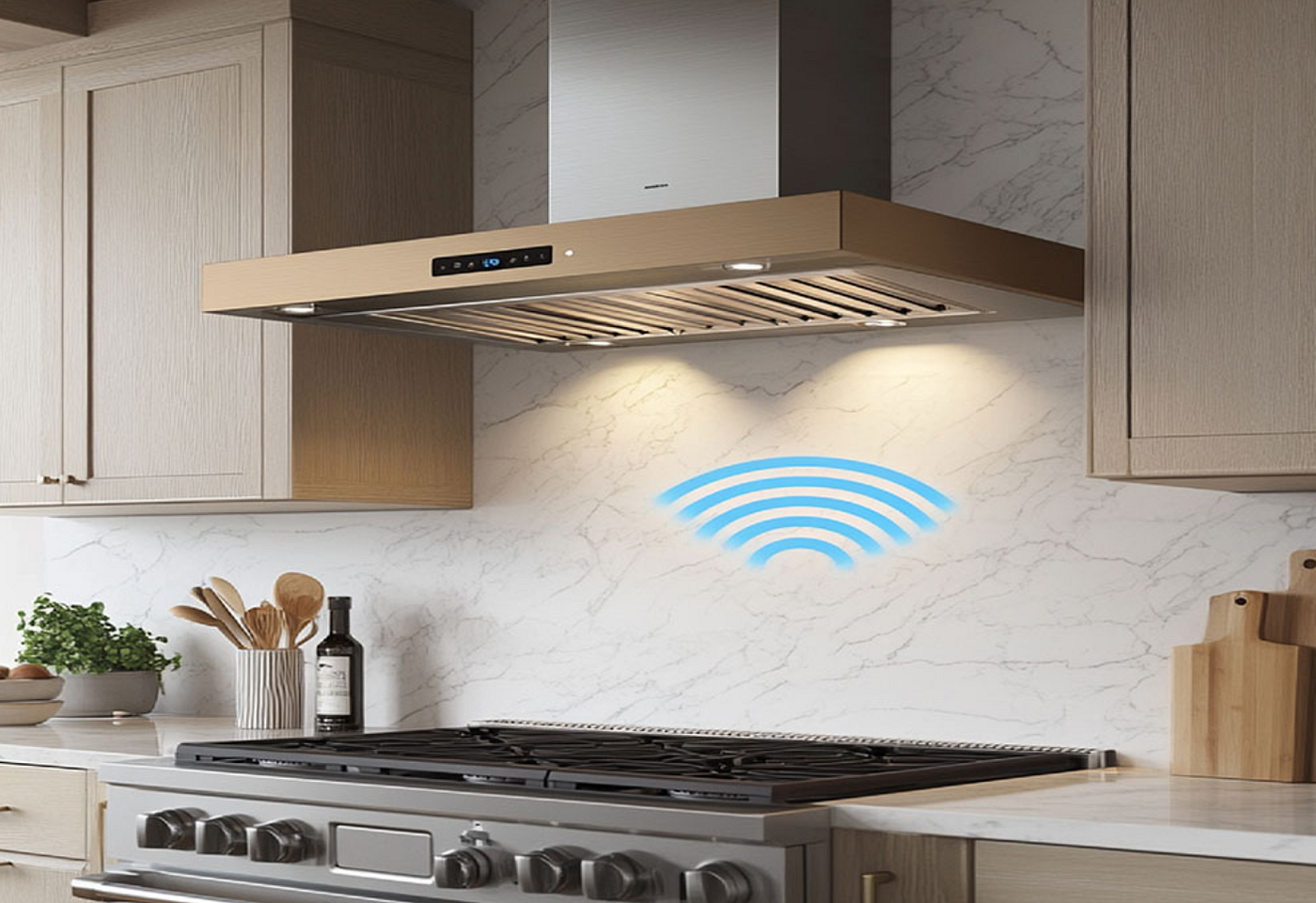
I walked into her kitchen expecting some secret ventilation setup. Instead, I saw a sleek glass panel mounted above her stove, humming quietly. She saw me staring. “Kitchen chimney,” she said casually. “Best decision we made during the renovation.”
I’d heard of these, obviously, but always assumed they were one of those unnecessary “luxury” additions that interior designers push on you. Like heated towel racks or wine fridges. Turns out, I was completely wrong.
She explained that it’s not just a fan it’s engineered specifically to handle the kind of heavy, oil-saturated smoke that Indian cooking produces. The suction is strong enough to pull smoke directly from the source before it has a chance to spread. And more importantly, it’s designed to separate grease from the air, not just push it around.
The Shift That’s Quietly Happening
I started noticing these units in more homes. Friends who’d renovated recently. Colleagues who’d moved into new apartments. Even my mother-in-law, who initially scoffed at “unnecessary gadgets,” admitted that cooking had become noticeably more pleasant after they installed one.
What surprised me most was how much it improved day-to-day comfort. Not having to close bedroom doors before cooking. Not worrying about guests showing up right after you’ve fried something. Not waking up to a house that still smells like last night’s dinner.
If you’re curious about the technical side of how these actually work and what makes them effective for Indian cooking specifically, this detailed guide on choosing the right kitchen chimney breaks down everything from suction capacity to filter types in a really practical way.
It’s Not About Perfection, It’s About Relief
Look, I’m not saying everyone needs to rush out and buy expensive kitchen equipment. But if you’re someone who dreads cooking because of the smoke, or if you’ve been putting off making fried food because you don’t want to deal with the aftermath, or if you’re tired of apologizing to guests about the lingering smell it’s worth understanding that solutions exist.
We’ve spent so long accepting kitchen smoke as an inevitable part of Indian cooking that we forget it doesn’t have to be this way. Your home can smell fresh. Your cabinets can stay clean. You can fry puris without turning your living room into a fog zone.
Sometimes, the best home improvements aren’t the ones that look impressive. They’re the ones that quietly make daily life feel a little less exhausting. And honestly? Being able to breathe comfortably while making dinner might just be worth it.
메타데이터
- post_id
- f1b5906348ba
- slug
- why-your-kitchen-feels-like-a-smoky-warzone-every-evening-and-what-indian-homes-are-finally-doing-f1b5906348ba
- url
- https://medium.com/@connect_54037/why-your-kitchen-feels-like-a-smoky-warzone-every-evening-and-what-indian-homes-are-finally-doing-f1b5906348ba
- canonical_url
- https://medium.com/@connect_54037/why-your-kitchen-feels-like-a-smoky-warzone-every-evening-and-what-indian-homes-are-finally-doing-f1b5906348ba
- author_url
- https://medium.com/@connect_54037
- status
- ok
- fetched_at
- 2026-07-10 15:46:15