Interactive installation using a scientific database
The point of the installation was to create a collaborative symphony based on the colors in each insect specimen.
Interactive installation using a scientific database

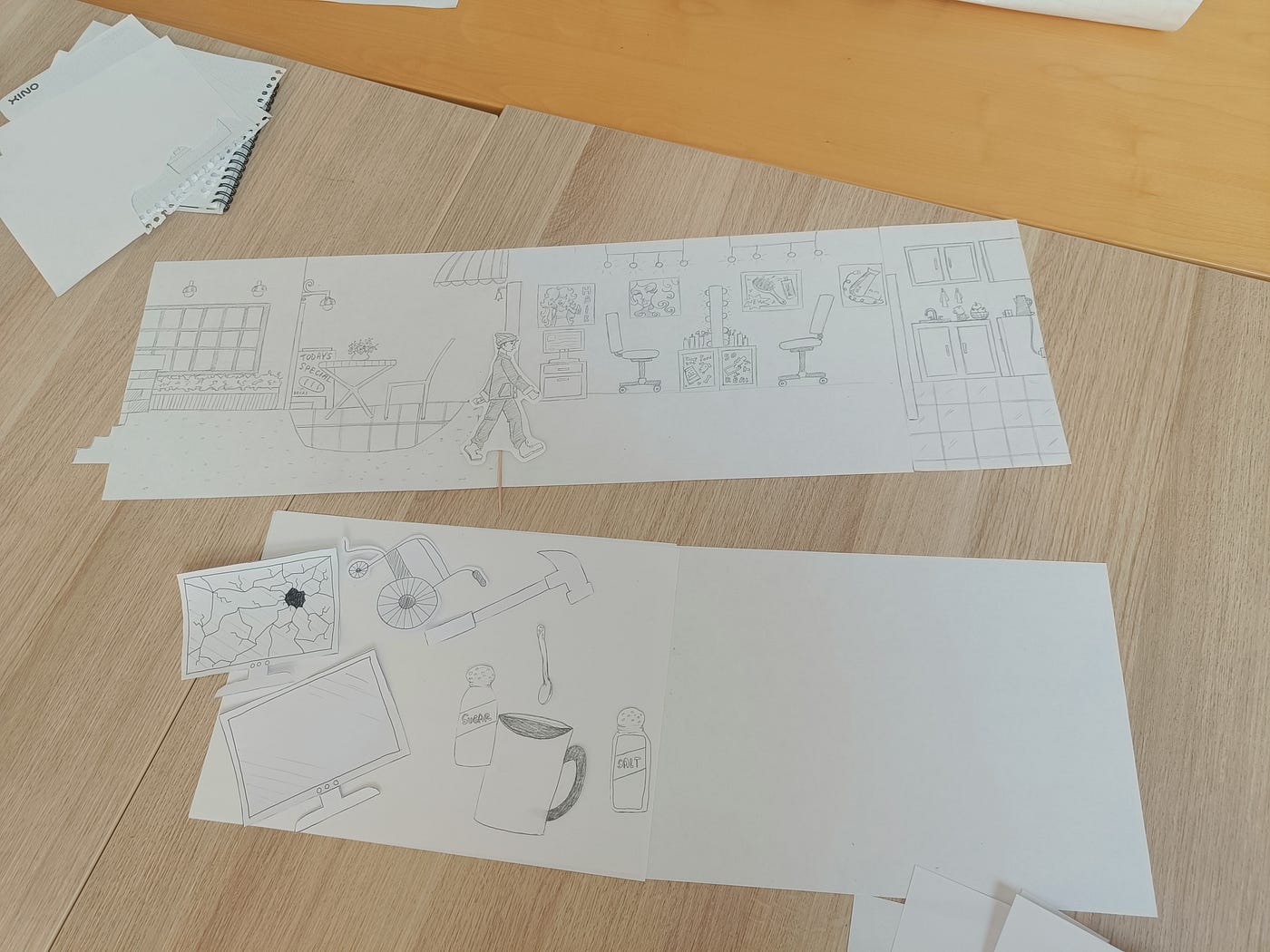
Prototype of the conceived interactive installation. Photo: Panopticon
By Pavel Sitnikov, Laurien Michiels and Media Haqshenas
As a part of the production exercise seminar, our Digital Narratives class collaborated with the Museum für Naturkunde Berlin (MfN). The task was to create a prototype for a digital narrative project using datasets provided by the museum. After a couple of weeks of lectures and seminars at school, our whole group took a trip to Berlin with our professors. We met with the museum’s staff, scientists, and digitizing specialists — almost all the people who run this magnificent place. They led us on a tour not only of the entire museum but also took us behind-the-scenes, where only the staff or researchers could enter. They showed us the rooms where a collection of millions of carefully-preserved insects is stored, awaiting its digitization. A completely hidden world opened to our eyes. Having said that, we could see only a tiny part of the museum collection.
We were tasked to build a prototype concerning either of the two datasets — Insect Drawers and Ehrenberg’s Drawings — of the Mediasphere For Nature at the MfN. The three of us authoring this post, Pavel Sitnikov, Laurien Michiels and Media Haqshenas were assigned as a group, which we named Panopticon.
The Vision
After several ideation sessions, we came up with a prototype idea that highlights the dataset of digitized insects. Our outline was resulting from this question: “what would the reflecting beetle colors sound like?” To achieve a project that could represent how the colors of beetles would sound, we decided to create an interactive installation, where the user would touch a specific beetle and as a reaction to this, the framework would unleash sounds and images linked to that specific specimen. The point of the installation was to create a collaborative symphony based on the colors in each insect specimen. Each color correlates to a wavelength which in turn can relate to a sound frequency. These sounds, in combination with soft modular synths and actual insect sounds from the database, would then, hopefully, create a dreamy yet intriguing experience. In our future vision, the user could then sample their symphony, ready to share on social media platforms.
For the vertical prototype of this idea, we focused on one insect specimen, but the entire installation would be showing off five different insect drawers that people could interact with (for example beetles, butterflies, bees, dragonflies, etc.).
Making of the Prototype
The idea was to build a sample of an interactive installation: a keyboard with haptic buttons, each representing different specimens of beetles, surround sound in the room by playing sounds from varied species of beetles, and several TVs displaying photographs of beetles. Not to mention that our audio-visual footage source was the database of Mediasphere For Nature. Our project was a haptic audiovisual installation. The user could touch each button on the keyboard, which triggered a concise code, resulting in playing an audio file and a picture relevant to the beetle species depicted on the button in an immersive form. It allows the users to fully immerse themselves in an ethereal, meditative and colorful abstract representation of the world of insects by controlling the audiovisual signals, using touch-sensitive insect models.
The User Experience
Watch how the porotype worked:
[embed]Video: Panopticon
In Conclusion
It was the first experience for everyone from our group to create an interactive installation. We were constantly facing various challenges that actually helped us understand how such an exhibition should function. As a result, we learned a lot doing this project, starting with elaborating the idea, considering perception of the audience, finishing with coding and connecting each HDMI-cable in a proper sequence. However, there is still a great potential for growth and improvement of the installation. During prototyping, for instance, the spectator could only interact with sound samples and images, while the core idea is not just to switch between images and sounds, but to modify the whole soundscape and landscape by touching buttons.
Our team Panopticon wishes that we could continue collaboration with the museum, in order to bring to life the whole conception of our project!

From Left to Right: Media Haqshenas, Pavel Sitnikov and Laurien Michiels. Photo: Panopticon
메타데이터
- post_id
- f1cbb9a3080b
- slug
- interactive-installation-using-a-scientific-database-f1cbb9a3080b
- url
- https://medium.com/digital-narratives/interactive-installation-using-a-scientific-database-f1cbb9a3080b
- canonical_url
- https://medium.com/digital-narratives/interactive-installation-using-a-scientific-database-f1cbb9a3080b
- author_url
- https://medium.com/@l.michiels
- status
- ok
- fetched_at
- 2026-06-24 23:31:39