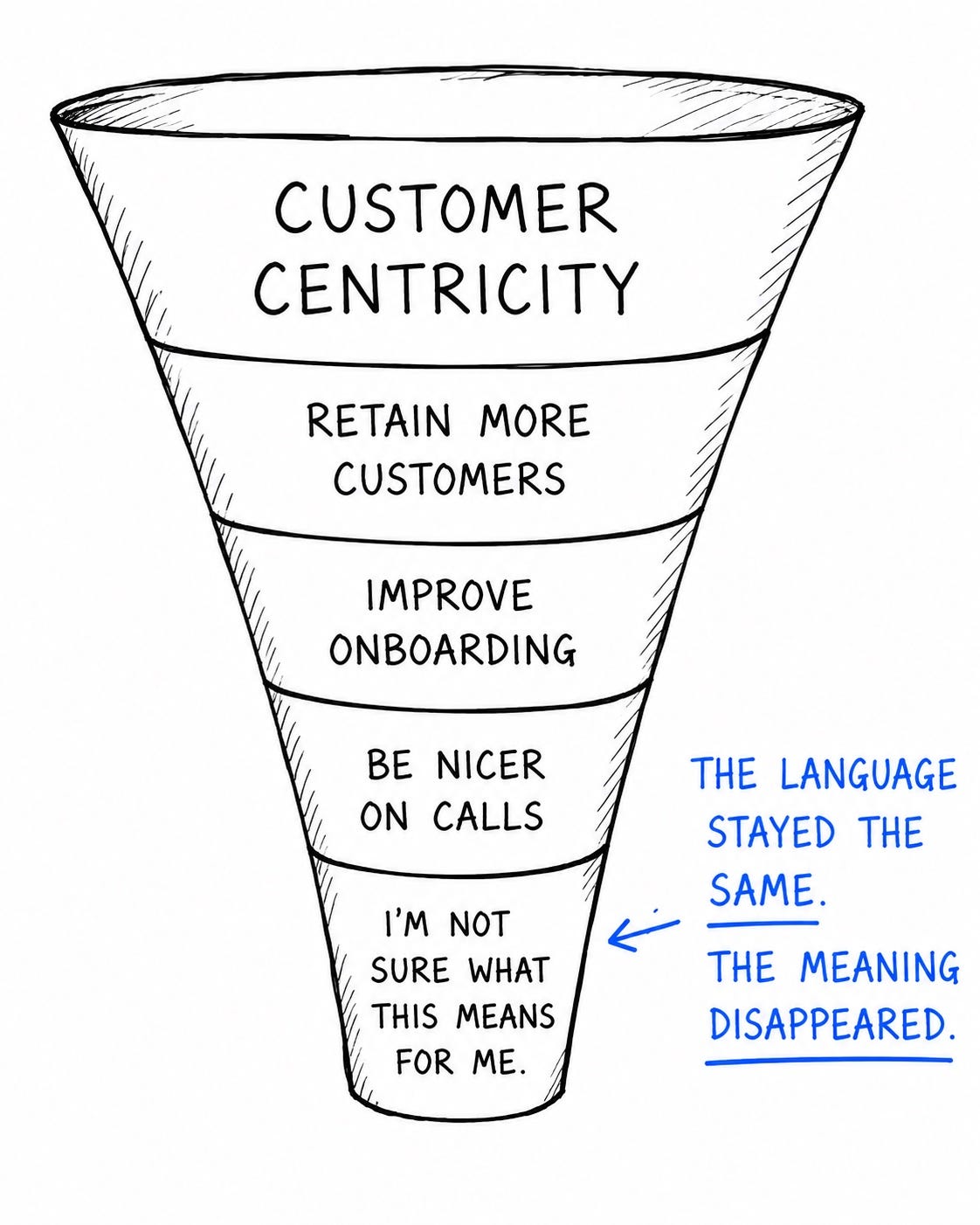
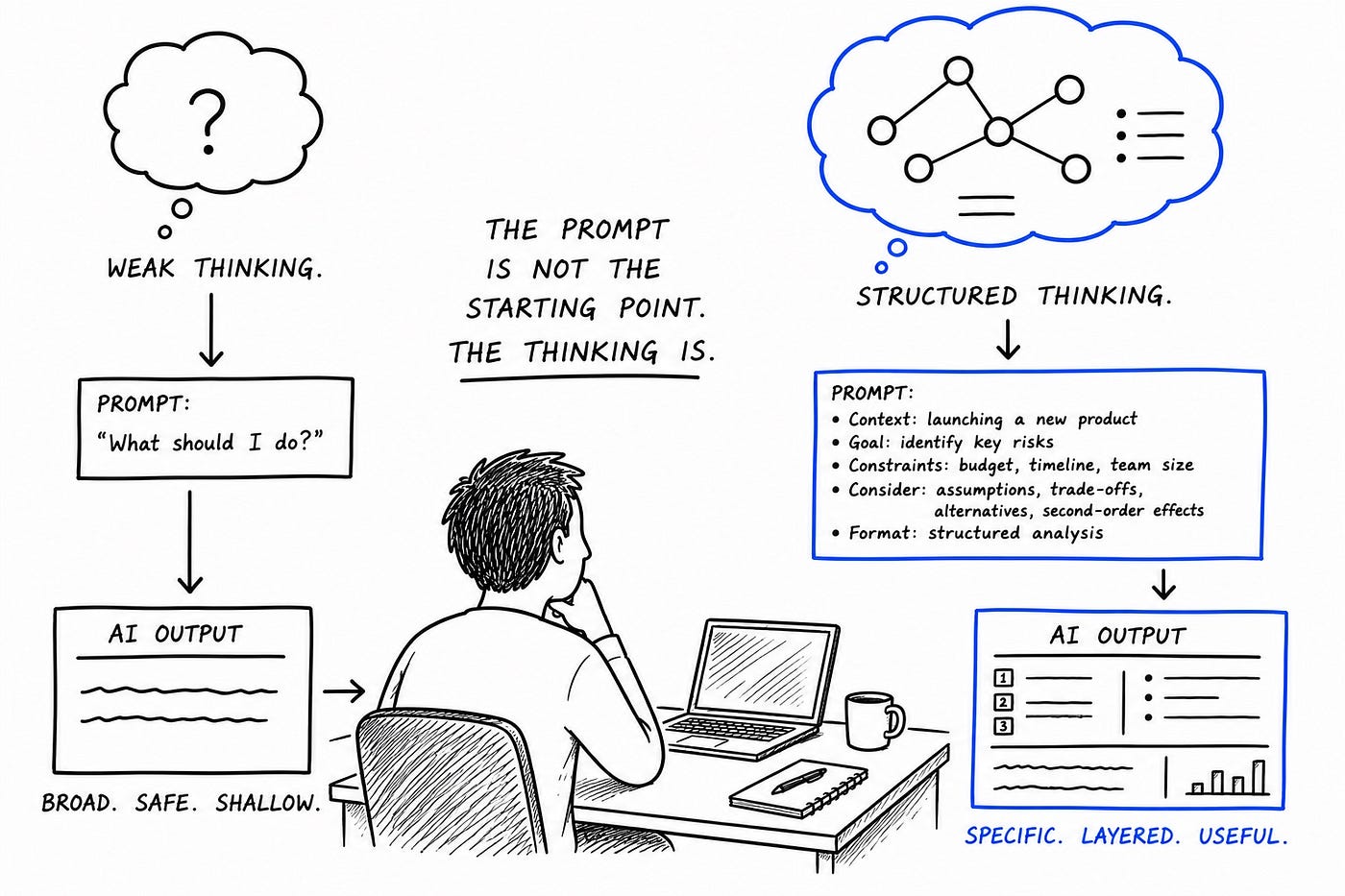
DECISION MAKING — Why More Options Make Decisions Harder #7
Decision Making | Post 7 of 15
From Noise to Clarity | Track 5
DECISION MAKING — Why More Options Make Decisions Harder #7
Decision Making | Post 7 of 15

The assumption that misleads
There is an intuition most people carry into decision-making: more options mean better outcomes. If you have one path, you might miss a better one. If you have ten, you are more likely to find the right one. If you have a hundred, surely the answer is in there somewhere.
This intuition is partly correct. Having some options is better than having none. The first few alternatives genuinely improve decision quality by introducing comparison and preventing premature commitment to an inadequate first choice.
But beyond a certain point, the logic inverts. More options do not continue to improve decisions. They begin to degrade them. Each additional option increases the number of comparisons that need to be made, the number of futures that need to be simulated, the number of trade offs that need to be weighed, and the cognitive load required to hold all of it together. At some point the question is no longer what should we choose. It becomes what are we giving up by not choosing everything else. And that shift, from selection to regret management, is where decision-making begins to break down.
What modern environments have done to this
The conditions of modern professional life have taken a challenge that has always existed and scaled it significantly.
Organisations today operate inside environments that continuously generate more possibilities. More tools, more pathways, more recommendations, more perspectives, more optimisation opportunities. The pace of change produces new options faster than existing ones can be properly evaluated. And the culture of most organisations rewards the appearance of thoroughness, which means exploring more options is consistently encouraged, while the discipline of stopping exploration and committing is rarely celebrated.
The result is a professional environment where the natural tendency toward option expansion has no reliable counterweight. People keep looking because looking feels productive. And the accumulation of possibilities, each one individually plausible, gradually crowds out the capacity for clear commitment.
VISUAL PROMPT 1: “How Options Multiply Cognitive Load” A hand-drawn sketchnote on a white background. A central figure at a decision point. In the first version, two options connect to the figure by clean arrows. Below: “2 comparisons. manageable.” In the second version, six options surround the figure with arrows crossing each other. Below: “15 comparisons. difficult.” In the third version, twelve options surround the figure, arrows forming a dense web. Below: “66 comparisons. overload.” A blue handwritten note beneath all three versions: “every new option adds more than one comparison. it multiplies them.” Black ink throughout except the blue note. White background. Rough sketch aesthetic.

AI and the acceleration of possibility
This is where the current environment has introduced something genuinely new.
AI can now generate dozens of strategies, hundreds of content variations, multiple competing scenarios, endless refinements, and a continuous stream of alternative recommendations within minutes. The tools that were supposed to help leaders decide faster have, in many cases, made the decision environment significantly more complex.
The experience follows a predictable arc. In the first stage, the ability to generate more options feels like empowerment. The constraints that used to limit exploration, time, access, expertise, now seem to have dissolved. Every direction can be explored. Every alternative can be assessed. The decision space appears to have expanded.
But expansion is not always an advantage. As a visual thinking strategist, I see this pattern consistently: the leaders who use AI most intensively to generate options are not always the ones who decide with the most clarity. They are sometimes the ones who struggle most to commit. Because the tool that removed the constraint on exploration also removed the natural forcing function that used to prompt a decision: the point at which running out of alternatives meant it was time to choose.
AI does not know when enough exploration has happened. It will continue generating options for as long as it is asked to. The judgment about when to stop belongs entirely to the person directing it. And that judgment, in environments saturated with possibility, is increasingly the most important decision skill available.
The confusion between possibility and progress
One of the less visible problems with excessive options is this: people begin confusing possibility generation with decision progress.
Generating options feels like movement. Each new alternative represents effort, analysis, and engagement with the problem. It produces the sensation of forward motion without requiring the commitment that actual forward motion demands.
But generating more options does not automatically create better judgment. It defers it. Every new possibility reopens uncertainty. It invites comparison. It creates another loop of evaluation and second-guessing. And the pursuit of the best possible answer, carried past the point where it is useful, begins to weaken the ability to move at all.
This is why decision fatigue has become increasingly common in modern organisations. Not because the people in those organisations are less capable than their predecessors. Because the decision environment has become saturated with possibility in a way that previous generations did not face. And saturation, unchecked, produces paralysis.
VISUAL PROMPT 2: “Possibility Generation vs Decision Progress” A hand-drawn sketchnote on a white background. Two horizontal tracks running parallel. Top track labelled “possibility generation”: a figure moving left to right, generating option bubbles as they move. Each bubble is labelled with a small plus sign. The figure covers a lot of ground. Caption: “feels like progress.” Bottom track labelled “decision progress”: the same figure, fewer option bubbles, but a clear commitment arrow pointing forward at the end. The figure covers less ground but arrives somewhere. Caption: “actually moves.” A blue bracket connecting the end of both tracks with a handwritten note: “these are not the same thing. knowing the difference is the skill.” Black ink throughout except the blue bracket and note. White background. Rough sketch aesthetic.

Why constraints are more useful than they appear
The instinct in most organisations is to treat constraints as limitations to be removed. More time, more resources, more options: the assumption is that removing constraints always improves outcomes.
But constraints serve a function in decision-making that abundance cannot replace. They reduce cognitive overload by creating boundaries. They force prioritisation by removing options that do not meet defined criteria. They establish decision criteria by making certain things non-negotiable. They create strategic focus by narrowing the field to what actually fits the current context. And they make trade offs clearer by reducing the number of things that need to be compared simultaneously.
Without constraints, every option competes equally for attention. And when everything feels possible, movement becomes harder, not easier. The person who says I can do anything is often less decisive than the person who says I can do these three things, and here is why these and not the others.
Strong decision-makers understand this. They do not try to maximise every possible pathway. They reduce the decision space. They ask which variables matter most in this specific situation, which option best fits the current context and constraints, which downside is most manageable, and which path remains adaptable as the situation develops. These questions do not expand the field. They narrow it. And narrowing, done with clarity and intent, is not a failure of imagination. It is the beginning of strategy.
VISUAL PROMPT 3: “How Constraints Create Decision Traction” A hand-drawn sketchnote on a white background. Two side by side scenes. Left scene: a figure standing at the centre of a wide open field, paths radiating outward in every direction, labelled “no constraints.” The figure is frozen, arrows pointing everywhere. Caption: “everything possible. no movement.” Right scene: the same figure inside a simple boundary shape, three clear paths visible within the boundary. The figure is moving along one of them. Caption: “constraints active. direction clear.” A blue arrow connecting the two scenes, labelled: “constraints do not limit strategy. they enable it.” Black ink throughout except the blue arrow and label. White background. Rough sketch aesthetic.

The moment exploration must stop
There is a specific leadership capability that the current environment demands and that receives almost no attention in most discussions of decision-making: the ability to stop exploring at the right moment.
Not because exploration is bad. The early stages of any good decision process benefit from genuine openness to alternatives. But exploration has diminishing returns. At some point, additional options do not add meaningful new information. They add noise. And the leader who cannot recognise that point, who continues generating alternatives when what the situation requires is commitment, is not being thorough. They are being indecisive with a productive-looking cover.
Every decision closes some possibilities in order to strengthen others. That is not a failure. It is the nature of choice. The word decision shares its root with words like incision and scissors: to cut. A decision, at its core, is the act of cutting away what will not be pursued in order to pursue what will. And in environments that continuously generate more possibilities, the discipline to make that cut deliberately, at the right moment, with clear reasoning, is increasingly the real leadership advantage.
If this resonates with you
The ideas in this series sit at the heart of the work Sherrie Low and I explore in The S.T.A.R. System: Applying Visual Thinking for Career and Business Success, published by Marshall Cavendish Business. The book is a practical guide to using visual thinking as a structured discipline for clearer communication, stronger decisions, and more confident professional navigation. If you want to go deeper than a series of posts allows, you can find it on Amazon.
A reflection worth sitting with
The question is not whether you have enough options. In most modern environments, you have more than enough. The question is whether you have the discipline to stop generating them at the point where more exploration adds noise rather than clarity, and to commit to a direction with the options you already have.
That discipline is not instinctive in environments that reward thoroughness and penalise premature commitment. But it is the one that produces movement. And in the end, movement is what decisions are for.
What is one decision you are currently facing where you might already have enough options, and what you actually need is the clarity to choose between them?
Next we look at the moment when you know enough to decide. Because that moment exists, and recognising it is one of the most underrated skills in decision-making.
I am Ai Yat Goh, a visual thinking strategist and co-author of The S.T.A.R. System. I write about thinking clearly in a world full of noise. Follow me here on Medium for the rest of this series, or connect with me on LinkedIn www.linkedin.com/in/aiyatgoh
VisualThinking #Leadership #DecisionMaking #StrategicThinking #TheSTARSystem
메타데이터
- post_id
- f1e565df35cb
- slug
- decision-making-why-more-options-make-decisions-harder-7-f1e565df35cb
- url
- https://medium.com/@aiyat.goh/decision-making-why-more-options-make-decisions-harder-7-f1e565df35cb
- canonical_url
- https://medium.com/@aiyat.goh/decision-making-why-more-options-make-decisions-harder-7-f1e565df35cb
- author_url
- https://medium.com/@aiyat.goh
- status
- ok
- fetched_at
- 2026-06-09 15:37:30