Customer Data Silos: The Hidden Growth Killer for SaaS Companies
Why Connected Customer Data Is Essential for Modern Revenue Operations
Customer Data Silos: The Hidden Growth Killer for SaaS Companies
Why Connected Customer Data Is Essential for Modern Revenue Operations
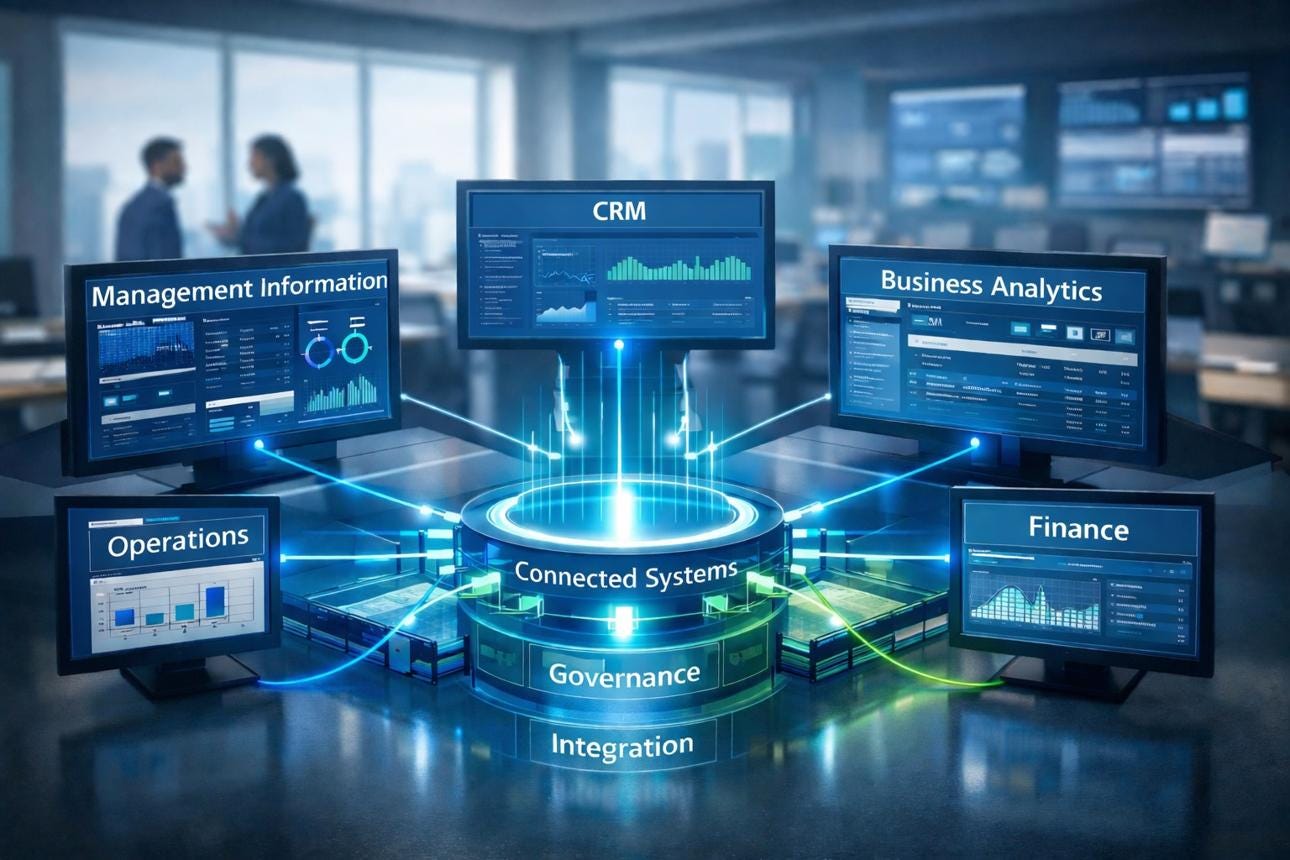
As B2B SaaS companies grow, so does the number of tools they rely on. A typical organization may use one platform for customer relationship management (CRM), another for marketing automation, a separate application for customer support, and additional tools for product analytics, billing, and communication.
While each platform serves a valuable purpose, they often create an unintended problem: customer data silos.When customer information is isolated across multiple systems, teams lose visibility into the complete customer journey. Sales lacks context about support issues, marketing doesn’t know when deals close, customer success misses product engagement signals, and leadership struggles with inconsistent reports.
These disconnected systems don’t just create operational inefficiencies — they slow business growth. For modern SaaS companies, eliminating customer data silos has become a strategic priority for improving collaboration, customer experience, and revenue performance.
Understanding Customer Data Silos
A customer data silo occurs when valuable customer information is stored within one department or application and isn’t easily accessible to the rest of the organization.
This usually happens gradually as companies adopt new software to solve specific business problems.
For example:
- Sales teams manage opportunities inside a CRM.
- Marketing stores campaign data in a marketing automation platform.
- Customer Success tracks customer health in a separate application.
- Support manages tickets in a help desk system.
- Finance maintains subscription and billing records independently.
Each department has useful information, but no one has a complete view of the customer. Without connected systems, every team works with only part of the story.
Why Data Silos Become a Growth Problem
In the early stages of a SaaS business, disconnected systems may not seem like a major issue.
However, as customer numbers increase, operational complexity grows rapidly.Teams begin spending more time searching for information than acting on it.Some of the most common challenges include:
- Duplicate customer records
- Manual data entry across multiple platforms
- Inconsistent customer information
- Delayed communication between teams
- Poor forecasting accuracy
- Slower customer onboarding
- Missed cross-sell and upsell opportunities
- Conflicting business reports
Instead of enabling growth, technology begins creating friction.
The Cost of Disconnected Customer Data
Data silos affect every stage of the customer lifecycle.Imagine a customer who recently submitted several high-priority support tickets. Because the support platform isn’t connected to the CRM, the sales team continues discussing expansion opportunities without knowing the customer is experiencing issues.
At the same time, marketing continues sending promotional campaigns because it isn’t aware of the customer’s current relationship status.These situations create poor customer experiences while reducing internal efficiency.
Over time, disconnected data leads to:
- Lower sales productivity
- Reduced customer satisfaction
- Less accurate reporting
- Slower business decisions
- Increased operational costs
The financial impact often grows as the company scales.
Why Revenue Operations Depends on Unified Data
Revenue Operations (RevOps) is built on one principle: every customer-facing team should work from the same information.When sales, marketing, customer success, and finance share reliable customer data, collaboration improves significantly.
Instead of debating which report is correct, teams can focus on improving business outcomes.
AI Makes Connected Data More Important Than Ever
Artificial intelligence is transforming how SaaS companies forecast revenue, qualify leads, automate workflows, and improve customer engagement.
However, AI systems depend entirely on data quality.If customer information is incomplete, duplicated, or spread across disconnected applications, AI recommendations become unreliable.
A unified customer dataset enables AI to:
- Predict churn risks
- Prioritize high-value opportunities
- Recommend next-best actions
- Improve sales forecasting
- Identify expansion opportunities
- Personalize customer experiences
In other words, AI performs best when it has access to complete and accurate customer information.

Building a Single Source of Truth
Eliminating data silos doesn’t necessarily require replacing every business application.Instead, organizations should focus on creating a connected ecosystem where information flows automatically between systems.
A practical strategy includes:
- Establishing the CRM as the primary customer record
- Connecting sales, marketing, support, and finance platforms
- Standardizing customer data fields
- Removing duplicate records
- Automating data synchronization
- Defining clear data ownership
The goal is to ensure every department works with consistent, up-to-date information.
Benefits of Connected Customer Data
Organizations that eliminate customer data silos often experience improvements across the business.
Better Sales Performance
Sales representatives gain complete visibility into customer history, making conversations more relevant and improving forecasting accuracy.
More Effective Marketing
Marketing teams can create highly targeted campaigns using real-time customer information instead of outdated contact lists.
Stronger Customer Success
Customer success managers receive earlier visibility into product adoption, customer health, and renewal risks.
Improved Executive Decision-Making
Leadership teams gain access to accurate dashboards that support strategic planning and resource allocation.
When every department works from the same data, decision-making becomes faster and more reliable.
Measuring Success
Companies should track measurable improvements after reducing customer data silos.
Useful performance indicators include:
- CRM data accuracy
- Duplicate record reduction
- Lead response time
- Customer onboarding time
- Forecast accuracy
- Customer retention
- Employee productivity
- Revenue growth
These metrics demonstrate how connected data contributes to operational efficiency and business performance.
Preparing for the Future
As AI and automation become increasingly important, businesses with fragmented customer information will find it difficult to realize their full potential.Organizations that invest in clean, connected data today will be better positioned to implement intelligent automation, predictive analytics, and AI-powered decision-making in the future.
Conclusion
Customer data silos are one of the most common — and overlooked — barriers to SaaS growth. While disconnected systems may appear manageable in the short term, they eventually reduce operational efficiency, limit collaboration, and create inconsistent customer experiences.
Building a connected customer data foundation helps organizations improve reporting, strengthen forecasting, enable AI, and deliver better experiences across the entire customer journey.
For B2B SaaS companies, unified customer data is no longer a technical objective — it is a business advantage.
Key Takeaways
- Customer data silos limit visibility across sales, marketing, customer success, and finance.
- Disconnected systems reduce operational efficiency and affect customer experience.
- A unified customer view improves reporting, forecasting, and collaboration.
- AI delivers better insights when powered by clean, connected customer data.
- Building a single source of truth creates a scalable foundation for long-term SaaS growth.
메타데이터
- post_id
- f1ed0200df29
- slug
- customer-data-silos-the-hidden-growth-killer-for-saas-companies-f1ed0200df29
- url
- https://medium.com/@sailolabs/customer-data-silos-the-hidden-growth-killer-for-saas-companies-f1ed0200df29
- canonical_url
- https://medium.com/@sailolabs/customer-data-silos-the-hidden-growth-killer-for-saas-companies-f1ed0200df29
- author_url
- https://medium.com/@sailolabs
- status
- ok
- fetched_at
- 2026-07-13 14:03:22