Britain’s entrepreneurs are voting with their feet — and the economy is paying
Net migration of millionaires hit 10,800 in 2024, the highest in the developed world, as tax rises and regulation push wealth creators…
Britain’s entrepreneurs are voting with their feet — and the economy is paying

Net migration of millionaires hit 10,800 in 2024, the highest in the developed world, as tax rises and regulation push wealth creators offshore.
The scene is a Thursday morning in late May at a private equity firm just off St James’s Street, London. The managing partner, a man who has built three successful businesses since the 1990s, is packing up his desk. Not because he’s retiring. He’s moving his family to Lugano, Switzerland, because, as he puts it, “the arithmetic no longer works here.” He’s not alone. His neighbour in the Cotswolds, a tech founder who sold his company to a US buyer last year, is already gone — to Dubai. The partner’s accountant tells him that four of his top ten clients have either left or are actively planning to leave within 18 months.
This isn't anecdote dressed as analysis. It's a data point in a pattern so pronounced it's now being tracked by the Henley Private Wealth Migration Report. In 2024, the UK suffered a net outflow of 10,800 millionaires — people with investable assets above $1 million. That's the highest figure for any country in the world. The United States, by contrast, had a net inflow of 3,800. China had an outflow, but at 15,200 it’s at least a function of a massive population base and capital controls. Britain’s figure is a policy choice.
The tax trap
The trigger is obvious. Rachel Reeves’s April Budget raised employer National Insurance to 15% and slashed the threshold for the additional-rate tax band to £125,000. Capital gains tax went up to 24% for most assets, with the basic rate scrapped. The personal allowance for high earners was frozen until 2028. The non-dom regime — a tax status that had survived, in various forms, since 1799 — was effectively abolished. The Institute for Fiscal Studies calculates that the overall tax burden will hit 37.7% of GDP by 2027-28, the highest since the Attlee government in 1948.
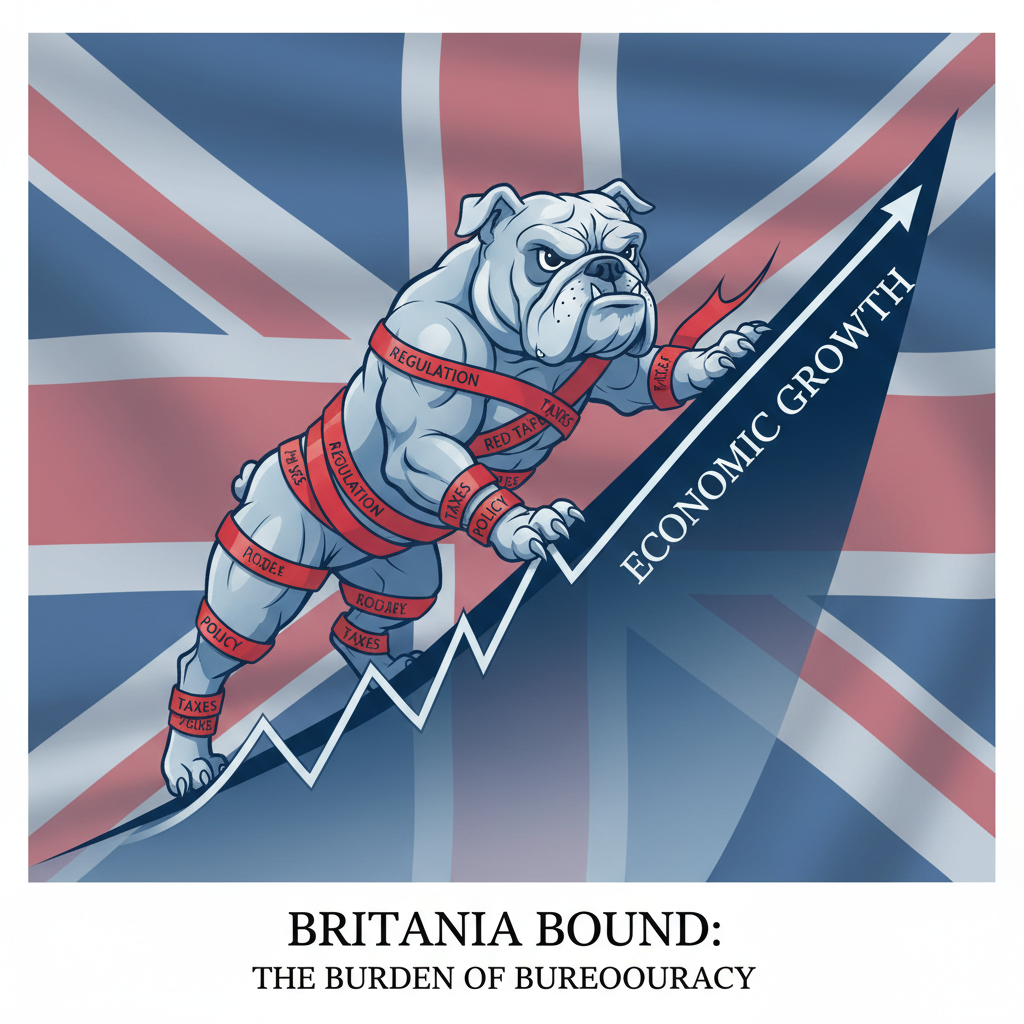
Now, you can make a moral case for taxing the rich more. You can argue that the post-2008 era of low taxes on capital was a political error. But the government is supposed to be in the business of economic growth. And the people who generate growth — who start companies, who invest in scale-ups, who buy the machinery that makes productivity possible — are the ones leaving. Or, just as damaging, they’re deciding not to expand in Britain at all.
Consider this: business investment in the UK was already running 23% below the pre-Brexit trend by early 2024, according to the Office for Budget Responsibility. The OBR’s March forecast revised that down further. The Resolution Foundation has shown that UK private sector investment as a share of GDP has been lower than the OECD average for 15 of the last 20 years. The problem isn't just Brexit uncertainty — it's a regime that taxes capital more heavily than labour, and then acts surprised when capital goes quiet.
The Bank of England’s strange subsidy
David McMillan’s observation about banks parking money at the Bank of England is worth unpacking. Since the Bank started paying interest on reserves in 2022 — a consequence of quantitative tightening — UK banks have been earning roughly 5.25% on the £500 billion or so they hold in reserve accounts. That’s about £26 billion a year in risk-free income. Why lend to a small business at 9% when you can earn 5% for doing nothing? The Bank of England has essentially become a giant savings account for the banking system, and the real economy is starving for credit.
This isn't some fringe view. Andrew Bailey himself acknowledged in a February 2025 speech that the interest on reserves “may have reduced the incentive for some banks to expand lending to the real economy.” That’s Bank of England speak for “we’ve accidentally subsidised the banks to do nothing.” The result? Business lending to SMEs fell 4.7% in the 12 months to March 2025, according to UK Finance. Gross lending to small firms is now at its lowest since 2015.
The productivity puzzle is not a mystery
Every chancellors’ speech since 2010 has lamented Britain’s “productivity puzzle.” The phrase implies something mysterious, almost metaphysical. It’s not. British productivity per hour worked is 16% below the G7 average, according to the ONS. The causes are well understood: chronic underinvestment in energy infrastructure, a planning system that takes seven years to approve a new substation, a skills system that produces hairdressers but not engineers, and a tax regime that penalises capital spending.
Take energy. The UK has the highest industrial electricity prices in the G7 — 50% higher than the US and 30% higher than Germany, according to the Department for Energy Security and Net Zero. That’s not abstract. It means a manufacturer in Teesside pays £80 per megawatt-hour more than his competitor in Düsseldorf. That margin eats into the investment needed to automate production lines, improve logistics, or raise wages. The government’s response has been to introduce a windfall tax on North Sea oil and gas producers, raising the effective tax rate to 78%. The result? TotalEnergies, Shell, and Equinor have all cut UK investment budgets by a combined £8 billion since the tax was announced.
The pension fund retreat
Then there's the domestic equity market. British pension funds now allocate just 4% of assets to UK equities, down from 48% in 1997. That’s a collapse that mirrors the decline in British corporate dynamism. The MSCI UK index has returned 3.2% annually over the last decade, compared to 12.1% for the S&P 500. Why would a pension fund manager buy British when they can buy American? But the causality runs both ways: a lack of domestic demand for UK stocks means companies have less incentive to list in London. The number of companies listed on the London Stock Exchange has fallen from 2,800 in 2008 to under 1,900 today. The IPO market is effectively dead — just £1.2 billion raised in 2024, down from £10 billion in 2021.
The government’s answer — the Mansion House reforms, the Edinburgh Reforms, the “compete” agenda — are all well-intentioned. But they’re tinkering. Rachel Reeves cannot simultaneously raise capital gains tax, abolish non-dom status, freeze allowances, increase National Insurance, and then claim she wants to make Britain “the best place in the world to start and grow a business.” The message is contradictory. The market hears the tax rises, not the rhetoric.
The welfare state without the workers
The final piece of the puzzle is demographic. The UK now has 9.3 million people of working age who are economically inactive — not working and not looking for work. That’s up from 8.6 million before the pandemic. The welfare bill has risen to £280 billion, a record in nominal terms. The government adds 1.4 million people onto incapacity benefits since 2020. Meanwhile, net migration hit 685,000 in 2023, the highest on record, but most of those arrivals are not filling the skilled trades and engineering roles the economy needs — they’re in care work, hospitality, and lower-skilled services.
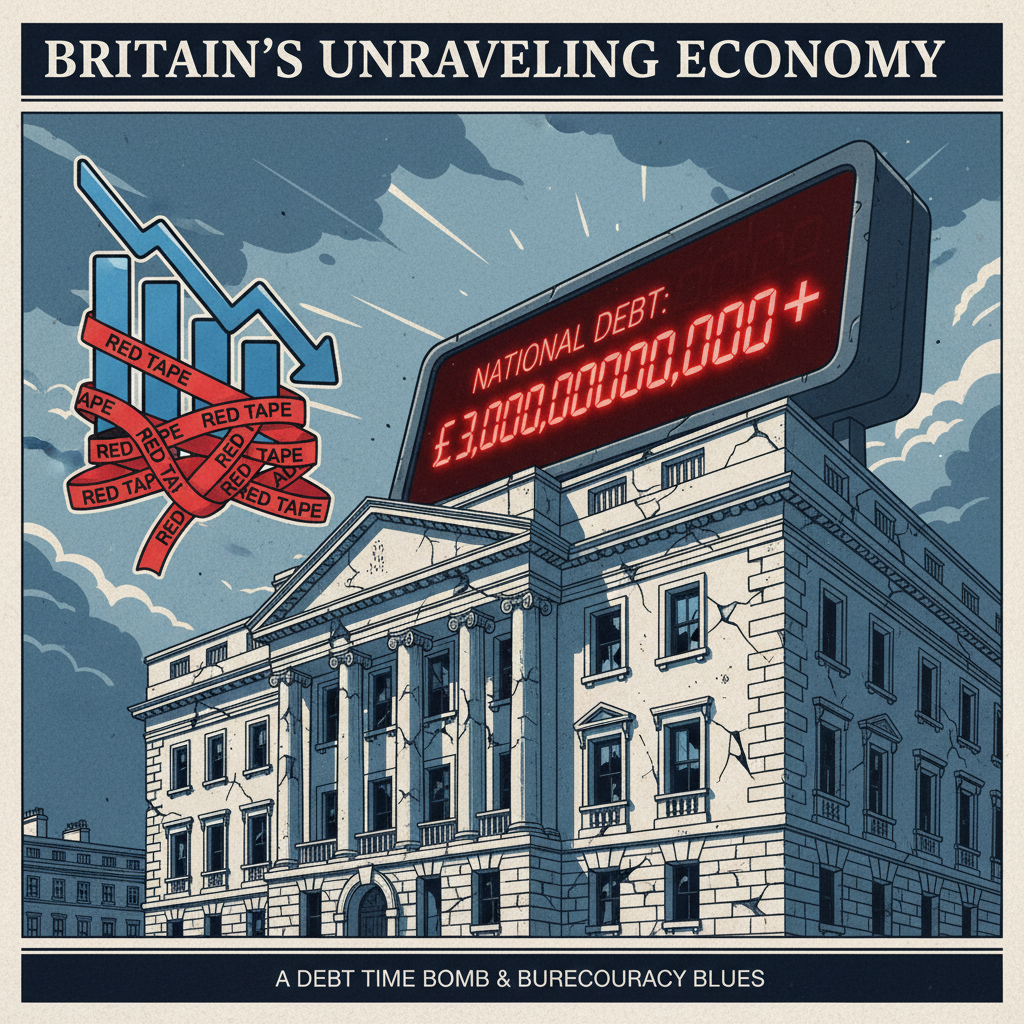
You don’t need to be an economist to see the trap. The tax base is shrinking because the people who generate tax revenue — entrepreneurs, investors, high-skilled workers — are leaving or scaling back. The welfare rolls are growing because older workers have retired early and younger workers have left the labour force. The government responds by raising taxes on the shrinking base, which accelerates the departure. This is the definition of a death spiral.
What would actually work?
The answer is boring and politically difficult. Cut the tax rate on capital gains back to 18%. Abolish the non-dom reform entirely — it raises less than £1 billion a year and destroys multiples of that in lost investment. Reform planning so that a new battery factory or data centre can be built in two years, not seven. Force the Bank of England to reduce the interest on reserves to 2% and make banks lend or get fined. Merge the 43 local police forces into six regions to cut overheads. Stop pretending that a 78% tax on North Sea oil is compatible with energy security.
But none of this will happen under the current government. Labour’s coalition is built on public sector unions, welfare recipients, and the urban left — groups that benefit from higher spending and higher taxes. The Conservative Party, meanwhile, is in a civil war between the free-marketeers and the nationalists. Neither party can articulate a credible growth strategy because neither party is willing to offend its base.
So the millionaires will keep leaving. The companies will keep listing in New York. The productivity gap will keep widening. And the British economy will keep shrinking, slowly, like a punctured tyre. The only question is how long the tyre can run before it’s completely flat.
메타데이터
- post_id
- f218d8f1bb70
- slug
- britains-entrepreneurs-are-voting-with-their-feet-and-the-economy-is-paying-f218d8f1bb70
- url
- https://medium.com/@worldnews99/britains-entrepreneurs-are-voting-with-their-feet-and-the-economy-is-paying-f218d8f1bb70
- canonical_url
- https://medium.com/@worldnews99/britains-entrepreneurs-are-voting-with-their-feet-and-the-economy-is-paying-f218d8f1bb70
- author_url
- https://medium.com/@worldnews99
- status
- ok
- fetched_at
- 2026-06-25 07:00:49