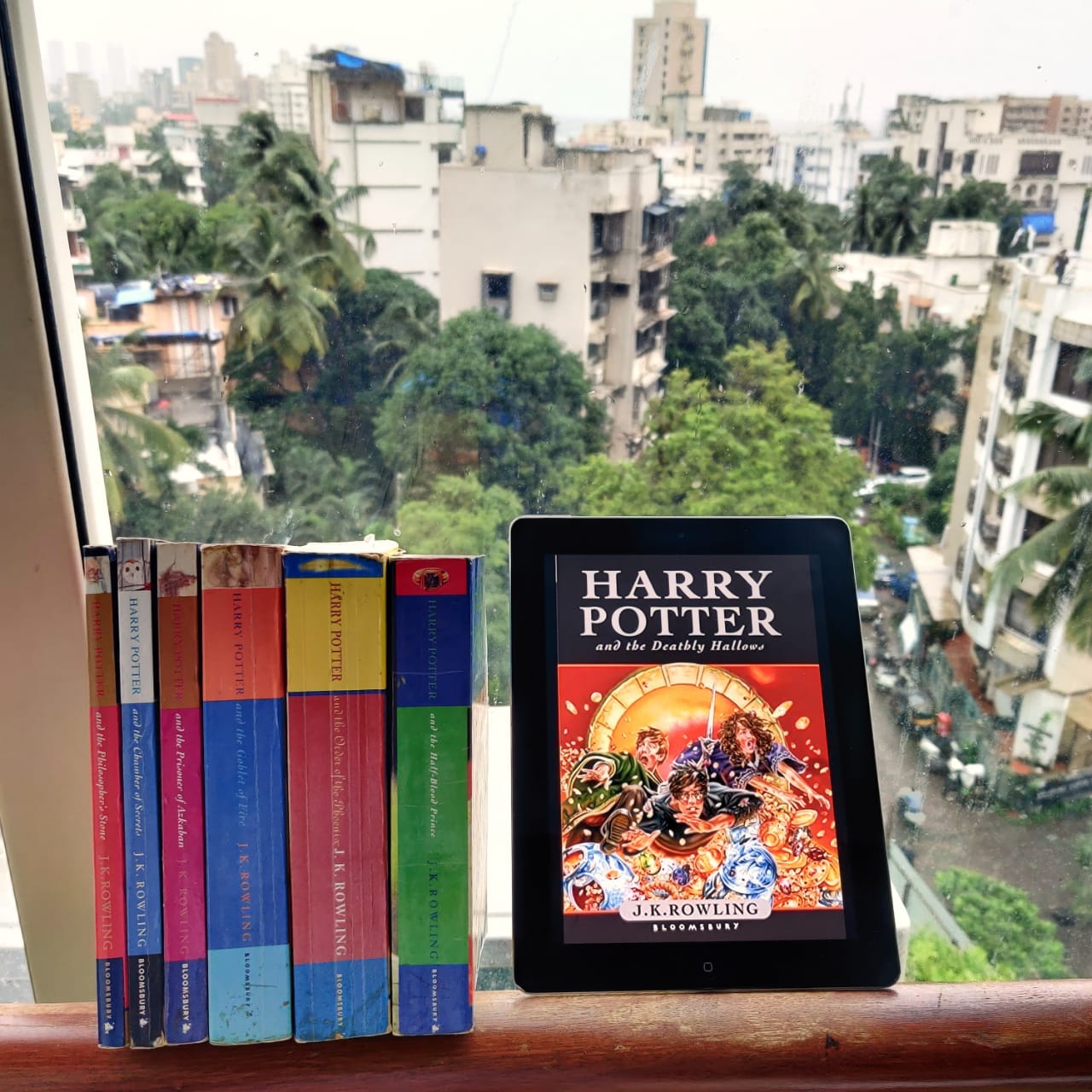
Why Harry Potter Became a Global Cultural Phenomenon
What 120 Readers and Parents Revealed About the World’s Most Enduring Fantasy Series
Why Harry Potter Became a Global Cultural Phenomenon
What 120 Readers and Parents Revealed About the World’s Most Enduring Fantasy Series

Photo by Angel Sanchez on Unsplash
A lot of books written for children and young adults feature magic. There are heroes and villains. A central quest and countless side quests. Yet very few works can sustain excitement across an entire series. Fewer still go on to become global cultural phenomena that span generations, countries, and decades.
Harry Potter is one such series.
But why did Harry Potter gain this level of success? What made these seven books resonate so deeply that millions of readers still return to them decades later? Why did they become a shared cultural touchstone for children, parents and entire communities?
To answer that question, I turned not just to the study of literary criticism but to the people who lived through the phenomenon. I collected and analyzed responses from 120 Harry Potter readers and parents across generations, alongside scholarship on children’s literature, reader-response theory, fandom studies, and publishing history.
While every reader’s story was different, the same patterns surfaced again and again. Harry Potter combined a compelling long-form story with characters who grew up alongside their readers. It gave children a symbolic language for understanding friendship, injustice, and abuse, and gave them a context in which to grow up. It transformed reading from a solitary activity into a shared cultural experience through midnight launches, school discussions, family traditions, and online fandom. And it arrived at a unique moment in history, when blockbuster publishing, the early internet, and film adaptations amplified its reach in ways few series before — or since — have experienced.
No single factor explains Harry Potter’s extraordinary success. But taken together, these patterns offer an explanation for why it became far more than a fantasy series.
The Story Was Built to Sustain Obsession

Photo by Kenny Gaines on Unsplash
Before Harry Potter became a cultural phenomenon, it had to accomplish something much simpler: persuade readers to keep turning the page.
J.K. Rowling achieved this by constructing what was, in effect, a long-form mystery. Every book posed its own central question while planting the seeds for mysteries that would only be answered years later in other books.
Who was Nicolas Flamel? Who had opened the Chamber of Secrets? Who put Harry’s name into the Goblet of Fire? What was Voldemort really after? Who was the Half-Blood Prince? What were the Deathly Hallows? And perhaps the biggest question of all: what was Severus Snape truly hiding?
Each book offered enough answers to feel satisfying, while leaving enough unresolved to make readers impatient for the next installment. The result was a story that continuously rewarded curiosity.
The series was equally patient with its characters. Neville Longbottom’s journey from a timid, forgetful boy to one of the heroes of the Battle of Hogwarts feels realistic precisely because it unfolds over seven books with slow revelations about his past, his personality and some foreshadowing. Snape’s motivations are revealed so gradually that readers spend years debating him. Details that initially appear insignificant like Pettigrew’s silver hand or the Deathly Hallows introduced only in the final book, prove central to the story. Rowling rewarded readers for paying attention, creating the sense that almost nothing in her world was accidental.
Just as importantly, the series matured alongside its audience. Several respondents pointed to the transition between Goblet of Fire and Order of the Phoenix as the moment Harry Potter stopped feeling like children’s fiction.
As one reader reflected,
“The strongest I ever felt was the transition of tone between Goblet of Fire and Order of the Phoenix. Cedric Diggory’s death marked a clear turning point. Harry comes into his own. Teenage angst, grief, responsibility — how difficult things can be on a young person.”
The experience was also shaped by the way the books were published. Unlike readers discovering the completed series today, millions experienced Harry Potter in real time. They had to wait years for the next installment. Those gaps became part of the phenomenon itself. Readers speculated endlessly about unresolved mysteries, debated fan theories, revisited earlier books in search of clues, and tried to predict how the story would end. Anticipation became a shared activity rather than a private one.
A compelling story explains why readers eagerly picked up the next book. It does not, by itself, explain why Harry Potter became a global cultural phenomenon.
For that, we have to look beyond the books and toward the people reading them.
Readers Grew Up Alongside Harry

Photo by Alexander Mass on Unsplash
One explanation surfaced more consistently than almost any other: readers didn’t simply read Harry Potter as children. They got a chance to mature alongside Harry.
When Harry Potter and the Philosopher’s Stone was published, Harry was eleven years old. He was awkward, bullied, lonely, and trying to understand where he belonged in the world. Many respondents were roughly the same age when they first met him. As each new book arrived over the next decade, both Harry and his readers grew older together.
This mattered because the books matured alongside the readers. Early adventures gradually gave way to more difficult questions about loss, belonging, identity, and responsibility.
Just as the characters changed, so did the ordinary rhythms of their lives. Hogwarts was magical, but it also felt recognizably real. Harry and his friends worried about homework, exams, friendships, first crushes, and difficult parents. They argued, made mistakes, and slowly became more independent. Rather than placing children at the edge of the story while adults solved problems, Rowling increasingly entrusted young people with impossible decisions. For many readers, that progression mirrored their own journey toward adulthood.
Several respondents described measuring time through the books. If Harry was returning to Hogwarts for another school year, they were returning to school too. Waiting for each new installment became part of growing up itself.
Each book offered enough answers to feel satisfying, while leaving enough unresolved to make readers impatient for the next installment.
That relationship also changed as readers revisited the series later in life. A parent admitted that scenes they barely paid attention to as a child affected them profoundly as an adult. Cedric Diggory’s death was no longer simply Harry’s tragedy. It was also Mr. Diggory’s unbearable, painful loss.
Readers also felt that characters like Dumbledore, they had once admired seemed more flawed, while others they had overlooked gained new significance. The books had not changed, but the readers had.
The responses also revealed that identification rarely stopped at Harry himself. Boys saw themselves in Hermione’s intelligence and stubborn conviction. Girls found confidence in a character who was unapologetically vocal about the causes she believed in. Others recognised parts of themselves in Sirius, Luna, Neville, or Remus. Readers didn’t simply choose favourite characters; they found people who gave shape to experiences they were still learning to name.
For many, the attraction was never just the magic. It was the tantalizing possibility that an ordinary life might conceal an extraordinary one. That behind train stations, school corridors, and difficult childhoods there might exist another world waiting to be discovered. Some remembered reading the books secretly under blankets long after bedtime. Others recalled hiding them from conservative parents who thought they should be studying instead. A few discovered the series much later, during the isolation of the pandemic, and found themselves becoming just as immersed as those who had waited years between releases.
Across the responses, one pattern became unmistakable. Readers weren’t merely following Harry’s life. They were using the series to navigate their own. The books became companions through childhood, adolescence, and adulthood — changing meaning as readers themselves changed.
That enduring relationship helps explain why people stayed with Harry Potter.
And to get to the heart of why people cared so deeply, we have to look at what the books gave readers in order to help them understand and navigate the world around them.
Hogwarts Was More Than a School. It Was Home.

Photo by Valerie on Unsplash
One idea repeatedly surfaced throughout the responses. Readers didn’t simply see Hogwarts as a magical boarding school. They saw it as home.
For some, that feeling came from the simple fantasy of belonging somewhere extraordinary. Harry’s world was filled with moving staircases, enchanted portraits, and Quidditch matches, but it was also a place where children formed friendships, found mentors, made mistakes, and discovered who they were through trials and tribulations. For readers navigating the uncertainty of adolescence, Hogwarts offered something even more powerful than magic: the promise that there might be a place where they were understood.
Fantasy literature has long been recognized as a way for young readers to safely explore difficult emotions and experiences. Stories give them symbolic forms that readers can inhabit and make sense of. The responses suggest that Harry Potter did precisely that.
One respondent, Reddit user Tacotica, described growing up in an abusive household where Harry Potter became the first story that helped them recognize abuse for what it was. Until then, every portrayal of abused children they had encountered involved orphanages, cruel step-parents, or obvious physical violence. Because their own experience looked different, they had grown up believing they were simply unlovable. Harry, living with relatives who neglected and mistreated him, became the first child they encountered whose suffering was acknowledged as real.
“Harry’s abuse wasn’t the same as mine, but seeing his treatment recognised as being wrong helped me understand that I was treated very badly too.”
Years later, they have reread the series with their own child. What began as validation during childhood has become an intergenerational tradition they still describe as magical.
Some stories were even more striking.
One reader wrote simply, “Honestly, it is a reason why I am still alive,” explaining that the series carried them through years of depression and darkness. Another remembered losing their mother at a young age and turning to Hogwarts after her death because it “felt like the home which was snatched from me.” The books became a guiding force, helping them understand friendship, hope, and the possibility that life could become brighter again.
What fascinated me was that readers rarely attached themselves to Harry alone. They found themselves scattered throughout the cast.
A reader who grew up poor and bullied saw themselves in the young Severus Snape but also saw his adulthood as a warning against allowing bitterness to consume them. Another, questioning their identity while growing up queer in a conservative community, found acceptance through characters who existed on the margins. A disabled reader described Remus Lupin as the first fictional character who articulated feelings they had never seen represented elsewhere. Lupin’s struggle to be accepted despite his condition gave them hope that they, too, could build meaningful relationships without hiding who they were. Others spoke of Luna Lovegood teaching them to embrace being different rather than apologizing for it.
The stories differed, but the pattern remained remarkably consistent. Readers were not simply choosing favourite characters. They were finding mirrors.
They found Harry’s resilience, Sirius’s loneliness, Snape’s resentment, Luna’s authenticity, Neville’s courage, and Lupin’s dignity in the face of prejudice. These characters became ways of understanding experiences that many respondents admitted they could not yet explain in their own lives.
The idea of Hogwarts itself carried a similar symbolic weight. Readers who had experienced bullying remembered imagining themselves sorted into Hufflepuff and finally finding friends. Others spoke of waiting for a Hogwarts acceptance letter while growing up in violent homes, hoping that another life might somehow exist beyond the one they knew. Even decades later, respondents described feeling an immediate sense of peace simply from seeing an image of the castle. One beautifully summarized the feeling through a line from the series itself: “For Harry, Snape, and Tom Riddle, the abandoned boys, Hogwarts was home.”
Viewed together, the pattern that emerges is that readers were not escaping reality when they entered Rowling’s world. They were learning how to navigate it. The magic drew them in, but it was the emotional truths beneath the fantasy that stayed with them. Harry Potter became more than entertainment. It became a language through which readers could understand loss, identity, injustice, friendship, belonging, and ultimately, themselves.
But these experiences were rarely private. They unfolded alongside classmates, siblings, parents, midnight book launches, and entire communities of readers. And that transformed Harry Potter from a deeply personal reading experience into something much larger: a shared cultural experience.
Reading Harry Potter Became a Shared Cultural Ritual

Photo by Annie Maher on Unsplash
Reading is often imagined as a solitary activity. A reader sits quietly with a book, inhabiting a world that exists largely in their own imagination. But for millions of Harry Potter readers, the experience was anything but solitary.
Respondents described Harry Potter not simply as a series of books but as a collective event. They didn’t just read the stories — they waited for them together, talked about them together, argued over them together, and celebrated them together. In doing so, reading became a collective ritual.
Timing played an important role. Unlike readers discovering the completed series today, children growing up between 1997 and 2007 experienced Harry Potter as an unfolding story. Every new book arrived after months — or sometimes years — of anticipation. Those gaps became fertile ground for speculation. Readers revisited earlier books searching for clues, debated fan theories with classmates and strangers online, and tried to predict where the story was heading. Waiting was not an interruption to the experience; it became part of the experience itself.
For many, release days became unforgettable memories. One respondent described midnight launches as “a cultural event” unlike anything they had experienced before or since. Another recalled entire towns transforming themselves for new book releases, with themed decorations, costumes, activities, and hundreds of readers waiting together until the clock struck midnight. People didn’t rush home after buying the latest installment — they sat together in parks, cafés, and bookstores, opening the first pages at exactly the same moment.
The community extended well beyond bookshops.
Parents read the books aloud to their children at bedtime. Schools assigned the novels as class reading and students discussed them together. Grandparents waited in line at bookstores with excited grandchildren. Reddit user chaosatnight recalled being taken to Barnes & Noble midnight releases by their grandmother, who defended the books despite her devout Christian husband’s concerns about magic. Years later, they still describe Harry Potter as the safe haven they returned to during an unpredictable childhood.
One respondent remembered their father standing outside Barnes & Noble on release day to secure a copy before anyone else. Another recalled reading alongside their children as the characters aged, eventually buying multiple copies of each new release because no one in the family could bear to wait their turn.
For quieter readers, Harry Potter became something else entirely: a social language. One respondent, who described themselves as painfully shy growing up, said the series became the conversation that opened countless doors. Harry Potter was how they made lifelong friends, connected with cousins, grandparents, classmates, and eventually even their own children. Looking back decades later, they realised the books had become woven into the fabric of family life across generations.
The internet amplified these experiences in unprecedented ways. Online forums filled with elaborate theories about Horcruxes, Snape’s loyalties, and the identity of the Half-Blood Prince. Readers who had never met one another debated clues, wrote fan fiction, imagined original characters, and returned to the books repeatedly in search of hidden details. As media scholar Henry Jenkins argues, fandom transforms audiences from passive consumers into active participants. Harry Potter readers were not simply waiting for the next book — they were collectively extending the world between publications.
Perhaps the most revealing finding was that many respondents struggled to separate the books from the experience of reading them. Years later, they remembered not just plots or characters but standing in midnight queues, dressing up for premieres, listening to Stephen Fry or Jim Dale on long car journeys, rereading dog-eared paperbacks, or feeling emotional as they stepped into Hogwarts again through films, games, and theme parks. The memories belonged as much to the community as they did to the stories themselves.
Readers weren’t merely following Harry’s life. They were using the series to navigate their own.
A great story may inspire passionate readers. But a shared ritual creates a culture.
That helps explain why Harry Potter inspired extraordinary devotion. It still leaves one question unanswered: why did that devotion spread so widely across ages, families, and generations?
Harry Potter Belonged to Everyone

Photo by Caroline Veronez on Unsplash
Most children’s books are eventually left behind. Readers outgrow them. A new generation of kids discover them. The cycle repeats.
Harry Potter followed a different path.
“For Harry, Snape, and Tom Riddle, the abandoned boys, Hogwarts was home.”
One of the clearest patterns to emerge from the responses was that the series rarely belonged to just one generation at a time. Children read it with their parents. Parents who had once waited eagerly for new releases now introduced the books to their own children. Grandparents queued at midnight launches alongside grandchildren. Rather than replacing one generation of readers with another, Harry Potter accumulated different generations of readers.
That intergenerational appeal took many forms. Some parents described reading the books aloud to children aged five and seven. Others looked forward to introducing the series once their children were old enough.
One of the most touching stories came from Mar, a reader from the Netherlands, whose Harry Potter memories are inseparable from her grandmother. Born in 1933, her grandmother was a conservative woman who rarely read fiction and had never attended secondary school. Yet after Mar persuaded her to read the first two Harry Potter books, they became something the two of them shared. They attended midnight releases together, bought Goblet of Fire on publication night, and took turns reading it aloud to one another. By the time the final book was released, Mar had moved more than a thousand kilometres away, but she travelled back so they could experience that final midnight launch together. Harry Potter bridged not only generations but also differences in age, education, beliefs, and reading habits, becoming a family tradition that neither of them had expected when they borrowed the first book from a library.
For one respondent, the books arrived as a gift from their mother after a trip to London. They admitted they had never been much of a reader until opening Harry Potter and the Philosopher’s Stone. Reading the series together sparked a lifelong love of books. Another respondent echoed that transformation from a different perspective. English had never been a language they enjoyed reading until Harry Potter. Determined to continue the series, they found themselves reading their first English novel — and never looked back. That single book, they reflected, set off a chain reaction that permanently changed their life.
The books did more than create readers; they sustained them.
One respondent reflected that Harry Potter was the first time they truly understood the power of words — the realization that ink and paper alone could create people, places, and entire worlds. Looking back, they saw that experience as the beginning of a lifelong relationship with literature itself. Others described rereading the series every few years, discovering fresh meanings each time. Even respondents who no longer considered themselves devoted fans still remembered Harry Potter as the series that made reading feel exciting.
Importantly, the research also included voices that complicated the narrative. One reader admitted they never identified strongly with the characters and gradually became more critical of the series as they grew older. Yet even they acknowledged that Harry Potter had encouraged them to read more and had left a lasting impression during adolescence. Not every reader experienced lifelong emotional attachment, but many still recognised the books as an important milestone in their reading lives.
Perhaps no response captures this continuity better than that of one mother who experienced Harry Potter from both sides of the phenomenon. She first read the books alongside her children as they grew up together with Harry, queued for release days, improvised homemade wands when official merchandise was too expensive, watched one child begin writing Harry Potter fan fiction, and later found herself relating most deeply to Molly Weasley as her own children became adults. The stories had not remained frozen in childhood. They had matured alongside an entire family.
That ability to recruit new readers while retaining old ones helps explain Harry Potter’s remarkable longevity. The books were never confined to a single age group or stage of life. They became stories that families could share, revisit, and eventually pass on.
Even that, however, does not fully explain why Harry Potter became the global cultural phenomenon of its era.
For that, we have to look beyond the readers themselves and at the unique historical moment in which the series appeared.
The Perfect Story Arrived at the Perfect Historical Moment

Photo by Rhii Photography on Unsplash
One final question remains: why Harry Potter?
Fantasy stories existed before it. So did magical schools, chosen heroes, dragons, wizards, and coming-of-age adventures. Even today, excellent fantasy novels continue to appear every year. Yet none have recreated quite the same cultural moment.
The responses suggest that Harry Potter succeeded because it arrived at an unusually fortunate point in history, when storytelling, publishing, technology, and fandom were all evolving together.
The books were published over a decade rather than all at once. That meant millions of readers experienced the story in real time, growing alongside the characters while waiting months — or years — for the next chapter. At precisely the same time, the internet was becoming part of everyday life. For one of the first times, readers from different countries could gather online to debate theories, analyse clues, write fan fiction, and speculate endlessly about what would happen next. Several respondents argued that Harry Potter was perfectly timed for the dawn of internet fandom, suggesting the series simply would not have reached the same scale had it appeared ten years earlier or ten years later.
Just as importantly, the books proved unusually friendly to fandom itself.
The Hogwarts house system invited readers to imagine themselves inside the story. Wands, Patronuses, pets, Quidditch teams, magical creatures, and school life all provided ways for fans to express their identities beyond simply reading the books. There were enough unanswered questions to fuel years of discussion, enough unexplored corners of the Wizarding World to inspire fan fiction, and enough memorable symbols to transform the series into merchandise, costumes, theme parks, and eventually an entire entertainment ecosystem.
One of the most insightful explanations came from Reddit user PartyPorpoise, who argued that Harry Potter was unusually “fandom-friendly.” The Hogwarts house system, Patronuses, wands, magical creatures, and school setting didn’t simply enrich the story — they invited readers to imagine themselves within it. Houses became identities, wands became extensions of personality, and the Wizarding World offered endless space for original characters, fan fiction, discussion, and debate. Because Rowling left many corners of the world unexplored, readers enthusiastically filled the gaps themselves. PartyPorpoise also pointed to something easy to overlook today: timing. Harry Potter arrived just as the internet was becoming mainstream, making it one of the first ongoing book series whose readers could gather online between releases to speculate, create, and build communities together. They even described the franchise as unusually “toyetic” — a property naturally suited to merchandise, collectibles, costumes, and eventually theme parks. Their broader point was compelling: Harry Potter didn’t merely inspire fandom; its world was exceptionally well designed to sustain one, while the emerging internet amplified that participation on a global scale.
The film adaptations expanded that world even further. Rather than replacing the books, they reinforced them. Readers became moviegoers. Characters readers had imagined for years suddenly had faces, voices, and music attached to them. One respondent reflected that rewatching the films at home years later could never quite recreate what opening weekend had felt like: the cheering, the anticipation, the collective gasp of an audience experiencing the story together for the first time. Another remembered entire towns transforming themselves into Harry Potter celebrations whenever a new book was released, with themed games, costumes, decorated shops, and hundreds of people waiting together until midnight before immediately beginning to read.
Several respondents also pointed to another force that is easy to overlook: publishing itself. Scholastic’s aggressive promotion, widespread availability in schools and bookshops, and relentless word of mouth created a snowball effect. The more people read Harry Potter, the easier it became for new readers to discover it. Popularity reinforced popularity until the series became almost impossible to ignore. As one respondent working in publishing put it, Harry Potter benefited from “the right place, right time” — a moment when a remarkable story met remarkable circumstances.
No single ingredient created the phenomenon. Not the books alone. Not the films. Not the internet. Not the marketing. Not the fandom.
It was their convergence.
Harry Potter offered a story that rewarded patience, characters who matured alongside their readers, emotional truths that transcended fantasy, and a community that transformed reading into a collective experience. It then arrived at exactly the moment when globalization, blockbuster publishing, the early internet, and film adaptations could amplify all of those strengths across the world.
That is perhaps the simplest answer to the question this article began with.
Harry Potter became a global cultural phenomenon not because it did one thing exceptionally well, but because it did many things well at exactly the right time.
Much More Than a Bestselling Fantasy Series

Photo by Bryan Walker on Unsplash
Harry Potter has sold more than 600 million copies, been translated into over 80 languages, inspired blockbuster films, theme parks, merchandise, podcasts, fan fiction, academic conferences, and generations of readers. Those achievements tell us how large the phenomenon became. They do not explain why.
Rather than replacing one generation of readers with another, Harry Potter accumulated different generations of readers.
This research suggests there isn’t a single factor alone.
Harry Potter was built to reward patience. It allowed readers to grow up alongside its characters, transforming childhood adventures into stories about belonging, loyalty, courage and the burden of choices. It gave many readers a language for experiences they struggled to express themselves. It turned reading into a shared ritual through midnight launches, classrooms, family traditions, and early internet fandom. It welcomed children, parents, and grandparents into the same story. And it arrived at precisely the moment when publishing, film, and the internet could amplify those strengths around the world.
None of those factors alone would have been enough.
Together, they created something remarkably rare: not simply a successful book series, but a generation’s shared cultural experience.
Perhaps the most surprising discovery was that, despite coming from different countries, ages, and life experiences, readers kept returning to remarkably similar ideas. They remembered not only spells or Quidditch matches, but friendship, belonging, courage, loss, waiting for midnight releases, rereading beloved passages, and feeling that Hogwarts had somehow become part of their own lives.
One respondent described the series simply as “part of me.” Another called it “a spiritual text,” comparing its role in their life to Joseph Campbell’s idea of the hero’s journey. Neither was talking about magic. They were talking about meaning.
That may be the clearest explanation of Harry Potter’s enduring appeal.
Long after the mysteries have been solved and the final page has been turned, readers continue to return — not because they are searching for answers about the Wizarding World, but because, somewhere within its pages, they continue to find new answers about themselves.
Of Books and Bookworms is a literary publication exploring books, reading, writing, and the ideas that stay with us long after the final page.
If you enjoyed this piece, consider following Of Books and Bookworms on Medium for more essays, reflections, literary rabbit holes, and reading-life conversations.
You can also follow the author for future writing.
메타데이터
- post_id
- f229f79f749f
- slug
- why-harry-potter-became-a-global-cultural-phenomenon-f229f79f749f
- url
- https://medium.com/ofbnb/why-harry-potter-became-a-global-cultural-phenomenon-f229f79f749f
- canonical_url
- https://medium.com/ofbnb/why-harry-potter-became-a-global-cultural-phenomenon-f229f79f749f
- author_url
- https://medium.com/@sanskriti.n
- status
- ok
- fetched_at
- 2026-07-09 08:27:28