🔬 Rethinking Science Class: How Modern Physical Science Education is Shaping Future Minds
Science education has come a long way from dusty chalkboards and memorized formulas. In today’s classrooms, physical science — covering…
🔬 Rethinking Science Class: How Modern Physical Science Education is Shaping Future Minds
Science education has come a long way from dusty chalkboards and memorized formulas. In today’s classrooms, physical science — covering topics like physics, chemistry, and earth science — is more dynamic, relevant, and hands-on than ever before. But what exactly makes modern physical science education different?
Let’s dive into the core principles and practices that are transforming how students explore the natural world.
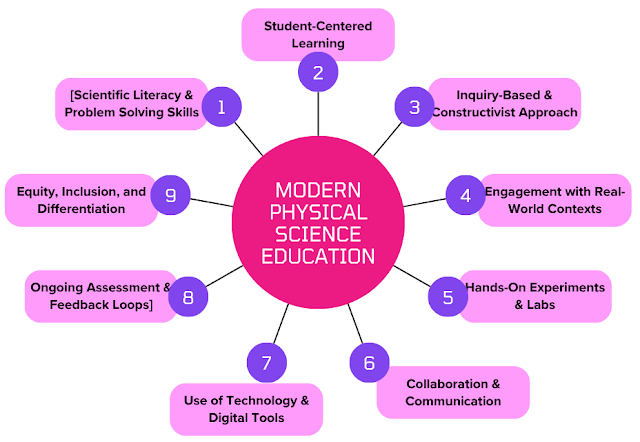
💡 Learning by Doing: The Power of Inquiry
At the heart of today’s science education is inquiry-based learning. This means students aren’t just absorbing facts — they’re asking questions, designing experiments, and analyzing real data. Whether it’s investigating the laws of motion or testing chemical reactions, learners are encouraged to think and act like scientists.
This shift empowers students to take ownership of their learning, build problem-solving skills, and develop a genuine curiosity about the world around them.
🧠 Building Understanding from the Inside Out
Modern classrooms embrace a constructivist approach, where students connect new ideas to what they already know. Instead of memorizing complex equations in isolation, they’re guided to explore how those equations explain real-world phenomena.
Teachers play the role of facilitators — helping students make sense of their discoveries rather than simply delivering content.
🌍 Making Science Relevant and Real
Why do volcanoes erupt? How do solar panels work? What causes climate change? These are the kinds of questions students tackle through real-world connections. Physical science lessons are increasingly tied to global issues and everyday experiences, helping students understand why science matters beyond the classroom.
This real-world relevance makes lessons more engaging — and much more meaningful.
🧪 From Theory to Practice: Emphasizing Hands-On Learning
Modern science education doesn’t just happen on paper. Lab work and experiments are crucial for helping students apply theory to practice. Whether mixing chemicals, building circuits, or launching model rockets, students get their hands dirty (sometimes literally) while learning to think critically and work safely.
Even when physical labs aren’t possible, virtual labs and simulations provide powerful alternatives, thanks to advances in technology.
🤝 Learning Together: Collaboration and Communication
Today’s scientists rarely work alone — and neither do students. Group projects and lab partnerships encourage collaborative learning, where students share ideas, solve problems together, and communicate their findings. These skills are essential, not just in science, but in every aspect of modern work and life.
🌐 Technology in the Science Classroom
From data-logging sensors to interactive simulations, technology is transforming how students engage with physical science. Tools like graphing software, modeling platforms, and digital lab journals help students visualize complex concepts and work more efficiently.
These tools also support remote learning, opening the door to science education for students everywhere.
✅ Measuring What Matters: Assessment for Learning
Gone are the days when a single test defined your understanding of science. Today’s teachers use ongoing assessments, like quick quizzes, lab reports, and group discussions, to gauge understanding and adjust instruction. It’s all about supporting student growth, not just grading performance.
Inclusive, Equitable Classrooms
Modern science education also emphasizes equity and inclusion. Educators are working to create learning environments that reflect and respect diverse backgrounds, experiences, and learning styles. That includes using culturally relevant examples and ensuring all students have access to high-quality science instruction.
📚 Guided by Standards
Many classrooms follow frameworks like the Next Generation Science Standards (NGSS), which promote deep understanding through three dimensions:
- Disciplinary Core Ideas (the content),
- Science and Engineering Practices (the doing), and
- Crosscutting Concepts (the thinking tools that connect ideas).
These standards ensure that learning is coherent, challenging, and aligned with real-world scientific practice.
Final Thoughts: Science for the 21st Century
Modern physical science education is about more than passing tests — it’s about preparing students to navigate and shape a rapidly changing world. By combining hands-on learning, critical thinking, technology, and real-world relevance, today’s science classrooms are equipping young minds to become the problem solvers, innovators, and informed citizens of tomorrow. Whether you’re a student, teacher, or lifelong learner, it’s an exciting time to explore the world through the lens of science. 🔬🌍🚀
메타데이터
- post_id
- f2679d507a8d
- slug
- science-education-has-come-a-long-way-from-dusty-chalkboards-and-memorized-formulas-f2679d507a8d
- url
- https://medium.com/@crackwithuday/science-education-has-come-a-long-way-from-dusty-chalkboards-and-memorized-formulas-f2679d507a8d
- canonical_url
- https://medium.com/@crackwithuday/science-education-has-come-a-long-way-from-dusty-chalkboards-and-memorized-formulas-f2679d507a8d
- author_url
- https://medium.com/@crackwithuday
- status
- ok
- fetched_at
- 2026-07-22 13:40:40




