Complete Guide to Tensile Roof Structures for Car Parking, Walkways & Industrial Areas
If you’ve recently visited a mall, office complex, or even a factory, you’ve probably noticed a shift in how spaces are being covered…
Complete Guide to Tensile Roof Structures for Car Parking, Walkways & Industrial Areas
If you’ve recently visited a mall, office complex, or even a factory, you’ve probably noticed a shift in how spaces are being covered. Instead of heavy concrete or metal roofing, more projects are now using tensile roof structures and not without reason.
These structures offer a smart balance between functionality and design. They’re lightweight, visually appealing, and capable of covering large open areas without making the space feel closed or bulky. Whether it’s a car parking area, a walkway or an industrial setup, tensile roofing is becoming a practical and modern solution.
In this guide, we’ll walk through how **tensile roof structures** work, where they are used and why they’re gaining so much popularity across different industries.
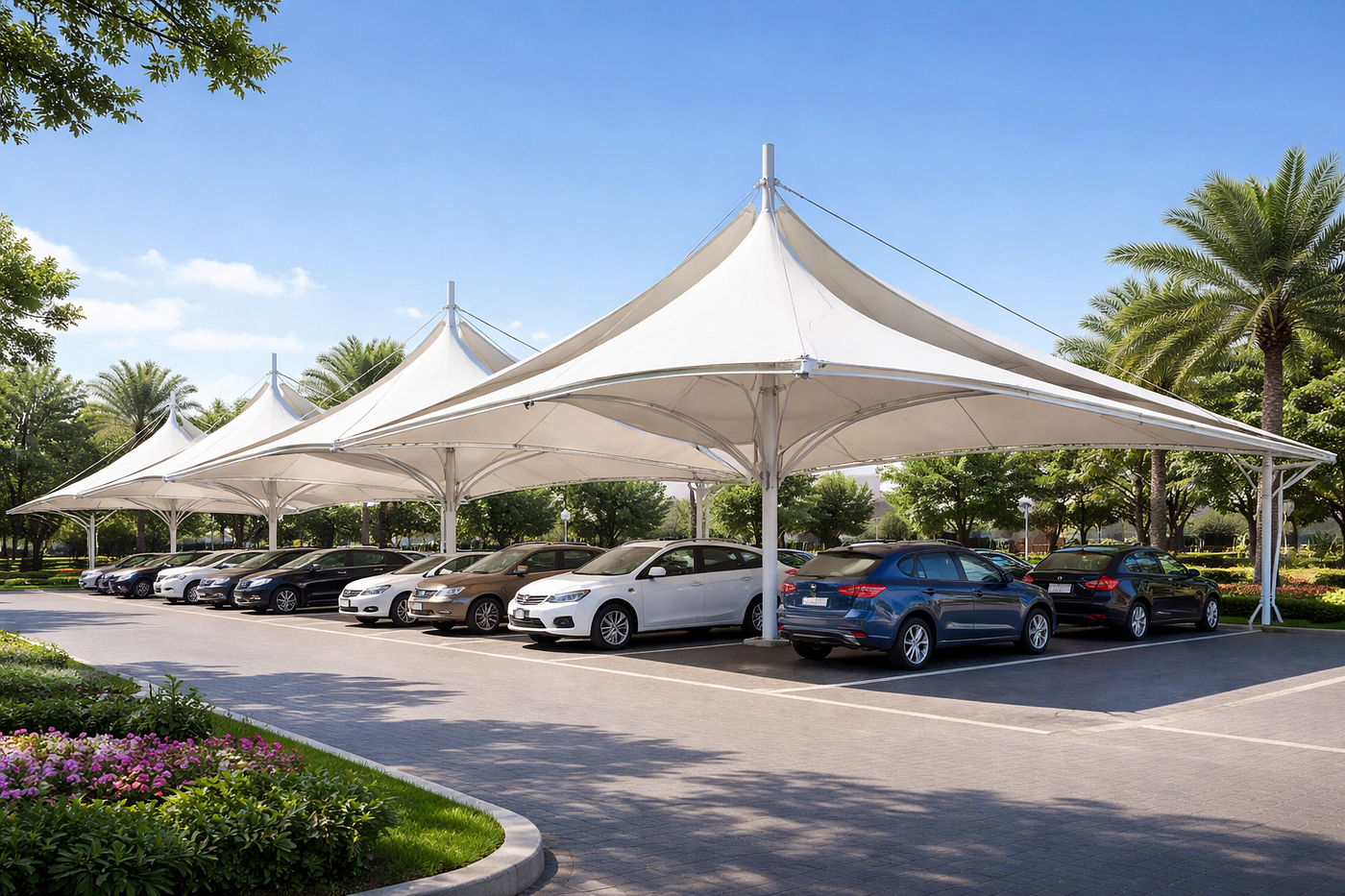
Tensile Roof Structures for Car Parking
What Is a Tensile Roof Structure?
A tensile roof structure is essentially a fabric-based roofing system supported by a steel framework. What makes it different from traditional roofing is the way it works — these structures rely on tension rather than compression.
In simple terms, instead of using heavy materials to hold everything down, tensile structures use stretched fabric to create stability. This allows them to span large areas with fewer columns, giving more open and usable space underneath.
Because of this design flexibility, tensile roofing systems are often used in places where traditional construction either feels too heavy or is not practical.
Where Are Tensile Roof Structures Commonly Used?
One of the most common applications is in car parking areas. Many residential societies, commercial buildings, and hospitals now prefer tensile car parking shades because they are quicker to install and provide effective protection from sunlight and rain without adding unnecessary structural weight.
Walkways are another area where tensile structures are widely used. Covered walkways in hotels, corporate offices, and public spaces not only offer shade but also enhance the overall appearance of the property. A well-designed walkway tensile structure can make even a simple entry look more premium.
In industrial environments, tensile roofing plays a very practical role. Factories and warehouses often need large covered areas for operations, storage, or loading zones. Industrial tensile roofing provides that coverage without blocking movement or requiring heavy construction, making it highly efficient for such spaces.
Why Are Tensile Roof Structures Becoming Popular?
There are a few practical reasons behind this growing preference. First, these structures are lightweight roofing systems but still strong enough to handle outdoor conditions. They don’t put excessive load on the base structure, which is a major advantage in many projects.
Another important factor is weather resistance. Good-quality UV resistant tensile fabric is designed to handle sun exposure, rainfall, and even wind pressure, making it suitable for long-term outdoor use.
Aesthetics also play a big role. Compared to traditional roofing, tensile structures offer a cleaner and more modern look, which is especially important for commercial spaces.
On top of that, maintenance requirements are relatively low. Once installed properly using quality materials, these structures don’t require frequent repairs or heavy upkeep.
What Materials Are Used in Tensile Roofing?
The performance of a tensile roof structure largely depends on the materials used. The fabric itself is a specialized tensile membrane that is flexible, strong, and resistant to UV rays and weather conditions.
This fabric is supported by a steel framework, which is usually treated to resist corrosion and ensure long-term durability. In addition, protective coatings are often applied to improve performance and lifespan.
Choosing the right combination of materials is essential because it directly affects how well the structure performs over time.
Tensile Roofing vs Traditional Roofing
When compared to traditional roofing systems, tensile roofing offers more flexibility in design and faster installation. Traditional roofs tend to be heavier and more rigid, while tensile roofing allows for creative shapes and open spaces.
Maintenance is another area where tensile structures have an edge. Since they are designed for efficiency and durability, they generally require less upkeep over time.
However, the right choice always depends on the project requirement. For modern, open, and design-focused spaces, tensile roofing often turns out to be a better option.
What About Cost?
The cost of a tensile roof structure can vary depending on factors like size, design complexity, fabric quality, and installation requirements.
While the initial cost may seem comparable to other options, **customized tensile roof structures for commercial use** often prove to be more cost-effective in the long run due to their low maintenance and durability.
How to Choose the Right Tensile Structure Manufacturer
Selecting the right manufacturer is one of the most important steps in the process. It’s not just about pricing — it’s about quality, experience, and execution.
A reliable tensile fabric car parking shade manufacturer or experienced tensile roofing contractor will handle everything from design to installation and will use proper materials suited for your specific project.
They also provide tensile structure installation services and consider factors like site conditions, load requirements, and long-term performance.
Working with an experienced provider ensures that the final result is both functional and visually appealing.
Conclusion
Tensile roof structures have become a practical solution for modern construction needs. They offer the flexibility to cover large areas without making the structure heavy, while also improving the overall look of the space.
Whether it’s for car parking, walkways, or industrial use, tensile roofing provides a combination of durability, efficiency, and design that is hard to ignore.
Frequently Asked Questions (FAQ)
1. What is the lifespan of a tensile roof structure?
A well-designed tensile roof structure typically lasts between 10 to 20 years, depending on the quality of tensile fabric, steel framework, and installation. High-grade materials with proper coating and professional installation can significantly extend the lifespan, especially in outdoor environments.
2. Are tensile roof structures waterproof?
Yes, tensile roof structures are fully waterproof when made with high-quality tensile fabric. The membrane material is specially designed to resist water penetration and ensure proper drainage, making it suitable for heavy rainfall and outdoor conditions.
3. Can tensile structures withstand strong winds?
Yes, professionally designed tensile structures are engineered to withstand wind loads and environmental stress. Heavy-duty tensile structures for industrial applications are specifically built using strong steel frameworks and tensioned fabric to ensure stability even in harsh weather conditions.
4. Are tensile car parking shades better than traditional sheds?
In many cases, **tensile car parking shades** are a better alternative to traditional sheds. They are lightweight, quicker to install, and offer a more modern and aesthetic appearance. Additionally, they require less maintenance while providing effective protection against sunlight and rain.
5. Is maintenance required for tensile roofing?
Tensile roofing requires very minimal maintenance. Regular inspection, occasional cleaning, and checking of structural components are usually sufficient. High-quality weatherproof canopy structures are designed for long-term use without frequent repairs.
6. Can tensile structures be customized?
Yes, one of the biggest advantages of tensile structures is their flexibility in design. Customized tensile roof structures can be developed in various shapes, sizes, and styles based on site conditions, functional needs, and architectural preferences.
메타데이터
- post_id
- f26ee6d6ded9
- slug
- complete-guide-to-tensile-roof-structures-for-car-parking-walkways-industrial-areas-f26ee6d6ded9
- url
- https://medium.com/@hxbindia123/complete-guide-to-tensile-roof-structures-for-car-parking-walkways-industrial-areas-f26ee6d6ded9
- canonical_url
- https://medium.com/@hxbindia123/complete-guide-to-tensile-roof-structures-for-car-parking-walkways-industrial-areas-f26ee6d6ded9
- author_url
- https://medium.com/@hxbindia123
- status
- ok
- fetched_at
- 2026-07-17 04:06:05