The Growing Cost of Insurance Fraud and How Technology Is Fighting Back
Insurance fraud has become one of the most significant challenges facing insurers worldwide. Every fraudulent claim not only impacts…
The Growing Cost of Insurance Fraud and How Technology Is Fighting Back
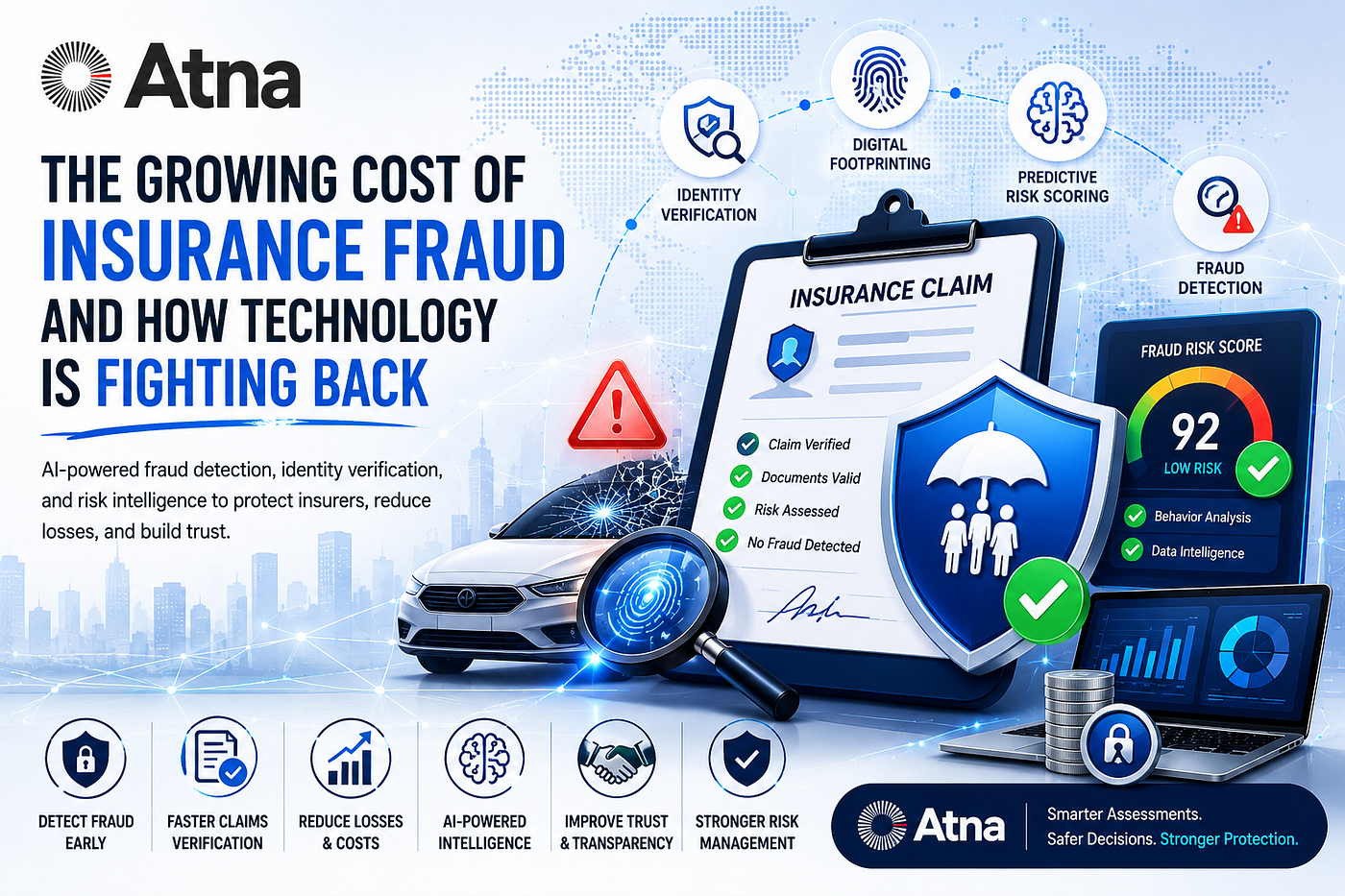
Insurance fraud has become one of the most significant challenges facing insurers worldwide. Every fraudulent claim not only impacts insurance companies but also affects honest policyholders through increased premiums and reduced trust in the system.
As fraudsters become more sophisticated, traditional verification methods are no longer sufficient. Insurance providers must adopt intelligent technologies capable of identifying suspicious claims before payouts occur.
The future of insurance depends on smarter verification, faster investigations, and more accurate risk assessment.
Understanding the Impact of Insurance Fraud
Insurance fraud occurs when individuals or organizations intentionally deceive insurers for financial gain.
Common examples include:
- False accident claims
- Exaggerated damages
- Staged incidents
- Identity fraud
- Fake medical documentation
- Duplicate claims
These activities cost the insurance industry billions of dollars annually and create unnecessary financial burdens for legitimate customers.
Why Traditional Claims Reviews Are No Longer Enough
Historically, insurers relied heavily on manual investigations and document reviews.
While these methods remain important, they often struggle to identify sophisticated fraud schemes that involve manipulated documents, synthetic identities, and coordinated criminal networks.
Modern insurers need tools that can evaluate claims using multiple data sources and risk indicators simultaneously.
The Rise of Insurance Fraud Detection Technologies
Advanced **insurance fraud detection** solutions use artificial intelligence and machine learning to analyze claims data in real time.
These systems can:
- Identify suspicious claim patterns
- Detect anomalies in supporting documents
- Flag high-risk submissions
- Uncover hidden fraud networks
- Prioritize investigations
This allows insurance providers to focus resources on the claims most likely to involve fraud.
Why Identity Verification Matters
A large percentage of fraudulent claims involve identity manipulation.
Strong **identity verification** processes help insurers:
- Confirm claimant authenticity
- Prevent impersonation attempts
- Detect synthetic identities
- Improve regulatory compliance
- Reduce fraudulent applications
Accurate identity verification serves as the foundation of effective **fraud prevention**.
Leveraging Digital Footprinting for Better Investigations
Fraudsters often leave traces of their activities online.
Through **digital footprinting**, insurers can analyze publicly available information and behavioral signals to gain additional insights into claim credibility.
Benefits include:
- Improved claimant validation
- Detection of inconsistencies
- Better fraud risk assessment
- Faster investigations
- Stronger evidence gathering
Digital intelligence adds another layer of protection against increasingly sophisticated fraud attempts.
The Importance of Predictive Risk Scoring
Not every claim carries the same level of risk.
Modern insurers are adopting **predictive risk scoring** models that analyze hundreds of data points to determine claim credibility.
Risk scoring helps organizations:
- Identify high-risk claims early
- Reduce investigation costs
- Improve claims processing efficiency
- Allocate resources effectively
- Increase decision accuracy
Rather than treating every claim equally, insurers can focus attention where it is needed most.
Building a Proactive Fraud Prevention Strategy
The most effective insurers combine multiple technologies into a unified fraud management framework.
This often includes:
- Identity Verification
- Claims Validation
- Digital Intelligence
- Risk Scoring
- Behavioral Analysis
- Automated Monitoring
Together, these capabilities create a stronger defense against fraud while improving customer experiences.
The Future of Insurance Claims Management
The insurance industry is rapidly moving toward data-driven decision-making.
Organizations that embrace AI-powered verification and intelligent fraud detection will be better equipped to manage risks, reduce losses, and improve operational efficiency.
Technology is no longer simply supporting fraud investigations — it is becoming the primary tool for preventing fraud before it occurs.
Conclusion
Insurance fraud continues to evolve, creating new challenges for insurers around the world.
Organizations that invest in insurance fraud detection, identity verification, digital intelligence, predictive risk scoring, and proactive fraud prevention strategies will gain a significant advantage in protecting both their business and their customers.
The future belongs to insurers that can identify fraud faster, investigate smarter, and make decisions with confidence.
메타데이터
- post_id
- f280d905d11d
- slug
- the-growing-cost-of-insurance-fraud-and-how-technology-is-fighting-back-f280d905d11d
- url
- https://medium.com/@frontendatna/the-growing-cost-of-insurance-fraud-and-how-technology-is-fighting-back-f280d905d11d
- canonical_url
- https://medium.com/@frontendatna/the-growing-cost-of-insurance-fraud-and-how-technology-is-fighting-back-f280d905d11d
- author_url
- https://medium.com/@frontendatna
- status
- ok
- fetched_at
- 2026-06-10 18:44:10




