From Research Tool to National Security Asset: What Happened to Project Glasswing This Week
Three developments in five days signal that Claude Mythos has moved well beyond a controlled cybersecurity experiment.
From Research Tool to National Security Asset: What Happened to Project Glasswing This Week
Three developments in five days signal that Claude Mythos has moved well beyond a controlled cybersecurity experiment.

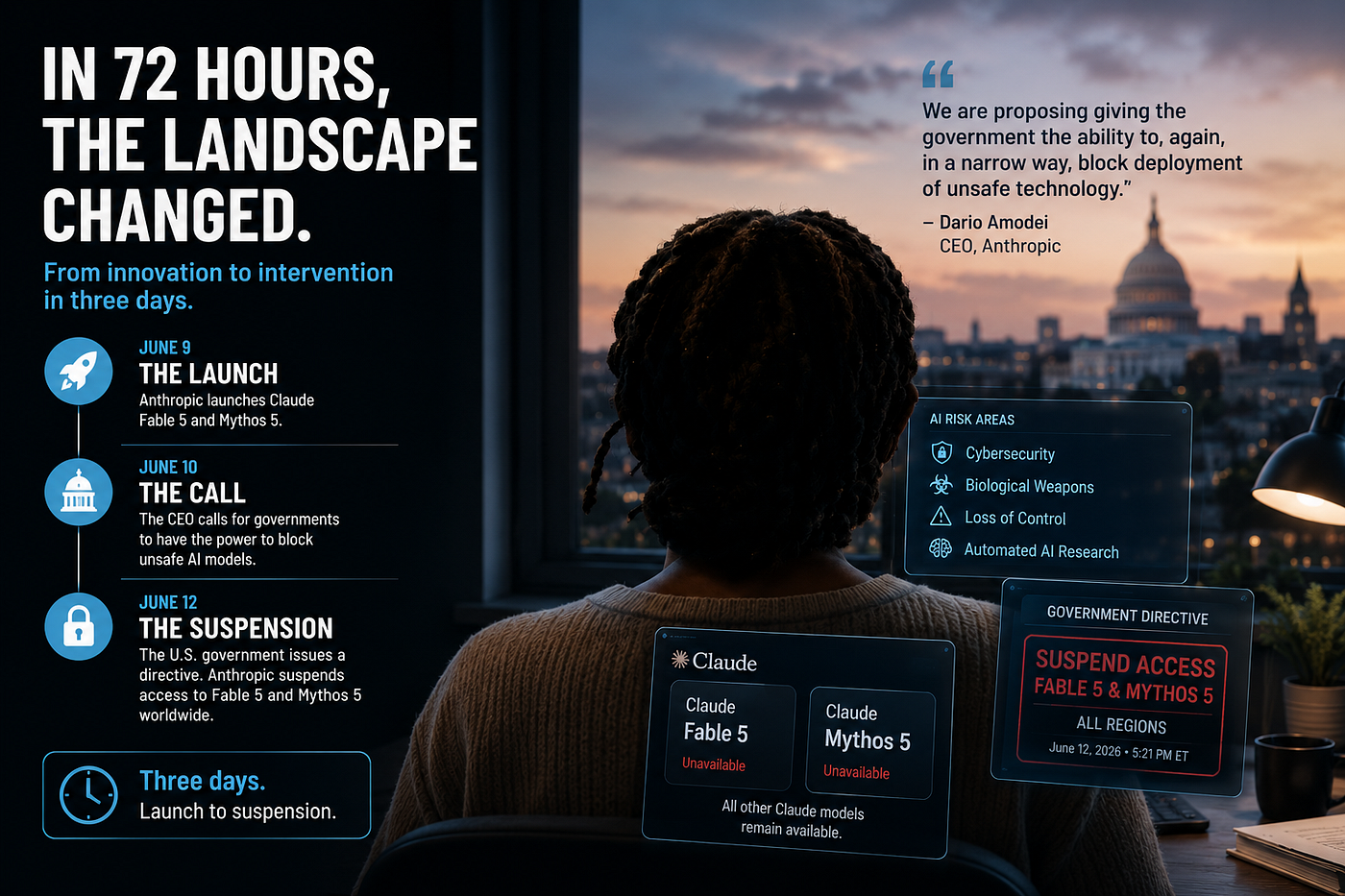
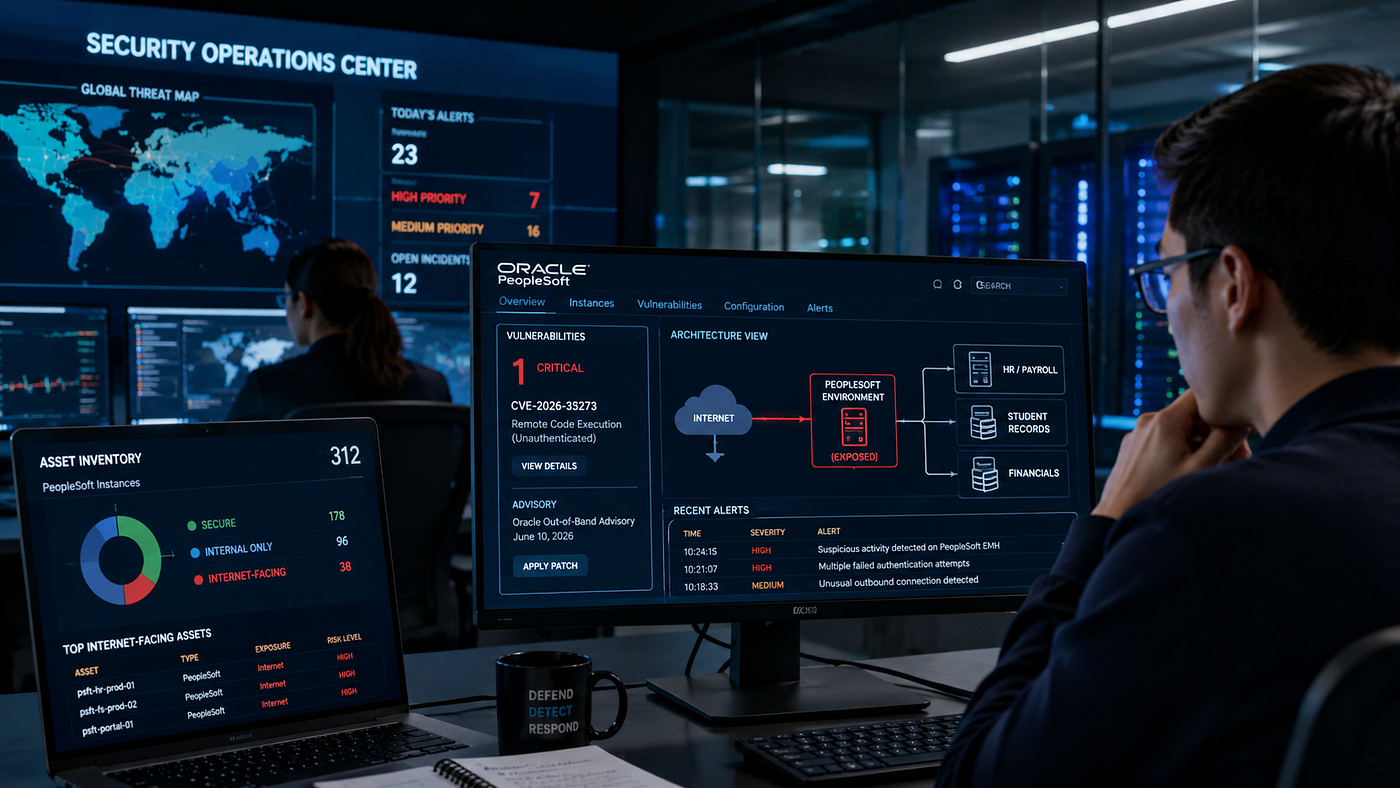
AI Generated Image
The Week That Changed the Conversation
When Anthropic launched Project Glasswing on April 7, it was framed as a controlled defensive initiative. A closed group of trusted partners with access to a powerful but unreleased model, working quietly to find and patch vulnerabilities before attackers could exploit them. Findings were confidential. Participation was not publicly disclosed. The model stayed inside a carefully managed perimeter.
That perimeter changed significantly this week, and three separate developments tell a story that goes beyond a policy update. Mythos has become something larger than a research program. It is now at the center of a national security debate, a geopolitical conversation, and an unresolved tension between the US government and one of the most consequential AI companies in the world.
Glasswing Just Opened Up
On May 18, Reuters reported that Anthropic has revised its earlier position and is now allowing Project Glasswing partners to share findings, best practices, tools, and code developed through the program with parties outside the initiative. Partners may share with security teams at other companies, industry bodies, regulators, government agencies, open-source maintainers, the media, and the public, subject to responsible disclosure norms.
Anthropic spokesperson confirmed:
We fully support our partners sharing findings with each other and companies outside of Glasswing to triage vulnerabilities. As the program has matured, we have adapted them to ensure key information can be shared broadly, including outside the program, for maximum defensive impact.
This is a meaningful shift. The original confidentiality protections were not imposed by Anthropic. They were added at partner request, after companies expressed concern that being publicly named as Glasswing participants and as recipients of unreleased frontier AI cyber capabilities could make them targets. The willingness to share findings publicly suggests the program has reached a level of maturity and trust that did not exist six weeks ago.
For the security community outside Glasswing, this matters. Knowledge that was previously locked inside a closed consortium can now flow to the organizations that need it most.
The Pentagon Is Using Mythos While Planning to Remove Anthropic
This is where the story gets complicated in a way that deserves honest examination.
Speaking at a conference in Washington, DC, Emil Michael, the Pentagon’s chief technology officer and undersecretary for research and engineering, described the situation as a “national security moment”. He confirmed that the Defense Department is using Mythos to identify and patch software vulnerabilities across US government networks. He also confirmed that the Pentagon continues to execute plans to remove Anthropic’s products from its systems over the coming months.
Both of those things are true at the same time, and the tension between them matters.
Earlier this year, Anthropic declined to ease restrictions against its tools being used for domestic surveillance or fully autonomous weapons systems for Pentagon use. That decision triggered a supply chain risk designation from the Defense Department and a White House order that all federal agencies phase out their use of Anthropic tools. Anthropic has legally challenged that move.
So the US government is simultaneously phasing out Anthropic tools and deploying Mythos to secure federal networks. That is not a contradiction born of confusion. It reflects the reality that Mythos offers capabilities the government currently has no equivalent for elsewhere, regardless of the broader policy disagreement.
Dan Richard, associate deputy director of the Digital Innovation Directorate at the CIA, described Mythos as a reflection point for agencies managing sensitive data, acknowledging both its defensive value and the concern that similar capabilities could empower adversaries.
Katherine Sutton, the Department of Defense’s assistant secretary for cyber policy, offered a perspective worth noting:
I hear a lot of people talking about challenges and threats when they talk about Mythos. But there is huge opportunity in these models. One of the foundational things that they are going to enable is the development of secure code.
The Global Governance Challenge
The World Economic Forum’s Center for Cybersecurity, releasing a report this month on AI and cyber defense, has framed the challenge plainly. The key issue is no longer purely technological. It is institutional and increasingly geopolitical. As countries and companies race to develop and deploy frontier AI capabilities, diverging approaches to access, control, and security could lead to fragmented standards, uneven levels of protection, and greater systemic vulnerability globally.
That framing deserves serious attention. Project Glasswing is currently a US-anchored initiative with a defined set of Western technology partners. The question of how the defensive benefits of tools like Mythos extend beyond that consortium, and who gets left behind if they do not, is one that global security leaders and policymakers have not yet answered.
For organizations in Africa and other emerging markets that are not inside the Glasswing ecosystem, the opening of information sharing is a partial step in the right direction. Security teams, regulators, open-source maintainers, and the public can now receive findings that were previously confidential. Whether the institutions that most need that information have the capacity to act on it is a separate question, and an important one.
The Bottom Line
Six weeks ago, Project Glasswing was a controlled research initiative with a closed circle of partners and confidential findings. Today, the Pentagon is deploying Mythos on federal networks while simultaneously planning to remove Anthropic from its approved vendor list. The CIA is describing it as a reflection point. The WEF is placing it at the center of global cybersecurity governance discussions. And Anthropic has opened the program’s findings to the world.
The story of Claude Mythos is no longer just a story about what an AI model can do. It is a story about who controls powerful defensive tools, who has access to what they find, and whether the institutions responsible for global security can coordinate fast enough to make that access meaningful.
In my professional opinion, the most important shift happening around Project Glasswing is no longer purely technical. It is institutional. Mythos is becoming part of broader conversations about national security, cyber defense, governance, and access to advanced defensive capabilities. The decisions being made now about information sharing, control, and participation will shape how organizations and governments respond to AI-assisted cybersecurity threats for years to come.
Reference Links
Reuters, Anthropic to let partners share Mythos cybersecurity findings with others, May 18: https://money.usnews.com/investing/news/articles/2026-05-18/anthropic-to-let-partners-share-mythos-cybersecurity-findings-with-others
Security Boulevard, Anthropic Allows Glasswing Partners to Share Mythos-Based Findings, May 20: https://securityboulevard.com/2026/05/anthropic-allows-glasswing-partners-to-share-mythos-based-findings/
IT Pro, Anthropic lets Glasswing partners publicly share Mythos flaws: https://www.itpro.com/technology/artificial-intelligence/anthropic-lets-glasswing-partners-publicly-share-mythos-flaws
DevDiscourse, Pentagon deploys Anthropic Mythos AI cyber model despite plans to phase out company tools: https://www.devdiscourse.com/article/technology/3905658-pentagons-strategic-deployment-of-anthropics-mythos-amid-cybersecurity-challenges
ExecutiveGov, CIA and Industry Officials Warn Advanced AI Models Reshaping Federal Cybersecurity, May 20: https://www.executivegov.com/articles/cia-industry-advanced-ai-cybersecurity
GovConWire, Pentagon Leader Sees Opportunity in Anthropic Project Glasswing and Claude Mythos: https://www.govconwire.com/articles/anthropic-glasswing-claude-mythos-katherine-sutton-dow-cybersecurity
Nextgov, Anthropic Glasswing Initiative Raises Questions for US Cyber Operations: https://www.nextgov.com/cybersecurity/2026/04/anthropics-glasswing-initiative-raises-questions-us-cyber-operations/412721/
World Economic Forum, Anthropic Mythos Moment: How Frontier AI Is Redefining Cybersecurity: https://www.weforum.org/stories/2026/04/anthropic-mythos-ai-cybersecurity/
Anthropic, Project Glasswing official page: https://www.anthropic.com/project/glasswing
메타데이터
- post_id
- f28b582b690a
- slug
- from-research-tool-to-national-security-asset-what-happened-to-project-glasswing-this-week-f28b582b690a
- url
- https://medium.com/@amieonsecurity/from-research-tool-to-national-security-asset-what-happened-to-project-glasswing-this-week-f28b582b690a
- canonical_url
- https://medium.com/@amieonsecurity/from-research-tool-to-national-security-asset-what-happened-to-project-glasswing-this-week-f28b582b690a
- author_url
- https://medium.com/@amieonsecurity
- status
- ok
- fetched_at
- 2026-06-09 15:37:30