The Forgotten Riders
Long ago, in the Kingdom of Arakan, Muslim horsemen rode with pride beneath banners of green silk. Their commanders sat upon fine Arabian…
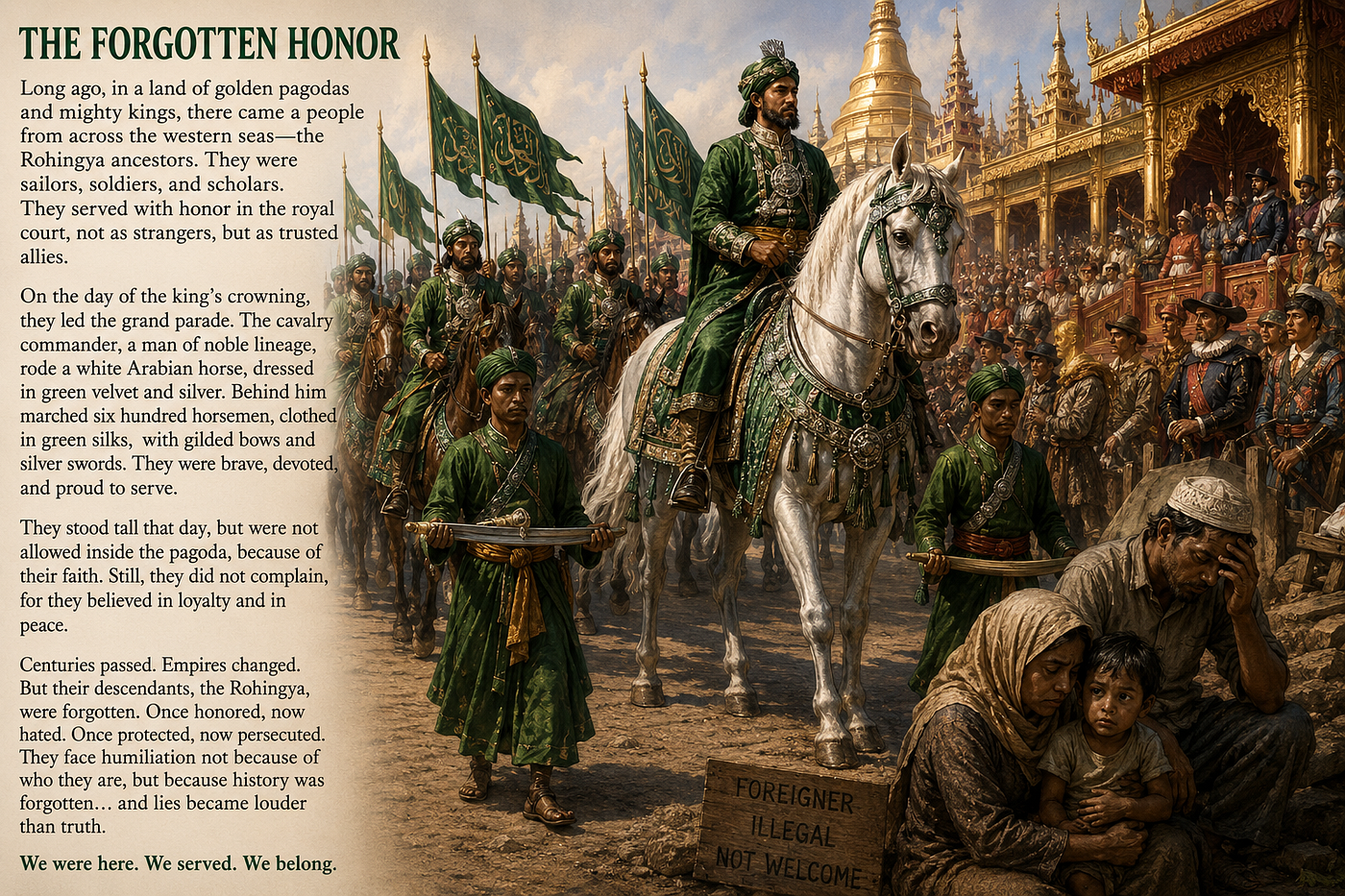
Although generated by AI, this image is based on real historical events involving Rohingya ancestors
By Alpha:
The Forgotten Riders
Long ago, in the Kingdom of Arakan, Muslim horsemen rode with pride beneath banners of green silk. Their commanders sat upon fine Arabian horses, their swords gleamed with silver, and their ranks opened royal processions before kings and nobles.
They were soldiers, administrators, scholars, and trusted servants of the court. Though they belonged to a different faith, they played an important role in the kingdom’s life and prosperity. When the king was crowned, six hundred Muslim cavalrymen marched in splendid formation. Their bows were gilded, their horses draped in green silk, and their loyalty was admired by all who watched. They stood among Portuguese officers and Japanese mercenaries, serving the kingdom with honor. History remembered them as part of Arakan’s rich and diverse society.
Centuries passed. Kingdoms disappeared, borders changed, and memories faded. The descendants of those men; the Rohingya found themselves stripped of recognition in the land where their ancestors had once lived and served. Many were driven from their homes, separated from their families, and forced to seek refuge across Asia.
But exile did not always bring acceptance.
Across parts of South Asia and Southeast Asia, waves of fear, misinformation, and political rhetoric often turned public anger toward the Rohingya. On social media, they became targets of insults and mockery. Some blamed them collectively for crimes committed by individuals. Others portrayed them as burdens, invaders, or people without history. Election seasons and times of social tension sometimes amplified hostility, leaving many Rohingya feeling unwanted even in places where they had sought safety.
Children born in refugee camps grew up hearing stories not of royal horsemen, but of overcrowded shelters, uncertain futures, and lives lived without citizenship. Their parents carried memories of homes they could no longer return to, while their grandparents remembered a different story one of dignity and belonging.
Yet, despite humiliation and hardship, many still preserve the memories passed down through generations. They remember that their ancestors once rode in royal processions, traded across seas, and lived alongside people of many faiths and cultures. They remember that history is rarely simple, and that identities are not erased by hatred.
Today, the descendants of those forgotten riders ask for neither privilege nor revenge. They seek something far simpler: the right to live with dignity, to be judged as individuals rather than stereotypes, and to pass on to their children not bitterness, but hope.
Empires rise and fall. Hatred comes and goes. But truth endures. And somewhere beneath the dust of forgotten history, the echoes of those riders still remain.
메타데이터
- post_id
- f28d3e3303bf
- slug
- the-forgotten-riders-f28d3e3303bf
- url
- https://medium.com/@forizulhaque/the-forgotten-riders-f28d3e3303bf
- canonical_url
- https://medium.com/@forizulhaque/the-forgotten-riders-f28d3e3303bf
- author_url
- https://medium.com/@forizulhaque
- status
- ok
- fetched_at
- 2026-07-09 22:34:41