Field Notes #2: Why I Stopped Wearing Birkenstocks
A lesson I learned after multiple resoles, two falls, and a lot of wasted money
Field Notes #2: Why I Stopped Wearing Birkenstocks
A lesson I learned after multiple resoles, two falls, and a lot of wasted money
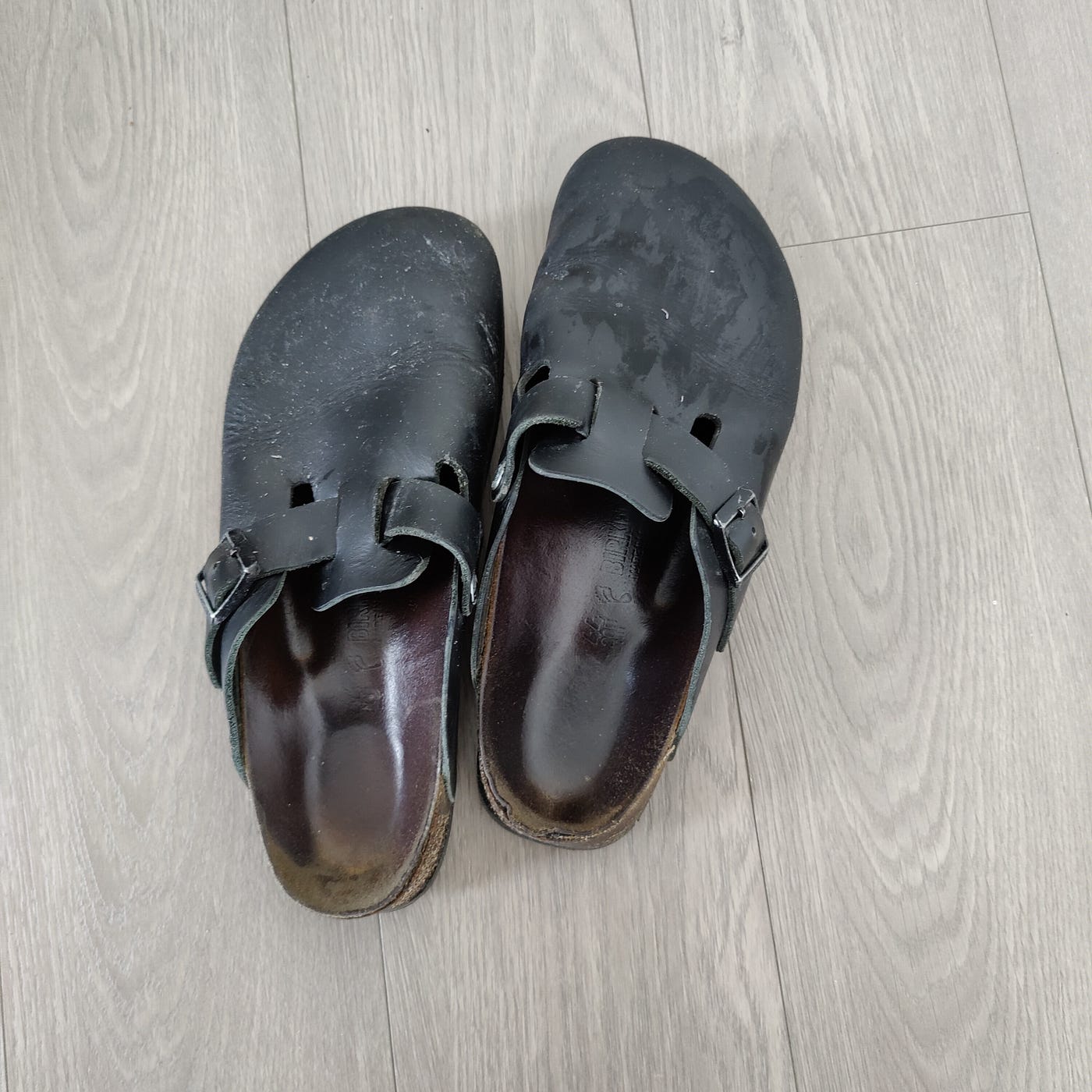
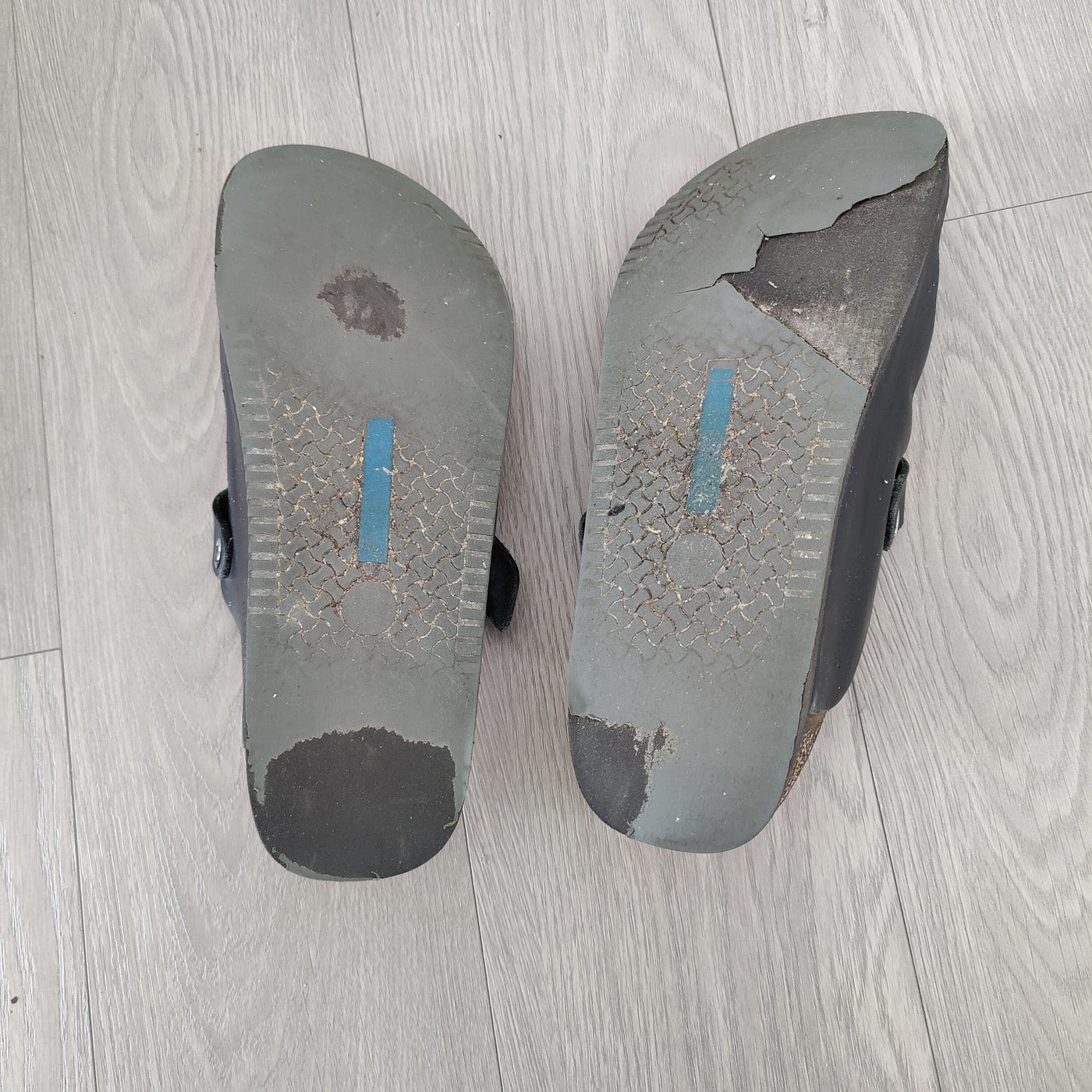
My old Birkenstock Bostons after two years of daily use. Losing the original non-slip sole relegates them to the trash.
I had been wearing my re-soled Birkenstock Boston clogs for a few weeks, and they weren’t as slip-resistant as I needed them, and the sole was already peeling off one of them. While walking through the kitchen, my feet would slide through any small puddle I encountered.
Red flag.
One day, I was bringing some dirties to the dishpit. There was an issue with the dish machine drainage, and the floor flooded while the machine ran. When I entered the pit, I slipped and fell right on my ass.
I was okay, but I had to eat the fact that the almost $200 I spent on resoling my Birkenstocks was a waste and I needed to get a new, reliable shoe for work. I got on my phone and scheduled a service call with the dishwashing company, and I ordered a new pair of Xero Prio non-slip shoes.
Once the soles start peeling off the shoe, it’s time to throw them out and think if it is worth re-investing in a new pair.
It is not worth it.
In my experience, there have been a few waves of Birkenstocks as THE professional kitchen shoe.
Back in 2000, everyone had Birkies, including me. Shortly after, I switched to bar backing and bartending and lost them. I used old sneakers or would buy a pair of black shoes from Payless if I worked at a place that required a uniform.
In 2010, I was over front-of-house customer interactions. I traded the bar for the sanctuary of the kitchen. By then, the kitchen footwear standard had shifted: everyone was wearing Crocs. They were affordable and had non-slip kitchen models. Mario Batali famously always wore his signature orange pair. That did not age well.
I spent most of the ’10s cycling through three pairs of Crocs, held together by an astronomical amount of Krazy Glue.
If you work in a restaurant where the line cooks do the deep cleaning at the end of the night, including washing the floors, your shoes wear fast. All of the water and industrial soap degrade the glue that holds the soles. After three or four months, the soles start peeling off the shoe.
I started noticing Birkenstock clogs making a comeback later in that decade, from staging at other kitchens. There are the Tokyos, which have a back strap, and Bostons, with an open back.
I transitioned to zero-drop minimalist and barefoot shoes in 2018–19. Altra for running, Xero for casual, and Vivobarefoot for winter boots. I bought a pair of Birkenstock Bostons for work. I wanted Tokyos, but was told they weren’t in production anymore at the Birkenstock Store in SoHo.
At first, they were great, as they should be when you spend over $160 for a pair.
It took longer than Crocs, about two years, but the soles started peeling. I called the Birkenstock store to ask if they could replace the sole. Negative, but they recommended a cobbler in the West Village who could replace the soles.
I got it done. Once you replace the original soles, the Birkenstock life span is now the same as a pair of Crocs. I tried my Krazy Glue fix with them but it didn’t work. Four months after the first replacement, I had to get the soles replaced again.
Same result after a few months. I searched for other alternatives for zero-drop minimalist non-slip kitchen footwear. Xero makes a nonslip version of their Prio model, so I ordered that. It is all black and non-slip. I retired my Bostons and was happy with my Xero Prios, which lasted me three years of daily use, never losing their non-slip soles.
After years of daily use, the usual wear and tear occurred: holes developed in spots like in the toe, so my feet would get wet. You would think that after that first run of Xero Prios, I would buy a fresh pair.
Nope.
I decided to give my Bostons another try and contacted a different cobbler close to my job for resoling.
It took about one month to get resoled. It was pricey, at almost $200.
Again, not worth it.
The new soles were barely nonslip. I slid around on wet floors frequently at work. It was frustrating. I busted my ass twice in a flooded dishpit and had enough.
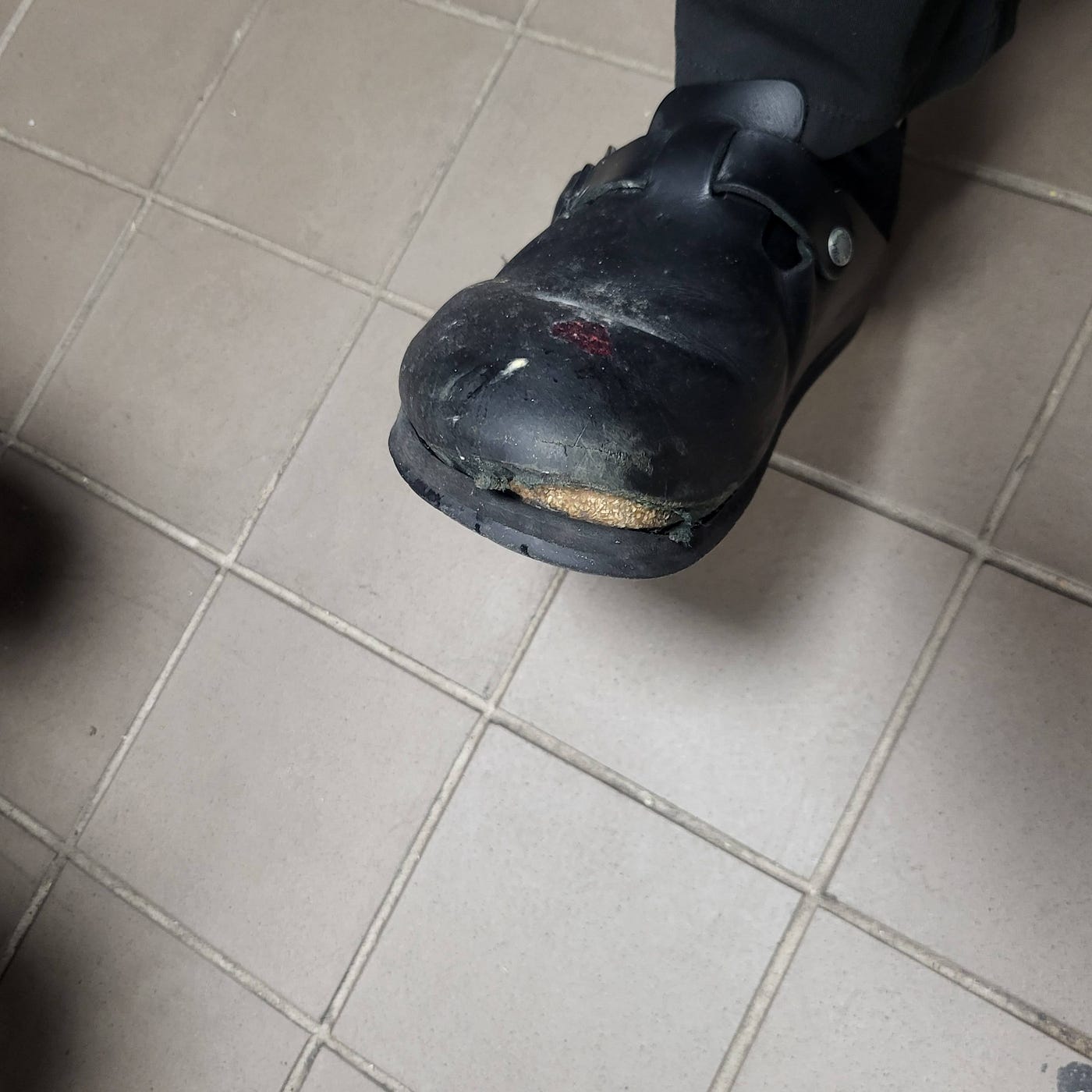
Shortly after the third resole.
Clearly, I had to learn the hard way. I ordered a new pair of Xero Prios. Once they were delivered, I threw my Birkenstock Bostons in the trash.
Just because they look cool or are “industry standard” doesn’t mean that they are the most efficient shoes to work with. Kitchen shoes are a tool with the job to keep your feet safe, dry, and from slipping on the floor, all while standing/walking/maneuvering for eight to twelve hours a shift. Once any of those criteria are not met, it is time to buy a new pair of shoes.
Prios cost about $110, so that is a savings of $50 for better function and comfort over Birkenstock Boston or Tokyo clogs.
The best kitchen shoe is probably not the one you see everyone wearing. It’s the one that supports you in getting the job done.
For me, that is not Birkenstocks anymore.
메타데이터
- post_id
- f2acdd8d11b5
- slug
- field-notes-2-why-i-stopped-wearing-birkenstocks-f2acdd8d11b5
- url
- https://medium.com/@doublelp/field-notes-2-why-i-stopped-wearing-birkenstocks-f2acdd8d11b5
- canonical_url
- https://medium.com/@doublelp/field-notes-2-why-i-stopped-wearing-birkenstocks-f2acdd8d11b5
- author_url
- https://medium.com/@doublelp
- status
- ok
- fetched_at
- 2026-06-25 07:00:49




