Artificial Intelligence: How Machines Learn, Think, and Create Like Humans
Understanding AI, Machine Learning, Deep Learning, Generative AI, and Agentic AI with Simple Real-World Examples
Artificial Intelligence: How Machines Learn, Think, and Create Like Humans
Understanding AI, Machine Learning, Deep Learning, Generative AI, and Agentic AI with Simple Real-World Examples
Introduction
Imagine a machine that can answer your questions, recognize your face, write stories, generate images, and even help plan your next trip. A few decades ago, this sounded like science fiction. Today, it is reality because of Artificial Intelligence (AI).
Artificial Intelligence is transforming the way we live, work, and communicate. From smartphones and social media platforms to self-driving cars and virtual assistants, AI is becoming an essential part of our daily lives.
But what exactly is Artificial Intelligence? How do machines become intelligent? Can machines really learn and think like humans?
In this article, we’ll explore the fascinating world of AI and understand how technologies such as Machine Learning, Deep Learning, Generative AI, and Agentic AI help machines mimic human intelligence.
What is Artificial Intelligence?
Artificial Intelligence (AI) is a branch of computer science that focuses on creating machines capable of performing tasks that normally require human intelligence.
These tasks include:
- Learning from experience
- Solving problems
- Making decisions
- Understanding language
- Recognizing images
- Creating new content
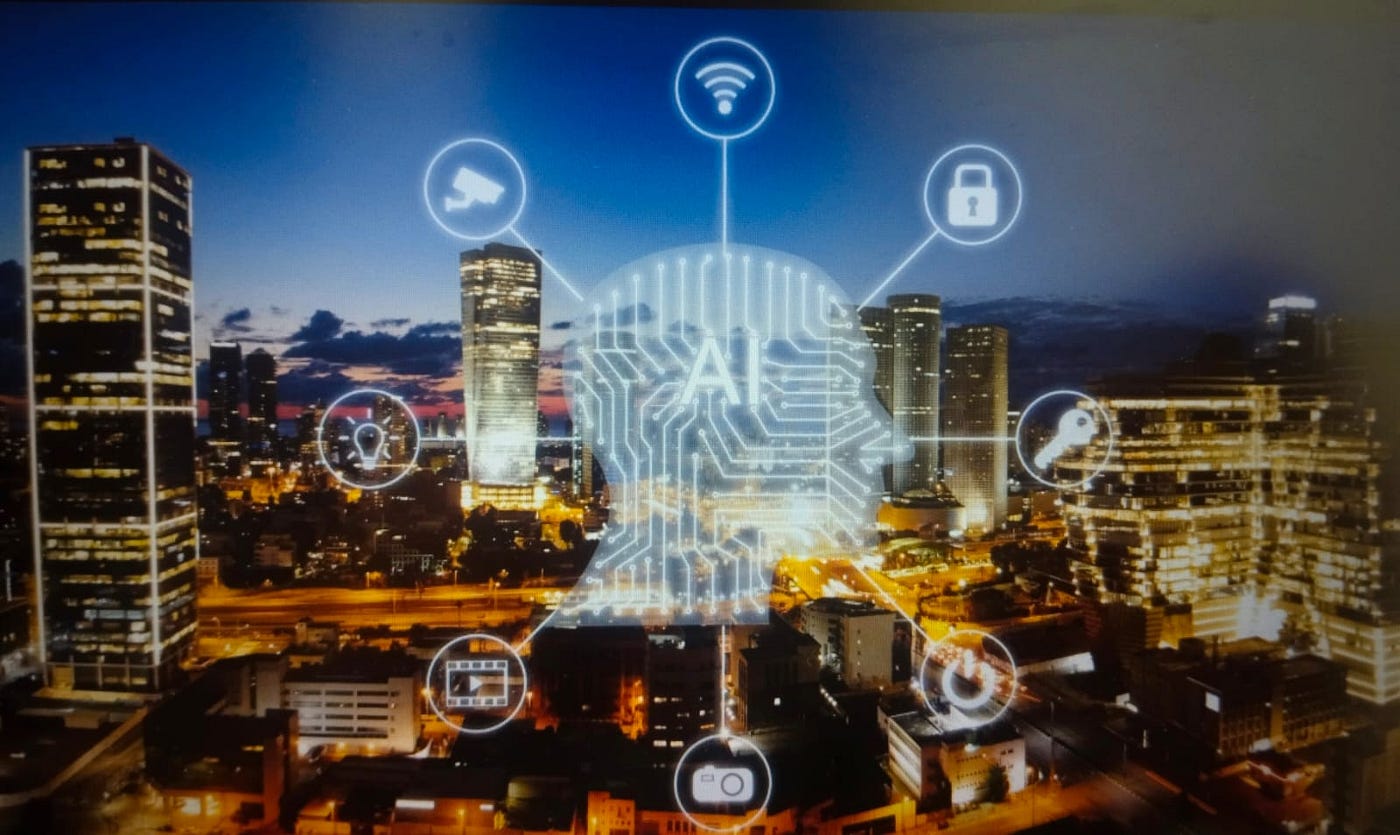
“Artificial Intelligence enables machines to mimic human intelligence through learning, reasoning, and creativity.”
Examples of AI :
- Chat GPT
- Google Assistant
- Siri
- Face Unlock on smartphones
- YouTube recommendations
- Self-driving vehicles
Understanding the Meaning of Artificial Intelligence
The term Artificial Intelligence consists of two words:
Artificial
Artificial means something that is created by humans rather than occurring naturally.
Examples:
- Natural flower → Created by nature
- Artificial flower → Created by humans
Intelligence
Intelligence is the ability to:
- Learn
- Think
- Understand
- Reason
- Solve problems
- Create new ideas
When these two words are combined, Artificial Intelligence means:
Human-made intelligence designed to imitate natural human intelligence.
Understanding Artificial Through a Satellite Example
To better understand the concept of “Artificial,” let’s consider satellites.
The Moon is a natural satellite because it naturally revolves around the Earth.
Scientists observed how natural satellites function and then created their own satellites that behave similarly.
Examples include:
- Communication satellites
- GPS satellites
- Weather satellites
Since these satellites are created by humans but imitate natural satellites, they are called Artificial Satellites.
Similarly, AI systems are designed by humans to imitate human intelligence, which is why they are called Artificial Intelligence.
What Makes Humans Intelligent?
Human intelligence is one of the most remarkable capabilities in nature.
Humans possess several unique abilities that allow them to adapt and succeed in different situations.
Three important abilities of human intelligence are:
1. Learning Ability
Humans continuously learn from experiences, observations, and education.
Example:
A child learns mathematics by solving problems repeatedly.
2. Imagination Ability
Humans can imagine things that do not yet exist.
Example:
Engineers imagined flying cars long before they became technological possibilities.
3. Generative Ability
Humans can create new things.
Examples include:
- Writing stories
- Creating paintings
- Composing music
- Designing buildings
Artificial Intelligence aims to mimic these abilities through different technologies.
The Evolution of Machines: Before AI and After AI
Before AI
Traditional machines followed fixed instructions provided by programmers.
Every rule had to be manually written.
For example:
A calculator can perform mathematical operations only because humans programmed those operations into it.
If the calculator encounters something outside its programming, it cannot learn or adapt.
After AI
With the development of AI, machines gained the ability to learn from data and improve their performance over time.
Modern AI systems can:
- Learn patterns
- Make predictions
- Understand language
- Generate content
- Assist humans in decision-making
This shift has made machines significantly more intelligent and useful.
How Do Machines Mimic Human Intelligence?
Imagine a student trying to copy notes from another student.
To do this, the student needs tools such as a pen or pencil.
Similarly, machines require special tools to copy human intelligence.
The major tools used in AI are:
- Machine Learning
- Deep Learning
- Generative AI
- Agentic AI
Each technology helps machines imitate a different aspect of human intelligence.
Machine Learning: Teaching Machines to Learn
Machine Learning (ML) is a subset of AI that enables computers to learn from data rather than relying solely on programmed instructions.
Instead of telling the machine every rule, we provide examples and allow it to discover patterns on its own.
Example: Spam Detection
Suppose we provide thousands of emails labeled as:
- Spam
- Not Spam
The machine studies these examples and learns patterns associated with spam messages.
After training, it can automatically identify new spam emails.
Real-World Applications
- YouTube recommendations
- Netflix movie suggestions
- Online shopping recommendations
- Fraud detection in banking
Machine Learning primarily focuses on mimicking the learning ability of humans.
Deep Learning: Learning Like the Human Brain
Deep Learning is an advanced form of Machine Learning inspired by the human brain.
The human brain contains billions of neurons that work together to process information.
Similarly, Deep Learning uses structures called Artificial Neural Networks.
These networks help machines recognize complex patterns and relationships in data.
Example: Face Recognition
When you unlock your smartphone using your face, Deep Learning algorithms analyze facial features and compare them with stored data.
The system learns to recognize your face accurately even under different lighting conditions.
Applications of Deep Learning
- Face recognition
- Speech recognition
- Medical image analysis
- Autonomous vehicles
Deep Learning allows machines to learn in a way that is closer to human learning.
Generative AI: Mimicking Human Creativity
Humans do more than learn; they create.
We write stories, compose songs, draw pictures, and develop new ideas.
Generative AI is designed to imitate this creative ability.
Unlike traditional AI systems that only analyze information, Generative AI can create entirely new content.
What Can Generative AI Create?
- Articles
- Images
- Videos
- Music
- Software code
Examples
- ChatGPT generates text.
- AI image generators create artwork.
- AI coding assistants generate computer programs.
Generative AI represents one of the most exciting advancements in modern technology because it brings machines closer to human creativity.
Agentic AI: The Future of Intelligent Systems
Agentic AI is the next stage in the evolution of Artificial Intelligence.
Traditional AI systems typically respond to specific instructions.
Agentic AI goes further by planning, reasoning, and taking actions to achieve goals.
Example
Imagine telling an AI system:
“Plan my vacation.”
An Agentic AI system could:
Search for flights
Compare hotel prices
Create an itinerary
- Suggest attractions
- Manage bookings
Instead of performing a single task, it acts like a digital assistant capable of handling multiple activities independently.
This makes Agentic AI one of the most promising areas of future AI development.
Why Data is Important in AI
Data is often called the fuel of Artificial Intelligence.
Humans learn from:
- Books
- Teachers
- Experiences
Machines learn from:
- Data
The more quality data an AI system receives, the better it becomes at performing tasks.
Example
If we want a machine to recognize cats, we provide thousands of cat images.
The machine studies patterns such as:
- Ear shape
- Eye structure
- Fur texture
Eventually, it learns to identify cats in new images accurately.
Without data, AI cannot learn.
Why Python is the Preferred Language for AI
Machines understand only binary language (0s and 1s).
Humans communicate using natural languages such as English.
Programming languages act as translators between humans and machines.
Among all programming languages, Python has become the most popular choice for AI because it is:
- Easy to learn
- Easy to write
- Powerful
- Supported by numerous AI libraries
Popular AI libraries include:
- NumPy
- Pandas
- Scikit-Learn
- TensorFlow
- PyTorch
Because of these advantages, Python is widely used in Artificial Intelligence and Data Science.
The AI Technology Hierarchy
Artificial Intelligence (AI)
          │
          ├── Machine Learning (ML)
          │
          ├── Deep Learning (DL)
          │
          ├── Generative AI
          │
          └── Agentic AI
Each technology contributes to making machines more intelligent, capable, and autonomous.
Conclusion
Artificial Intelligence is not simply about building smarter machines; it is about understanding human intelligence and finding ways to replicate it using technology.
Machine Learning helps machines learn from data. Deep Learning enables brain-inspired learning. Generative AI allows machines to create content, while Agentic AI empowers them to plan and act independently.
As AI continues to evolve, it will transform industries, create new opportunities, and redefine how humans interact with technology.
The future of AI is not about replacing humans — it is about building intelligent systems that work alongside humans to solve problems, improve productivity, and unlock new possibilities.
Artificial Intelligence began with the dream of making machines intelligent. Today, that dream is becoming reality.
메타데이터
- post_id
- f2b2db2ba783
- slug
- artificial-intelligence-how-machines-learn-think-and-create-like-humans-f2b2db2ba783
- url
- https://medium.com/@burrachandana20/artificial-intelligence-how-machines-learn-think-and-create-like-humans-f2b2db2ba783
- canonical_url
- https://medium.com/@burrachandana20/artificial-intelligence-how-machines-learn-think-and-create-like-humans-f2b2db2ba783
- author_url
- https://medium.com/@burrachandana20
- status
- ok
- fetched_at
- 2026-06-25 07:00:49



