Car Rental Market Set to Cross USD 219.14 Billion by 2032: Growth Trends, Key Drivers & Forecast
The global car rental market is entering a strong growth phase, driven by rising travel demand, the shift toward flexible mobility, and…
Car Rental Market Set to Cross USD 219.14 Billion by 2032: Growth Trends, Key Drivers & Forecast
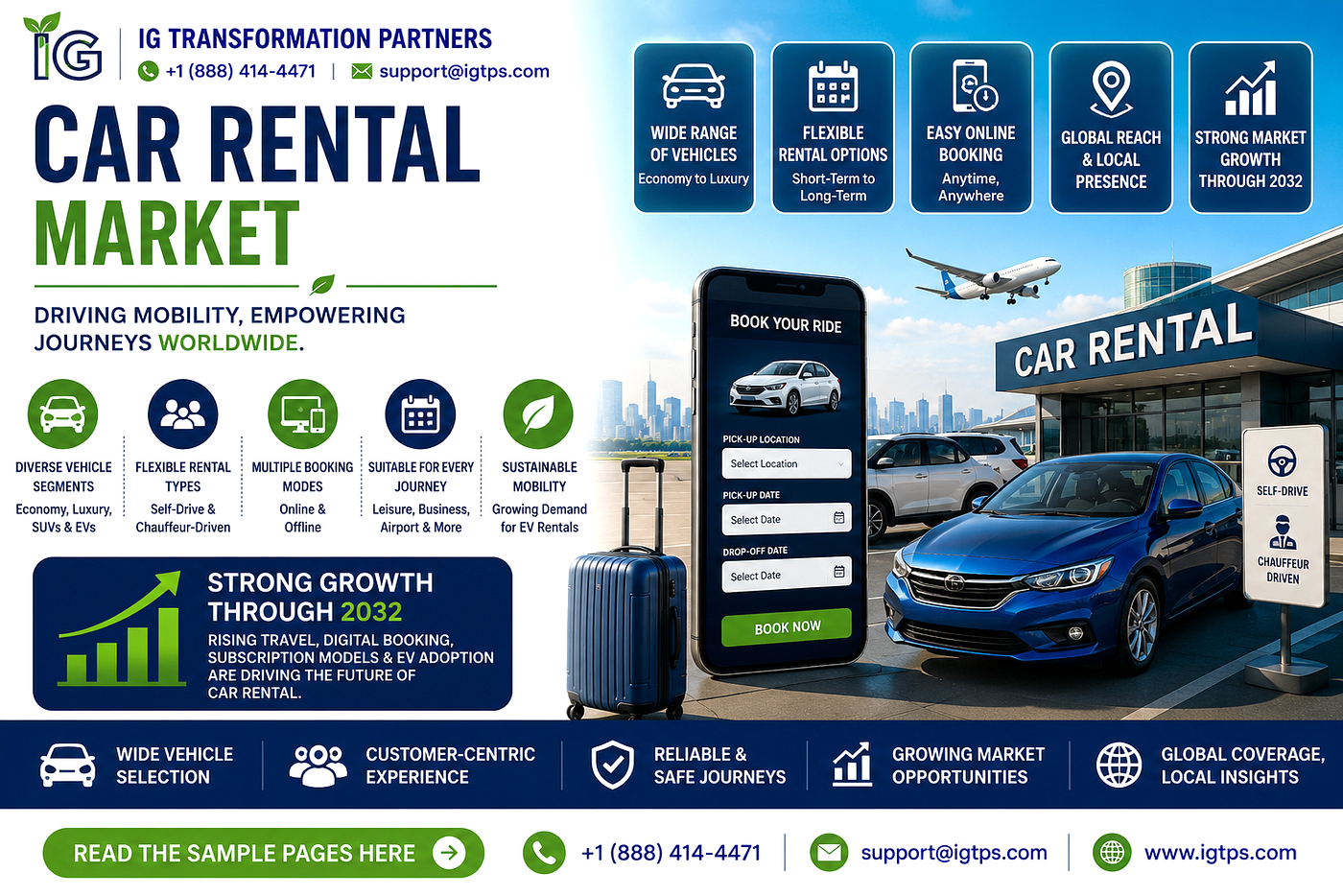
The global car rental market is entering a strong growth phase, driven by rising travel demand, the shift toward flexible mobility, and rapid digital adoption across booking platforms. According to the latest industry analysis, the car rental market size was valued at USD 124.6 Billion in 2025, is expected to reach **USD 135.1 Billion in 2026, and is projected to grow to USD 219.14 Billion by 2032, registering a robust CAGR of 8.4%** during the forecast period (2026–2032).
This blog breaks down the key trends, drivers, segments, and regional outlook shaping the future of the car rental industry.
Market Overview
The car rental industry has evolved far beyond traditional airport counters and roadside agencies. Today, it spans a wide spectrum of vehicle categories, rental models, and digital booking ecosystems that cater to both individual travelers and corporate clients. The rise of online car rental booking, subscription-based mobility, and electric vehicle fleets is reshaping how consumers and businesses access short-term and long-term transportation.
North America currently leads the global car rental market, supported by a mature travel and tourism ecosystem, strong corporate travel demand, and well-established rental infrastructure. Meanwhile, Asia-Pacific is the fastest-growing region, fueled by rising disposable incomes, expanding tourism, growing airport connectivity, and the rapid digitization of mobility services across countries like India, China, and Southeast Asia.
Key Market Segments
By Vehicle Type
The market spans economy cars, executive cars, luxury cars, SUVs & MUVs, and electric vehicles. The electric vehicle rental segment is gaining particular momentum as rental companies expand EV fleets in response to sustainability goals and tightening emissions regulations.
By Rental Type
Consumers can choose between self-drive rental and chauffeur-driven rental services, with self-drive continuing to dominate due to its flexibility, while chauffeur-driven services remain popular for corporate and premium travel segments.
By Booking Mode
The shift from offline car rental booking to online car rental platforms is one of the most significant trends in the industry, driven by mobile apps, real-time availability, and seamless digital payments.
By Rental Duration
The market is segmented into short-term car rental and long-term car rental, catering respectively to leisure travelers and corporate or extended-stay customers.
By Application
Key applications include leisure and tourism travel, business travel, airport transport, local usage, and intercity or outstation travel, reflecting the diverse use cases driving demand.
By Service Model
Beyond traditional car rental, the industry is witnessing rising adoption of subscription-based car rental and peer-to-peer (P2P) car rental, both of which offer more flexible, asset-light alternatives to conventional vehicle ownership and rental.
By End User
Demand comes from both individual consumers and corporate clients, with corporate travel programs increasingly integrating rental services into broader mobility management strategies.
Key Growth Drivers
- Rising global tourism and business travel activity fueling demand for flexible, on-demand transportation
- Growing preference for subscription-based mobility over vehicle ownership, especially among urban millennials and Gen Z consumers
- Expansion of electric vehicle rental fleets in response to sustainability commitments and government incentives
- Increasing airport car rental partnerships and expanding intercity travel infrastructure
- Rapid growth of online booking platforms offering price comparison, real-time inventory, and contactless check-in
Regional Outlook
North America remains the largest market, supported by extensive rental networks, strong leisure and business travel volumes, and early adoption of digital rental platforms.
Asia-Pacific, meanwhile, is projected to post the fastest growth through 2032, driven by expanding middle-class populations, rising international and domestic tourism, and the rapid rollout of app-based self-drive rental services across major cities.
What This Means for the Industry
The car rental market is no longer just about renting a vehicle for a few days. It is becoming a broader mobility ecosystem that blends traditional rentals, subscription models, and peer-to-peer platforms, all powered by digital booking technology and an expanding range of vehicle options, including electric vehicles. Companies that invest early in EV fleet expansion, seamless online booking experiences, and flexible subscription-based rental offerings are best positioned to capture the fastest-growing segments of this market through 2032.
Explore the Full Market Report
Want the complete breakdown of market size, segmentation, competitive landscape, and regional forecasts?
👉 Read the sample pages now to access in-depth data, charts, and analysis on the global car rental market.
메타데이터
- post_id
- f2ba5dd1679d
- slug
- car-rental-market-set-to-cross-usd-219-14-billion-by-2032-growth-trends-key-drivers-forecast-f2ba5dd1679d
- url
- https://medium.com/@himanshia9076/car-rental-market-set-to-cross-usd-219-14-billion-by-2032-growth-trends-key-drivers-forecast-f2ba5dd1679d
- canonical_url
- https://medium.com/@himanshia9076/car-rental-market-set-to-cross-usd-219-14-billion-by-2032-growth-trends-key-drivers-forecast-f2ba5dd1679d
- author_url
- https://medium.com/@himanshia9076
- status
- ok
- fetched_at
- 2026-08-11 00:49:50