Hitler Fortress Cities: WWII Last Stand
Hitler’s Küstrin fortress fell to the Red Army in 1945. The brutal collapse of Nazi Germany’s Festung strategy.
February 1, 1945—Küstrin, now Kostrzyn nad Odrą, stood on the brink of annihilation. Encircled by the relentless advance of the Red Army, the city wasn’t just another battlefield; it was declared a Fortress City, a last stand against the inevitable.
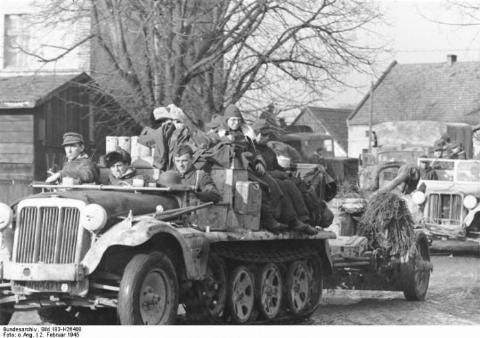
Withdrawal of German troops to Breslau. By Bundesarchiv
In the final years of World War II, as defeat loomed over Germany, Hitler embraced a desperate strategy—the Festung (fortress) doctrine. Cities and towns were transformed into heavily fortified strongholds, stocked with food and ammunition, tasked with holding out against relentless Allied offensives. This strategy wasn’t just about defense; it was an act of defiance, a refusal to surrender even as the Reich crumbled. The first and most infamous of these so-called fortresses? Stalingrad—a brutal, unyielding battleground that foreshadowed the fate of many others.

The MNH patterns common during this period would be seen until late in the war, such as on these Panthers from Panzer Division Müncheberg during the attempted relief of Küstrin in February 1945
As the Red Army stormed westward in early 1945, Hitler clung to a fading hope—his Festung cities. These fortified strongholds weren’t just military positions; they were symbols of defiance, meant to buy time for a miracle. Maybe a secret weapon. Maybe a fracture in the Allied front. Maybe, just maybe, a negotiated peace.

A battery of Wespe self-propelled guns open fire simultaneously during defensive operations in Poland in the late summer of 1944. Both vehicle’s guns can be seen recoiling.
Among the most critical fortress cities were Breslau, Danzig, Kolberg, Königsberg, and Küstrin. But none stood out like Breslau. As Soviet forces unleashed their final offensive, city after city crumbled—except Breslau. Declared a Fortress City, it became a battlefield of brutal resistance. The Red Army encircled it, artillery pounded it, and yet, it held. Breslau wasn’t just fighting for survival—it was fighting against the inevitable.

Wehrmacht Soldiers with MG34 AA Machine Gun Set Up on Railway Car
Breslau’s defenders had little more than desperation on their side. With makeshift barricades and dwindling supplies flown in under the cover of night, men and boys—many barely old enough to hold a rifle—clung to the ruins for three brutal months. Elsewhere, in cities like Pyritz, chaos reigned. Soldiers whispered of mass desertions, of Hitler himself sacking generals at the front—none of it true. But some rumors were. Officers had fled, some with their Polish or Russian mistresses. Others stumbled back to German lines in rags, barefoot, broken. "This retreat," one soldier muttered, "is one of the darkest chapters in German history."

On the left, a crew of the 120mm mortar model 1938 PM-38 on the streets of Breslau, and on the right, a crew of its simplified version from 1941 (PM-41) against the backdrop of the famous Vienna cathedral, Votivkirche.
Some fortresses held out until the bitter end—until Hitler’s suicide and Germany’s surrender. Breslau, the most infamous, finally fell on May 6, 1945, four days after Berlin. Over 25,000 soldiers and civilians lay dead, the city reduced to rubble. In the war’s aftermath, Germany would lose not just the war but entire cities—places once German for centuries, now erased from its map.

Panzer III carrying infantry in March 1942 by Bundesarchiv
In the early years of the war, Germany’s greatest strength lay in speed. Blitzkrieg wasn’t just a strategy—it was a revolution in warfare. Lightning-fast offensives shattered enemy lines, allowing German forces to encircle and crush entire armies before they could react. Nowhere was this more devastating than in the Soviet Union during Operation Barbarossa (1941). Vast Red Army formations found themselves trapped, cut off, and annihilated in one encirclement after another. Mobility was Germany’s weapon—and for a time, it seemed unstoppable.
As the war dragged on, Germany’s greatest strength—mobility—slowly bled away. The Eastern Front consumed vast numbers of vehicles, fuel ran desperately short, and the once-dominant Wehrmacht found itself increasingly immobile. Meanwhile, the Red Army, bolstered by American Lend-Lease support, adapted. Soviet forces grew faster, more flexible, and deadlier.
The Festung doctrine was, in part, a reaction to this shift. But instead of halting the Soviet advance, it played right into their hands. Cities declared fortresses became traps, allowing the Red Army to encircle and isolate German forces, turning them into vast, self-imposed POW camps. Nowhere was this clearer than in Courland, where entire German formations were cut off and left to wither. The Soviets simply bypassed them, pushing ever westward, leaving these stranded garrisons to be dealt with at their convenience.
Civilian Volkssturm are trained to shoot the MG 42, a general purpose machine gun and one of the best weapons of the war. November 1944. Courtesy of the Bundesarchiv
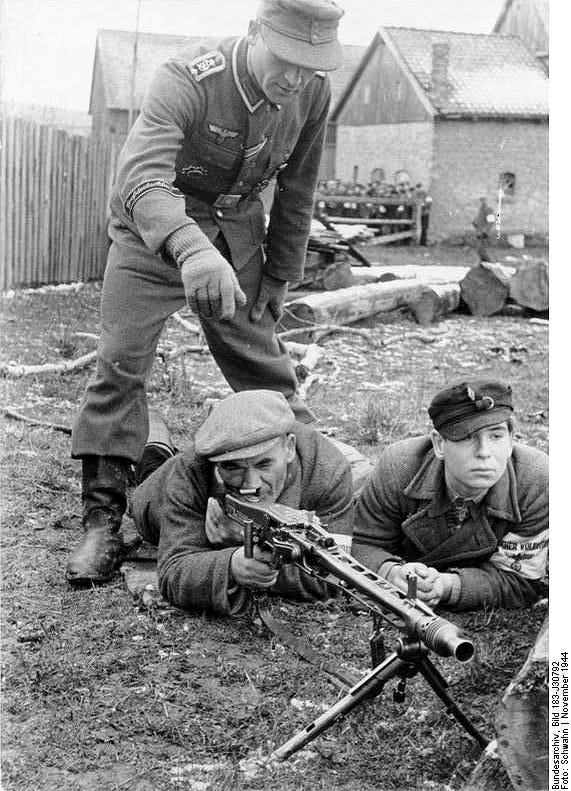
Civilian Volkssturm are trained to shoot the MG 42, a general purpose machine gun and one of the best weapons of the war. November 1944. By Bundesarchiv
Hitler saw the Festungen as a way to stretch his dwindling forces—a last-ditch attempt to hold territory without committing his best troops. Many of these fortresses were manned by second-rate or immobilized units, soldiers who might have been lost anyway in the chaotic retreats Hitler so often delayed until it was too late. The idea was simple: force the Red Army to lay siege, slowing their advance.
Some, like Festung Posen, became brutal battlegrounds—encircled and crushed by Vasily Chuikov’s 8th Guards Army. But most were poorly placed, easily bypassed, and ultimately futile. Worse, thousands of German soldiers were squandered in these isolated strongholds—troops that could have been desperately needed in Berlin, where the capital’s final defense fell to teenagers, old men, and the Volkssturm.
메타데이터
- post_id
- f2baae6de250
- slug
- hitler-fortress-cities-wwii-last-stand-f2baae6de250
- url
- https://medium.com/@txtchronicles/hitler-fortress-cities-wwii-last-stand-f2baae6de250
- canonical_url
- https://medium.com/@txtchronicles/hitler-fortress-cities-wwii-last-stand-f2baae6de250
- author_url
- https://medium.com/@txtchronicles
- status
- ok
- fetched_at
- 2026-07-23 08:49:49