The People Who Live on Moving Islands: Life on Bangladesh’s Chars
For millions of Bangladeshis, the land beneath their feet is never permanent.
The People Who Live on Moving Islands: Life on Bangladesh’s Chars
For millions of Bangladeshis, the land beneath their feet is never permanent.
When people think of Bangladesh, they often think of overcrowded cities, fertile agricultural lands, or the country’s economic progress over the past few decades. Yet hidden within the vast network of rivers that shape the nation lies a different reality.
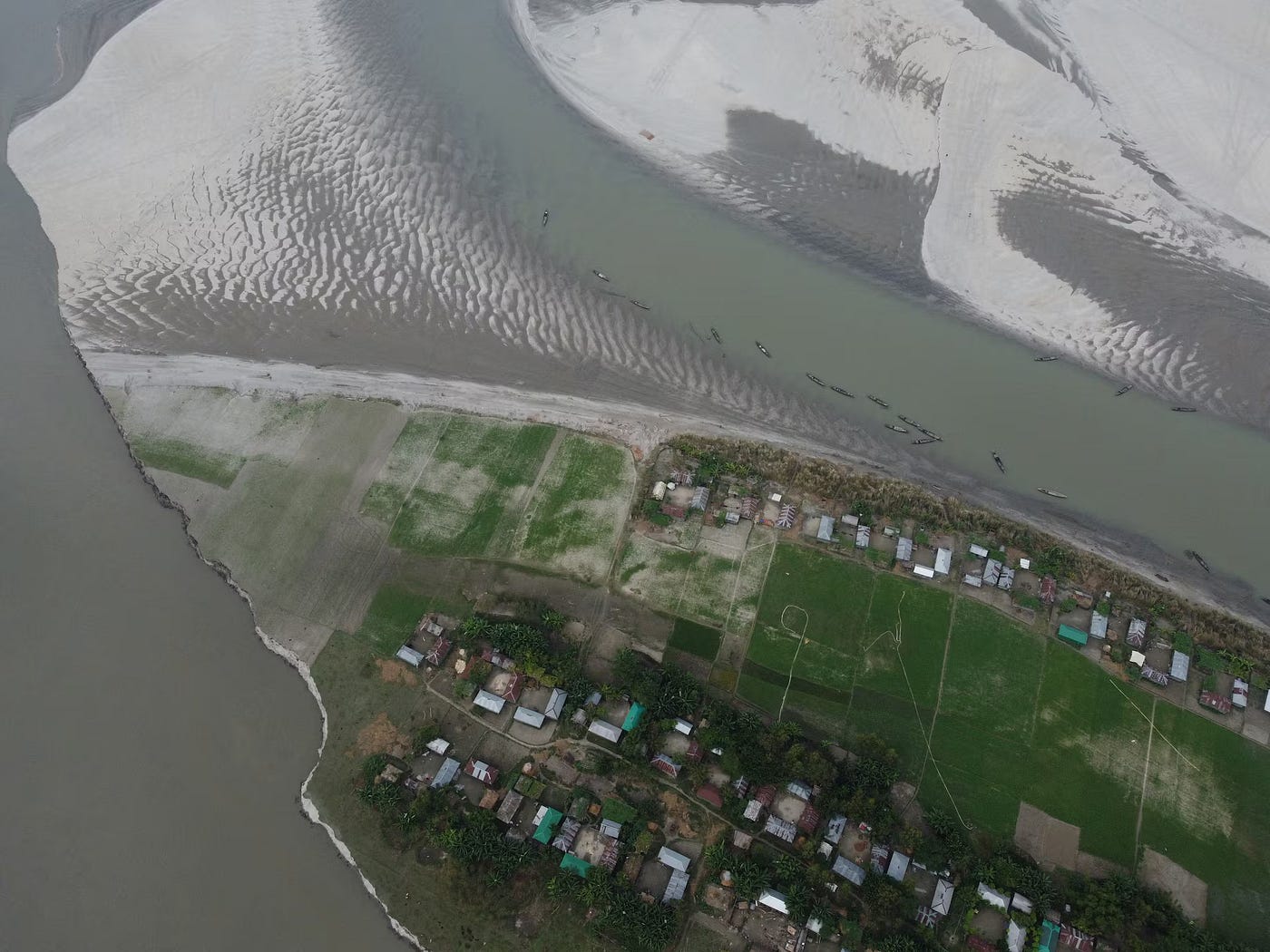
Across the major rivers like Padma, Meghna, Jamuna, and Brahmaputra, millions of people live on chars (temporary river islands, formed by the continuous movement of water and sediment brought by the rivers from the upperland). These islands emerge, expand, shrink, and sometimes disappear altogether. For the families who call them home, uncertainty is not an occasional challenge, it is the way of life.
“For many families in chars, cultivating land, and raising a family, only to watch the river swallow everything during a single monsoon season. Despite these hardships, char communities continue to rebuild, adapt, and survive. Their story is often told through statistics about poverty and vulnerability. But behind those numbers are millions of people navigating one of the most dynamic landscapes on Earth.
What Are Chars?
Chars are riverine islands created by the deposition of sediment carried by Bangladesh’s major rivers from the upperlands like India, China and Tibbet. Over time, these sediments accumulate to form new land. At the same time, riverbank erosion destroys existing land elsewhere.
This process has shaped the geography of Bangladesh for centuries. Unlike permanent islands, however, chars are constantly changing. A char that exists today may disappear within a few years, while new land may emerge elsewhere on that river.
According to research by the BRAC Institute of Governance and Development (BIGD), chars account for approximately 5% to 6% of the total land area in Bangladesh. This translates to about 7,200 km² to 8,200 km² of landmass, which is home to an estimated 6.5 million to 12 million people. Despite their large population, many char communities remain remote and underserved compared to mainland regions. For outsiders, chars may appear as remote strips of land in the middle of vast rivers. For residents, they are home, places where generations have lived, farmed, and built communities.
Living with Uncertainty
For most people, a home represents stability. It is a place where families plan for the future. But on the chars, the future is often shaped by forces beyond human control.
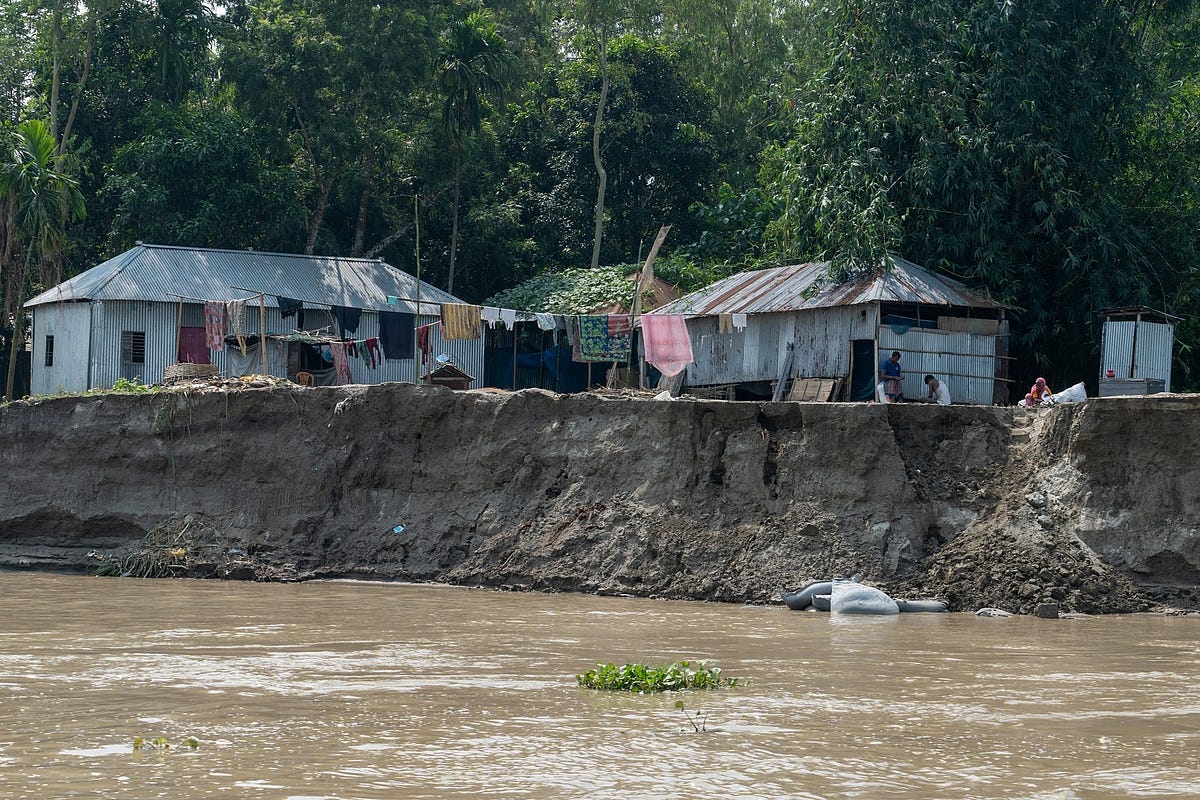
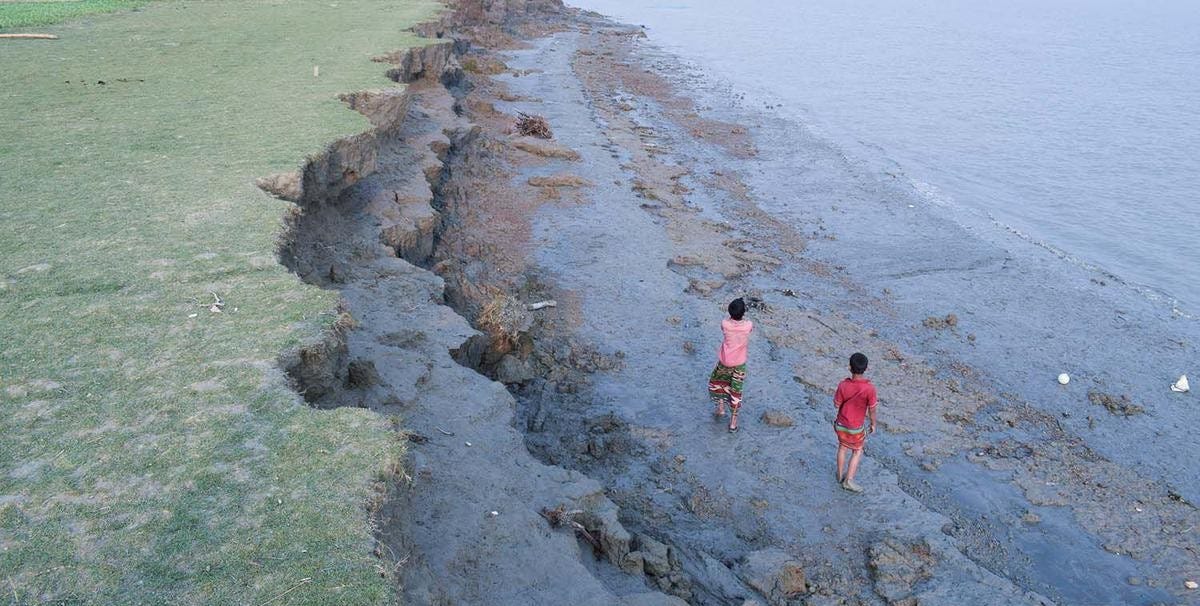
Riverbank erosion remains one of the most significant challenges facing char communities. Every year, major rivers consume an estimated 8,700 to 10,000 hectares of land annually, displacing nearly 200,000 people. Families who lose their land frequently relocate to another char, nearby villages, or urban settlements. Some experience displacement multiple times during their lives.
The emotional toll of this event is difficult to measure. Losing a home means more than losing property. It means losing memories, social networks, and a sense of belonging. There is an old saying in Bengali which translates,“If your home is destroyed by a fire, you have the land to rebuild. But if you lose your home to a river, there is nothing left to build”.
At the same time, uncertainty affects economic decisions. Investing in permanent housing, businesses, or infrastructure becomes difficult when there is no guarantee that the land itself will survive. Despite these challenges, char dwellers continue to cultivate crops, raise livestock, and establish communities. Their ability to adapt to changing circumstances is one of the most remarkable aspects of life on the chars.
A Different Kind of Isolation
Life on the chars is shaped by distance in ways many Bangladeshis rarely experience. According to a 2024 survey by the BRAC Institute of Governance and Development (BIGD), only 27% of surveyed chars had road connections to the mainland, and just 17% remained accessible by road during the rainy season.
This remoteness affects access to essential services, particularly education. While 77% of surveyed chars had a government primary school, only 4% had a government secondary school. For many students, continuing their education requires long journeys by boat and road, often through difficult weather conditions.
The effects extend beyond schooling. Farmers may travel hours to reach markets, while access to healthcare can become challenging during emergencies. These realities highlight a less visible form of inequality, one shaped not only by income, but by location. Where people live can significantly influence the opportunities available to them.
When Geography Becomes Destiny
Inequality is often associated with differences in income or wealth. However, the experience of char communities highlights another dimension of inequality: geography.
Where a person is born can influence the opportunities available to them throughout their life. A child growing up in Dhaka or another major city is likely to have easier access to schools, healthcare facilities, transportation networks, better internet connectivity, and government services. For many children living on chars, these resources may be limited, distant, or difficult to access.
This does not mean that success is impossible for char residents. Rather, it means that the starting point is often different. The challenges faced by char communities are not simply individual problems. They are shaped by broader structural conditions linked to location, infrastructure, and public investment. WHO reports that timely access to primary healthcare is a key determinant of health outcomes, with distance and transportation barriers being major contributors to health inequities worldwide.
In this sense, chars reveal an important lesson about inequality. Opportunity is not distributed evenly across space. Geography can influence education, employment, health outcomes, and social mobility long before individuals make choices of their own.
Education on Shifting Ground
Education is often seen as the most reliable pathway out of poverty, and Bangladesh has made remarkable progress in expanding access to schooling. Yet these gains have not reached every corner of the country equally. In many char communities, education remains constrained by geographical isolation, seasonal flooding, and limited infrastructure. A 2024 BIGD survey found that while 77% of surveyed chars had a government primary school, only 4% had a government secondary school. For many students, continuing their education requires traveling long distances, often crossing rivers by boat in different weather conditions.
These barriers are especially challenging for girls. Social stigma, household responsibilities, financial hardship, and safety concerns can all increase the likelihood of dropping out. Education can create opportunities for social mobility, but for many char residents, the journey to those opportunities starts with crossing a river.
Climate Change at the Frontline
Bangladesh is frequently identified as one of the countries most vulnerable to climate-related risks. Char communities are at the frontline of this vulnerability. Flooding, river erosion, changing rainfall patterns, and extreme weather events directly affect livelihoods and living conditions. Many households depend on agriculture and natural resources, making them particularly sensitive to environmental change.
Climate change does not create all the challenges facing char residents, but it frequently intensifies existing vulnerabilities. For communities already coping with remoteness, limited services, and economic unsureness, environmental hazards can have far-reaching consequences.
Resilience Beyond the Headlines
Stories about char communities often focus on hardship. But it is only a part of the picture. The history of char dwellers is also a story of resilience. Families rebuild homes many times after erosion. Farmers adapt cultivation techniques to changing environmental conditions. Communities develop social networks that help members cope during difficult times.
Many residents possess deep local knowledge about river behavior, seasonal changes, and traditional agricultural practices. This knowledge has been developed over generations of living in dynamic environments.
Non-governmental organizations and development initiatives have also contributed to improving access to education, healthcare, livelihoods, and disaster preparedness in many char regions. Despite limited resources and significant challenges, char communities continue to adopt. Their resilience deserves recognition alongside discussions of vulnerability.
Why the Chars Matter
The story of Bangladesh’s chars is not simply a story about remote river islands. It is a story about how geography shapes human lives.
The challenges faced by char dwellers raise broader questions about development and inclusion. As Bangladesh continues to achieve economic growth and social progress, ensuring that these gains reach marginalized communities, remains an important challenge. Development is not only about national statistics or economic indicators. It is also about whether people can access opportunities regardless of where they are born or live.
The experiences of char communities remind us that progress can be uneven. While some regions benefit from improved infrastructure and expanding opportunities, others remain separated by distance, isolation, and dubiety. Recognizing these differences is an essential step toward building a more inclusive future.
Conclusion
Every year, Bangladesh’s rivers reshape the landscape, creating new land in one place while erasing it in another. Yet on these fragile islands, millions of people continue to build homes, raise families, and plan for the future despite living with constant uncertainty.
Their story is one of both vulnerability and resilience. It highlights how environmental change can shape everyday life, but also how communities adapt and endure in the face of repeated challenges. More importantly, it reminds us that inequality is not always measured by income or wealth. Sometimes it is shaped by geography.
For char dwellers, the struggle is not only against erosion, floods, or displacement. It is also about ensuring that access to education, healthcare, and opportunity is not determined by the shifting course of a river.
메타데이터
- post_id
- f2d2e7aac09d
- slug
- the-people-who-live-on-moving-islands-life-on-bangladeshs-chars-f2d2e7aac09d
- url
- https://medium.com/@faysal.khan.research/the-people-who-live-on-moving-islands-life-on-bangladeshs-chars-f2d2e7aac09d
- canonical_url
- https://medium.com/@faysal.khan.research/the-people-who-live-on-moving-islands-life-on-bangladeshs-chars-f2d2e7aac09d
- author_url
- https://medium.com/@faysal.khan.research
- status
- ok
- fetched_at
- 2026-06-23 03:48:11