Kitchen Sanitation and Senior Safety: A Caregiver’s Guide
Kitchen Sanitation and Senior Safety: A Caregiver’s Guide
Kitchen sanitation is one of the most effective, low-cost defenses against severe illness and injury in older adults. Adults 65 and older face a substantially higher risk of hospitalization and death from foodborne pathogens like Salmonella, Campylobacter, and Listeria, which means the difference between a clean kitchen and a merely tidy one can be the difference between a bad afternoon and an emergency room visit.
You can start reducing that risk in the next ten minutes. Check the refrigerator temperature and confirm it reads at or below the safe refrigeration temperature. Walk through the fridge and toss anything questionable rather than trusting a sniff test. Then run through a basic handwashing and surface sanitizing routine before the next meal is prepped.
Watch for these warning signs after a meal: vomiting paired with a fever above 101.5°F, signs of dehydration (dizziness, dry mouth, reduced urination), or sudden confusion. Older adults dehydrate faster and their symptoms escalate quicker than a younger person’s. If you see confusion or a high fever, call a doctor or urgent care immediately rather than waiting to see if it passes.
Key Takeaways
Kitchen sanitation works because it replaces guesswork with measurable checks, thermometers, timelines, and labels, that catch risks before they reach an older adult’s plate.
Point Details Fridge temperature is non-negotiable Keep it at or below 40°F and check it weekly with a dedicated thermometer. Cook to a number, not a guess Use 165°F for poultry, 160°F for ground meats, and 145°F for whole cuts. Clean then sanitize, always two steps Soap and water remove debris; a bleach solution or approved sanitizer kills bacteria. Leftovers follow a strict clock Refrigerate within 2 hours (1 hour above 90°F) and discard after 3 to 4 days. Professional help fills the gaps Octomaids offers background-checked recurring and one-time deep cleans for households with limited time or mobility.
Where to Verify This Guidance
- CDC: Safer Food Choices for Adults 65 and Older for risk data specific to older adults.
- USDA FSIS: Cleanliness Helps Prevent Foodborne Illnesses for the Clean, Separate, Cook, Chill framework.
- Foodsafety for a quick-reference summary.
- USU Extension: Food Safety for Older Adults for practical, senior-specific storage advice.
Print or bookmark whichever source fits your routine best, since a quick reference beats trying to recall guidelines during a busy dinner prep.
This article is general information, not a substitute for advice from a qualified doctor. Consult a qualified healthcare professional about your own circumstances before acting on anything here.
Table of Contents
- The Role of Kitchen Sanitation in Senior Safety
- How to Assess Kitchen Hazards for an Older Adult
- Sanitation Steps That Actually Prevent Foodborne Illness
- Storage, Labeling, and Leftover Timelines That Remove the Guesswork
- Preventing Burns, Fires, and Chemical Exposure in the Kitchen
- Simple Tools That Make Sanitation Easier to Sustain
- How to Coach an Older Adult to Handle Sanitation Independently
- Emergency Steps for Common Kitchen Accidents
- Choosing the Right Sanitation Products and Tools
- Sources
- FAQ
The Role of Kitchen Sanitation in Senior Safety
The role of kitchen sanitation in senior safety comes down to a simple biological fact: aging weakens the immune system’s ability to fight off bacteria that a younger body would shrug off. A stomach bug that sends a 30-year-old to bed for a day can put a 75-year-old in the hospital. That’s not a scare tactic, it’s the outcome the CDC has documented across pathogens like Listeria, which disproportionately hits older adults with severe complications.
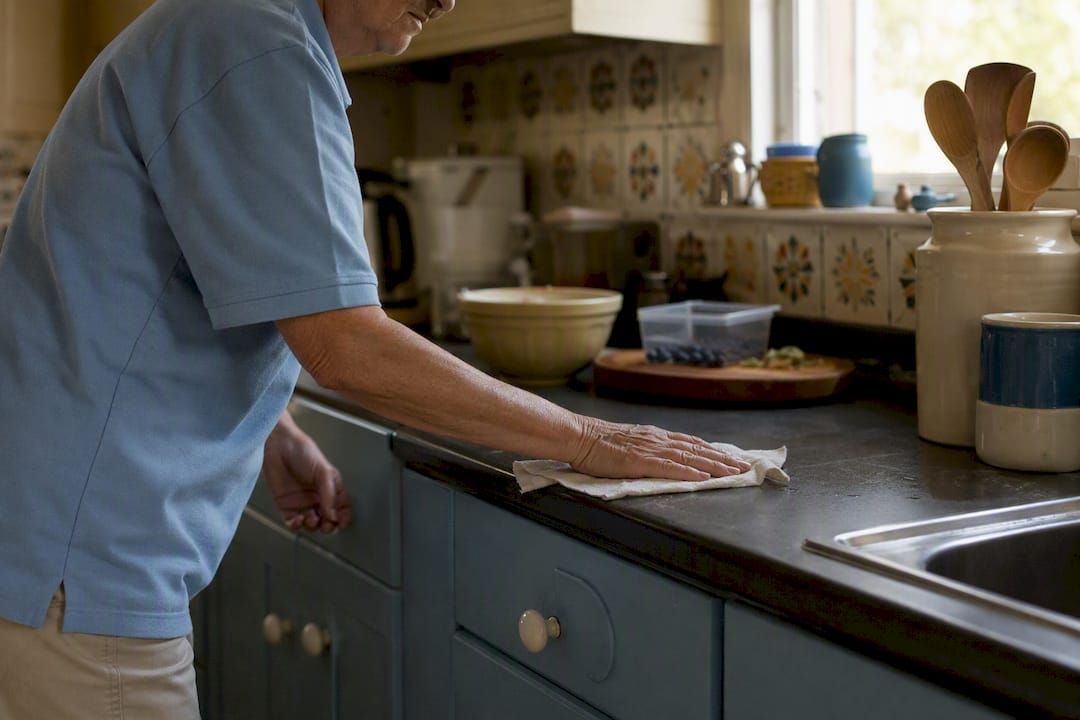
This is why kitchen sanitation practices for seniors need to be more disciplined than the average household routine, not because older adults are careless, but because their margin for error is thinner. A cutting board that isn’t quite clean enough for a healthy 25-year-old to notice a problem can still make a 78-year-old seriously sick. Preventing foodborne illnesses in this age group isn’t about paranoia. It’s about treating everyday kitchen tasks with the same rigor a commercial kitchen applies, because the stakes for the person eating the food are genuinely higher.
How to Assess Kitchen Hazards for an Older Adult
A hazard assessment doesn’t need a clipboard or a consultant. It needs five minutes and a willingness to look at the kitchen the way a stranger would, not the way someone who’s cooked there for thirty years automatically does.
Walk through and check for:
- Lighting. Dim task lighting over the stove or counter hides spills, stains, and expired labels.
- Trip hazards. Loose rugs, trailing appliance cords, and cabinet doors left open at shin height.
- Reachability. Heavy pots or bulk items stored above shoulder height or below knee height invite falls and dropped-object injuries.
- Slip risk. Wet floors near the sink, dishwasher, or fridge, especially without a non-slip mat.
- Ventilation. A stuffy kitchen slows moisture evaporation, which helps mold and bacteria linger on surfaces.
- Cross-contamination zones. Check whether raw meat prep and ready-to-eat food prep happen on the same board or the same section of counter.
The sink drain and sponge storage deserve extra attention. Both harbor more bacteria than most people assume, and both get overlooked in a standard visual sweep.
Pro Tip: Set a recurring five-minute Sunday check: fridge temperature, expiration dates, and a quick look under the sink for leaks or improperly stored chemicals. Catching a hazard before it becomes a habit is far easier than undoing one.
Sanitation Steps That Actually Prevent Foodborne Illness
USDA’s Clean, Separate, Cook, Chill framework isn’t a slogan, it’s the practical backbone of preventing foodborne illnesses at home, and every step maps to a specific action you can build into daily routines.
- Clean. Wash hands for at least 20 seconds with warm soapy water before and after handling food. Wash cutting boards and utensils in hot, soapy water immediately after use.
- Separate. Use different cutting boards for raw meat and produce. Never let raw meat juices touch a surface that will hold ready-to-eat food.
- Cook. Use an instant-read thermometer to ensure poultry, ground meats, and whole cuts are cooked to their respective safe internal temperatures.
- Chill. Refrigerate perishables within 2 hours, or within 1 hour if the room is above 90°F.
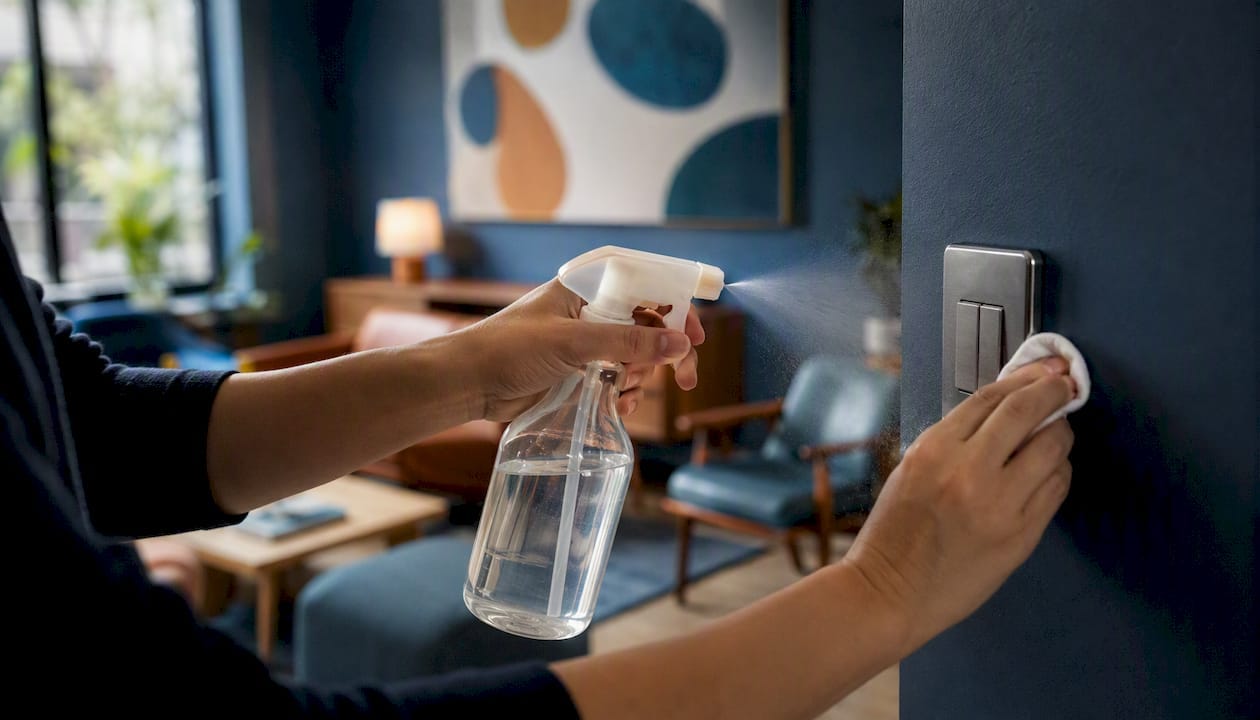
Cleaning and sanitizing are two separate steps, not one. Cleaning with soap and water removes visible debris. Sanitizing kills the bacteria that soap and water leave behind. A basic homemade sanitizer is one tablespoon of unscented liquid chlorine bleach per gallon of water, applied after cleaning, left on the surface briefly, then air-dried or wiped with a clean paper towel. Never mix bleach with ammonia or other cleaners, and always work in a ventilated space.
Never wash raw meat, poultry, or eggs under the tap. It feels like extra caution, but splash-back actually spreads bacteria around the sink and counter instead of removing it. Cooking to the correct internal temperature is what kills the pathogens, not rinsing.
Pro Tip: Skip the sponge. Paper towels or daily-laundered cloths are far easier to keep sanitary than a sponge, which becomes one of the most bacteria-dense objects in a home kitchen within days of regular use.
Storage, Labeling, and Leftover Timelines That Remove the Guesswork
Older adults often rely on smell or appearance to judge whether food is still good, but pathogens like Listeria don’t announce themselves with an odor. Objective timelines and thermometer checks remove that guesswork entirely.
A simple label system prevents “when did I make this?” guesswork. Write the prep date, the contents, and a discard-by date directly on a piece of masking tape stuck to the container lid. It takes fifteen seconds and eliminates the single most common reason leftovers get eaten past their safe window: nobody remembers when they were made.
Preventing Burns, Fires, and Chemical Exposure in the Kitchen
Sanitation and safety overlap more than most caregivers expect. The same clutter that hides bacteria on a counter often creates a fire or burn hazard, and the same cabinet that stores dish soap frequently sits inches from the cereal box.
Follow this quick do/don’t list:
- Do keep flammable items (paper towels, dish towels, oven mitts) at least three feet from stovetop burners.
- Don’t store cleaning agents on the same shelf as food, even briefly, since a leaking bottle can contaminate everything below it.
- Do use clearly labeled, tightly sealed containers for any chemical, and keep original packaging when possible so ingredients stay identifiable.
- Don’t wear loose sleeves or unsecured cardigans while cooking. Loose fabric near an open flame is one of the more common causes of kitchen burns in older adults.
- Do choose non-slip shoes for kitchen work instead of slippers or socks.
Pro Tip: Cool-touch handles and induction cooktops are worth the investment for a senior-friendly kitchen. Induction surfaces only heat the pan, not the surrounding cooktop, which dramatically cuts the risk of an accidental burn from touching a hot surface after cooking.
Simple Tools That Make Sanitation Easier to Sustain
The right tools turn sanitation from a chore requiring memory and vigilance into something closer to a habit. A refrigerator thermometer and an instant-read food thermometer are the two highest-value purchases in this entire guide, since they replace guesswork with a number.
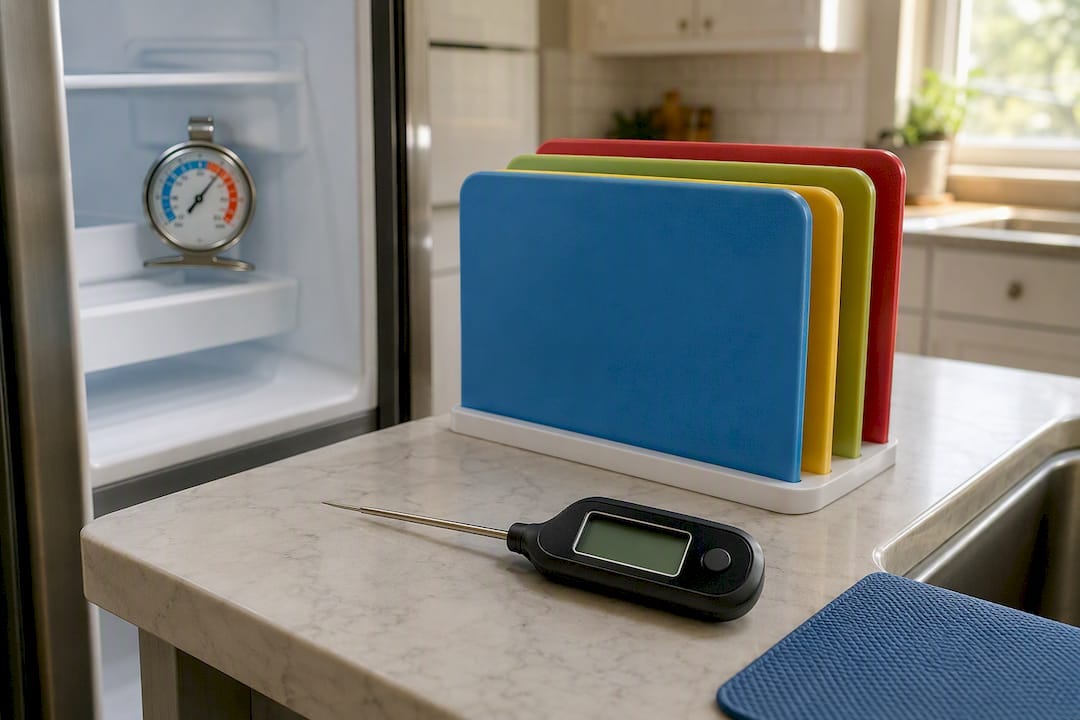
Beyond thermometers, color-coded cutting boards (one color for raw meat, another for produce) prevent cross-contamination without requiring anyone to remember a rule. Paper towels beat sponges for surface cleanup. Non-slip mats near the sink and stove reduce fall risk in the exact spots where water and grease accumulate. Easy-grip utensils reduce dropped-knife incidents for anyone with arthritis or reduced hand strength.
Small behavioral shifts help too: pre-portioning groceries into meal-sized containers, storing frequently used items between hip and shoulder height, and upgrading task lighting over the counter and stove. For sanitation tasks that go beyond daily upkeep, deep cleaning of grout, drains, and appliance interiors, a professional cleaning visit handles what a weekly wipe-down can’t reach.
How to Coach an Older Adult to Handle Sanitation Independently
Independence matters as much as safety, and the two aren’t in conflict if you build habits around simple, repeatable cues instead of long instructions. Most older adults don’t need a lecture on bacteria. They need three or four physical anchors that make the safe choice the obvious one.
Start with visual cues instead of verbal reminders. A laminated card taped inside a cabinet door with cooking temperatures in large print does more than a conversation that gets forgotten by dinnertime. Color-coded cutting boards work the same way: the choice is built into the tool, so there’s nothing to remember.
Break tasks into short, specific routines rather than general advice. “Wash your hands before cooking” is vague. “Sing the happy birthday song twice while washing your hands” gives a concrete, repeatable action tied to the 20-second guideline. The same goes for chilling leftovers: a sticky note on the fridge that says “leftovers out more than 2 hours? Toss them” removes the need for judgment calls under time pressure.
Practice alongside them rather than supervising from across the room the first few times. Cooking together, even once a week, lets you catch habits that need adjusting, like washing raw chicken in the sink, without it feeling like correction. Praise the process, not just the outcome. Someone who checks the thermometer and gets it right deserves to hear that the checking mattered, not just that dinner turned out fine.
Revisit the routine every few months. Vision, grip strength, and memory shift gradually, and a system that worked last year might need a bigger label or a lower shelf this year.
Emergency Steps for Common Kitchen Accidents
Fast, correct first aid in the first sixty seconds after a kitchen accident often determines how serious the outcome becomes, so it’s worth having the basics memorized rather than looked up mid-crisis.
Burns. Run cool (not ice-cold) water over the burn for 10 to 20 minutes. Don’t apply butter, ice, or ointment. Cover loosely with a clean, dry cloth. Seek medical care if the burn blisters, covers a large area, or appears on the face or hands.
Cuts. Apply firm, direct pressure with a clean cloth for several minutes without checking too soon. Elevate the hand above heart level if possible. Seek stitches if the bleeding doesn’t slow after 10 minutes or if the cut is deep enough to see fat or muscle.
Falls near the stove or sink. Don’t rush the person to stand up immediately. Check for pain, confusion, or an inability to bear weight before helping them move, and call for medical help if any of those signs appear, since a fall combined with a head injury in an older adult warrants evaluation even if they seem fine.
Suspected food poisoning. Watch for a fever above 101.5°F, confusion, or signs of dehydration. Offer small sips of water or an electrolyte drink and call a doctor promptly rather than waiting out the symptoms, especially if they started within hours of a shared meal.
Keep a written list of emergency contacts, including the nearest urgent care and the person’s primary doctor, posted somewhere visible in the kitchen itself, not just saved in a phone that might not be nearby during the incident.
Choosing the Right Sanitation Products and Tools
The best kitchen sanitation products for a senior household share three traits: simple to use correctly, hard to misuse, and effective without requiring precise measuring under stress.
An instant-read food thermometer is the single most important purchase, since it replaces “does this look done” with an actual number. Look for a model with large, high-contrast digital numbers rather than a small analog dial. A refrigerator thermometer, kept clipped to a middle shelf rather than the door, gives an accurate read on the temperature that actually matters.
For sanitizing, an approved food-contact sanitizer spray or the homemade bleach solution described earlier both work, but pre-measured spray bottles reduce the risk of an incorrect dilution. Avoid multi-purpose cleaners that claim to both clean and sanitize in one step unless the label explicitly states an EPA registration number for food-contact surfaces, since many all-in-one products fall short of true sanitizing strength.
Color-coded cutting boards remove a decision point entirely: red for raw meat, green for produce, no exceptions. Choose textured, non-slip mats for the sink and stove areas over decorative rugs, which tend to bunch and slide. When selecting any tool, prioritize one-handed operation and large, legible labeling, since both reduce the chance of a mistake during a moment of distraction or fatigue.
Why a Cleaning Service’s Perspective Matters Here
A recurring or deep clean does more than make a kitchen look nice, it physically removes the contamination vectors that a quick daily wipe-down misses: grease film behind appliances, buildup in drain traps, and residue on high-touch surfaces.
Caregivers juggling meals, medication, and mobility support rarely have bandwidth left for grout lines and refrigerator coils.
When to Bring In Professional Cleaning Help
Some sanitation problems go beyond what a checklist and a bottle of sanitizer can fix. Consider hiring professional cleaning help if you notice frequent bouts of stomach illness with no clear cause, if the senior in your care has limited mobility that makes deep cleaning tasks physically risky, or if sink and garbage odors persist despite regular cleaning, which often signals biofilm buildup in drains that household tools can’t reach.
Before hiring anyone, ask three questions: Are cleaners background-checked and do you provide references? What sanitizing methods and products do you use, and are they appropriate for a household with an older adult? What scheduling options exist for recurring cleaning versus a one-time deep clean?
Octomaids has served households across Vancouver, WA and the Portland, OR metro area with the same background-checked cleaning teams on every visit, which matters when you’re inviting someone into a home shared with a vulnerable family member. Rather than juggling grout, drains, and appliance interiors on top of caregiving duties, a scheduled deep clean can handle the sanitation tasks that fall through the cracks of daily routines. If dust and air quality near the kitchen are also a concern, a duct cleaning service can address buildup that a surface clean won’t reach. Check available dates and get a quote through Octomaids’s services page to see what a recurring or one-time visit would look like for your household.
Sources
- Safer Food Choices for Adults 65 and Older | Food Safety | CDC
- Cleanliness helps prevent Foodborne Illnesses | USDA FSIS
- Food Safety for Older Adults: Why Food Safety Matters More As You Age | USU Extension
- Handling and Preparing Food Safely for People with Weakened Immune Systems | FDA (media)
- Foodsafety
FAQ
What Are the Four C’s of Kitchen Safety?
The four principles are Clean, Separate, Cook, and Chill, the USDA framework that covers handwashing, cross-contamination prevention, proper cooking temperatures, and timely refrigeration.
How Often Should an Older Adult Shower?
This guide focuses on kitchen sanitation rather than personal hygiene schedules, so it doesn’t have a sourced answer to this question; check with a physician or caregiver resource for personalized hygiene guidance.
What Are the Basic Kitchen Safety Rules?
Core rules include washing hands for 20 seconds, using separate cutting boards for raw meat and produce, cooking to verified internal temperatures, refrigerating perishables within 2 hours, keeping flammables away from the stove, and storing cleaning chemicals away from food.
What Are the Key Hygiene Rules in a Kitchen?
Wash hands and surfaces frequently, use paper towels instead of sponges when possible, sanitize cutting boards after contact with raw meat, wash produce under running water without washing raw meat, and clean then sanitize surfaces as two separate steps.
When Should I Hire a Professional Cleaner Instead of Handling It Myself?
Consider professional help if illness recurs without a clear cause, if mobility limits make deep cleaning risky, or if drain odors persist. Octomaids provides background-checked recurring and one-time deep cleaning services across the Vancouver, WA and Portland, OR area.
Recommended
- What Grip-Hazard Cleaning Prevention Really Means
- Why Shared Desks Require Regular Disinfection
- Home Cleaning Best Practices for a Spotless Home
The post Kitchen Sanitation and Senior Safety: A Caregiver’s Guide appeared first on Octomaids.
메타데이터
- post_id
- f2d5cb033b13
- slug
- kitchen-sanitation-and-senior-safety-a-caregivers-guide-f2d5cb033b13
- url
- https://medium.com/@octomaids/kitchen-sanitation-and-senior-safety-a-caregivers-guide-f2d5cb033b13
- canonical_url
- https://medium.com/@octomaids/kitchen-sanitation-and-senior-safety-a-caregivers-guide-f2d5cb033b13
- author_url
- https://medium.com/@octomaids
- status
- ok
- fetched_at
- 2026-08-21 10:12:04