The Bradley Effect: What 1982 Can Teach Us About 2026
By Forrest Woolman — UCLA Class of ’01, History & Political Science
The Bradley Effect: What 1982 Can Teach Us About 2026
By Forrest Woolman — UCLA Class of ’01, History & Political Science
Mayor Bradley was, as my school teacher mom called a “People’s Mayor, as I discovered when I met him and chatted with him while he flipped burgers at the Chase Park dedication in 1977.
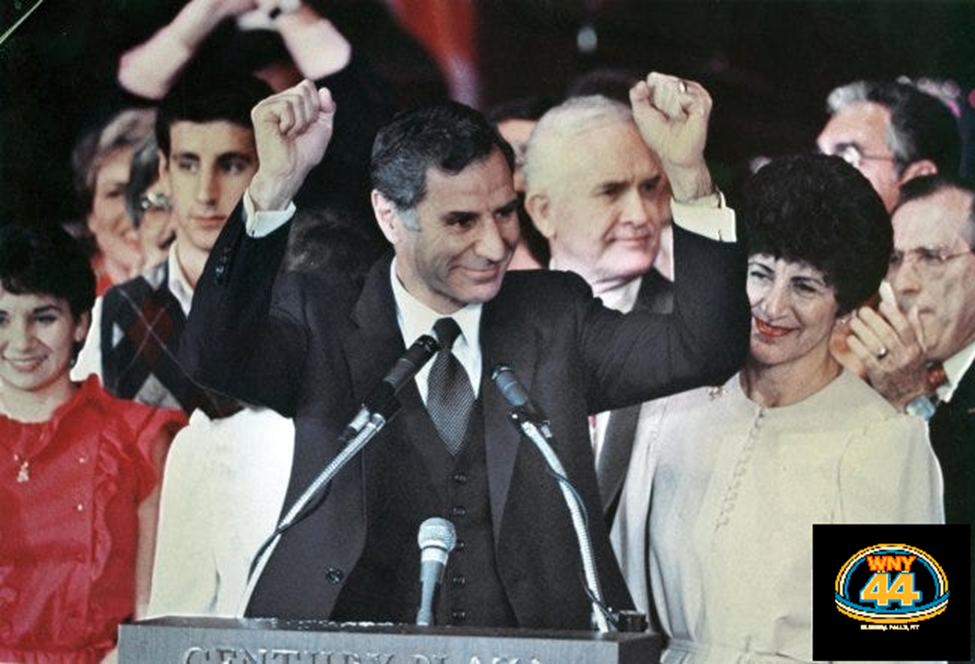
Tom Bradley’s 1982 campaign for California governor remains one of the most studied polling failures in modern American politics. Bradley, a Democrat, served as Mayor of Los Angeles from 1973 to 1993, and by the fall of ’82 he appeared poised to become the state’s first Black governor. Every major poll showed him ahead. Exit polls showed him ahead. Yet when the votes were counted, he narrowly lost.
Political scientists eventually labeled the discrepancy the Bradley Effect — the phenomenon in which voters, influenced by social pressure, tell pollsters one thing but vote differently in private.
As a fellow UCLA alumnus, I’ve always followed Bradley’s story closely. I met him briefly at Chase Park in the summer of 1977, when he attended a community event in a short‑sleeve flannel shirt and jeans, flipping burgers and talking with families. He had been an LAPD officer for nearly 30 years — at a time when Black officers were rare — and had been bound for the 1940 U.S. Olympic track and field team before the Games were canceled. Even people outside his political base respected him; a Nixon‑voting neighbor of mine once said, “I could tell he’s a legit guy. I feel good about him being our mayor.”
That broad appeal makes the 1982 polling miss even more instructive. It wasn’t about Bradley’s popularity. It was about voter behavior under social pressure.
And that is where the comparison to 2026 becomes relevant.
The Conditions That Created the Bradley Effect Haven’t Disappeared
The Bradley Effect was rooted in a simple dynamic: voters gave pollsters socially comfortable answers, then voted according to private loyalties.
In 2026, the pressures are different, but the psychology is similar.
Across the country, political identity has become socially loaded. In some communities, expressing support for Trump‑aligned candidates carries a stigma; in others, expressing opposition does. Many voters navigate these pressures by softening their views, avoiding conflict, or giving pollsters the answer that feels least risky.
As an alumnus with friends and relatives across red states, I’ve heard a consistent refrain:
“When I get in the booth, I’ll probably stick with my party.”
These are not voters trying to mislead anyone. They are voters who feel conflicted, but whose long‑standing partisan identity still exerts a pull when the curtain closes.
This is precisely the kind of environment where a Bradley‑style gap can re‑emerge.
Polling Challenges Make the Effect Harder to Detect
Polling in the 1980s relied heavily on landlines and high response rates. Today, pollsters face:
- historically low response rates
- distrust of institutions
- partisan non‑response bias
- difficulty reaching rural and older voters
- difficulty modeling turnout in polarized environments
These structural issues make it harder to detect subtle forms of social desirability bias — the very bias that defined the Bradley Effect.
In other words, if the Bradley Effect is happening today, we may not see it until Election Night.
Why 2026 Could Produce a Similar Surprise
To be clear, the 2026 political landscape is not identical to 1982. The issues are different. The candidates are different. The social pressures are different.
But the underlying mechanism — the gap between public expression and private action — is very much alive.
If even a modest share of conflicted voters revert to long‑standing partisan habits in the booth, the result could diverge from polling expectations. Not dramatically, but meaningfully. Enough to shift close races. Enough to create a Wednesday‑morning narrative of surprise or disappointment.
This is not a prediction of outcomes. It is a recognition of risk — the same risk that blindsided analysts in 1982.
The Lesson for 2026
Tom Bradley’s loss was not a failure of his campaign or his character. It was a failure to understand how voters behave when social pressure meets private choice.
Forty‑four years later, the lesson remains:
Polls measure what people are willing to say. Elections measure what they are willing to do.
As we head into 2026, that distinction deserves more attention than it’s getting.
메타데이터
- post_id
- f2dac712af07
- slug
- the-bradley-effect-what-1982-can-teach-us-about-2026-f2dac712af07
- url
- https://medium.com/@fpwoolman/the-bradley-effect-what-1982-can-teach-us-about-2026-f2dac712af07
- canonical_url
- https://medium.com/@fpwoolman/the-bradley-effect-what-1982-can-teach-us-about-2026-f2dac712af07
- author_url
- https://medium.com/@fpwoolman
- status
- ok
- fetched_at
- 2026-06-09 15:37:30