Navigating Multiple Identities as a Calcutta Sindhi
There is a particular kind of loneliness in belonging to a city that never fully claims you, while carrying a heritage tied to a homeland…
Navigating Multiple Identities as a Calcutta Sindhi
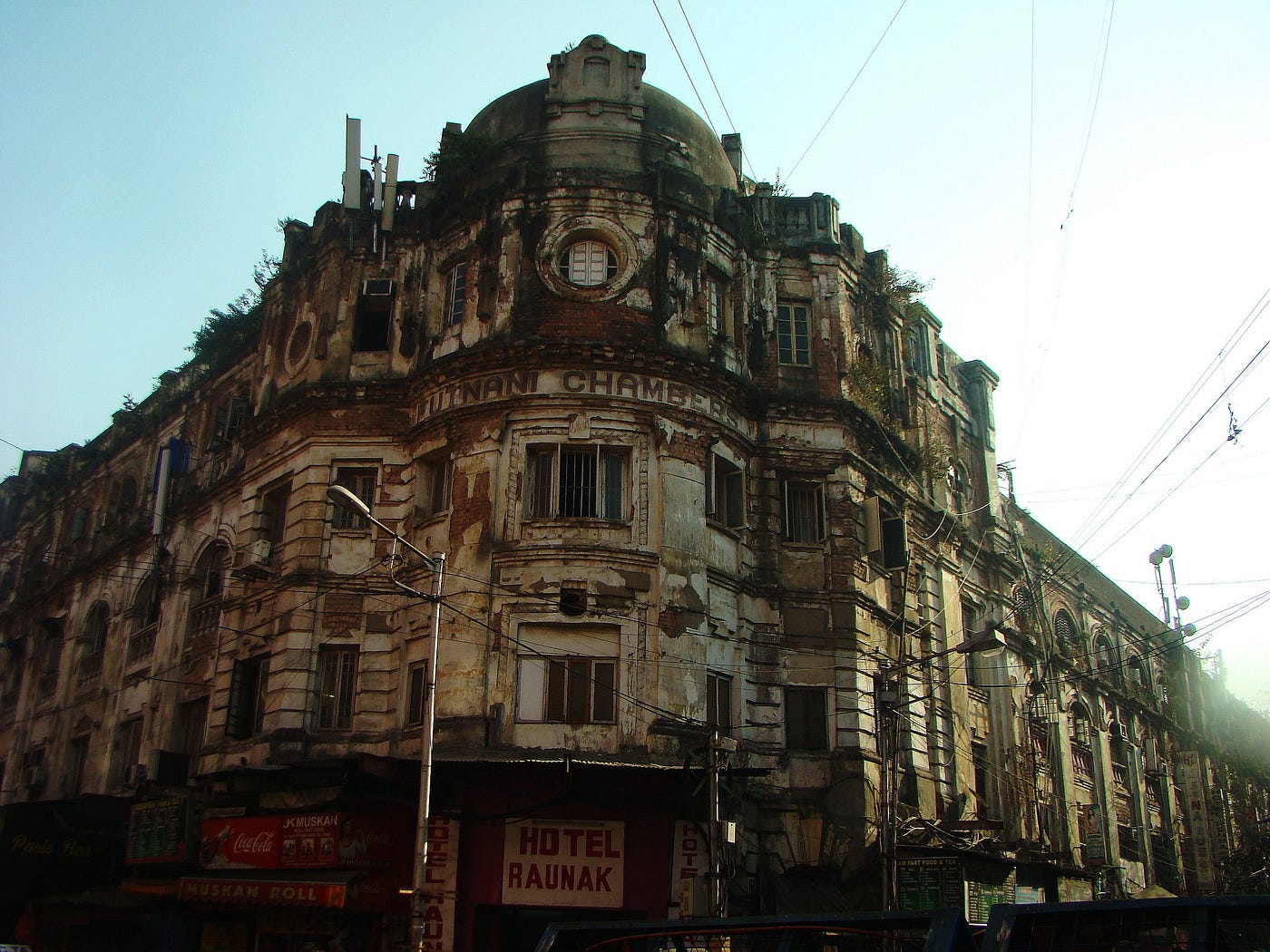
Futnani Chambers: A colonial landmark transformed into a Sindhi enterprise cornerstone by the Futnani family.
There is a particular kind of loneliness in belonging to a city that never fully claims you, while carrying a heritage tied to a homeland you have never seen.
That, in many ways, is what it feels like to grow up as a Calcutta Sindhi.
I have spent my entire life in Calcutta. Its humidity, chaos, political arguments, yellow taxis, old buildings and crumbling grandeur feel more familiar to me than anything else in the world. The city exists in my muscle memory. I instinctively argue about the best kathi roll and biryani joints, about whether Park Street’s old eminence has faded into a shadow of itself and about Bengal’s politics with the passion of someone whose roots run deep here.
And yet, all it takes is a surname to remind you that, to many people, you are still “non-Bengali.”
Growing up, I often felt like I existed in two parallel worlds.
Inside the house was one universe, grandparents speaking Sindhi in fragments, family conversations carrying echoes of Partition, stories of Hyderabad told with a strange mixture of pain and nostalgia. There were customs that felt inherited rather than understood. Sindhi food on occasions. Curry every Sunday. Community events where everyone somehow knew everyone, where surnames carried familiarity before faces did. Beneath it all an unspoken expectation that we would preserve something that history had already scattered across borders.
Outside the house was Calcutta, overwhelmingly Bengali in language, culture and emotional rhythm. My schooling, friendships, humour, political consciousness and worldview were all shaped by Bengal. The sound of dhaak in October triggers something instinctive inside me. Rabindrasangeet feels familiar. So does the melancholy that Bengalis carry about the decline of their state.
But identity is rarely neat in India.
To many Bengalis, Sindhis are viewed through a narrow lens — business families, Marwari-adjacent, outsiders who settled in the city but never became fully part of its cultural soul. To many Sindhis from elsewhere, Calcuttan Sindhis can appear too assimilated, too detached from “authentic” Sindhi identity.
You begin to realise that existing between cultures means constantly being partially claimed and partially rejected by both.
I think a lot about my grandparents’ generation.
They arrived in India after Partition carrying trauma that was rarely spoken about openly. Unlike Punjabis, Sindhis did not receive a linguistic state or a strong geographical centre after Partition. Sindhis dispersed. Over time, survival became more important than preservation. People adapted quickly because they had to.
Perhaps that is why many Sindhi families, including mine, slowly lost the language.
Today, I can understand fragments of Sindhi, speak bits and pieces, but I cannot claim fluency. There is guilt attached to that. An uncomfortable awareness that something precious faded within just two or three generations. Sometimes I hear elderly relatives speaking fluent Sindhi and feel like I am listening to a disappearing world.
And yet, culture survives in strange ways.
It survives in the smell of Sindhi curry on Sunday afternoons. In the way business and financial caution are discussed at home. In family values shaped by displacement. In the instinctive emphasis on education, stability and rebuilding. In surnames that still carry the memory of a lost geography.
At the same time, Calcutta shaped me just as deeply.
The city gave me my politics, my humour, my worldview and my emotional instincts. It taught me to romanticise intellectualism and decay simultaneously. It taught me how fiercely people can love a city even while watching it decline. It taught me nostalgia before I was old enough to understand the word.
Sometimes I wonder what identity really means.
Is it blood? Language? Geography? Community acceptance? Memory?
Because if identity is determined only by family name, then I am Sindhi. But if identity is shaped by lived experience, then Calcutta runs through me far more deeply than a homeland I know only through inherited stories.
Perhaps that contradiction never fully resolves itself.
Perhaps being a Calcutta Sindhi means learning to live with layered belonging. To accept that identity does not always come in pure forms. That cultures bleed into each other. That people shaped by migration often become bridges between worlds without fully belonging to either.
There are moments when this feels isolating.
But there are also moments when it feels beautiful.
Because existing between identities allows you to see the world differently. You understand that cultures are not rigid walls; they are living, changing things. You learn that home is not always a single place or language. Sometimes home is simply where your memories were formed.
And all my memories were formed here.
In Calcutta.
A city that may never completely see me as one of its own, but one that I will probably continue to love with the irrational loyalty only Calcuttans understand.
메타데이터
- post_id
- f2e84e647cc4
- slug
- navigating-multiple-identities-as-a-calcutta-sindhi-f2e84e647cc4
- url
- https://medium.com/@ashmodhravvaswani/navigating-multiple-identities-as-a-calcutta-sindhi-f2e84e647cc4
- canonical_url
- https://medium.com/@ashmodhravvaswani/navigating-multiple-identities-as-a-calcutta-sindhi-f2e84e647cc4
- author_url
- https://medium.com/@ashmodhravvaswani
- status
- ok
- fetched_at
- 2026-07-14 04:53:50