Designing for Debt: How Customer Understanding and Journey Mapping Can Transform Loan Retrieval in…
A service design perspective on turning the most adversarial moment in lending into a business opportunity.
Designing for Debt: How Customer Understanding and Journey Mapping Can Transform Loan Retrieval in Nigerian Fintech
A service design perspective on turning the most adversarial moment in lending into a business opportunity.
Nigeria’s digital lending market has grown at a staggering pace. Platforms like FairMoney, Carbon, Branch, and PalmCredit have made borrowing as frictionless as ordering a ride — a few taps, a BVN verification, and money lands in your account within minutes. The result is an active borrowing economy where millions of Nigerians interact with credit products as part of everyday life.
But there is a structural asymmetry at the heart of this economy. The same platforms that have mastered the art of giving money have largely failed at the art of getting it back. Loan origination is a design problem these companies solved brilliantly. Loan retrieval, on the other hand, remains a brute-force operation — a sequence of escalating threats that eventually gets handed off to a third-party collector, at which point the customer relationship is effectively dead.
This article argues that the retrieval problem is not an operations failure. It is a design failure. And the tools to fix it already exist within the discipline of service design: customer understanding, journey mapping, and insight framing. What’s missing is the willingness to apply them to the part of the business that everyone treats as a back-office function rather than a strategic touchpoint.
Part One: Customer Understanding as a Business Driver
The Segment You Think You Know
Most Nigerian lending platforms segment their users by credit score, loan size, repayment history, and demographic data. These are useful categories for risk modelling, but they are almost useless for understanding behaviour. They tell you who is likely to default. They tell you nothing about why someone defaults, what their emotional state is when they do, or what kind of intervention might change their trajectory.
Service design begins with a different premise: that the most valuable thing you can know about a customer is not their data profile but their context. What was happening in their life when they took the loan? What did they use it for? How did they feel about borrowing? What is their relationship with debt as a concept?
Consider two borrowers who both take a ₦100,000 loan and both miss their first repayment. One is a small trader in Alaba whose supplier raised prices unexpectedly. She intends to repay but needs two more weeks. The other is a salaried worker who took the loan on impulse during a promotional push and has since moved his salary account to a different bank. The data profile of these two borrowers might look identical. Their contexts — and therefore the interventions that would work on them — are completely different.
This is the gap that customer understanding is meant to close. Not the statistical understanding that risk models provide, but the behavioural and emotional understanding that tells you what a person is actually experiencing when they interact with your product.
Beyond Personas: Understanding Emotional Postures
Traditional persona work in UX often produces flat archetypes — “The Cautious Saver,” “The Impulse Borrower” that are too generic to drive real design decisions. A more useful framework for the lending context is what we might call emotional postures: the distinct psychological states that a borrower occupies at different points in the loan lifecycle.
An emotional posture is not a personality type. It is a temporary orientation toward the product, shaped by circumstance, and it can shift. The same person who felt grateful and optimistic when the loan was disbursed might feel cornered and resentful two weeks before the repayment deadline. The posture is not the person; it is the moment. And it is the moment that the service needs to be designed for.
This distinction matters because most retrieval strategies are designed for a type of person (the defaulter) rather than a type of moment (the point at which repayment becomes emotionally difficult). When you design for the person, you get punitive systems. When you design for the moment, you get interventions.
Part Two: The Loan Journey, Mapped
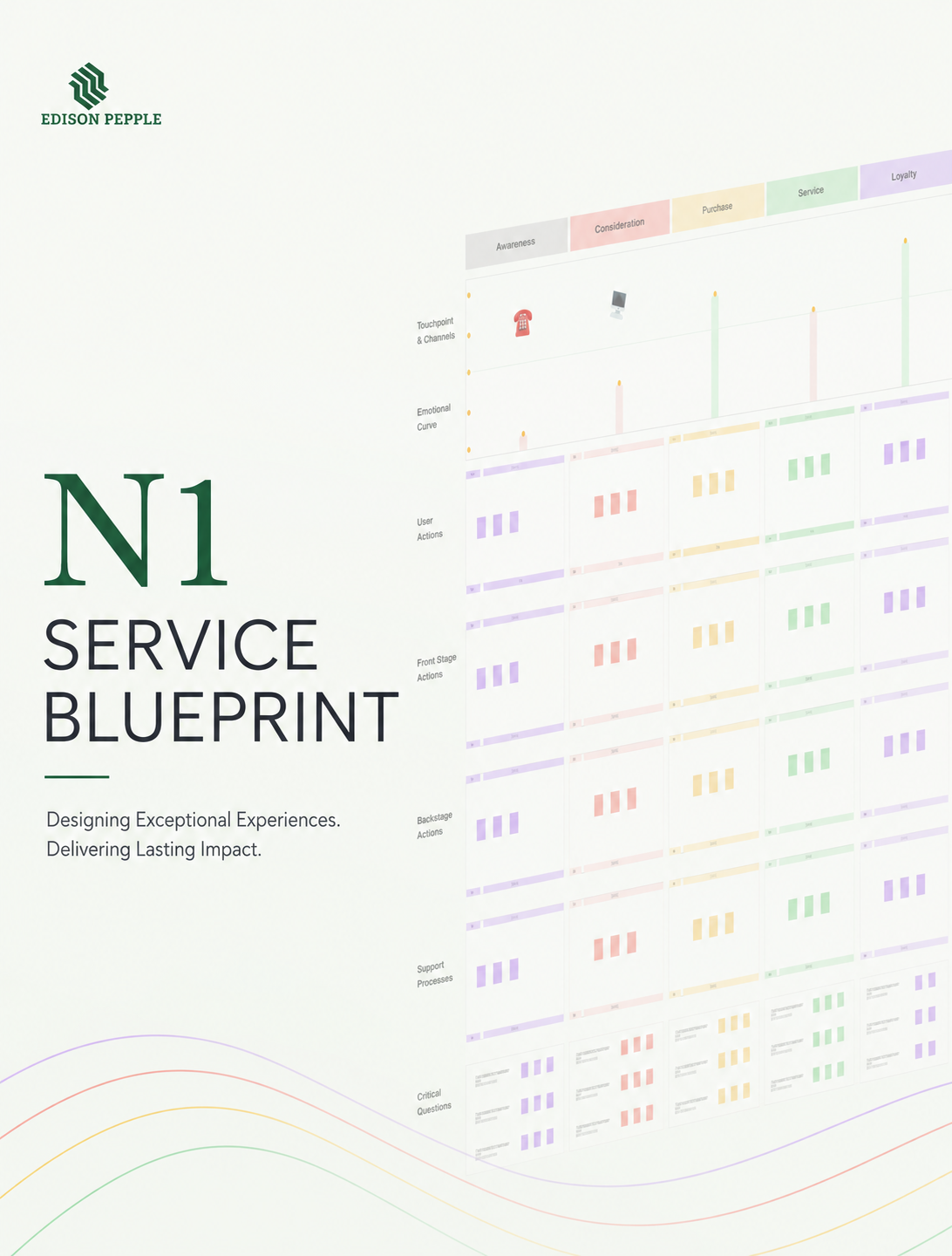
Journey mapping is one of the most widely used tools in service design, and one of the most frequently misapplied. A journey map is not a flowchart of process steps. It is a visualization of experience over time what a person does, thinks, and feels as they move through a service. Its value lies not in documenting what the company already knows, but in revealing the gaps between what the company designed and what the customer experienced.
For the Nigerian lending context, the journey can be mapped across three broad phases, each with distinct emotional dynamics.
Phase One: The Pre-Loan Period
Awareness. The user learns they are eligible for a loan. This typically happens through an in-app notification, an SMS, or a push message. The emotional posture here is curiosity mixed with validation — the platform has essentially told the user, you are creditworthy. This is a powerful moment, and platforms know it. The notification is engineered to feel like an invitation, not an advertisement.
Consideration. The user explores whether the loan serves a real purpose. For borrowers in genuine financial need, this stage is brief — the need drives the decision. But a significant portion of digital loan users in Nigeria are not in acute distress.
They are exploring. They are thinking about an upgrade, a side business, a purchase they have been deferring. The consideration stage for this group is longer and more elastic, and the emotional posture is one of possibility. The loan is not yet money; it is optionality.
Application. The user commits and applies. The emotional posture shifts from possibility to commitment, often accompanied by a small spike of anxiety (am I making the right choice?) that is immediately soothed by the speed of disbursement.
The faster the money arrives, the less time the borrower spends in the anxiety window. This is by design, and it works but it also means the borrower has very little time to develop a repayment identity. They become a borrower in minutes. The identity of someone who owes money takes longer to form.
Phase Two: The Loan Usage Period
Service. The user deploys the loan for its intended purpose or, frequently, for a purpose that evolved between application and disbursement. The emotional posture during usage is one of agency. The borrower feels empowered.
The loan is performing its function. The platform, at this stage, is largely invisible. There may be a countdown to the repayment date in the app, but the relationship between borrower and lender is dormant.
This dormancy is a missed opportunity. The usage period is the only window in the entire journey where the borrower has a positive association with the platform and is not yet burdened by the obligation to repay. It is, in other words, the ideal moment for relationship-building and most platforms do nothing with it.
Phase Three: The Loan Retrieval Period
This is where the journey breaks down, and where the richest design opportunities exist.
The Loyalty Paradox. In a traditional service design framework, the repayment stage maps to “loyalty” the phase where a satisfied customer returns value to the business. In lending, this framing exposes an uncomfortable truth: the “loyalty” the platform needs is not emotional loyalty but financial compliance.
The borrower’s act of repayment is not an expression of satisfaction; it is the fulfilment of a contract. And when fulfilment becomes difficult, the emotions that govern decision-making are not the ones that loyalty programs are designed to address.
Four emotional states dominate the retrieval period, and they do not arrive in a clean sequence. They coexist, compete, and shift depending on the borrower’s circumstances:
Anxiety surfaces first for borrowers who intend to repay but are unsure whether they can. This is the most productive emotional state for the platform, because the borrower is still oriented toward compliance. Anxiety means the person cares.
The design question is: how do you keep this person in a state of productive concern without tipping them into avoidance? Most platforms fail here by doing nothing during the anxiety window, then escalating directly to threats, which converts anxiety into resentment.
Fear follows when the borrower begins to imagine specific consequences a damaged credit record, exposure to contacts, legal action. Fear is a short-term motivator but a long-term relationship killer. A borrower who repays out of fear will never use the platform again voluntarily. Worse, fear has diminishing returns: if the threatened consequences do not materialize quickly, fear decays into the next emotional state.
Surprise or more precisely, the absence of expected consequences is the most dangerous state for the platform. The borrower has missed a payment. They expected something bad to happen. Nothing did. The in-app warnings continue, but life outside the app is unaffected. They can still bank with other institutions.
Their phone still works. Their contacts were not called (or if they were, no one they care about noticed). This moment of surprise wait, nothing happened? is the inflection point where a struggling borrower becomes a comfortable defaulter.
Comfort with non-payment is the terminal state. The borrower has recalibrated their understanding of the consequences and concluded that the cost of non-payment is lower than the cost of repayment. At this point, conventional retrieval tactics have almost no leverage. The borrower has, in effect, exited the platform’s sphere of influence.
And this is typically the stage at which the platform hands the case to a third-party collector transferring the relationship at precisely the moment it requires the most nuanced intervention.
Part Three: From Map to Strategy — The Role of Insight Framing
A journey map, no matter how detailed, is not a strategy. It is a diagnostic tool. The bridge between what the map reveals and what the business does about it is a discipline called insight framing the practice of translating observed patterns into actionable design principles that align with business objectives.
Insight framing asks three questions of every finding on the journey map:
What is actually happening here? Not what we assumed, not what the process documents say, but what the data, qualitative research, and behavioural evidence tell us is occurring at this touchpoint.
Why does it matter to the business? Not every pain point is worth solving. An insight earns investment only when it connects to a measurable business outcome recovery rate, customer lifetime value, cost of collection, cross-sell conversion.
What is the design implication? Given what we now know and why it matters, what should the experience look like at this moment? What should the borrower see, hear, feel, or be offered?
Applying Insight Framing to the Retrieval Journey
Let us walk through three insights that a well-executed journey map of the Nigerian lending retrieval experience might surface, and frame each one for strategic action.
Insight One: The anxiety window is the highest-leverage moment in the entire retrieval journey, and most platforms waste it.
What is happening: Between loan disbursement and the first missed payment, there is a period typically five to ten days before the due date where borrowers who are going to struggle begin to feel the pressure. They check their balance. They do mental arithmetic. They avoid opening the app. These are behavioural signals that the borrower is entering the anxiety posture.
Why it matters: A borrower in the anxiety posture is still oriented toward repayment. They have not yet defaulted. They have not yet experienced the “nothing happened” surprise. Intervening here before the first missed payment is exponentially cheaper and more effective than intervening after.
Design implication: The platform should design a pre-default intervention experience. Not a reminder notification (which reads as pressure), but a genuine restructuring offer. “We noticed your repayment is coming up. Would a two-week extension work better for you? Here’s what it would look like.” This reframes the platform from creditor to partner, preserves the borrower’s repayment identity, and critically keeps the interaction inside the app rather than pushing it toward the off-app escalation that eventually destroys the relationship.
Insight Two: The transition from in-app to off-app collection is where lifetime customer value goes to die.
What is happening: When a borrower stops engaging with the app, the platform escalates to SMS, calls, and eventually third-party collection. Each step moves the interaction further from the borrower’s relationship with the product and closer to a pure enforcement dynamic. By the time a third-party collector is involved, the borrower no longer thinks of themselves as a customer of the platform. They think of themselves as a target.
Why it matters: Nigerian digital lenders do not only offer loans. They offer savings products, investment products, bill payments, insurance. A borrower who defaults on a loan but is retained within the ecosystem might generate more lifetime revenue through other products than the outstanding loan amount.
But the moment the retrieval process pushes them off-platform, cross-sell becomes impossible. The economics of collection agencies (who typically take 20–40% of recovered amounts) make this even worse: the platform pays a premium to destroy a relationship it could have restructured.
Design implication: The retrieval journey should be designed to keep the borrower inside the app for as long as possible. This means the app itself needs to become the primary collection channel not through aggressive notifications, but through value.
What if the borrower’s app experience changed during the retrieval period? What if it surfaced a micro-savings tool that helps them build toward repayment?
What if it offered a pathway to settle the loan by completing micro-tasks or referring new customers? The principle is not to make collection invisible, but to make the app a place where the borrower wants to be even when they owe money.
Insight Three: Borrowers who default are the platform’s most informed potential customers for non-loan products, and the retrieval process should be designed to surface those products.
What is happening: A borrower who has gone through the full loan lifecycle awareness, application, usage, and the emotional complexity of repayment has a deeper, more textured understanding of the platform than a new user who has only interacted with the savings or payments product. They know the app. They have experienced its highs and lows. They have a relationship with it, even if that relationship is strained.
Why it matters: These borrowers are not lost customers. They are underserved customers. The platform has defined them solely through the lens of debt, and every interaction since the missed payment has reinforced that framing.
But the borrower is a whole person with financial needs that extend beyond the loan. They need to save. They need to send money. They need insurance. The platform already has their data, their trust (however damaged), and their attention (they are still getting messages). What it lacks is a product experience that speaks to them as something other than debtors.
Design implication: The retrieval journey should include deliberate product introduction moments — not as sales pitches, but as genuine value additions that happen to serve the business goal of re-engagement. “While you’re working on your repayment plan, did you know you can lock away ₦500 a week in a goal savings account? It won’t affect your loan — it’s yours.” This does two things simultaneously: it reframes the platform’s relationship with the borrower, and it creates a new revenue stream that subsidizes the cost of the extended repayment timeline.
Part Four: Designing the Retrieval Experience
What would a well-designed loan retrieval experience look like in practice? Here is a framework, built on the principles outlined above.
Stage One: Anticipation Design (Days 7–1 Before Due Date)
The platform detects early signals of repayment difficulty through behavioural data: reduced app usage, declining wallet balance, increased frequency of balance checks.
Rather than waiting for the missed payment, it initiates a soft conversation — an in-app experience that acknowledges the upcoming obligation and offers flexibility. The tone is collaborative, not transactional. The goal is to keep the borrower in the anxiety posture (where they are still motivated to repay) and prevent the slide into avoidance.
Stage Two: Graceful Friction (Days 1–14 After Missed Payment)
The borrower has missed a payment. Rather than escalating to punitive messaging, the platform introduces what we might call graceful friction — a series of gentle in-app interventions that make the debt visible without making the borrower feel attacked.
The app experience subtly shifts: the repayment module becomes more prominent, a progress tracker appears showing how close they are to resolution, and the platform begins surfacing micro-repayment options. The principle is that people are more likely to act on small, achievable steps than on a single large obligation.
Stage Three: Value Reframing (Days 14–30 After Missed Payment)
This is the critical window where the borrower is most likely to experience the “nothing happened” surprise and settle into comfort with default. The platform’s response should not be to increase pressure but to increase value. Introduce non-loan products. Offer financial literacy content. Create a pathway where partial repayment unlocks new features.
The message is not “you owe us money” but “you are still a customer, and there are things here that are useful to you.” The strategic logic is that a borrower who is using the savings product and the bill payment feature while gradually repaying a loan is infinitely more valuable than a borrower who has been scared into a one-time repayment and never returns.
Stage Four: Structured Resolution (Days 30+)
For borrowers who have not responded to the earlier stages, the platform offers a structured resolution pathway a formal repayment plan with clear terms, reduced penalties, and a defined endpoint. This is the stage where most platforms currently start. By moving it to the end of a thoughtful sequence, the platform ensures that it reaches this point only with borrowers who genuinely need it, rather than applying it as a blunt instrument to everyone.
The third-party handoff, if it must happen, should be the absolute last resort and it should be framed to the borrower not as an escalation but as a transition. “We’re connecting you with a partner who specialises in helping people find repayment solutions.” The borrower should understand that the platform still considers them a customer, even when the collection is handled externally.
The Bigger Picture
The argument of this article is not that Nigerian fintechs should be softer on defaulters. It is that they should be smarter. The current retrieval model pressure, escalation, handoff recovers some money in the short term and destroys customer relationships in the long term. It treats every borrower as a collection problem and ignores the reality that these same borrowers are potential customers for every other product the platform offers.
Service design offers a different approach. By investing in genuine customer understanding, by mapping the emotional journey of the borrower rather than just the operational process of the lender, and by framing insights in terms of business outcomes rather than empathy alone, lending platforms can design retrieval experiences that recover more money, retain more customers, and create new revenue streams in the process.
The platforms that figure this out will not just be better at getting their money back. They will be the ones that turn the borrowing economy into a financial relationship economy where the loan is not the end of the story but the beginning of a much longer, much more profitable conversation.
메타데이터
- post_id
- f2e8a1246600
- slug
- designing-for-debt-how-customer-understanding-and-journey-mapping-can-transform-loan-retrieval-in-f2e8a1246600
- url
- https://medium.com/@peppleiyerefa/designing-for-debt-how-customer-understanding-and-journey-mapping-can-transform-loan-retrieval-in-f2e8a1246600
- canonical_url
- https://medium.com/@peppleiyerefa/designing-for-debt-how-customer-understanding-and-journey-mapping-can-transform-loan-retrieval-in-f2e8a1246600
- author_url
- https://medium.com/@peppleiyerefa
- status
- ok
- fetched_at
- 2026-06-26 12:24:55