Most Museums Don’t Calculate Ticketing Software ROI Correctly
Most museums evaluate ticketing software based on features.
Most Museums Don’t Calculate Ticketing Software ROI Correctly
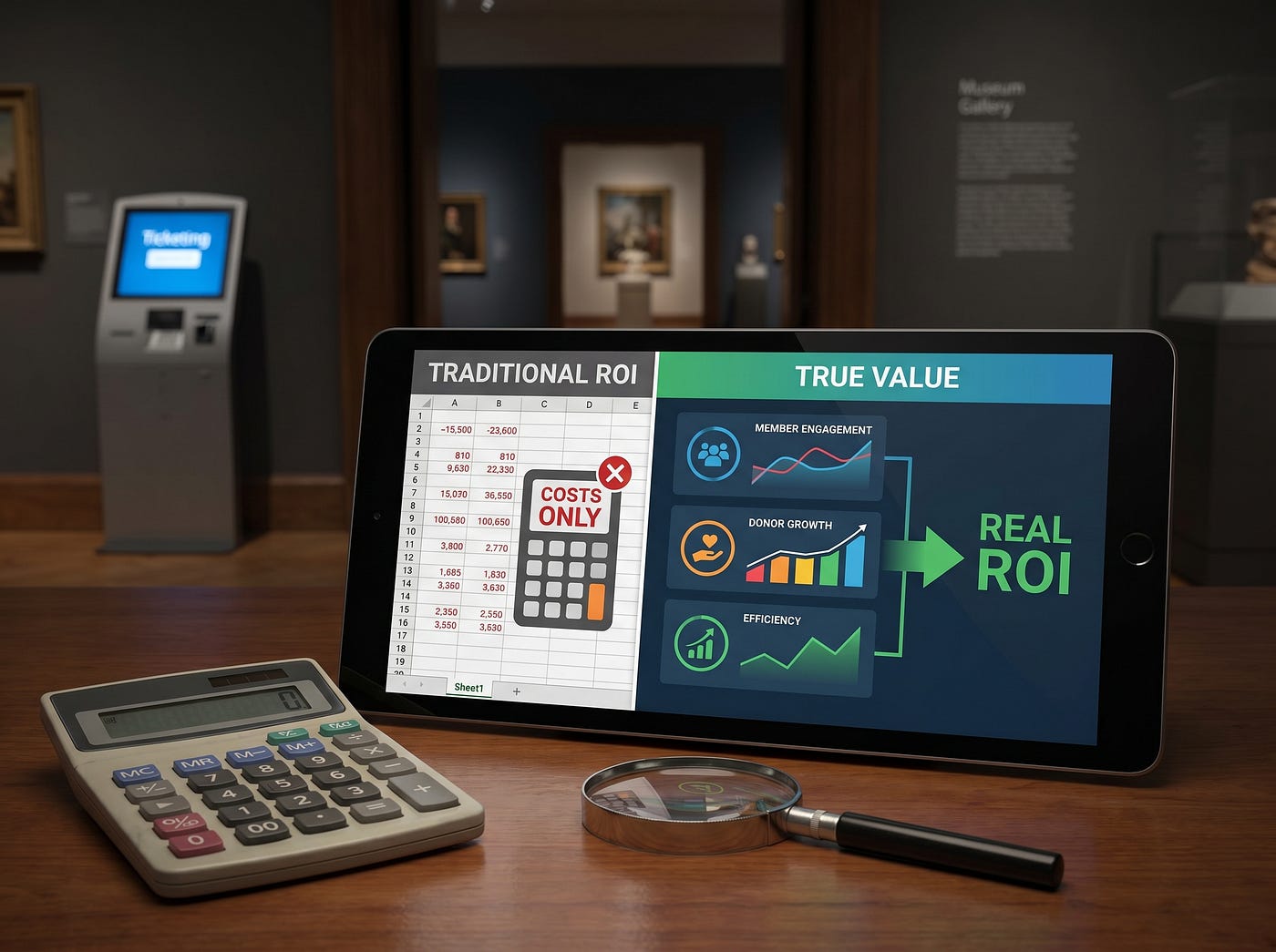
Most museums evaluate ticketing software based on features.
That sounds logical at first.
Teams compare dashboards, booking modules, visitor analytics, integrations, and pricing plans. Vendors showcase polished demos filled with automation promises and attractive reporting interfaces.
But the real question usually gets ignored:
Will this software actually improve museum operations enough to justify the investment?
That’s where ROI becomes more important than features.
And honestly, many museums discover this too late after deployment headaches, operational friction, or disappointing adoption rates.
The Problem With How Museums Usually Buy Software
Most museum software buying decisions happen like this:
- Someone identifies operational issues
- Teams start collecting vendor demos
- Feature lists become the main comparison tool
- Pricing discussions dominate the evaluation process
What gets overlooked is operational reality.
Because software ROI is rarely about “having more features.”
It’s about removing friction from daily operations.
For museums, that usually means:
- Reducing visitor queues
- Simplifying entry management
- Improving online booking adoption
- Reducing manual staff workload
- Preventing ticket misuse
- Improving reporting visibility
A dashboard doesn’t create ROI by itself.
Operational efficiency does.
Manual Ticketing Is More Expensive Than Most Museums Realize
One thing many institutions underestimate is how much manual processes quietly cost over time.
Not just financially.
Operationally.
A museum may already be losing significant resources through:
- Slow ticket validation
- Weekend congestion
- Manual reconciliation
- Cash handling issues
- Staffing inefficiencies
- Long entry wait times
- Inaccurate visitor tracking
These problems become “normal” internally, which makes them harder to measure.
But once digital ticketing is implemented properly, the contrast becomes obvious very quickly.
ROI Starts With Measuring Operational Friction
The smartest software evaluations usually begin with operational questions, not feature questions.
For example:
- How long does ticket verification currently take?
- How many staff members are required during peak hours?
- How much reporting is still manual?
- How often do visitors face entry delays?
- How much time is spent resolving ticketing errors?
Those numbers matter.
Because they reveal where the museum is already losing time, money, and operational efficiency.
And that’s the baseline needed to calculate ROI accurately.
Online Booking Changes Visitor Behavior More Than Museums Expect
One of the biggest shifts after digital ticketing adoption is visitor behavior.
When online booking becomes simple and predictable:
- Advance bookings increase
- Visitor flow becomes easier to manage
- Group reservations become smoother
- Tourist conversions improve
- Entry experiences feel less chaotic
This matters because visitor experience directly affects operational stability.
A smoother entry process reduces pressure on front-desk staff and improves crowd movement naturally.
In many cases, museums notice operational improvements before they even notice revenue improvements.
Software ROI Isn’t Just About Revenue
This is probably the biggest misconception.
ROI does not only mean “more money.”
Sometimes the biggest returns come from operational stability.
For example:
- Staff spend less time fixing issues
- Reporting becomes faster
- Weekend crowd management improves
- Visitor complaints decrease
- Audit preparation becomes easier
- Entry processing speeds increase
Those operational gains compound over time.
And honestly, reducing operational chaos during holidays or weekends can already justify a major part of the investment.
The Best Software Questions Aren’t Usually Technical
Many software demos focus heavily on technology.
But museums often benefit more from practical operational questions like:
- What happens if the internet goes down?
- How fast is QR scanning during peak visitor traffic?
- How difficult is staff training?
- Can the system support both online and offline validation?
- How quickly can reporting be exported?
- How much manual intervention still remains?
These questions reveal whether the platform works in real museum conditions , not just in polished presentations.
Smaller Museums Often Benefit Faster From Automation
There’s a common assumption that digital ticketing is mainly for large institutions.
But smaller museums often experience faster operational improvements because they rely heavily on limited staff resources.
Automation reduces pressure immediately by simplifying:
- Ticket reconciliation
- Reporting
- Visitor entry management
- Booking coordination
- Daily operational monitoring
Even relatively simple systems can create major workflow improvements for smaller teams.
Features Matter Less Than Daily Usability
This might sound controversial, but it’s true.
A simpler platform staff can operate confidently is usually more valuable than an advanced platform nobody fully understands.
Because in real environments:
- Entry queues matter
- Staff efficiency matters
- Operational reliability matters
Software only creates ROI if people actually use it effectively.
That’s why workflow simplicity often beats feature complexity.
Every single time.
Museums Should Evaluate Software Like Operational Infrastructure
The best museum ticketing systems don’t just sell tickets.
They support the entire visitor flow.
That includes:
- Booking
- Entry management
- Validation
- Reporting
- Crowd monitoring
- Operational planning
Once museums start evaluating software as infrastructure instead of “just another tool,” ROI discussions become much more practical and measurable.
And usually, much smarter.
If your museum is currently evaluating digital ticketing solutions, focusing on operational impact instead of feature overload will almost always lead to better long-term decisions.
Especially when visitor experience, staff efficiency, and scalability are part of the conversation from day one.
Whether you’re exploring digital ticketing for the first time or planning to upgrade an existing museum management system, our team is here to help. We work with museums and cultural institutions to simplify visitor entry, improve operational efficiency, and create smoother booking experiences through smart ticketing solutions.
**Connect with us** to discuss your goals, operational challenges, or deployment requirements.
메타데이터
- post_id
- f31f737ae912
- slug
- most-museums-dont-calculate-ticketing-software-roi-correctly-f31f737ae912
- url
- https://medium.com/@everyticket/most-museums-dont-calculate-ticketing-software-roi-correctly-f31f737ae912
- canonical_url
- https://medium.com/@everyticket/most-museums-dont-calculate-ticketing-software-roi-correctly-f31f737ae912
- author_url
- https://medium.com/@everyticket
- status
- ok
- fetched_at
- 2026-06-09 15:37:30